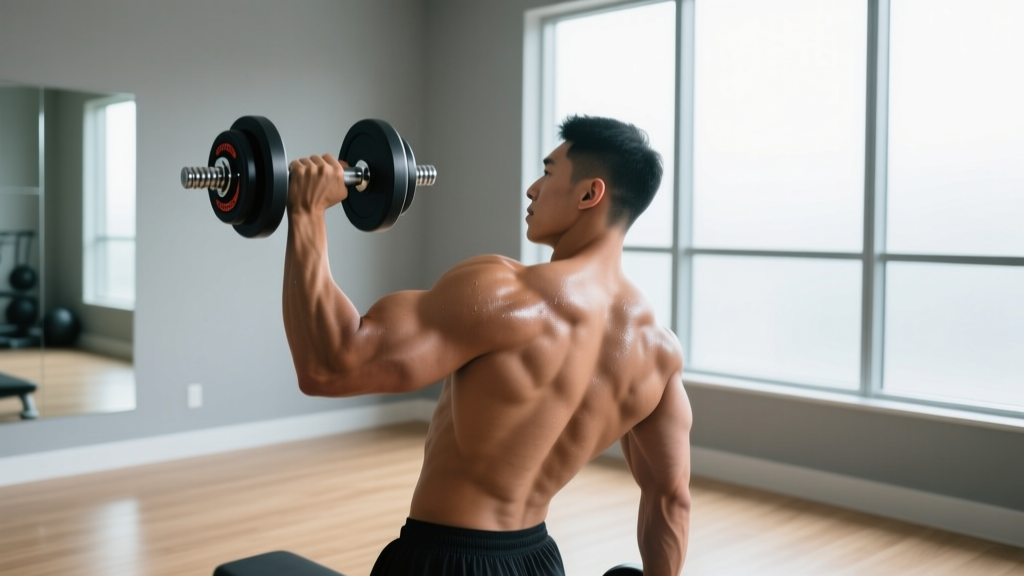
Dumbbell Row Target Muscles Guide & Top Adjustable Dumbbells 2026
Master the dumbbell row target muscles with our step-by-step beginner guide, plus a 2026 comparison of the best adjustable dumbbells for back training.

The Ultimate Beginner's Guide to the Dumbbell Row
Building a strong, resilient back is the cornerstone of any effective fitness journey. For home-gym beginners, the dumbbell row is arguably the most versatile and impactful pulling movement you can perform. However, executing the movement correctly and selecting the right equipment are two hurdles that often stall progress. This comprehensive guide breaks down the exact dumbbell row target muscles, provides a step-by-step tutorial for flawless form, and delivers an in-depth 2026 adjustable dumbbell comparison to help you choose the best gear for your home setup.
Beginner Insight: The back is a 'blind' muscle group. Unlike your biceps or quads, you cannot easily see your back muscles working in the mirror. Mastering the mind-muscle connection through proper technique is critical before you start adding heavy weight.Dumbbell Row Target Muscles: Anatomy of the Pull
When analyzing the dumbbell row target muscles, we are looking at a complex network of upper and mid-back musculature. Understanding which muscles are engaged will help you adjust your elbow path and torso angle to target specific areas.
- Latissimus Dorsi (Lats): The primary movers. These large, wing-shaped muscles are responsible for shoulder extension and adduction. To maximize lat engagement, keep your elbow tucked close to your torso at roughly a 15-to-30-degree angle.
- Rhomboids & Middle Trapezius: Located between your shoulder blades, these muscles are responsible for scapular retraction (squeezing your shoulder blades together at the top of the movement).
- Rear Deltoids: The back of the shoulder. If you flare your elbow out to a 90-degree angle from your body, the rear delts and upper traps take over the movement, shifting the focus away from the lats.
- Biceps Brachii & Brachialis: The secondary movers. Your biceps assist in elbow flexion during the pull. Using a neutral grip (palms facing your body) heavily recruits the brachialis and brachioradialis.
- Erector Spinae & Core: While not the primary targets, these stabilizer muscles work isometrically to keep your spine neutral and prevent your torso from rotating during unilateral (one-arm) rows.
For a detailed biomechanical breakdown of the pulling musculature, the ExRx.net exercise directory remains one of the most accurate kinesiology resources available online, confirming the synergistic relationship between the lats and the biceps brachii during horizontal pulling.
Step-by-Step Guide: Perfecting Your Rowing Form
Follow this four-step sequence to ensure you are stimulating the correct dumbbell row target muscles while protecting your lower back.
- The Setup & Stance: Place your left knee and left hand on a flat utility bench. Your right foot should be planted firmly on the floor, slightly behind your hip, creating a stable tripod base. Keep your spine completely neutral—imagine a straight line from the crown of your head to your tailbone.
- The Hinge & Brace: Grab the dumbbell with a neutral grip. Before you pull, take a deep breath into your belly and brace your core. Depress your shoulder blade slightly (pull it down away from your ear) to create a stable shelf for the pull.
- The Concentric Pull: Drive your elbow straight up toward the ceiling, keeping it tucked close to your ribcage. Do not think about pulling with your hand; think about driving your elbow back. Stop when the dumbbell reaches the height of your hip pocket. Squeeze your shoulder blade toward your spine for a full one-second pause.
- The Eccentric Lowering: Lower the weight under strict control for a count of two to three seconds. Allow your shoulder blade to protract (stretch forward) at the very bottom of the movement to get a deep stretch in the lat muscle before initiating the next rep.
2026 Adjustable Dumbbell Comparison for Rowing
Now that you understand the biomechanics, let's address the equipment. Traditional fixed dumbbell racks cost upwards of $2,500 and consume an entire wall of your home gym. Adjustable dumbbells are the undisputed solution for space-saving home workouts. However, not all adjustable models are suitable for rowing. The handle grip, knurling, and physical footprint of the weight blocks can severely impact your wrist alignment and the range of motion during a row.
Below is our expert review and comparison of the top adjustable dumbbells on the market in 2026, specifically evaluated for back training and rowing mechanics.
1. Nuobell 80lb Adjustable Dumbbells (Best Overall for Rows)
The Nuobell 80lb model has dominated the 2026 market for serious home lifters. Unlike dial-based systems, Nuobell uses a twisting handle mechanism that mimics the exact dimensions and feel of a traditional commercial hex dumbbell. For rowing, this is critical. The fully knurled steel handle provides an aggressive grip, preventing the dumbbell from slipping out of your sweaty hands during heavy lat rows. The slim profile of the weight blocks means they won't scrape against your thigh or bench during the eccentric phase.
2. Bowflex SelectTech 552 (Best for Absolute Beginners)
The Bowflex 552 remains a staple due to its accessible 5-to-52.5 lb weight range, adjusting in 2.5 lb increments for the first 25 lbs. This micro-loading is fantastic for beginners who are just learning the dumbbell row target muscles and need to progress slowly. However, the handle is made of smooth plastic/rubber, which can become slippery during high-rep back sessions. Additionally, the bulky plastic casing at the ends of the dumbbell can occasionally bump into your torso or bench during deep, one-arm rows.
3. PowerBlock Elite USA (Best for Heavy, Compact Pulling)
PowerBlock's cage design is incredibly durable and compact. The 2026 Elite USA models feature a welded steel construction that can survive being dropped (unlike the Bowflex). The caged handle keeps the weight perfectly balanced over your wrist, which is excellent for joint health during heavy rows. The downside? The enclosed cage restricts your grip width. If you have large hands or prefer a slightly offset grip to target different angles of the rhomboids, the cage can feel restrictive.
Equipment Comparison Matrix
| Model | 2026 Price (Pair) | Handle Material | Weight Increments | Rowing Suitability |
|---|---|---|---|---|
| Nuobell 80lb | $699 | Knurled Steel | 5 lbs | Excellent (True commercial feel) |
| Bowflex 552 | $349 | Rubber/Plastic | 2.5 lbs (up to 25) | Good (Bulky ends may interfere) |
| PowerBlock Elite | $379 | Steel Cage | 2.5 lbs (w/ add-ons) | Very Good (Restricted grip width) |
| Core Home Fitness | $249 | Textured Rubber | 5 lbs | Fair (Grip degrades over time) |
Common Beginner Mistakes & How to Fix Them
Even with the best adjustable dumbbells, poor form will result in bicep tendon strain rather than back hypertrophy. Avoid these three critical errors:
- Mistake 1: Pulling to the Chest/Armpit. Many beginners pull the dumbbell straight up toward their chest, flaring their elbow out to 90 degrees. This shifts the tension entirely to the rear deltoids and upper traps. The Fix: Pull toward your hip pocket, keeping the elbow tucked.
- Mistake 2: Torso Rotation (Using Momentum). As the weight gets heavy, lifters often twist their spine to heave the weight up. This removes tension from the lats and puts dangerous shear force on the lumbar spine. The Fix: Keep your hips and shoulders perfectly square to the floor. If you have to twist, the weight is too heavy.
- Mistake 3: Gripping Too Tightly. 'White-knuckling' the dumbbell over-activates the forearm flexors and biceps, causing your arms to fatigue before your back muscles do. The Fix: Use a 'hook grip' or lifting straps. Think of your hand as a simple meat hook connecting your elbow to the weight.
'The back muscles respond best to a deep stretch and a hard contraction. If you are just moving weight from point A to point B without pausing to squeeze the scapula, you are missing out on 50% of the hypertrophic stimulus.' - National Academy of Sports Medicine (NASM) Training Guidelines
Programming Your Rows: Sets, Reps, and Progression
According to strength and conditioning guidelines highlighted by the Harvard T.H. Chan School of Public Health, consistency and progressive overload are the primary drivers of muscular adaptation. For beginners looking to build foundational back strength and muscle, implement the following protocol:
- Frequency: 2 times per week (e.g., Upper/Lower split or Full Body routine).
- Volume: 3 to 4 working sets per arm.
- Rep Range: 8 to 12 repetitions. This range provides the optimal balance of mechanical tension and metabolic stress for hypertrophy.
- Proximity to Failure: Stop 1 to 2 reps shy of absolute failure (Reps in Reserve, or RIR). Your form should never break down on the final rep.
How to Progress with Adjustable Dumbbells
Because adjustable dumbbells jump in 5 lb increments (which is a massive 20% increase if you are rowing 25 lbs), you cannot simply add weight every single week. Instead, use Double Progression. If your goal is 3 sets of 12 reps with 30 lb dumbbells, stick with the 30s until you can hit 3x12 with perfect form. Only then should you adjust the dial or twist the handle up to 35 lbs, and start back at the bottom of the rep range (e.g., 3 sets of 8).
Final Thoughts on Back Training at Home
Mastering the dumbbell row target muscles is a rite of passage for any beginner. By focusing on scapular retraction, maintaining a tucked elbow path, and controlling the eccentric phase, you will build a thick, wide back that supports your posture and boosts your overall strength. Pairing this strict technique with a high-quality adjustable dumbbell set—like the Nuobell for grip purists or the Bowflex for micro-loading beginners—ensures your home gym is equipped for years of progressive overload. Grab your bench, dial in your weight, and start pulling.
More gear to consider
All reviews
Olympic vs Standard Plates for Your 20 Minute Workout with Dumbbells

Shoulder Press Machine vs Dumbbell: Neoprene Home Setup

Upper Body Dumbbell Workout Routine: EZ Curl Bar vs Straight Bar

Dumbbell Power Snatch Gear: Bumper Plate vs Iron Plate
Bumper vs Iron Plates: Care for Upper Back Dumbbell Setups
