Dumbbell Rack Maintenance: Storing Iron and Bottle Dumbbell Sets
Expert guide on dumbbell rack maintenance, load distribution, and specialized storage protocols for urethane, cast iron, and bottle dumbbell sets.

The Hidden Costs of Improper Dumbbell Storage
A high-quality dumbbell set and its corresponding rack represent a significant financial investment for any home or commercial gym. Yet, the longevity of this equipment is rarely determined by the intensity of your workouts; rather, it is dictated by how the gear is stored, loaded, and maintained between sessions. In 2026, the market offers an unprecedented variety of free weights, ranging from traditional cast iron and premium urethane to specialized eco-resin and water-filled bottle dumbbell designs. Each material interacts differently with environmental factors and rack hardware.
According to the National Strength and Conditioning Association (NSCA), improper equipment storage and degraded rack integrity are leading contributors to home gym accidents and premature gear failure. This comprehensive guide breaks down the metallurgical and polymer-specific maintenance protocols required to maximize the lifespan of your dumbbell rack and the diverse weight sets it holds.
Rack Metallurgy and Preventative Hardware Care
The structural integrity of your dumbbell rack is the foundation of your storage system. Most premium racks, such as the Rogue 3-Tier Dumbbell Rack or the Rep Fitness DR-4000, are constructed from either 11-gauge or 3mm laser-cut steel. While these materials boast immense static load capacities (often exceeding 1,000 lbs), they are vulnerable to environmental degradation and mechanical fatigue if ignored.
Combating Powder Coat Oxidation and Rust
Even high-quality electrostatic powder coatings can develop micro-fissures from the repeated impact of heavy dumbbells being dropped onto the cradles. Once moisture penetrates these fissures, subsurface oxidation begins. To prevent this:
- Install UHMW Liners: Ultra-High Molecular Weight (UHMW) polyethylene tape or custom-cut saddle liners (typically costing $30-$50 per rack) absorb impact shock and prevent steel-on-steel or steel-on-cast-iron friction.
- Quarterly Waxing: Apply a thin layer of carnauba-based automotive wax to the rack's steel uprights every three months. This fills microscopic pores in the powder coat and creates a hydrophobic barrier against ambient humidity.
- Bolt Torque Verification: Vibrations from dropped weights gradually loosen structural carriage bolts. Use a calibrated torque wrench to check all primary load-bearing bolts every six months, tightening them to the manufacturer's specified foot-pounds (usually between 60-80 ft-lbs for 3/8-inch hardware).
Material-Specific Storage Protocols
Not all dumbbells are created equal. The chemical composition of your weights dictates how they should be positioned on the rack and the environmental conditions they can tolerate.
Urethane vs. Virgin Rubber
Urethane is the gold standard for commercial gyms due to its resistance to UV degradation and its lack of volatile organic compounds (VOCs). Virgin rubber, while cheaper, is highly susceptible to UV breakdown, which causes the surface to chalk, crack, and emit a persistent odor. Store rubber dumbbells away from direct sunlight and ozone-generating equipment (like certain air purifiers or electrostatic machines). Wipe down both urethane and rubber handles with a pH-neutral cleaner weekly; avoid bleach-based solutions, which accelerate polymer chain breakdown.
Cast Iron and Chrome-Plated Weights
Chrome-plated cast iron requires aggressive humidity management. In garage gyms where relative humidity frequently exceeds 60%, chrome will develop surface pitting within months. Apply a light coat of 3-in-One oil or a specialized barbell rust-preventative spray to the handles and heads bi-weekly. Store these on the middle or top tiers of your rack to keep them further away from ground-level moisture pooling.
The Bottle Dumbbell and Specialty Polymer Storage
The modern fitness market has seen a rise in alternative weight designs, including the bottle dumbbell—a category encompassing water-filled adjustable weights, physical therapy aqua-bells, and eco-bells manufactured from compressed recycled high-density polyethylene (HDPE). Storing these requires unique considerations:
Expert Insight on HDPE Storage: According to material data from the British Plastics Federation, while HDPE is highly impact-resistant, it is vulnerable to long-term static stress and extreme temperature fluctuations. Never store a water-filled bottle dumbbell in an unheated garage during freezing winter months; the expansion of freezing water will cause catastrophic micro-fractures in the plastic seams. Furthermore, avoid storing round or teardrop-shaped bottle dumbbells on standard angled steel saddle cradles, as the concentrated point-load can warp the plastic shell over time. Use flat, rubber-matted shelving tiers instead.Load Distribution and Rack Structural Integrity
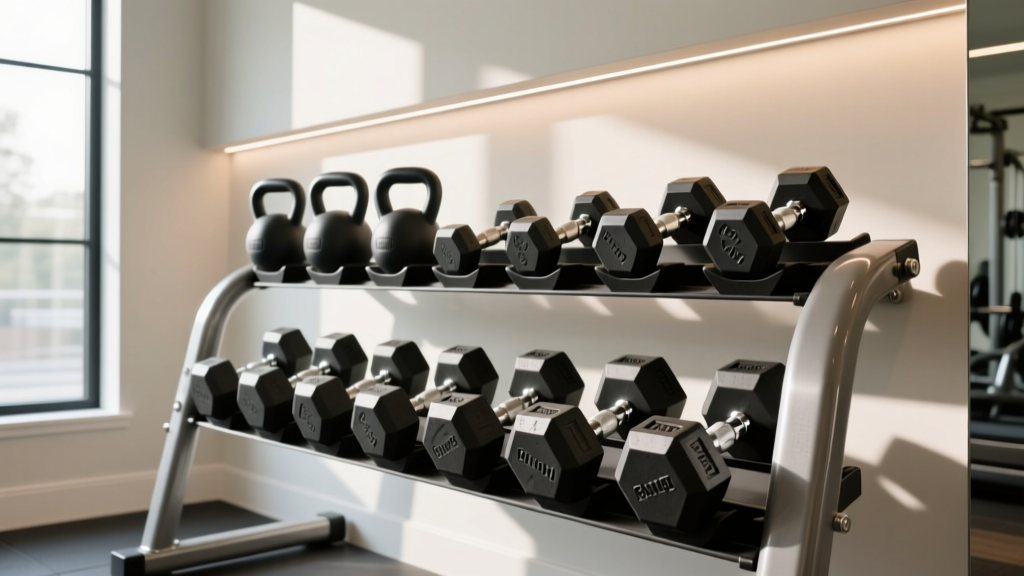
A common failure mode in multi-tier dumbbell racks is the bowing of the saddle rails. This occurs when users treat the rack as a display case rather than a structural load-bearing system. The physics of a 3-tier rack demand a specific loading hierarchy to minimize shear force on the welds.
| Tier Level | Ideal Weight Range | Structural Purpose | Recommended Dumbbell Type |
|---|---|---|---|
| Bottom Tier | 70 lbs - 150+ lbs | Lowers center of gravity; prevents tipping. | Heavy Urethane / Cast Iron |
| Middle Tier | 35 lbs - 65 lbs | Primary ergonomic pickup zone. | Rubber / Chrome Hex |
| Top Tier | 5 lbs - 30 lbs | Minimizes overhead lifting strain. | Neoprene / Bottle Dumbbell Sets |
Placing 100 lb dumbbells on the top tier of an 11-gauge steel rack creates a severe cantilever effect. Over time, the repeated eccentric loading of picking up and returning heavy weights from the top tier will physically bend the horizontal support rails, leading to a dangerous sloping effect where dumbbells can roll off the cradles.
Routine Maintenance Schedule
To systematize the care of your free weights and storage solutions, implement the following maintenance cadence. The American College of Sports Medicine (ACSM) emphasizes that structured equipment checks are vital for maintaining a safe training environment.
- Weekly (Surface Care): Wipe down all dumbbell handles with a non-corrosive antibacterial wipe. Sweep or vacuum beneath the rack to remove chalk dust and debris, which can trap moisture against the base plates of the rack.
- Monthly (Hardware & Polymer Check): Inspect the seams of any water-filled or eco-resin bottle dumbbell sets for stress whitening (a sign of polymer fatigue). Check the UHMW saddle liners for deep gouges and replace them if the underlying steel is exposed.
- Bi-Annually (Structural Audit): Use a digital level to ensure the rack has not settled unevenly into your gym flooring. Uneven weight distribution on rubber stall mats can cause the rack to twist, placing asymmetric stress on the welds. Re-torque all structural bolts and apply a fresh coat of protective wax to the steel uprights.
Final Thoughts on Longevity
Maintaining a dumbbell rack and its associated weights is not merely about aesthetics; it is a critical safety practice. Whether you are storing a 150 lb set of competition-grade urethane bells or a specialized set of therapeutic bottle dumbbell variations, respecting the material limits and structural physics of your storage system will ensure your equipment survives decades of rigorous use. Invest in protective liners, manage your gym's humidity, and adhere to a strict loading hierarchy to protect your investment and your physical safety.
More gear to consider
All reviews
Barbell Collar Setup: Clamp Types & Dumbbell Split Squat Exercise
Budget Loadable Dumbbells for Tricep Dumbbell Exercises at Home

Best Adjustable Dumbbells for a Hamstring Dumbbell Workout (2026)

Best Adjustable Dumbbells for the Dumbbell One Arm Swing (2026)

Dumbbell Curl for Women: Troubleshooting Olympic Barbell Knurling