
Best Dumbbell Storage for Leaning Dumbbell Lateral Raise Workouts
Discover the best dumbbell racks for seamless drop sets. We test top storage solutions using the leaning dumbbell lateral raise as our ergonomic stress test.

The Ergonomic Demands of Isolation Storage
When outfitting a home or commercial gym in 2026, most lifters obsess over the aesthetics of their dumbbells but treat the storage rack as an afterthought. However, as any seasoned hypertrophy coach will tell you, the rack is the silent partner in your workout. It dictates workflow, time-under-tension, and even exercise biomechanics. To truly evaluate the market's top dumbbell racks, we don't just look at static weight capacity; we use high-demand, quick-transition isolation movements as our ultimate stress test.
Our benchmark movement for this review is the leaning dumbbell lateral raise. This specific variation requires a seamless grab-and-go workflow for drop sets, precise shelf spacing to prevent handle-locking, and a sturdy upright that can double as an anchor point for the torso lean. Below, we break down the best dumbbell storage solutions that survive our rigorous isolation stress test.
The Stress Test: Leaning Dumbbell Lateral Raise Protocol
According to biomechanics data cataloged by ExRx, the lateral raise targets the middle deltoid through shoulder abduction. By adding a torso lean—gripping a rack upright with the free hand—you alter the resistance curve, maximizing tension at the peak contraction. Our stress test requires the lifter to perform a mechanical drop set (25 lbs, 20 lbs, 15 lbs) with minimal rest. The rack must allow for instant weight acquisition, and the upright must remain completely stable when leaned against at a 20-degree angle.
Top 3 Dumbbell Racks Reviewed for Quick-Change Workflows
1. Rogue Fitness 3-Tier Urethane Dumbbell Rack
The Rogue 3-Tier remains the gold standard for commercial and high-end home gyms. Constructed from 11-gauge steel, this rack is virtually indestructible. But its real magic lies in the shelf geometry. The 15-degree tilt and 10.5-inch shelf depth are specifically calibrated so that urethane and hex dumbbell heads rest flush without the handles overlapping.
- The Anchor Test: The 3x3-inch uprights feature a smooth, powder-coated finish that is comfortable to grip during the leaning dumbbell lateral raise. There are no sharp weld seams to dig into your palm when you lean your body weight against it.
- Drop-Set Fluidity: The UHMW plastic liners on the shelf lips allow you to slide a dumbbell off the rack with one hand without snagging the knurling.
- Pricing (2026): Approximately $695 for the rack frame (weights sold separately).
2. REP Fitness A-Frame Dumbbell Rack
For lifters with limited square footage, the REP A-Frame is a popular vertical storage solution. It utilizes a 14-gauge steel framework and occupies a mere 24x24-inch footprint. While it excels at storing a 5-50 lb set in a tight corner, it presents unique challenges for our isolation stress test.
- The Anchor Test: Leaning against the A-Frame during a lateral raise requires caution. Because the footprint is narrow and the center of gravity is high, applying lateral force (leaning) while pulling a 25 lb dumbbell can cause slight wobbling if the rack isn't bolted or fully loaded on the opposing side.
- Drop-Set Fluidity: The vertical stacking means the top tier handles sit very close together. When fatigued, grabbing the 15 lb dumbbells quickly often results in knuckle-scraping against the adjacent 20s.
- Pricing (2026): Around $249 for the frame.
3. Eleiko Angled Dumbbell Storage Rack
Eleiko represents the premium tier of gym equipment, and their angled storage rack is a masterclass in ergonomics. Designed with an 18-degree shelf tilt, it aligns perfectly with the natural reach of the human arm, reducing shoulder strain during weight selection.
- The Anchor Test: The uprights are wrapped in a high-density polyurethane sleeve. This not only protects the steel but provides an exceptional, non-slip grip for the non-working hand during the leaning dumbbell lateral raise.
- Drop-Set Fluidity: Unmatched. The shelf spacing is precisely 11.2 inches, guaranteeing that even wide-head urethane dumbbells never interlock. You can execute a triple drop set in under 12 seconds.
- Pricing (2026): $1,150+ (reflecting its commercial-grade pedigree).
Comparative Matrix: Rack Specs and Clearances
| Model | Steel Gauge | Shelf Angle | Handle Clearance | Drop-Set Rating |
|---|---|---|---|---|
| Rogue 3-Tier | 11-Gauge | 15 Degrees | High (10.5" depth) | 9/10 |
| REP A-Frame | 14-Gauge | Vertical / Tiered | Low (Vertical Stack) | 5/10 |
| Eleiko Angled | 12-Gauge | 18 Degrees | Maximum (11.2" depth) | 10/10 |
Shelf Spacing and the 'Locked Handle' Failure Mode
One of the most critical, yet overlooked, aspects of dumbbell storage is shelf spacing and the resulting 'locked handle' failure mode. When a rack's shelf angle is too flat (under 10 degrees), gravity doesn't pull the dumbbell heads firmly against the back lip of the shelf. As a result, the hexagonal or round urethane heads shift, causing the handles to cross over one another.
Why does this matter for the leaning dumbbell lateral raise? Because isolation exercises rely heavily on strict rest periods and metabolic stress. If you are performing a rest-pause set and your fine motor skills are degraded by lactic acid buildup, fumbling to pry apart two interlocked 20 lb dumbbells destroys your workout density. According to research on shoulder hypertrophy and exercise selection by the American Council on Exercise (ACE), maintaining strict form and controlled tempo is paramount for deltoid development. A poorly designed rack forces you to break your mental focus and physical setup to untangle your equipment.
"The transition between weights during a drop set should take no more than 5 seconds. If your storage solution requires two hands to separate interlocked dumbbells, it is actively sabotaging your metabolic stress protocol."
The Rack as an Anchor: Biomechanics of the Lean
The leaning dumbbell lateral raise is unique because the storage rack often becomes an integral piece of the exercise apparatus. To achieve the optimal 15-to-20-degree torso lean, the lifter must grip a vertical post. This introduces lateral sheer force to the rack.
Cheaper, big-box store racks often use thin 16-gauge steel and narrow feet. When a 200 lb lifter leans against the upright while simultaneously hoisting a 30 lb dumbbell, the rack can tip or slide. The Rogue and Eleiko models feature wide, gusseted feet and heavy-gauge steel that completely neutralizes this sheer force. Furthermore, the tactile feel of the upright matters. Bare, aggressively knurled steel or rough weld seams will tear into the palm of your anchoring hand over a 4-week hypertrophy block. The polyurethane sleeves on premium racks solve this edge case elegantly.
Final Verdict: Optimizing Your 2026 Home Gym Layout
If your training regimen heavily features strict isolation work, mechanical drop sets, and variations like the leaning dumbbell lateral raise, your storage solution must be viewed as an ergonomic tool, not just a shelf.
For the ultimate no-compromise setup, the Eleiko Angled Rack is the undisputed champion of workflow and tactile feedback, though its price tag restricts it to serious enthusiasts and commercial spaces. For 90% of home gym owners, the Rogue Fitness 3-Tier Rack offers the perfect intersection of bombproof stability, optimal shelf angling, and comfortable anchor points for unilateral leaning exercises. Avoid vertical A-Frame designs if your primary goal is rapid weight transitioning for high-volume shoulder isolation; the handle clearance simply isn't there to support advanced intensity techniques.
More gear to consider
All reviews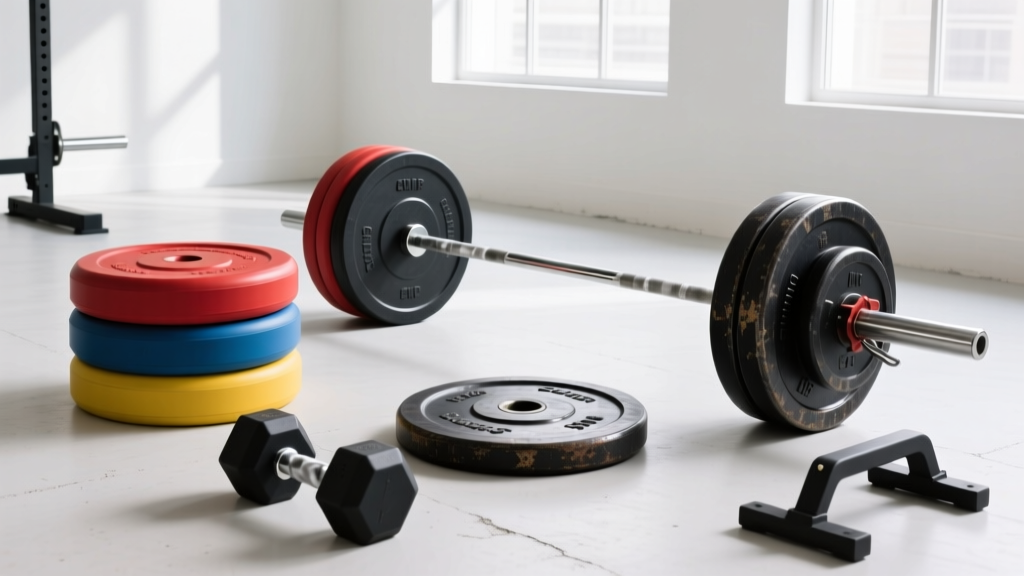
Bumper vs Iron Plates: Budgeting for Deadlifts & Dumbbell Pull Overs
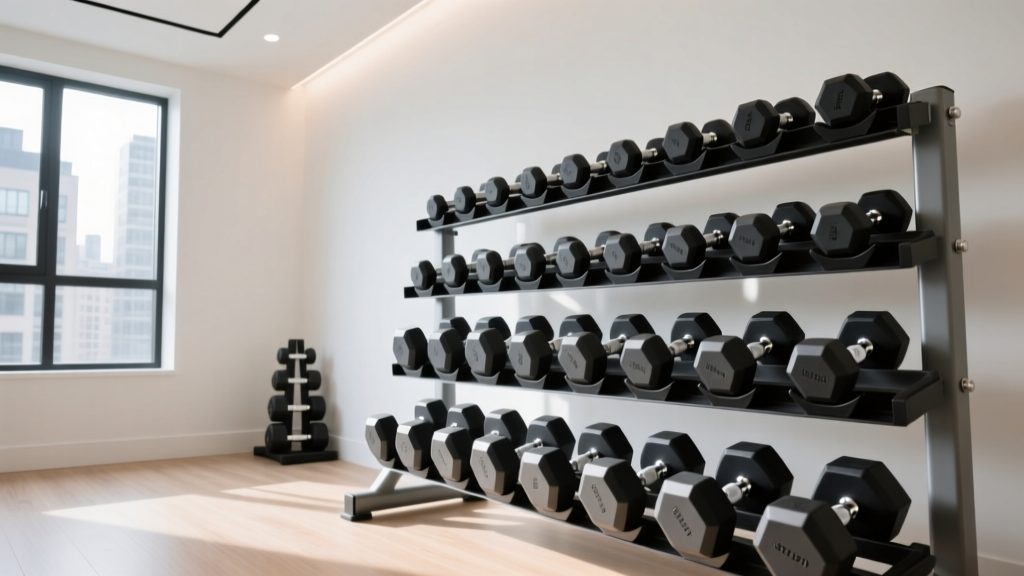
2026 Market Trends: Storage Racks for Dumbbell Rows for Beginners

Best Layouts for Cold Climates: Engineering Thermal Efficiency, Airflow, and Occupant Comfort

Beyond the Dumbbells PNG: Troubleshooting Neoprene Dumbbells
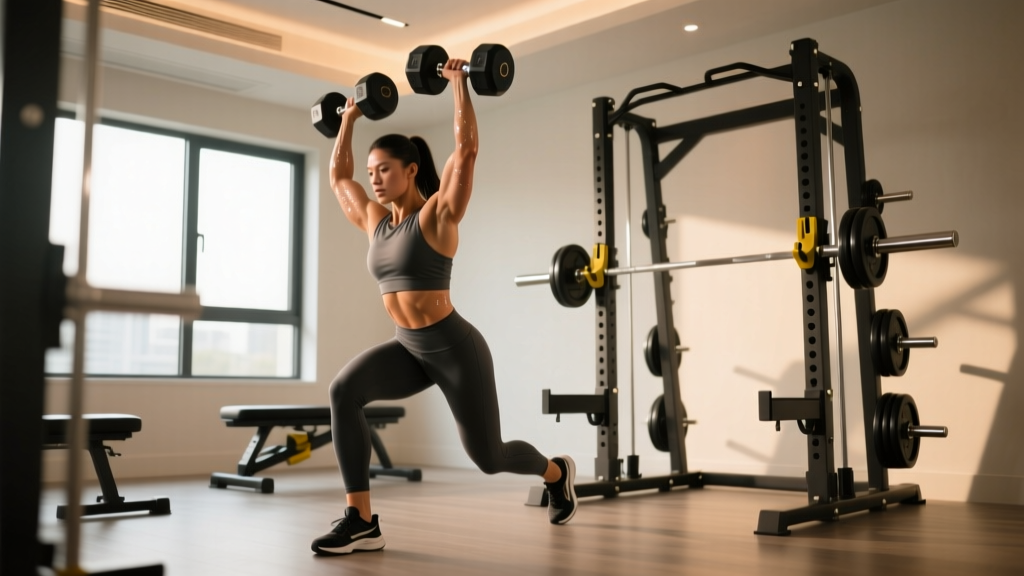
Dumbbell Shoulder to Overhead CrossFit: Power vs Squat Rack vs Stand
