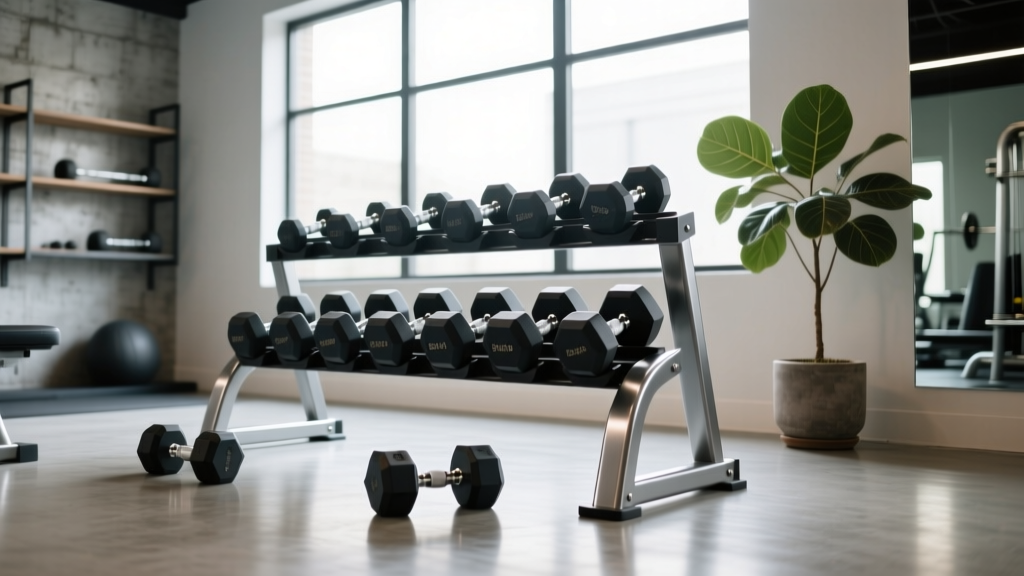
Dumbbell Rack Care: Prep for Good Exercises for Triceps with Dumbbells
Learn essential dumbbell rack maintenance and storage tips to ensure a safe, stable setup for good exercises for triceps with dumbbells and heavy lifts.

The Hidden Risks of Poor Dumbbell Storage
When building a comprehensive home or commercial gym, the focus often lands squarely on the weights themselves, while the storage infrastructure is treated as an afterthought. However, a poorly maintained dumbbell rack is not just an organizational nuisance; it is a significant safety hazard. This is especially true when you are setting up for isolation movements that require awkward retrieval angles. To safely execute good exercises for triceps with dumbbells—such as lying skull crushers, Tate presses, or heavy seated overhead extensions—you must reach backward or overhead to extract weights from specific tiers. If a rack tier is sagging, sticky, or structurally compromised, a 40-pound hex dumbbell can easily slip, leading to severe joint or facial injuries.
In 2026, with home gym setups becoming more permanent and equipment investments rising, proactive rack maintenance is critical. According to facility management guidelines highlighted by the American Council on Exercise (ACE), ensuring structural integrity and clear clearance zones around storage equipment is a foundational pillar of gym safety. Let us dive into the exact maintenance protocols required to keep your dumbbell rack in peak condition.
Step-by-Step Dumbbell Rack Maintenance Protocol
Routine maintenance extends the lifespan of your rack and prevents catastrophic failure modes. Follow this quarterly protocol to ensure your storage solution remains rock-solid.
1. Bolt Torquing and Hardware Inspection
Vibrations from dropping heavy hex dumbbells onto adjacent flooring or the rack itself gradually loosen carriage bolts. Most 3-tier racks utilize 3/8-inch Grade 5 hardware.
- Target Torque: Use a torque wrench set to 30-35 ft-lbs. Over-tightening beyond 40 ft-lbs can strip the threads on imported, budget-friendly racks, compromising the joint entirely.
- Threadlocker Application: If you notice bolts loosening every few weeks, apply a single drop of Blue Loctite (Threadlocker 242) to the threads before re-torquing. Avoid Red Loctite, as it makes future disassembly nearly impossible without a blowtorch.
2. Tier Surface Cleaning and Degreasing
Hand oils, chalk dust, and sweat accumulate on rack tiers, creating a slippery surface that causes dumbbells to slide when placed on an incline.
- Remove all dumbbells from the rack.
- Wipe down the tiers using a microfiber cloth dampened with a 70% isopropyl alcohol solution. This cuts through grease without degrading powder-coated steel or rubberized shelf liners.
- Avoid bleach or ammonia-based cleaners, which can cause micro-fissures in PVC shelf pads and accelerate the oxidation of raw steel edges.
3. Weld and Joint Stress Testing
Inspect the gussets where the tier shelves meet the vertical uprights. Look for 'shadow lines' or hairline cracks in the powder coat, which indicate underlying weld fatigue. If you spot rust weeping from a weld seam, the structural integrity is already compromised, and the rack should be retired or professionally re-welded.
⚠️ CRITICAL WARNING: Plasticizer MigrationIf you are storing cheap, recycled rubber dumbbells on PVC or plastic-lined rack tiers, you may encounter 'plasticizer migration.' The oils in low-grade rubber leach into the plastic shelves, causing the dumbbells to literally fuse to the rack over 6 to 12 months. When you attempt to pull a dumbbell for a triceps extension, the sudden release of tension upon breaking the bond can cause you to drop the weight. Always use Urethane (PU) dumbbells on plastic-lined racks, or stick to bare steel/wood tiers for rubber-coated weights.
Material Compatibility: Dumbbell Coatings vs. Rack Tiers
Understanding how your dumbbell coating interacts with your rack's shelf material is vital for long-term longevity. The table below outlines the most common pairings and their maintenance requirements.
| Dumbbell Coating | Ideal Rack Tier Material | Maintenance / Degradation Risk | Expected Lifespan Impact |
|---|---|---|---|
| Virgin Urethane (PU) | Steel, PVC, Wood | Extremely low. Resists oils and UV degradation. | 10+ Years |
| Recycled Rubber | Bare Steel, Wood | High. Off-gasses, degrades PVC, leaves black scuff marks. | 3-5 Years (Shelf liner replacement needed) |
| Neoprene / Vinyl | PVC, Foam-lined Steel | Medium. Can tear if dragged across rough steel welds. | 5-7 Years |
| Chrome / Bare Steel | Wood, UHMW Plastic | Low. Requires regular oiling of the dumbbell to prevent rust. | 15+ Years |
Optimizing Rack Layout for Triceps and Isolation Work
How you arrange your dumbbells on the rack directly impacts your safety during specific lifts. When preparing for good exercises for triceps with dumbbells, your retrieval mechanics are vastly different from a standard bicep curl or chest press.
The 'Overhead Reach' Zone
For movements like the seated overhead triceps extension or the lying dumbbell pullover, you are often reaching backward or overhead while your spine is supported on a bench. Storage Rule: Never store dumbbells heavier than 25 lbs on the top tier of an A-frame or vertical rack if your bench is positioned directly in front of it. A 40 lb dumbbell slipping from the top tier (usually 40-48 inches off the ground) poses a severe crush risk to your head or cervical spine. Keep the top tier reserved for 5 lb to 20 lb neoprene or urethane pairs used for high-rep kickbacks.
The 'Bench-Adjacent' Zone
For skull crushers and Tate presses, you typically grab the weights from a seated position before lying back. Storage Rule: Position your bench parallel to the middle tier (housing 25 lb to 40 lb dumbbells). Ensure there is a minimum of 18 inches of lateral clearance between the edge of the rack and your bench. This allows you to pick up the dumbbells, rest them on your knees, and safely roll back into position without your elbows striking the vertical uprights of the rack.
Top Storage Solutions and Weight Capacities in 2026
Upgrading to a commercial-grade rack eliminates many of the structural sagging issues found in budget models. Below is a comparison of three industry-leading racks currently dominating the market, based on structural integrity and tier spacing.
| Brand & Model | Capacity & Tiers | Shelf Material | Price (2026 Est.) | Best For |
|---|---|---|---|---|
| Rogue A-Frame Rack | 5-50 lbs (3 Tiers) | UHMW Plastic Liners | $395.00 | Urethane dumbbells; tight spaces. |
| Rep Fitness SR-4000 | 5-100 lbs (3 Tiers) | Heavy-Duty Steel w/ Rubber Mats | $299.00 | Heavy hex rubber dumbbells. |
| Titan 3-Tier Rack | 15-50 lbs (3 Tiers) | Bare Formed Steel | $249.00 | Budget setups; chrome/steel weights. |
Note: Always verify the exact weight capacity per tier. As noted in the Rogue Fitness A-Frame specifications, exceeding the 50 lb per pair limit on the top tier alters the center of gravity, creating a tip-over hazard.
Troubleshooting Common Rack Failure Modes
Even high-end racks require troubleshooting over time. Here is how to address the most frequent issues reported by home gym owners.
Issue 1: Tier Sagging on the Bottom Row
Cause: The bottom tier bears the brunt of heavy 40-50 lb hex dumbbells being dropped or rolled onto the edge, rather than placed flat. Over time, this causes the steel lip to bend downward by 5 to 10 degrees.
Fix: Remove the tier (if bolted) and use a hydraulic press or a heavy-duty bench vise to bend it back to a true 90-degree angle. If welded, reinforce the underside with a 1-inch steel angle iron bracket, secured via self-tapping metal screws or a quick MIG weld.
Issue 2: Dumbbells Rolling Off Incline Racks
Cause: Uneven flooring or degraded rubber feet causing the rack to lean forward.
Fix: Do not rely on the rack's leveling feet alone. Purchase a set of 1/4-inch thick horse stall mats and cut them into 2x2 inch squares to shim the back legs of the rack, creating a deliberate 2-degree backward tilt. This gravity-assist keeps hex and round dumbbells securely seated against the backstop.
Issue 3: Squeaking and Metal-on-Metal Grinding
Cause: The rack's cross-braces are rubbing against the main uprights due to loose tolerances in budget manufacturing.
Fix: Apply a dry PTFE (Teflon) lubricant to the joints. Avoid WD-40 or wet silicone sprays, as they will attract gym chalk dust and create an abrasive paste that accelerates wear.
Frequently Asked Questions (FAQ)
How often should I clean my dumbbell rack?
For a home gym used by 1-2 people, a thorough wipe-down with isopropyl alcohol every 3 months is sufficient. In a commercial setting, tiers should be wiped nightly to prevent sweat-induced corrosion on the steel welds.
Can I store kettlebells on a standard dumbbell rack?
It is not recommended. Kettlebells have a concentrated, uneven center of mass and a rounded base. Placing them on flat dumbbell tiers creates a severe rolling hazard. Always use dedicated kettlebell racks with angled, lipped shelves. Proper equipment storage is just as important as following expert advice on general gym equipment maintenance to ensure a safe training environment.
Is an A-frame rack safer than a horizontal 3-tier rack for triceps exercises?
For isolation movements, a horizontal 3-tier rack is generally safer. A-frames require you to stand directly in front of the rack and pull weights toward your body, which can strain the lower back if grabbing heavy pairs from the bottom tier. Horizontal racks allow you to approach from the side, maintaining a neutral spine while retrieving weights for your bench or mat work.
More gear to consider
All reviews
Olympic vs Standard Plates: Head-to-Head (Beyond Dumbbell Curls GIF)
Bumper vs Iron Plates: Setup for Squats & Sitting Dumbbell Curls

Budget Dumbbell Racks for Bench Press and Dumbbell Press Setups

How to Hit Triceps With Dumbbells & Barbell Knurling Buying Mistakes

Dumbbells vs Barbells: Rubber Hex vs Urethane Dumbbell Care
