Budget Dumbbell Racks: Optimize Your Dumbbell Static Lunge Flow
Discover the best budget dumbbell racks in 2026. We analyze storage value, safety, and how the right setup optimizes your dumbbell static lunge routine.

The Intersection of Storage, Budget, and Biomechanics
When building a home gym, the dumbbell rack is often an afterthought—a place to dump weights after the real work is done. But if your programming relies heavily on unilateral lower-body movements, your storage solution directly impacts your training efficacy and safety. Consider the dumbbell static lunge (often interchangeably programmed as a split squat). Unlike walking lunges, the static lunge requires you to establish a fixed, staggered stance before initiating the descent. Picking up 50-pound hex bells from the floor while in a split stance introduces massive asymmetric shear force on the lumbar spine, specifically the L4-L5 vertebrae.
A properly height-graded dumbbell rack eliminates this hazard, allowing you to hinge neutrally, grab the implements, and step back into your lunge stance. However, with 2026 steel tariffs and shipping costs pushing fitness equipment prices higher, budget-conscious lifters must be strategic. This guide breaks down the value analysis of budget dumbbell racks, evaluating how different storage tiers impact your workout flow, floor space, and long-term equipment longevity.
The Biomechanical Argument for Proper Rack Height
Before analyzing specific budgets, we must establish why rack geometry matters for exercises like the dumbbell static lunge. According to exercise biomechanics databases like ExRx.net, the lunge requires significant core stabilization to prevent the torso from rotating under load. If your dumbbells are stored on the ground or on a poorly designed, knee-level rack, you are forced to round your lower back to retrieve them.
⚠️ Safety Callout: The Staggered Lift Hazard
Never pick up heavy dumbbells from the floor while already in a split-stance lunge position. The rotational torque applied to the pelvis and lower back can lead to acute sacroiliac (SI) joint strain. Always retrieve weights with a bilateral, hip-hinged deadlift motion, then step into your static lunge stance. A 3-tier rack facilitates this safe retrieval pattern.
For optimal flow, the middle tier of your rack should sit between 24 and 28 inches off the ground. This allows a slight hip hinge to grab 30lb to 60lb dumbbells—the most common weight ranges for intermediate lifters performing static lunges—without compromising spinal neutrality.
Tier 1: The A-Frame Compromise ($120 - $180)
The A-Frame rack is the undisputed king of budget home gyms. Models like the CAP Barbell A-Frame or the Rogue A-Frame Dumbbell Rack (which sits at the very top of this budget tier) offer a vertical storage solution that minimizes floor footprint.
Pros and Cons for the Unilateral Lifter
- Pro: Footprint is exceptionally small, usually around 29" x 29", leaving maximum floor space for the actual execution of the dumbbell static lunge.
- Pro: Keeps weights off the floor, protecting rubberized hex coatings from degrading against concrete.
- Con: Dynamic Tipping Hazard. When you aggressively pull a 50lb dumbbell from the top peg, the center of gravity shifts. Cheaper A-frames with narrow bases can tip forward if not bolted down or loaded symmetrically.
- Con: Tray depth is often limited to 14 inches, which struggles to hold modern, oversized 100lb+ urethane hex dumbbells securely.
Value Verdict: If your static lunge routine maxes out at 40lb dumbbells per hand, an A-frame is a high-value, space-saving investment. If you are pushing 60lbs+, the tipping risk degrades the value proposition significantly.
Tier 2: The 3-Tier Horizontal Sweet Spot ($250 - $450)
The horizontal 3-tier rack is the gold standard for serious home gyms. It mimics commercial gym layouts, grading weights from lightest on top to heaviest on the bottom. This tier represents the best amortization of cost versus safety and utility.
| Model (2026 Market) | Approx. Price | Footprint | Max Capacity | Best For |
|---|---|---|---|---|
| Rep Fitness SR-4000 (3-Tier) | $349 | 44" W x 28" D | 1,000+ lbs | Heavy lunges, 5-100lb sets |
| Titan Fitness 3-Tier Rack | $279 | 43" W x 26" D | 800 lbs | Budget-conscious heavy lifters |
| BCC 3-Tier Dumbbell Rack | $429 | 48" W x 30" D | 1,200 lbs | Commercial-grade home setups |
As highlighted in comprehensive equipment analyses by Garage Gym Reviews, the 3-tier design allows you to remove the top tier if you only own heavier dumbbells. This creates an open shelf at waist height, perfectly positioning your 50s and 60s for rapid grab-and-go transitions during supersets or drop-sets on the static lunge.
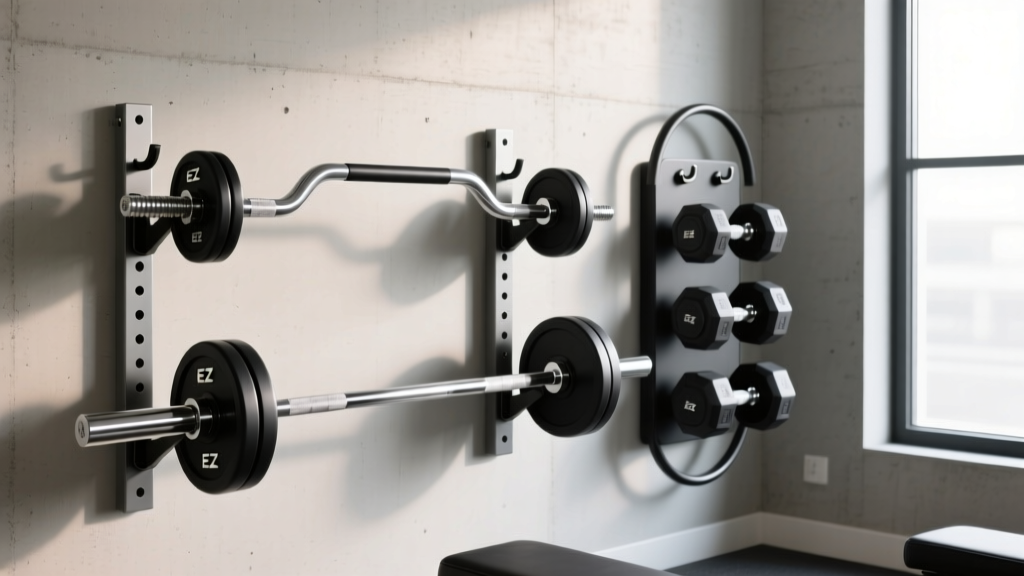
Tier 3: Vertical & Wall-Mounted Alternatives ($150 - $300)
For garage gyms where floor space is at an absolute premium—perhaps you are sharing the space with a vehicle or a woodworking bench—vertical dumbbell storage pegs or wall-mounted cradles are the alternative.
While they save square footage, they fail the "flow test" for the dumbbell static lunge. Pulling a 40lb dumbbell horizontally off a wall peg requires immense grip strength and shoulder stabilization before you even begin your lower-body warm-up. Furthermore, wall-mounted solutions require drilling into load-bearing studs; drywall anchors will inevitably fail under the dynamic load of racking and un-racking heavy iron.
Hidden Costs: Where Budget Racks Fail
When conducting a value analysis, the initial purchase price is only one metric. You must account for the failure modes of budget equipment over a 5-to-10-year lifespan.
- Weld Degradation: Sub-$150 racks often use spot-welding rather than continuous MIG welds. The repetitive impact of dropping rubber hex dumbbells onto the tray can cause micro-fractures in the welds, eventually leading to tray collapse.
- Floor Damage: Budget racks frequently omit rubberized foot pads, or use cheap PVC that flattens out within months. A 500lb rack sitting on bare steel feet will grind into your epoxy garage floor or scratch hardwood, costing hundreds in repairs.
- Tray Depth Incompatibility: Many budget racks are designed for older, narrower cast-iron dumbbells. Modern urethane and thick-rubber hex dumbbells (like those from Yes4All or Rogue) have wider heads. If the tray depth is under 16 inches, the dumbbells will overhang, creating a rollover hazard when you bump the rack mid-workout.
Value Analysis: Calculating Cost-Per-Workout
Let us apply a practical decision framework to justify the expenditure. Assume you train lower body twice a week, utilizing the dumbbell static lunge as a primary accessory movement. That is roughly 100 workouts a year.
- The $130 A-Frame: Over 5 years (500 workouts), the cost is $0.26 per workout. However, if it tips and damages your floor or causes a minor strain due to awkward retrieval, the ROI plummets.
- The $349 Rep Fitness 3-Tier: Over 5 years, the cost is $0.69 per workout. You gain commercial-grade stability, ergonomic weight retrieval, and zero risk of tipping during heavy static lunge setups.
The delta is less than 50 cents per session. For lifters prioritizing progressive overload and spinal health, the 3-tier horizontal rack offers vastly superior long-term value.
Final Verdict: Allocating Your Budget
If your budget is strictly capped under $200, purchase a heavy-duty A-Frame, but you must bolt it to the floor or wall to mitigate tipping risks during heavy unilateral lifts. Always prioritize a neutral-spine hinge when retrieving weights, as advised by safety guidelines from institutions like the Cleveland Clinic.
However, if you can stretch your equipment budget to the $300–$400 range, a 3-tier horizontal rack is non-negotiable for serious home gyms. It transforms the dumbbell static lunge from a clumsy, lower-back-risking chore into a seamless, highly effective unilateral strength builder. Invest in the geometry that protects your spine, and let the rack do the heavy lifting before you even start your set.
More gear to consider
All reviews
Best Adjustable Dumbbells for a One Dumbbell Workout 2026

Decline Dumbbell Press Alternative: Picking the Right Rack

Budget Dumbbell Racks for the Ultimate Arm Workout Using Dumbbells
Power Rack vs Squat Rack vs Stand: Incline Dumbbell Tricep Extension
Optimizing Space for Double Dumbbell Squats: Rubber vs Urethane