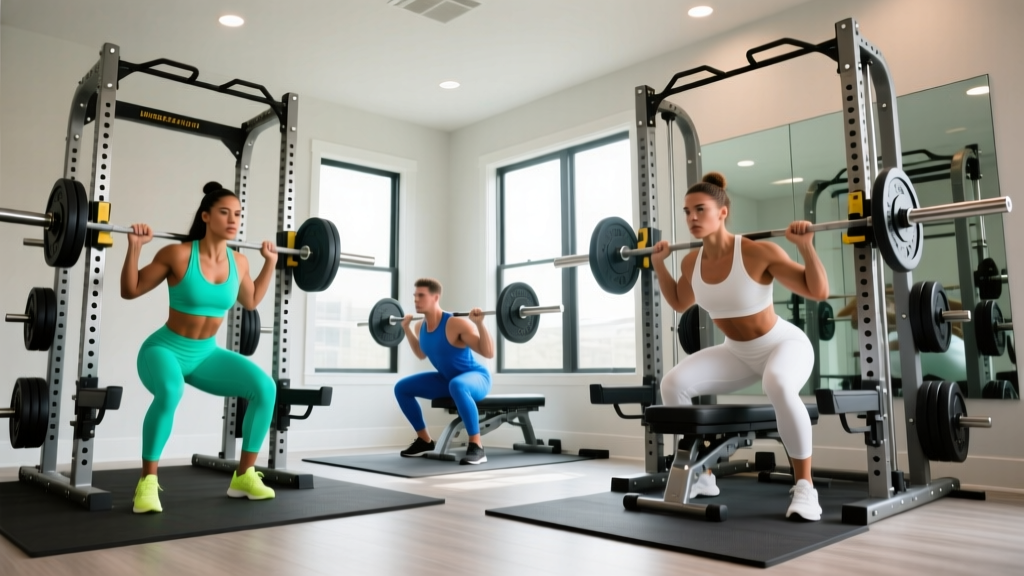
Dumbbell Walking Lunges Alternative: Power Rack vs Squat Rack vs Stand
Seeking a dumbbell walking lunges alternative? We compare power racks, squat racks, and squat stands to find the safest rig for heavy unilateral leg work.

The Grip-Force Bottleneck: Why You Need a Lunge Alternative
Dumbbell walking lunges are a staple for unilateral leg development, but they suffer from a critical limiting factor: grip strength. For advanced lifters in 2026, holding a pair of 100lb+ dumbbells for a 20-yard walking set often results in forearm and trap fatigue long before the quadriceps and glutes reach true mechanical failure. If you are actively searching for a dumbbell walking lunges alternative, the solution lies in axial loading—shifting the weight to your back or shoulders using a barbell or specialized safety bar.
However, transitioning from free-roaming dumbbells to heavy barbell lunges and split squats introduces a massive safety variable: unilateral drift. When you perform a Bulgarian split squat or a reverse lunge with 275lbs on your back, your center of mass shifts laterally and vertically. If you lose your balance, you don't just drop the weight; you fall forward or backward with a loaded barbell trapping you. This reality makes your choice of enclosure—specifically a power rack vs squat rack vs squat stand—the most important decision for your home gym's longevity and your spinal safety.
The Enclosure Dilemma: Unilateral Drift vs. Rack Geometry
Not all racks are built to handle the unpredictable bar path of a lunge alternative. To understand which rig fits your needs, we must break down the geometry of the three primary rack categories and how they interact with dynamic leg movements.
1. The Power Rack (Full Cage)
A true power rack features four uprights and a fully enclosed cage, typically with a depth of 40 to 48 inches. Models like the Rep Fitness PR-4000 or Rogue RM-6 Monster provide a massive 'drift zone.' If you stumble backward during a Safety Squat Bar (SSB) reverse lunge, the cage's pin-pipe safeties are positioned to catch the bar before your trailing knee slams into the floor. The 3x3-inch, 11-gauge steel footprint ensures the rack won't tip, even if you crash into the uprights.
2. The Squat Rack (Open-Front 4-Post)
Squat racks, such as the Titan T-2 Short or Rogue SML-2C, feature four uprights but an open front, usually sitting at 24 inches deep. They are excellent for static movements like the barbell front-rack split squat, where your feet remain planted. However, they lack the overhead and side-to-side crossmembers of a full cage, meaning a severe lateral stumble could result in the barbell sliding off the safety straps.
3. The Squat Stand (2-Post)
Squat stands like the Rogue S-2 or Fitness Reality 810XLT are minimalist, two-post setups. They are inherently dangerous for dynamic lunge alternatives. Unless heavily bolted into a concrete slab and paired with massive spotter arms, a forward stumble during a heavy walking lunge will pull the entire stand down onto your neck.
⚠️ Critical Safety Warning: Never perform dynamic reverse or walking lunges inside an unbolted 2-post squat stand. The forward momentum of a failed rep generates enough kinetic energy to tip a 150lb stand forward, bypassing the spotter arms entirely. Stick to static split squats if a stand is your only option.Head-to-Head Comparison Matrix
| Feature | Power Rack (43"+ Depth) | Squat Rack (24" Depth) | Squat Stand (2-Post) |
|---|---|---|---|
| Best Lunge Alternative | SSB Reverse Lunge, Walking Lunge | Bulgarian Split Squat, Static Lunge | Deficit Split Squat (Static Only) |
| Safety Catcher Type | Pin-Pipe or Sandwich J-Cup/Straps | Safety Straps (Required) | Extended Spotter Arms |
| Unilateral Drift Tolerance | High (Cage protects all angles) | Medium (Open front is vulnerable) | Low (High tip-over risk) |
| Avg. 2026 Price Range | $650 - $1,400+ | $400 - $750 | $250 - $450 |
Rigging the Top 3 Dumbbell Walking Lunges Alternatives
According to ExRx.net's biomechanical breakdown of the split squat, unilateral movements require precise hip and knee flexion tracking. To replicate the hypertrophy of walking lunges without the grip bottleneck, here is how to rig the best alternatives based on your rack type.
1. Safety Squat Bar (SSB) Reverse Lunge (Requires Power Rack)
The SSB reverse lunge is the undisputed king of lunge alternatives. The camber of the bar and the front-facing handles completely remove grip and shoulder mobility from the equation, allowing you to load the quads and glutes maximally. However, the SSB shifts your center of gravity forward, and during a deep reverse lunge, the barbell sleeves often drift backward toward the rear uprights.
- The Setup: Use a full-depth power rack (minimum 40 inches). Set pin-pipe safeties one hole below your lowest kneeling depth.
- Pro-Tip: Wrap the SSB sleeves in pool noodles or thick rubber collars to prevent them from screeching against the powder-coated rear uprights when you drift backward at the bottom of the lunge.
2. Barbell Front-Rack Bulgarian Split Squat (Squat Rack Friendly)
If you only have a 24-inch deep squat rack, dynamic walking lunges are out, but the Bulgarian split squat is in. By placing the weight in the front rack position, you enforce an upright torso, which heavily biases the quadriceps of the lead leg. As noted in BarBend's comprehensive guide to specialized barbell training, altering the load placement drastically changes the muscular recruitment pattern, making front-rack split squats a phenomenal substitute for dumbbell lunges.
- The Setup: Use a squat rack with safety straps, not metal pin-pipes. If you fail a front-rack split squat, you will dump the bar forward. Straps will catch the barbell smoothly; metal pipes will cause the bar to bounce, potentially damaging your knurling or your collarbones.
- Hole Spacing Matters: Look for a rack with 'Westside' hole spacing (1-inch increments in the bench press zone). This allows you to set the J-cups exactly at shoulder height so you don't have to perform a micro-squat just to unrack the bar before your split stance is set.
3. Deficit Reverse Lunge (The Squat Stand Compromise)
If you are restricted to a 2-post squat stand due to space or budget, you must abandon dynamic movement. The deficit reverse lunge is your best alternative. By standing on a 45lb bumper plate, you increase the range of motion, forcing the trailing leg into deep hip flexion and the lead leg into maximum stretch-mediated hypertrophy.
- The Setup: Bolt the stand to a plywood platform or concrete. Extend the spotter arms fully and place a wooden block or extra plate under the front feet of the stand to counterbalance forward weight distribution.
- Execution: Step back onto the floor from the bumper plate. Do not walk. Reset your feet completely between every single rep to ensure zero lateral sway.
2026 Buying Framework: Footprint vs. Safety Tolerances
When selecting your rig specifically for unilateral leg day, consider the following decision matrix:
- Ceiling Height & Depth: If you have an 84-inch ceiling and a 4x8 foot mat space, buy a 4-post squat rack (e.g., Titan T-2 Power Rack). It gives you the stability of 4 uprights for split squats without the claustrophobia of a 48-inch deep cage.
- Upright Profile: Prioritize 3x3-inch uprights with 5/8-inch hardware over 2x2 or 2x3 profiles. The sheer torque generated when a 200lb athlete stumbles laterally inside a rack requires the shear strength of 11-gauge 3x3 steel to prevent joint warping over time.
- J-Cup Liners: Ensure your rack comes with UHMW plastic-lined J-cups. When performing heavy split squats, reracking the bar while your legs are shaking often results in slamming the bar into the cups. Bare metal cups will strip your barbell's zinc or chrome finish instantly.
FAQ: Unilateral Leg Training in Home Gyms
Can I use a Smith Machine as a dumbbell walking lunge alternative?
A Smith machine enforces a fixed vertical bar path, which is highly restrictive for lunges. Because your hips naturally shift forward and backward during a lunge, a Smith machine forces your joints into an unnatural track, increasing shear force on the knee. A free-weight setup inside a power rack with safety straps remains vastly superior for joint health and stabilizer recruitment.
How do I prevent my barbell from rolling off the safety straps during a split squat?
Always use flat safety straps (made of heavy-duty nylon or Dyneema) rather than roller safeties or round pin-pipes. Flat straps conform to the knurling of the barbell, creating immense friction that stops the bar from rolling forward if you dump it during a failed Bulgarian split squat.
Are lunges better than split squats for home gym hypertrophy?
Walking lunges require significant floor space and carry a high risk of tracking the knee inward (valgus collapse) as fatigue sets in. The static Bulgarian split squat, performed inside the safety of a squat rack, allows you to push to absolute mechanical failure safely, making it the superior hypertrophy driver for most garage gym athletes.
More gear to consider
All reviews
Setup Guide: Neoprene Dumbbell for Arms Exercise at Home

Olympic vs Standard Plates: Guide & Leg Workout Using Dumbbells

Olympic vs Standard Plates for High Pulls with Dumbbells

Upgrading From Wood Dumbbells: Olympic Barbell Knurling Mistakes

Best Adjustable Dumbbells for the 1 Arm Dumbbell Snatch (2026)
