Dumbbell Good Morning Exercise: Rack Storage & Longevity Tips
Discover how proper dumbbell rack storage protects your gear during the dumbbell good morning exercise. Expert maintenance tips for home gyms.

The Hidden Cost of the Hinge: Why Storage and Maintenance Matter
When outfitting a home or commercial gym, most lifters obsess over the quality of their free weights but treat storage as an afterthought. However, the way you store, load, and unload your equipment directly dictates its lifespan. This is especially true when incorporating heavy, deep-hinge movements into your programming. The dumbbell good morning exercise is a phenomenal posterior chain builder, targeting the hamstrings, glutes, and erector spinae with a unique stretch-mediated stimulus. Yet, the setup and teardown phases of this specific lift are notorious for accelerating equipment degradation.
Unlike a standard bicep curl or shoulder press where weights are returned to a rack at waist or chest height, the dumbbell good morning exercise requires you to hinge deeply at the hips. At the bottom of the movement, or immediately upon finishing a grueling set, lifters are often fatigued and prone to dropping heavy hex or urethane dumbbells from a height of 20 to 30 inches. This repeated kinetic impact doesn't just damage your flooring; it causes micro-fractures in cast iron cores, degrades urethane coatings, and places immense shear stress on the welds of your storage rack. In this comprehensive 2026 guide, we break down how to select the right dumbbell rack, maintain your free weights, and protect your investment from the unique wear-and-tear of heavy hinge movements.
The Biomechanics of Gear Destruction
To understand why storage solutions matter, we must look at the physics of the lift. According to the American Council on Exercise (ACE), hinge movements require significant core stabilization and a deep hip fold. When holding a pair of 50-pound dumbbells for a good morning, you are managing 100 pounds of external load. If you drop these dumbbells from a 24-inch height onto a hard surface or improperly onto a flat rack shelf, the impact force can exceed 250 pounds of localized pressure on the dumbbell's leading edge.
This repetitive shock leads to several specific failure modes:
- Urethane Delamination: High-density urethane can bubble or separate from the steel core if subjected to repeated high-impact drops.
- Handle Bending: Chrome-plated steel handles, particularly those on cheaper commercial-grade dumbbells, can develop a microscopic bow, causing them to roll off flat storage tiers.
- Rack Weld Fatigue: The gussets supporting the bottom tier of a dumbbell rack absorb the brunt of the vibration when heavy weights are hastily placed down post-set.
⚠️ Warning: The Roll-Away Hazard
Round-head dumbbells should never be used for the dumbbell good morning exercise unless stored in a specialized cradle rack. Placing round dumbbells on the floor or a flat rack tier post-set creates a severe rolling hazard, potentially leading to ankle injuries or crushed toes.
Tiered Rack Selection for Heavy Hinge Movements
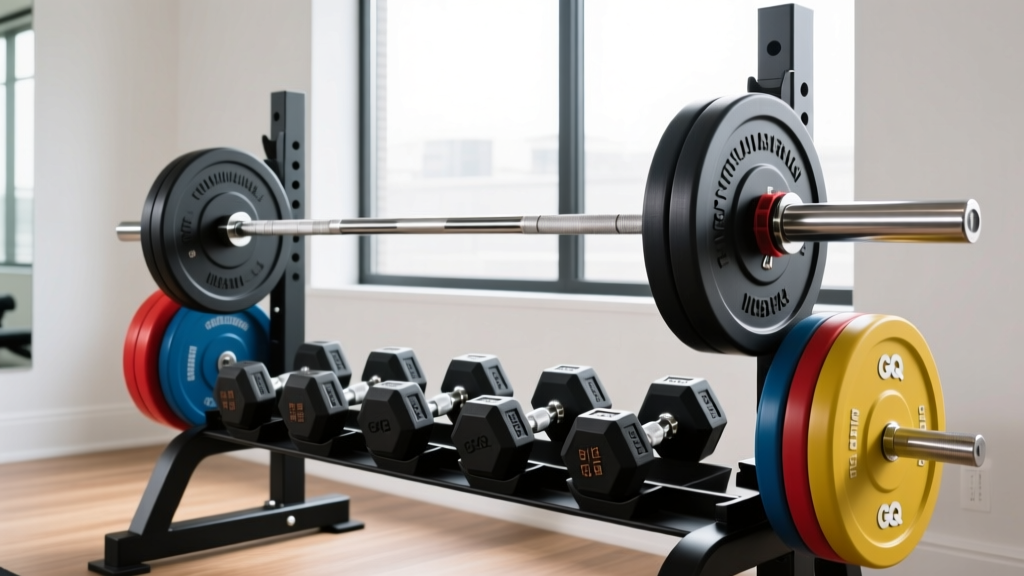
Choosing the right rack is your first line of defense in equipment longevity. For lifters regularly performing heavy hinge variations, a 3-tier rack with a sloped bottom shelf or specialized landing pads is essential. The slope allows you to guide the dumbbells down safely using your legs, rather than dropping them flat.
| Rack Model (2026 Market) | Steel Gauge & Build | Max Capacity | Hinge-Pickup Ergonomics | Est. Price |
|---|---|---|---|---|
| Rogue Fitness 3-Tier Dumbbell Rack | 11-Gauge Steel, UHMW Plastic Pads | 1,200+ lbs | Excellent (Sloped lower tier reduces bending) | $395.00 |
| Rep Fitness 3-Tier Rack | 10-Gauge Steel, Rubber Mats | 1,000 lbs | Good (Flat tiers require careful placement) | $249.99 |
| Titan Fitness A-Frame Stand | 12-Gauge Steel, Compact Footprint | 600 lbs | Poor (Requires deep squat to retrieve heavy weights) | $199.99 |
As highlighted by Rogue Fitness equipment specifications, the inclusion of UHMW (Ultra-High Molecular Weight) plastic pads on premium racks isn't just for noise reduction; it acts as a crucial shock absorber that dissipates kinetic energy, protecting both the dumbbell heads and the rack's structural welds.
Material-Specific Storage & Maintenance Protocols
The longevity of your free weights depends heavily on their material composition and how they interact with your storage environment. Here is how to maintain the three most common dumbbell types found in home gyms.
1. Urethane Dumbbells (Premium Commercial Grade)
Urethane is highly resistant to scratching and odor, but it is vulnerable to UV degradation and extreme temperature fluctuations. If your gym is in a garage with large windows, direct sunlight will cause the urethane to chalk, fade, and eventually become brittle. Maintenance Tip: Wipe down handles with a microfiber cloth after use to remove sweat salts, which can corrode the chrome handle where it meets the urethane head. Never use bleach-based cleaners on urethane; use a mild dish soap and water solution.
2. Rubber-Coated Dumbbells (Budget/Mid-Range)
Virgin rubber is prone to off-gassing and can degrade into a sticky, tar-like substance if exposed to high heat or ozone. Storage Rule: Ensure your rack is placed in a climate-controlled area or a well-ventilated space that stays below 85°F. If the rubber begins to feel tacky, wipe it down with a 50/50 mix of white vinegar and water to strip the degrading surface oils.
3. Cast Iron Hex Dumbbells (Traditional)
Raw or painted cast iron is virtually indestructible regarding impact, but it is highly susceptible to oxidation (rust). Longevity Hack: Once a month, apply a very light coat of 3-in-One oil or mineral oil to the iron heads, letting it sit for ten minutes before buffing it off with a dry rag. This creates a moisture barrier that prevents rust, especially in humid environments.
Expert Insight: The National Strength and Conditioning Association (NSCA) consistently emphasizes that facility maintenance is a core component of lifter safety. A rusted dumbbell handle loses its knurling integrity, increasing the risk of the weight slipping during a hip hinge like the good morning, which could result in severe lower back or hamstring injury.
Step-by-Step Rack Maintenance Routine
Your dumbbell rack is a static piece of equipment, but it is not maintenance-free. The vibration from racking and unranking heavy weights slowly loosens hardware over time. Implement this 15-minute bi-annual maintenance routine to ensure structural integrity:
- Inspect the Welds: Use a flashlight to examine the gussets where the tier shelves meet the vertical uprights. Look for hairline cracks or paint flaking, which indicate metal fatigue.
- Torque the Hardware: Using a torque wrench, check all M10 or M12 bolts. Most commercial racks require a torque setting between 40-50 Nm (Newton-meters). If your rack uses nylon insert lock nuts, replace them every 3 years as the nylon loses its gripping tension over time.
- Clean the Contact Pads: Remove any rubber or UHMW pads and clean the underlying steel shelf. Sweat and dust accumulate here, trapping moisture against the steel and causing hidden rust spots that compromise the shelf's load-bearing capacity.
- Level the Feet: Adjust the leveling feet on the bottom of the rack. An uneven rack creates a torsion twist in the frame, making one side bear 70% of the load when heavy dumbbells are placed on the top tier.
Frequently Asked Questions (FAQ)
Can I drop dumbbells on the floor after a good morning set?
No. Dropping dumbbells, especially hex or urethane models, from hip height generates enough force to crack the internal cast iron core or shatter the outer coating. Always use a controlled eccentric to lower them to the floor, or better yet, return them to a sloped rack tier using a partial squat.
How much weight can a standard 3-tier rack actually hold?
While many racks advertise a '1,000 lb capacity,' this is usually the static load limit for the entire unit. The top tier is typically rated for lighter weights (up to 50 lbs per dumbbell), while the bottom tier handles the heavy 100+ lb pairs. Always store your heaviest dumbbells on the bottom tier to lower the center of gravity and prevent tipping.
Is an A-Frame rack safe for heavy good morning dumbbells?
A-Frame racks are excellent for saving floor space, but they are ergonomically poor for heavy hinge movements. Retrieving 70 lb dumbbells from the bottom pegs of an A-Frame requires an awkward, twisted squat, which is a recipe for a lumbar strain. Stick to horizontal 3-tier racks for heavy posterior chain training.
Final Thoughts on Gear Longevity
The dumbbell good morning exercise is a staple for building a resilient posterior chain, but it demands respect for the equipment you use. By investing in a high-gauge, ergonomically sloped 3-tier rack, adhering to material-specific cleaning protocols, and performing bi-annual hardware torque checks, you can easily extend the lifespan of your free weights and storage solutions by a decade or more. Treat your gear with the same discipline you apply to your training, and it will support your fitness journey for years to come.
More gear to consider
All reviews
Loadable Dumbbells: Chest Exercises with Dumbbells at Home (2026)

Space-Saving Incline Dumbbell Hex Press: Rubber vs Urethane Hex Bells

How to Get a Good Workout with Dumbbells: Neoprene Guide
EZ Curl Bar vs Straight Bar: Curls & Dumbbell Wood Chop Alternatives
Olympic Barbell Setup: Weight, Knurling & Dumbbell Pull Aparts