
Beyond the Dumbbell Exercise for Women's Arms: Olympic vs Standard Weight Plates
Transitioning from a dumbbell exercise for women's arms to barbell training? Compare Olympic vs standard weight plates, sizes, pricing, and compatibility.

The Evolution of Your Home Gym: From Isolation to Compound Loading
Most home gym setups begin with a focus on targeted isolation. You might start by mastering the perfect dumbbell exercise for women's arms—executing controlled tricep kickbacks, lateral raises, and bicep curls with 10 to 25-pound neoprene or adjustable hex dumbbells. These foundational movements build crucial connective tissue strength and baseline muscle endurance. However, as your neuromuscular adaptation accelerates, you will inevitably hit the progressive overload ceiling of standard adjustable dumbbells, which typically max out at 50 to 90 pounds per hand.
When you are ready to transition to heavy barbell compound lifts like squats, deadlifts, and bench presses, you must invest in a barbell, a power rack, and weight plates. This brings you to a critical hardware crossroads that dictates the future of your training: Olympic vs. Standard weight plates. Choosing the wrong ecosystem in 2026 can result in hundreds of dollars of stranded equipment, compromised safety, and limited strength ceilings. This in-depth buying guide breaks down the metallurgy, dimensions, pricing, and real-world applications of both plate types to ensure your investment scales with your strength.
The Core Divide: 1-Inch vs 2-Inch Hub Anatomy
The fundamental difference between standard and Olympic plates lies in the center hole (the hub) and the corresponding barbell sleeve diameter.
- Standard Plates (1-Inch Hub): Designed for solid steel or basic tubular bars with a 1-inch diameter. These bars lack rotating sleeves and are generally rated for lower weight capacities.
- Olympic Plates (2-Inch Hub): Engineered for Olympic barbells featuring 2-inch diameter rotating sleeves. These bars utilize internal bushings or bearings, allowing the sleeves to spin independently of the shaft during dynamic lifts like cleans and snatches.
Head-to-Head Comparison Matrix
| Feature | Standard Weight Plates | Olympic Weight Plates |
|---|---|---|
| Hub Diameter | 1 Inch (25.4 mm) | 2 Inches (50.4 mm) |
| Barbell Yield Strength | 200 - 300 lbs (Permanent bending) | 700 - 1,500+ lbs (High tensile steel) |
| 45lb Plate Diameter | Varies (Usually 14.5 - 15.5 inches) | 17.7 Inches (450 mm IWF Standard) |
| Average 2026 Cost | $1.00 - $1.50 per lb | $1.50 - $3.50+ per lb |
| Rack Compatibility | 1-Inch Pegs (Light-duty racks) | 2-Inch Pegs (Commercial/Heavy-duty) |
| Drop Tolerance | Very Low (Prone to cracking/bending) | High (Specifically bumpers/urethane) |
Standard Plates: The Budget and Space-Saver Ecosystem
Standard plates are frequently sold in 110 lb to 200 lb kits bundled with a basic 1-inch barbell. Brands like CAP Barbell and Yes4All dominate this space. In 2026, you can expect to pay roughly $1.10 per pound for cast iron standard plates.
The 'Cement-Filled' Trap
When shopping for standard plates, you will encounter ultra-cheap vinyl-coated cement plates priced around $0.60 per pound. Avoid these at all costs. Cement is significantly less dense than cast iron. A 25-pound cement plate can be over 2.5 inches thick, whereas a 25-pound cast iron plate is roughly 1.2 inches thick. Because 1-inch barbell sleeves are notoriously short (often only 6 to 8 inches long), cement plates will physically prevent you from loading enough weight to challenge your lower body. Furthermore, the vinyl shells are prone to splitting and leaking concrete dust onto your gym floor.
When to Buy Standard Plates
Standard plates are only recommended if you are building a lightweight, space-constrained apartment gym strictly for upper-body isolation and light resistance training, and you have zero intention of performing heavy barbell squats or deadlifts. For a comprehensive guide on the limitations of standard setups, refer to Garage Gym Reviews' plate analysis.
Olympic Plates: The Gold Standard for Progressive Overload
If your goal is long-term strength progression, Olympic plates are the only logical investment. The 2-inch hub accommodates high-tensile steel barbells that can safely support 500+ pounds without taking a permanent set (bending). The Olympic ecosystem is divided into three main material categories:
1. Machined Cast Iron
Classic, durable, and compact. Machined iron plates (like the Rogue Machined Iron Plates) have their hubs and faces milled for a precise fit on the barbell sleeve, eliminating the 'rattle' common in cheaper unmachined plates. They cost between $1.75 and $2.25 per pound. The primary failure mode of cast iron is edge chipping if dropped repeatedly on bare concrete.
2. Rubber and Urethane Coated
Urethane is the premium choice for commercial and high-end home gyms. Unlike cheap rubber, which off-gasses a toxic 'tire' smell and degrades under UV light, high-grade urethane (85-90 Shore A durometer) is odorless, scratch-resistant, and highly durable. REP Fitness and Fringe Sport offer premium urethane Olympic plates ranging from $2.50 to $3.50 per pound.
3. Olympic Bumper Plates
According to Rogue Fitness Echo Bumper specifications, true bumper plates feature a standardized 450mm (17.7-inch) diameter across all weights, from 10 lbs to 45 lbs. This uniform diameter ensures that when you drop a barbell from overhead during a clean or snatch, the impact is absorbed by the thick rubber edge of the bumpers, protecting both the barbell sleeves and your lifting platform. Bumpers are essential for Olympic weightlifting and CrossFit-style WODs, though their thickness limits the total weight you can load on a standard 16-inch sleeve (usually capping out around 405 lbs to 495 lbs depending on the plate brand).
⚠️ Expert Warning: The 'Adapter' Trap
Many beginners buy standard 1-inch plates to save money, planning to use cheap plastic or steel '1-inch to 2-inch adapters' on an Olympic barbell later. Do not do this. Adapters introduce severe shear stress and lateral play. During a heavy deadlift or a dynamic clean, the adapter can crack, or the plate can slide off the sleeve entirely, leading to catastrophic barbell imbalance and severe injury. Always match your plate hub directly to your barbell sleeve.
Storage and Rack Compatibility Considerations
Your plate choice dictates your storage and racking hardware. Standard weight trees utilize 1-inch pegs and are generally rated for 300-500 lbs total. Olympic weight trees use 2-inch pegs welded to heavy-duty 11-gauge steel frames, rated for 1,000+ lbs. Furthermore, if you purchase a power rack with standard 1-inch J-cups and safety pins, you will be locked into the 1-inch ecosystem. Upgrading later means selling your rack, bar, and plates at a loss. As highlighted in BarBend's comprehensive equipment guide, buying into the Olympic ecosystem from day one provides an infinitely higher resale value and upgrade path.
Frequently Asked Questions
Can I use Olympic plates on a standard 1-inch barbell?
No. The 2-inch hub of an Olympic plate will not fit onto a 1-inch standard barbell sleeve. The reverse is also true; standard plates will slide loosely and dangerously on an Olympic bar without a specialized (and generally unsafe for heavy loads) adapter.
Why are 10lb Olympic bumper plates so thick and prone to breaking?
To maintain the 450mm IWF-standard diameter, 10lb bumper plates must be very thin. This creates a 'taco effect' where the rubber folds inward upon impact. If you are dropping barbells loaded only with 10lb bumpers, the plates will warp and break quickly. Always pair 10lb bumpers with heavier 25lb or 45lb bumpers on the inside of the sleeve to absorb the primary shock.
How do I transition my arm training when upgrading to Olympic plates?
Once you acquire an Olympic barbell and plates, you can scale up your arm isolation work. Instead of light dumbbell kickbacks, you can utilize the barbell for heavy close-grip bench presses (targeting the triceps with loads exceeding 100 lbs) and barbell skull crushers. The knurling on an Olympic bar also provides superior grip security for heavy reverse curls, accelerating forearm and bicep hypertrophy far beyond what light dumbbells can achieve.
The Final Verdict for 2026
While standard plates have a marginal upfront cost benefit for ultra-lightweight apartment setups, they represent a dead-end for progressive overload. If your fitness journey has evolved past the basic dumbbell exercise for women's arms and you are ready to build genuine, functional strength through compound barbell movements, Olympic plates are the mandatory investment. Start with a high-quality cast iron or virgin rubber bumper set, pair it with a 2-inch Olympic barbell, and secure your equipment on a heavy-duty 2-inch peg weight tree to build a gym that will last a lifetime.
More gear to consider
All reviews
EZ Bar vs Straight Bar Care for Chest and Triceps Dumbbell Workouts
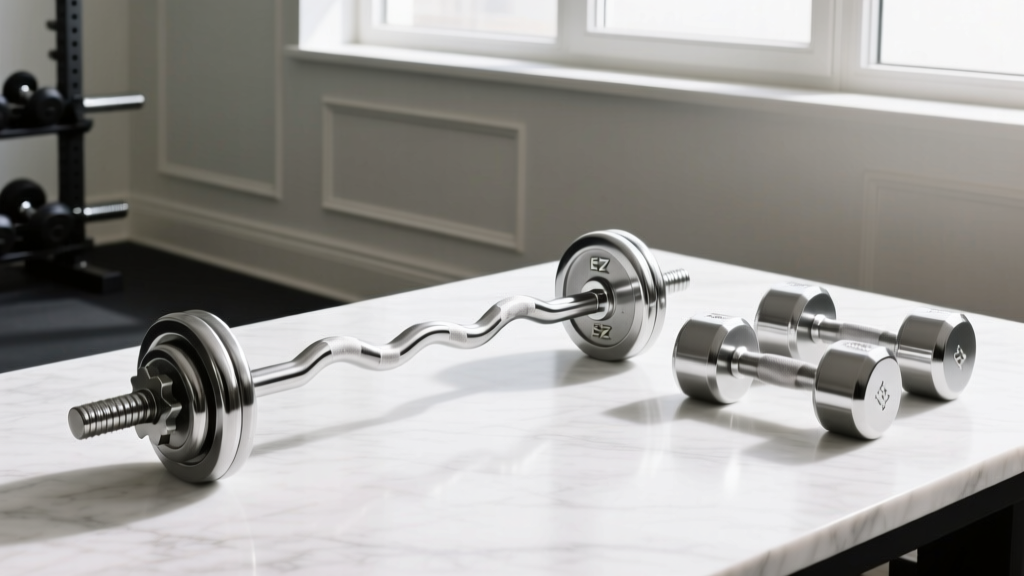
EZ vs Straight Bar: Care for Bench Dumbbells Exercises

Home Gym Setup: Barbell Knurling & Gorilla Rows with Dumbbells
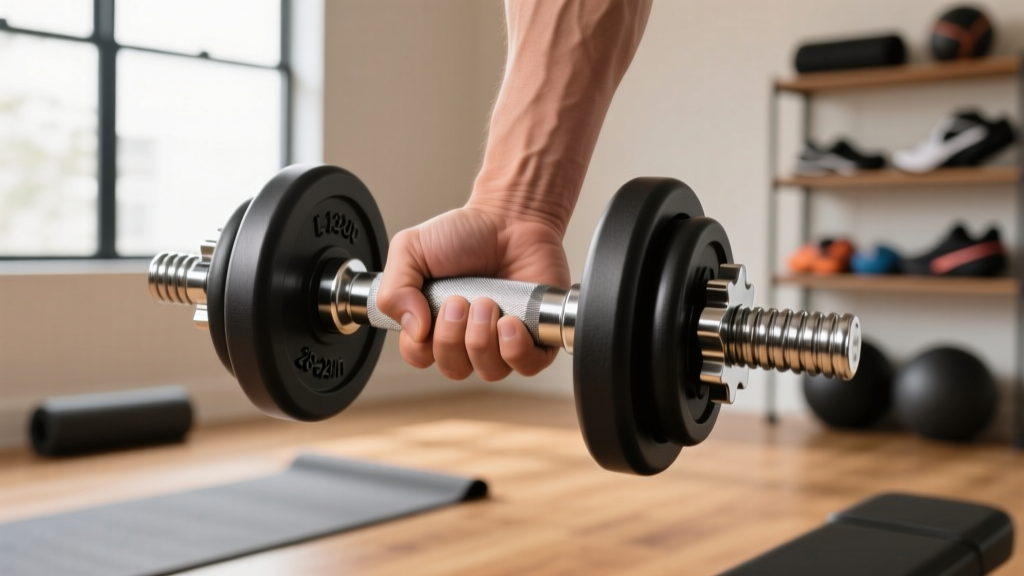
Best Adjustable Dumbbells for Your Wrist Dumbbell Workout (2026)

EZ Bar vs Straight Bar: Value for Curl Exercises with Dumbbells
