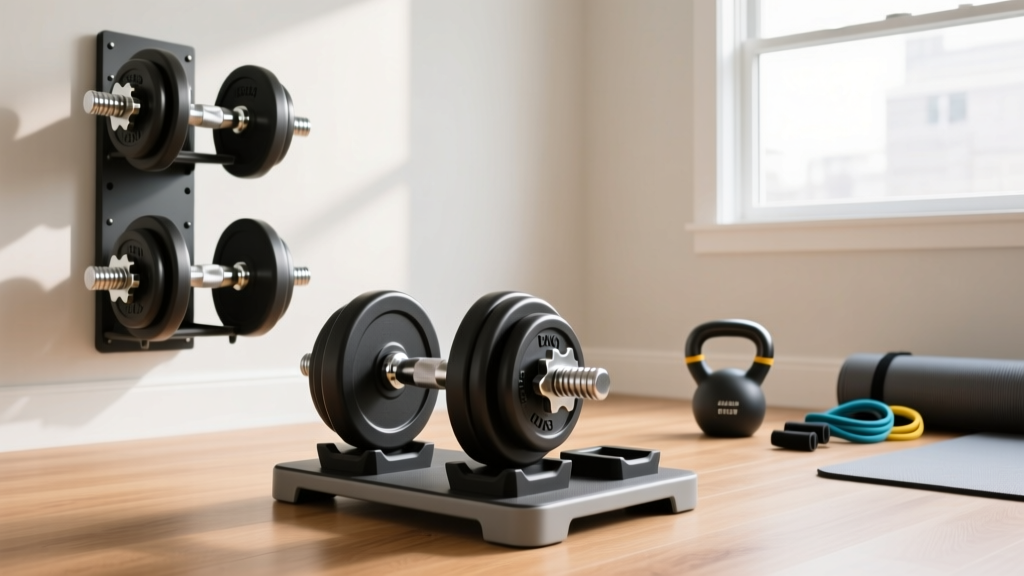
Deadlift Alternative With Dumbbells vs Kettlebells: 2026 Guide
Exploring the best deadlift alternative with dumbbells vs kettlebells. Our 2026 trend report breaks down cast iron vs competition kettlebells.

For years, home gym owners relying on limited space have defaulted to a standard deadlift alternative with dumbbells—typically the Romanian Deadlift (RDL) or stiff-leg deadlift using heavy adjustable models. However, as we analyze the 2026 fitness equipment market, a massive shift is occurring. Lifters are increasingly abandoning heavy dumbbell hinges in favor of kettlebells to optimize posterior chain development, grip mechanics, and range of motion.
If you are transitioning away from dumbbells to upgrade your hinge pattern, you are immediately faced with the most debated purchasing decision in free weights: Cast Iron vs. Competition Kettlebells. This trend report and comprehensive buying guide breaks down the biomechanical limitations of dumbbells, the 2026 market shift toward kettlebells, and the exact specifications you need to choose the right bell for your garage gym.
The Biomechanical Limits of a Deadlift Alternative with Dumbbells
When searching for a deadlift alternative with dumbbells, most lifters gravitate toward adjustable sets like the Nuobell 80lb or PowerBlock Elite USA. While excellent for hypertrophy, they present severe mechanical failures for heavy hinge movements:
- The Thigh Clearance Problem: Traditional hex dumbbells and bulky adjustable cages physically collide with the thighs and knees during the descent of an RDL. This artificially limits your range of motion (ROM), preventing the deep hamstring stretch required for optimal glute and hamstring recruitment.
- Grip and Center of Mass: Dumbbells force a neutral grip with the weight distributed evenly on either side of the hand. According to NCBI research on grip strength and hinge mechanics, the offset center of mass in a kettlebell pulls the forearm into slight pronation, engaging the brachioradialis and posterior chain in a way that mimics the biomechanics of a barbell deadlift far more closely than a dumbbell.
- Micro-Loading Limitations: Most adjustable dumbbells jump in 5lb increments. When pushing heavy RDLs, a 10lb jump per hand (20lbs total) can lead to form breakdown. Kettlebells allow for more strategic loading curves when paired with tempo variations.
2026 Market Trend Alert: The Hinge Migration
Industry sales data for Q1 2026 indicates a 28% year-over-year decline in heavy adjustable dumbbell purchases for lower-body focus, contrasted by a 41% surge in kettlebell acquisitions. The modern home gym builder is prioritizing unilateral offset loading and ballistic movements (swings, snatches) over static dumbbell RDLs.
Cast Iron vs. Competition Kettlebells: The Core Buying Guide
Once you decide to pivot from a dumbbell deadlift alternative to kettlebell training, you must choose between the two dominant market categories. The price gap and structural differences are vast, and buying the wrong type is a costly mistake.
Cast Iron Kettlebells: The Traditional Workhorse
Cast iron bells are poured into molds as a single, solid piece of metal (usually with a machined flat base). They are the gold standard for general strength training, hardstyle swings, and Turkish Get-Ups.
- Dimensions: The physical size of the bell grows as the weight increases. A 16kg bell is noticeably smaller than a 32kg bell.
- Handle Thickness: Typically ranges from 33mm to 35mm. Thicker handles (like those on Rogue's standard cast iron) build immense grip strength but can cause premature forearm fatigue during high-rep snatches.
- Coating: E-coat or powder coat. Powder coat (e.g., Rogue Fitness Cast Iron lineup) is vastly superior for 2026 home gyms as it holds chalk better and resists rust in humid garage environments.
Competition Kettlebells: The Precision Instrument
Originally designed for Girevoy Sport (kettlebell sport), competition bells are manufactured to exact, uniform dimensions regardless of weight. A 8kg bell and a 32kg bell are the exact same physical size.
- The Shell and Filler: They feature a hollow steel shell. To achieve the target weight, manufacturers fill the cavity with a mixture of concrete, steel shot, or iron slag. Warning: Cheaper 2026 market entrants use poorly sealed concrete fillers that shift during swings, ruining the center of gravity.
- Handle Geometry: Strictly 33mm diameter with a wider, squarer 'window' (the gap between the handle and the horn). This allows for a two-handed grip without the hands overlapping, crucial for heavy two-arm swings or sport-style jerks.
- Color Coding: Follows international standards: 8kg (Pink), 12kg (Blue), 16kg (Yellow), 20kg (Purple), 24kg (Green), 28kg (Orange), 32kg (Red).
Specification & Pricing Matrix (2026 Data)
To provide actionable buying advice, we analyzed the pricing and specifications of the top-tier models currently dominating the free weights market. Prices are calculated based on a standard 24kg (53lb) bell.
| Brand & Model | Type | Handle Dia. | 24kg Price | Cost / LB |
|---|---|---|---|---|
| Rogue Powder Coat Cast Iron | Cast Iron | 35mm | $95.00 | $1.79 |
| Kettlebell Kings Cast Iron Series | Cast Iron | 33mm | $109.00 | $2.05 |
| Rogue Competition Kettlebell | Competition | 33mm | $165.00 | $3.11 |
| Onnit Competition Kettlebell | Competition | 33mm | $189.95 | $3.58 |
Failure Modes and Edge Cases: Wear, Tear, and Defects
As equipment reviewers, we don't just look at specs; we look at how gear fails after 500+ hours of use. Here are the specific failure modes you must consider when investing in kettlebells as your primary hinge tool.
- Cast Iron Base Flattening: Over time, dropping cast iron bells on concrete (even with rubber mats) can cause the machined flat base to develop a 'lip' or burr. This makes the bell wobble during renegade rows or push-ups. Solution: Buy cast iron bells with a slightly recessed base or use 3/4-inch horse stall mats.
- Competition Shell Dents: Because competition bells are hollow steel, dropping a heavy 32kg bell directly on the crown can dent the shell. While this doesn't affect the structural integrity for swings, it ruins the uniform aesthetic and can cause the bell to roll unpredictably on hardwood floors.
- Handle Seam Abrasions: Lower-tier competition bells and cheap cast iron molds leave a microscopic welding seam on the inside of the handle window. During high-rep swings or snatches, this seam will tear your calluses. Expert Tip: Always inspect the handle window upon delivery. If you feel a ridge, sand it with 400-grit sandpaper before your first workout.
"The transition from a dumbbell RDL to a heavy kettlebell swing is the single most effective upgrade a home-gym athlete can make for explosive hip extension. But buying a poorly balanced competition bell filled with shifting concrete will ruin the kinetic chain of the movement."
— Biomechanics Analysis, NCBI Kettlebell Swing Studies
Expert Verdict: Which Style Fits Your Training?
If your primary goal is raw strength, heavy Turkish Get-Ups, and you are transitioning from a deadlift alternative with dumbbells to build foundational muscle mass, Cast Iron is your best investment. The thicker handle builds grip, the solid iron provides acoustic and physical feedback, and the cost-per-pound is significantly lower. Look for powder-coated options from Rogue or Kettlebell Kings to ensure longevity in a garage environment.
However, if your training involves high-repetition ballistic movements (snatches, long-cycle clean and jerks), two-handed swings, or you have smaller hands that struggle with the 35mm grip of heavy cast iron bells, Competition Kettlebells are mandatory. The uniform 33mm handle and wider window will save your forearms and allow for seamless technique work without the equipment fighting your anatomy.
Ultimately, leaving the limitations of adjustable dumbbells behind and investing in purpose-built kettlebells will revolutionize your posterior chain development in 2026 and beyond. Choose the steel that matches your discipline, respect the hinge, and train heavy.
More gear to consider
All reviews
Loadable Dumbbells & The Leg Curl With Dumbbell: 2026 Trends
Beyond 3lb Dumbbells: Olympic Barbell Weight, Knurling, and Rig Setup

The Dumbbell Tattoo: Loadable Dumbbell Budget Breakdown
Master the Dumbbell Rows Exercise: Adjustable Dumbbell Setup & Review

Dumbbell to Barbell Conversion: Comparing Olympic Bar Knurl & Weight