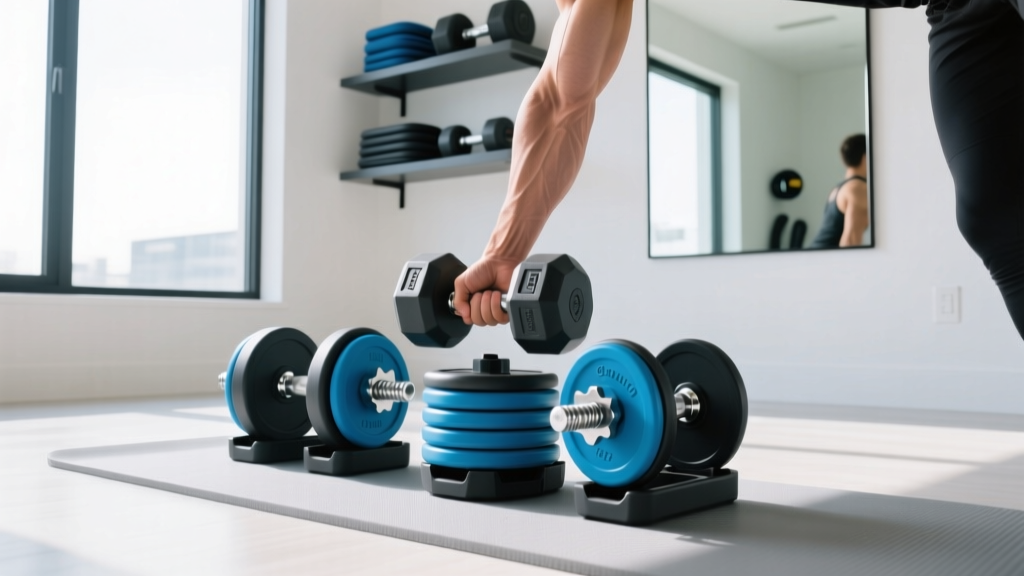
Beyond Dumbbell CrossFit: 2026 Olympic Barbell Weight & Knurl Guide
Upgrading from dumbbell CrossFit? Our 2026 Olympic barbell buying guide breaks down exact weights, knurling patterns, and top models for your home gym.

The Ceiling of Dumbbell CrossFit: Why You Need an Olympic Bar
Over the past few years, dumbbell CrossFit programming has exploded in popularity. Unilateral complexes, heavy dumbbell snatches, and high-rep thruster WODs are incredible for building symmetry, core stability, and unilateral strength. However, as your fitness journey progresses into advanced Olympic weightlifting and heavy barbell cycling (think WODs like "Grace" or "Fran"), dumbbells hit a mechanical ceiling. The thick, smooth 35mm handles of standard hex dumbbells prevent a true hook grip, and the lack of rotating sleeves places immense torque on your wrists during heavy cleans.
Transitioning to an Olympic barbell is a mandatory evolution for serious athletes. But not all barbells are created equal. Choosing the wrong shaft diameter, knurling pattern, or tensile strength can lead to torn calluses, wrist impingements, or a permanently bent bar. This 2026 in-depth buying guide breaks down the exact specifications you need to look for when upgrading from dumbbell CrossFit to Olympic barbell training.
Shaft Diameter & Weight: 15kg vs. 20kg Standards
The first decision you will face is barbell weight and shaft thickness. According to the International Weightlifting Federation (IWF) Technical Rules, Olympic competition mandates two primary barbell standards:
- 20kg (Men's Standard): Weighs exactly 44 lbs with a 28mm shaft diameter. This is the universal standard for most CrossFit WODs and powerlifting movements.
- 15kg (Women's Standard): Weighs exactly 33 lbs with a 25mm shaft diameter. The thinner shaft is crucial for athletes with smaller hands to secure a safe, locked-in hook grip during dynamic Olympic lifts.
Expert Insight: The Hook Grip Transition
When moving from dumbbell CrossFit to barbell work, the hook grip (wrapping your thumb around the bar, then your fingers over your thumb) is non-negotiable for heavy cleans and snatches. A 28mm shaft allows the fingers to securely overlap the thumb. If you have smaller hands and attempt a hook grip on a 28mm bar, you risk thumb impingement and grip blowout. If you fall into this category, a high-quality 15kg bar with a 25mm shaft is not a "downgrade"—it is a biomechanical necessity for safe, high-volume barbell cycling.
Decoding Knurling: Mountain, Volcano, and Hill
Knurling is the diamond-patterned machining cut into the steel shaft to provide grip. For CrossFit athletes who perform high-rep barbell cycling, the type of knurl is actually more important than the depth. Aggressive knurling will tear your calluses to shreds by rep 15 of a 30-rep clean and jerk workout. Here is how the three primary knurling profiles compare:
| Knurl Type | Profile Shape | Best For | CrossFit Verdict |
|---|---|---|---|
| Hill | Smooth, rounded peaks | High-rep cycling, beginners | Excellent for WODs, but may slip during heavy 1RM deadlifts with sweaty hands. |
| Volcano | Sharp rim, flat crater center | All-around training, mixed modal | The Gold Standard. Provides maximum surface area for grip without digging into calluses. |
| Mountain | Sharp, aggressive peaks | Powerlifting, heavy low-rep sets | Avoid for CrossFit. Will cause severe hand tearing during high-volume barbell cycling. |
2026 Barbell Comparison Matrix for CrossFit Athletes
To help you navigate the current market, we have tested and categorized the top Olympic barbells that bridge the gap between heavy strength work and high-volume CrossFit conditioning. As detailed in the Rogue Ohio Bar specifications, the industry standard for a versatile multi-purpose bar relies on a 190,000+ PSI tensile strength and composite bushing systems.
| Model (2026) | Weight / Shaft | Tensile Strength | Knurl Profile | Est. Price |
|---|---|---|---|---|
| Rogue Ohio Bar (Cerakote) | 20kg / 28mm | 190,000 PSI | Volcano (Composite Bushings) | $395 |
| Rep Fitness Excalibur | 20kg / 28mm | 200,000 PSI | Volcano (Needle Bearings) | $349 |
| Eleiko Sport Training Bar | 20kg / 28mm | 215,000 PSI | Hill (Premium Bearings) | $1,150 |
| Again Faster 29MM Bar | 20kg / 29mm | 190,000 PSI | Hill (Bronze Bushings) | $285 |
"The methodology of constantly varied functional movements executed at high intensity requires equipment that can withstand violent drops from overhead. Never purchase a barbell with a tensile strength below 190,000 PSI for CrossFit; it will permanently deform." — CrossFit Methodology Guidelines
Sleeve Construction: Bushings vs. Bearings for Drop-Heavy WODs
When you transition from dumbbell snatches to barbell snatches, the barbell must spin freely in your hands to prevent wrist injuries. This rotation is dictated by the sleeve construction:
Bronze Bushings
Bushings provide a slower, more controlled spin. They are incredibly durable, require less maintenance, and are ideal for slow, heavy lifts like squats and deadlifts. However, for high-rep Olympic lifting, they can sometimes feel "sticky" if chalk builds up inside the sleeve.
Needle Bearings
Bearings offer a lightning-fast, frictionless spin. They are mandatory for elite Olympic weightlifters. However, cheap needle bearings are a massive failure point in CrossFit. If a low-quality bearing bar is repeatedly dropped from overhead onto bumper plates, the internal needles can shatter or misalign, causing the sleeve to lock up completely. If you buy a bearing bar, ensure it is from a premium manufacturer like Eleiko or Rep Fitness.
Maintenance & Edge Cases: Preventing Sleeve Lock-Up
CrossFit gyms and home garage gyms are harsh environments. Chalk dust, sweat, and humidity are the enemies of your barbell's longevity. Here is a non-negotiable maintenance protocol for 2026:
- Weekly Brushing: Use a stiff nylon brush (never wire, as it strips the coating) to scrub chalk out of the knurling valleys. Compacted chalk acts like sandpaper, accelerating skin tears.
- Monthly Lubrication: Apply 3-in-1 oil or a specialized barbell lubricant to the sleeve seams. Spin the sleeve to work the oil into the bushings or bearings, then wipe the shaft completely dry.
- Coating Selection: In 2026, Cerakote is the undisputed king of barbell coatings for humid environments. It offers military-grade corrosion resistance. Black Oxide is cheap but will rust within months in a non-climate-controlled garage. Hard Chrome is durable but offers a slippery feel on the sleeves.
Frequently Asked Questions
Can I use a 20kg bar for all CrossFit WODs?
Yes, the 20kg / 28mm bar is the standard for 90% of CrossFit programming. However, if a WOD calls for high-rep snatches (e.g., "Isabel" - 30 snatches for time) and you have smaller hands, using a 15kg / 25mm bar will allow for a secure hook grip and save your grip strength from failing prematurely.
Why do my hands tear more on a barbell than on dumbbells?
Dumbbell handles are typically smooth and thick (32mm-35mm), which distributes pressure evenly across the palm. A barbell's aggressive knurling bites into the skin, and the rotational force of the barbell during a clean creates shear friction. Choosing a "Volcano" knurl and properly filing your calluses flat will drastically reduce tearing.
Do I need a center knurl?
For CrossFit and Olympic weightlifting, a center knurl is largely unnecessary and can actually irritate your chest during front squats or cleans. Most modern multi-purpose bars feature a smooth center ring or a very passive center knurl. Powerlifters, however, prefer an aggressive center knurl to grip the back during low-bar squats.
More gear to consider
All reviews
Power Rack vs Squat Rack vs Stand for an 85 Pound Dumbbell

2026 Value Guide: Kettlebells & Decline Chest Press with Dumbbells
Power Rack vs Squat Rack: Setup & Dumbbells for Teenager

Cast Iron vs Competition Kettlebells: 100 Pound Dumbbell Chest Press Care

Beyond Deltoid Muscle Workout Dumbbells: Barbell Knurling Mistakes