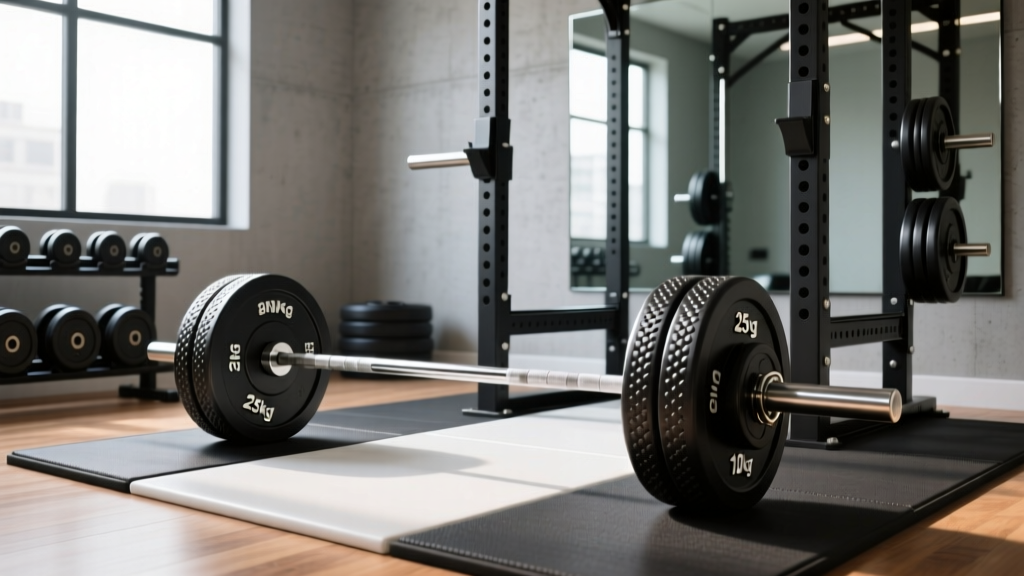
Beyond the Dumbbell Burpee Deadlift: Olympic Barbell Knurling Guide
Transition from the dumbbell burpee deadlift to heavy barbell training. Our beginner guide breaks down Olympic barbell weights, knurling types, and top picks.

The dumbbell burpee deadlift is an elite, full-body metabolic conditioning movement. It tests your cardiovascular endurance, hip hinge mechanics, and grip stamina using lighter loads—typically 20 to 50 lb dumbbells. However, as your fitness journey progresses, you will inevitably hit a ceiling where conditioning must give way to absolute strength development. To build a 300 lb conventional deadlift or a 225 lb back squat, you must transition to an Olympic barbell.
Choosing your first Olympic barbell can feel overwhelming. Unlike the standardized dimensions of most dumbbells, barbells vary wildly in shaft diameter, tensile strength, and—most importantly—knurling patterns. This beginner-friendly, step-by-step guide will decode Olympic barbell weights, sleeve dynamics, and knurling profiles to help you make an informed purchase in 2026.
Step 1: The Baseline — Olympic Barbell Weight and Dimensions
Before analyzing the grip, you must understand the physical footprint of the bar. The International Weightlifting Federation (IWF) and International Powerlifting Federation (IPF) dictate strict standards, but 'multi-purpose' bars have carved out a massive segment of the commercial market.
Standard Weight Categories
- 20kg (44 lbs) Men's Bar: The universal standard. Features a 28mm to 29mm shaft diameter and 50mm sleeve ends. If you are transitioning from heavy dumbbell work, this is your target.
- 15kg (33 lbs) Women's Bar: Features a narrower 25mm shaft, which is crucial for lifters with smaller hands to achieve a secure hook grip. The overall length is slightly shorter (79 inches vs 86 inches).
- 10kg (22 lbs) Technique Bars: Ideal for absolute beginners learning the biomechanics of the Olympic lifts, but generally lack the tensile strength for heavy loading.
Step 2: Decoding Knurling — The Grip Factor
Knurling is the cross-hatched machining pattern etched into the steel shaft. It dictates how the bar interacts with your calluses. When you perform a high-rep dumbbell burpee deadlift, grip fatigue is often the limiting factor; the right barbell knurling mitigates this by mechanically locking into your skin without tearing it.
The Three Main Knurl Profiles
Not all knurling is created equal. Manufacturers use different CNC cutting bits to create three distinct 'mountain' profiles:
- Hill Knurling (The Budget Trap): Found on cheap, sub-$150 Amazon bars. The peaks of the knurl are rounded off and smooth. It feels comfortable to the touch but offers zero bite. Your hands will slip during heavy deadlifts, forcing you to over-rely on lifting straps.
- Mountain Knurling (The Aggressive Grip): Popularized by brands like American Barbell. The peaks are sharp and pointy. It provides immense grip security for heavy powerlifting but can tear the skin on your palms during high-volume dynamic movements like cleans or snatches.
- Volcano Knurling (The Gold Standard): Pioneered by Rogue Fitness, this profile features a sharp outer rim with a hollowed-out center. It grabs the skin aggressively but distributes the pressure, preventing tearing. It is the ultimate multi-purpose knurl for lifters who want to deadlift heavy and still perform barbell complexes.
'Grip is the nervous system's first point of contact with the load. If the knurling fails to provide adequate sensory feedback and mechanical friction, your central nervous system will artificially limit force production to protect the joints.' — Biomechanics principles outlined by the National Strength and Conditioning Association (NSCA).
Step 3: Center Knurling and Sleeve Spin Dynamics
Once you have selected your knurl profile, you must decide on sleeve construction and center knurling. This decision depends entirely on your programming.
Do You Need a Center Knurl?
A center knurl is a small strip of machining in the exact middle of the bar. Powerlifters love it because it prevents the bar from sliding down their upper back during low-bar back squats. Olympic weightlifters and CrossFit athletes hate it, as it will severely scrape the collarbone and neck during front squats and power cleans. If you are a general fitness enthusiast doing a mix of both, look for a 'mild' or 'passive' center knurl.
Bushings vs. Bearings: The Spin Matrix
The sleeves (where you load the bumper plates) need to rotate independently of the shaft to reduce torque on your wrists during explosive lifts.
| Feature | Bronze Bushings | Needle Bearings |
|---|---|---|
| Best For | Powerlifting, General Strength | Olympic Weightlifting, CrossFit |
| Spin Speed | Moderate, controlled | Fast, frictionless |
| Maintenance | Low (self-lubricating) | High (requires periodic oiling) |
| Cost Impact | Budget-friendly ($200-$280) | Premium ($350-$600+) |
For 90% of beginners transitioning from dumbbell routines, a bushing bar is the correct, cost-effective choice. Bearings are only necessary if you plan to drop the bar from overhead during heavy snatches.
Step 4: Top Beginner-Friendly Olympic Barbells (2026 Market)
Based on current market pricing, tensile strength, and knurl quality, here are the top three entry-to-mid-level barbells that offer unparalleled value.
1. Rogue Ohio Bar (Volcano Knurl)
- Price: ~$295.00
- Specs: 190,000 PSI, 28.5mm shaft, Bronze Bushings.
- Verdict: The undisputed king of multi-purpose bars. The volcano knurl is legendary, and the composite bushing system provides a smooth, quiet spin. It is the perfect upgrade for anyone maxing out their dumbbell burpee deadlift capacity and moving to barbell complexes.
2. REP Fitness Colorado Bar
- Price: ~$249.99
- Specs: 190,000 PSI, 28.5mm shaft, Dual Bronze Bushings.
- Verdict: Features a unique 'mountain' knurl that is slightly more aggressive than the Ohio Bar, making it a favorite for lifters who prioritize deadlifts and heavy rows. The hard chrome finish resists rust exceptionally well in humid garage gyms.
3. Titan Fitness Olympic Barbell
- Price: ~$199.99
- Specs: 190,000 PSI, 28.5mm shaft, Bushings.
- Verdict: The ultimate budget workhorse. While the knurling is slightly closer to a 'hill' profile compared to premium brands, it is vastly superior to department store bars. An excellent starting point for strict budget constraints.
For a broader look at how these models compare against specialized powerlifting bars, consult the extensive testing data at BarBend's Barbell Buyer Guide.
Step 5: Transitioning Your Training
How do you bridge the gap between the dumbbell burpee deadlift and heavy barbell training? Do not abandon your conditioning; integrate it.
The Barbell Complex Protocol:Instead of dropping the barbell between reps, perform a 'Bear Complex' (Power Clean -> Front Squat -> Push Press -> Back Squat -> Push Press). Use 60% of your 1-Rep Max. This mimics the cardiovascular demand and grip fatigue of the dumbbell burpee deadlift while forcing your central nervous system to adapt to the biomechanics of a 20kg Olympic barbell.
Frequently Asked Questions
Can I use an Olympic barbell for high-rep touch-and-go deadlifts?
Yes, but ensure your bar has a high-quality finish (like Cerakote or hard chrome) and a volcano knurl. Aggressive mountain knurling will shred your shins and palms during high-rep, touch-and-go sets.
Do I need to oil my barbell?
If you purchase a bar with bronze bushings and a chrome or Cerakote shaft, you only need to brush the chalk out of the knurling with a stiff nylon brush once a week. Avoid wire brushes, as they will strip the protective coating and invite oxidation.
Why are some 20kg barbells more expensive than others?
Price scales with tensile strength (PSI), the precision of the sleeve machining (bearings vs. bushings), and the finish. A $600 Eleiko or premium Rogue bar offers tighter tolerances and specialized Cerakote coatings that prevent rust for decades, whereas a $150 bar will likely bend and rust within two years of heavy use.
Upgrading from dumbbells to an Olympic barbell is a milestone in your fitness journey. By prioritizing a 190k+ PSI tensile strength and a volcano or mild mountain knurl, you will secure a piece of equipment that safely supports your strength gains for the rest of your life.
More gear to consider
All reviews
Market Trends: EZ Bar vs Straight Bar & Alternating Dumbbell Press
Best Adjustable Dumbbells for Boxing Exercises (2026)

Barbell Collar & Clamp Comparison: The Dumbbell Cake Test

Dala Loves Dumbbells vs CAP: Best Neoprene Dumbbells 2026

Dumbbell Chest Exercises (No Bench): Rack Storage & Maintenance