Dumbbell Lateral Lifts: Beginner Guide for Neoprene Weights
Master dumbbell lateral lifts with our beginner step-by-step guide. Learn proper form, weight selection, and why neoprene dumbbells are ideal for home gyms.

The Case for Neoprene Dumbbells in Home Gyms
Building well-rounded, injury-resistant shoulders requires isolation work, and the lateral raise is the undisputed king of medial deltoid development. But if you are setting up a home gym and searching for the best way to perform lateral lifts, dumbbell material and coating play a surprisingly massive role in your comfort, floor protection, and long-term joint health.
Neoprene-coated dumbbells have become the gold standard for beginner to intermediate home gym setups. Unlike bare cast iron, which can rust and chip, or expensive urethane, which is often overkill for light isolation work, neoprene (a synthetic rubber) offers a unique set of advantages specifically suited for high-repetition shoulder training.
Expert Insight: The Grip Diameter Factor
Neoprene coating adds roughly 3mm to 5mm to the handle diameter of a dumbbell compared to bare steel. While this provides an excellent, tacky grip that prevents slipping when your hands get sweaty during a 20-rep set of lateral lifts, it also increases forearm fatigue. Beginners should factor this into their weight selection, as your grip may fail before your lateral deltoids do.
Top Neoprene Dumbbell Models for 2026
Not all neoprene is created equal. Based on current market durability tests and handle ergonomics, here is how the top budget-friendly neoprene dumbbells stack up for home use:
| Brand & Model | Approx. Price (10lb Pair) | Handle Profile | Best For |
|---|---|---|---|
| Yes4All Neoprene Hex | $19.99 | Contoured, Medium Thickness | Budget home gyms, high-rep sets |
| CAP Barbell Neoprene Hex | $24.50 | Straight, Slightly Thicker | Durability, commercial-grade feel |
| Amazon Basics Neoprene | $16.99 | Slimmer, Hexagonal | Absolute beginners, small hands |
Step-by-Step: Executing the Perfect Dumbbell Lateral Lift
Proper biomechanics are non-negotiable. The shoulder joint is highly mobile but inherently unstable. Follow this step-by-step protocol to maximize muscle fiber recruitment while protecting your rotator cuff.
Step 1: The Setup and Stance
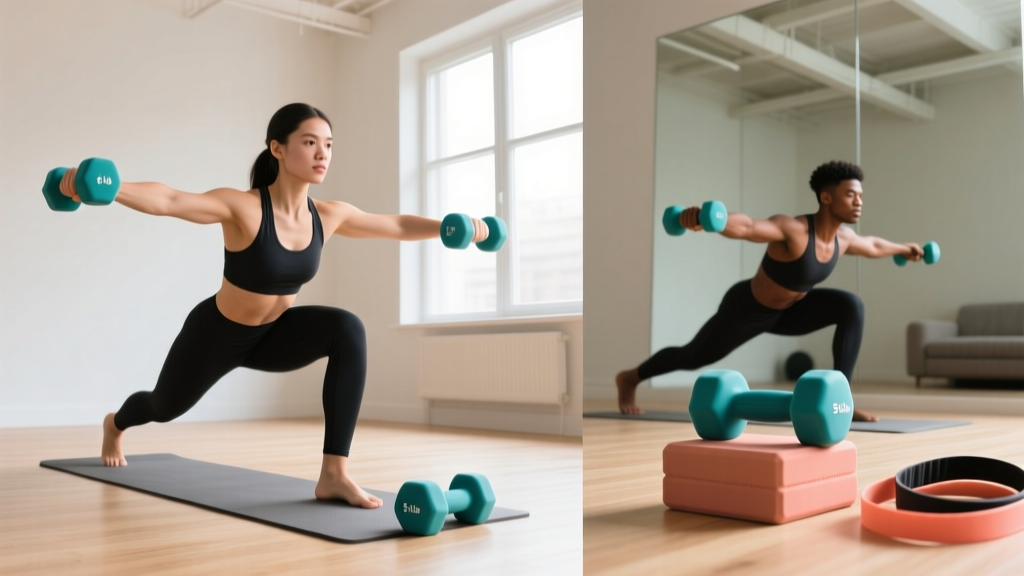
Stand with your feet shoulder-width apart, holding a neoprene dumbbell in each hand. Do not stand completely upright. Instead, push your hips back slightly and hinge forward at the waist by about 10 to 15 degrees. This slight forward lean aligns your torso with the natural path of the lateral deltoid. Keep a soft bend in your knees and engage your core to prevent lower back arching.
Step 2: The Scapular Plane Alignment
This is the most critical, yet most ignored, step. Do not lift the weights directly out to your sides (the frontal plane). Instead, bring your arms about 30 degrees forward into the scapular plane (scaption). According to the American Council on Exercise (ACE), lifting in the scapular plane keeps the humerus aligned with the scapula, drastically reducing the risk of shoulder impingement.
Step 3: The Concentric Phase (The Lift)
Initiate the movement by pushing your elbows out and up, not your hands. Imagine there is a string attached to your elbows pulling them toward the ceiling. Your hands should remain slightly below your elbows throughout the lift. Stop when your upper arms are parallel to the floor. Going higher than parallel shifts the load away from the medial deltoid and onto the upper trapezius.
Step 4: The Eccentric Phase (The Lowering)
Lower the weights slowly, taking a full 2 to 3 seconds to return to the starting position. The eccentric (lowering) portion of the lift causes the most micro-tearing in the muscle fibers, which is essential for hypertrophy. Do not let gravity pull the weights down; fight the resistance on the way back.
Myth-Busting: "Pouring the Pitcher"
For decades, gym-goers were taught to internally rotate their shoulders at the top of the movement (tilting the pinky up, like pouring a pitcher of water). Modern physical therapy has thoroughly debunked this. Internal rotation under load narrows the subacromial space, grinding the supraspinatus tendon against the acromion bone. As noted by the Mayo Clinic, repetitive impingement is a leading cause of rotator cuff tendinopathy. Keep your knuckles facing forward or slightly down, but never tilt the pinky upward.
Weight Selection & Programming Matrix
The lateral deltoid is a relatively small, pennate muscle group. It responds best to moderate weights and higher repetition ranges (12-20 reps) with strict form. Using momentum to swing heavy dumbbells is a fast track to a rotator cuff injury.
Beginner Programming Framework
- Weeks 1-4 (Neurological Adaptation): 3 sets of 15 reps. Use 5 lb to 8 lb neoprene dumbbells. Focus entirely on the 30-degree scapular plane and a 3-second eccentric.
- Weeks 5-8 (Hypertrophy Focus): 4 sets of 12 reps. Move up to 10 lb to 12 lb dumbbells. Introduce a 1-second isometric hold at the top of the movement.
- Weeks 9-12 (Metabolic Stress): 3 sets of 20 reps + 5 partial reps (burnout). Return to the 8 lb dumbbells but eliminate the rest at the bottom of the movement to keep constant tension on the muscle.
Common Form Failures & Troubleshooting
Even with the tactile grip of neoprene, beginners often fall into mechanical traps. Here is how to identify and fix them:
- The "Shrug" Error: If your upper traps are burning more than your side delts, you are elevating your scapula. Fix: Depress your shoulder blades (pull them down into your back pockets) before initiating the lift.
- The "Swing" Error: Using your hips and lower back to heave the weight up. Fix: Drop the weight by 30%. If you cannot control the eccentric phase, the weight is too heavy. Seated lateral lifts are a great regression to eliminate lower body momentum.
- Forearm Grip Failure: Because neoprene handles are slightly thicker, your grip may give out on set three. Fix: Use lifting straps for your final working set, or switch to a wrist-cuff cable attachment if your home gym has a functional trainer.
Caring for Your Neoprene Equipment
Neoprene is highly durable, but it is not invincible. The synthetic rubber can dry out, crack, or become sticky if exposed to harsh chemicals or UV light.
- Cleaning: Wipe down your dumbbells after every workout with a microfiber cloth dampened with warm water and a drop of mild dish soap.
- Chemicals to Avoid: Never use bleach, alcohol-based sanitizers, or ammonia-based glass cleaners on neoprene. These strip the synthetic oils from the rubber, leading to premature cracking and a chalky residue.
- Storage: Keep your dumbbells on a dedicated rack or mat away from direct sunlight. Prolonged UV exposure degrades the neoprene coating, causing it to fade and lose its tacky grip properties.
Frequently Asked Questions
Can I do lateral lifts every day?
No. While the lateral deltoids recover relatively quickly compared to larger muscle groups like the chest or back, they still require 48 hours of recovery to repair muscle tissue and grow. Aim to train them 2 to 3 times per week with at least one rest day in between.
Are neoprene dumbbells toxic?
High-quality neoprene from reputable fitness brands is non-toxic and safe for indoor use. However, extremely cheap, unbranded imports may use off-gassing fillers. Always buy from established brands like Yes4All or CAP Barbell, and allow new dumbbells to air out in a garage or well-ventilated room for 48 hours before bringing them into your living space.
What if I only have one dumbbell?
Unilateral (one-arm) lateral lifts are highly effective. In fact, performing the movement one arm at a time allows you to use your free hand to brace against a wall or power rack, which stabilizes your torso and allows for a slightly greater range of motion and better mind-muscle connection on the working side.
More gear to consider
All reviews
Space-Saving Dumbbell Racks & Layouts for Back Muscle Exercises with Dumbbells

Beyond the Dumbbell Symbol: Loadable Plates for Compact Gyms
EZ Curl vs Straight Bar Care & Abs Workout at Home with Dumbbells

Grip Troubleshooting: Beyond the Dumbbell Supinated Curl GIF to Olympic Barbell Knurling

Space-Saving Racks for Your First Beginner Dumbbell Weight Set