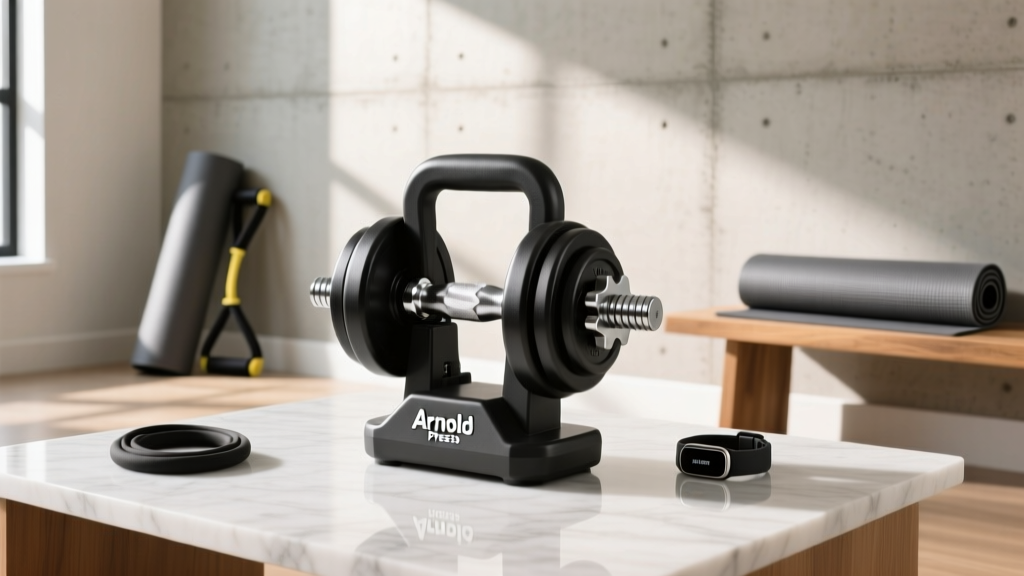
What Does Dumbbell Bench Press Work? Moving to Barbells & Collars
Discover what muscles the dumbbell bench press works, why lifters transition to barbells, and our in-depth comparison of the best barbell collars and clamps.

The Dumbbell Ceiling: Knowing When to Transition
If you have been scouring the internet asking, what does dumbbell bench press work, you are likely analyzing your chest hypertrophy and pressing mechanics. The dumbbell bench press is a phenomenal movement, but it has a hard ceiling. Once you surpass the 90-to-100-pound dumbbell mark, the limiting factor is rarely your pectoral strength; it is the stabilization required to hoist the weights into position and the sheer physical space required to press them without the dumbbells colliding. To achieve true mechanical overload, lifters inevitably transition to the barbell bench press. And the moment you start sliding 45-pound plates onto an Olympic sleeve, your safety—and the structural integrity of your lift—relies entirely on a small, often overlooked piece of hardware: the barbell collar.
What Does Dumbbell Bench Press Work? (The Anatomical Breakdown)
Before we dismantle the collar market, it is vital to understand the muscular recruitment of the dumbbell variation. According to biomechanical data from ExRx, the dumbbell bench press primarily targets the following musculature:
- Pectoralis Major (Sternal Head): The primary mover responsible for horizontal adduction of the humerus. Dumbbells allow for a deeper stretch at the bottom of the movement, maximizing sarcomere tension.
- Anterior Deltoids: Heavily recruited during the initial drive off the chest, especially if the elbows are flared at a 45-to-60-degree angle.
- Triceps Brachii: Responsible for elbow extension during the top third of the pressing motion.
- Stabilizers (Rotator Cuff & Serratus Anterior): Because each arm moves independently, the stabilizing muscles work overtime to prevent the weights from drifting laterally or anteriorly.
While this independent stabilization builds incredible joint integrity, it bleeds energy away from the prime movers. When your pecs are capable of pressing 275 pounds but your rotator cuff stabilizers fail at 100-pound dumbbells, it is time to move to the barbell.
Why Barbell Collars Are Non-Negotiable for Heavy Pressing
When you transition to barbell pressing, the bilateral stability of the barbell allows you to overload the pecs safely. However, loading the bar introduces lateral force vectors. If you miss a rep, bounce the bar off your chest aggressively, or have an uneven rack, the plates shift. A shifting plate alters the center of gravity in a fraction of a second, leading to catastrophic barbell tipping. Standard gym spring clips are entirely insufficient for loads over 225 pounds. You need engineered clamps.
⚠️ Safety Callout: Never bench press with an unevenly loaded bar or without collars, even if you are just "warming up." A 2.5-pound plate sliding outward on one side creates a lever-arm imbalance that the human wrist and shoulder cannot correct mid-rep.Barbell Collar and Clamp Types: A Deep Dive Comparison
The market is saturated with collar designs, but they generally fall into four distinct mechanical categories. When browsing premium options like those at Rogue Fitness, you will notice that price correlates directly with the clamping mechanism and material durability.
1. Spring Collars (The Commercial Gym Standard)
Made from zinc-plated steel wire, spring collars rely on torsion tension to grip the sleeve. They are cheap, ubiquitous, and lightweight. However, the steel fatigues over time. After six months of being stretched over 50mm sleeves, the tension degrades, and they will slide off during dynamic movements or heavy negatives.
2. Nylon Clamp / Lock-Jaw Collars
These utilize a glass-filled nylon body with internal teeth that bite into the steel sleeve. Models like the Lock-Jaw Pro are incredibly popular in commercial gyms. They are fast to apply and hold up well to general bodybuilding work. The flaw? Chalk dust and oxidized steel dust accumulate in the nylon teeth over time, acting as a dry lubricant and causing the clamp to slip under heavy lateral loads.
3. Aluminum Lever / Cam-Lock Collars
The gold standard for powerlifting and Olympic weightlifting. Collars like the Rogue Pro-Loc 2.0 or Eleiko Olympic Collars use a CNC-machined aluminum body with a cam-lever system. When you snap the lever shut, it physically compresses an inner polymer ring against the barbell sleeve. This creates 360 degrees of friction, making them virtually immovable, even during a dropped clean and jerk.
4. Spinlock / Threaded Collars
Common on cheap home-gym barbells with threaded sleeves, these screw on like a nut. They offer absolute zero lateral slip but take 10 to 15 seconds to secure per side. They are completely impractical for supersets, drop sets, or any environment where plate changes need to happen in under 30 seconds.
Comprehensive Collar Comparison Matrix
| Collar Type | Mechanism | Material | Weight (per pair) | Avg. Price (2026) | Best Application | Drop-Test Rating |
|---|---|---|---|---|---|---|
| Spring Clip | Torsion Wire | Zinc-Plated Steel | ~1.2 lbs | $10 - $15 | Light isolation, warm-ups | Fails at >45 lb drop |
| Nylon Clamp | Teeth & Latch | Glass-Filled Nylon | ~0.6 lbs | $25 - $35 | Bodybuilding, general fitness | Moderate (slips with chalk) |
| Aluminum Lever | Cam-Lever Compression | CNC Aluminum / Polymer | ~0.8 - 1.1 lbs | $45 - $75 | Powerlifting, CrossFit, Oly | IWF/IPF Standard Pass |
| Spinlock | Threaded Screw | Cast Iron / Steel | ~2.5 lbs | $15 - $25 | Home gyms (threaded bars) | Absolute (Zero slip) |
Real-World Failure Modes and Edge Cases
As a domain expert testing gear, I have seen expensive collars fail not because of poor manufacturing, but due to user error and environmental factors. Here are the edge cases you must watch for:
The "Sleeve Lip" Problem
Olympic barbell sleeves end in a raised ridge or "lip" to keep plates from sliding off the end. If you push a nylon clamp or lever collar flush against this lip, the clamping mechanism may sit partially on the beveled edge rather than the flat 50mm cylinder. This reduces surface area contact by up to 40%, guaranteeing a slip during a heavy bench press unrack. Solution: Always leave a 2-millimeter gap between the collar and the sleeve lip.
Sleeve Diameter Tolerances
The IWF standard for an Olympic sleeve is exactly 50mm. However, budget barbells often measure 49.5mm or 49.8mm. While an aluminum lever collar can compress to accommodate this, rigid nylon clamps (like older Lock-Jaw models) will fail to engage their teeth properly on a 49.5mm sleeve, rendering them useless. Always measure your barbell sleeve with digital calipers before buying rigid clamps.
Knurling Dust and Chalk Buildup
If you use liquid chalk or dry magnesium carbonate, it inevitably transfers from your hands to the barbell sleeves. On nylon clamp collars, this dust packs into the gripping teeth. Once the teeth are clogged, they glide over the steel sleeve rather than biting into it. Lever collars avoid this issue entirely because they rely on compression, not teeth.
"A barbell collar is not just a convenience; it is a critical safety device. In a max-effort bench press, the lateral shift of a single unsecured 45-pound plate can generate enough torque to tear a pectoral muscle or dislocate a shoulder before the lifter can react."
2026 Buying Framework: Match the Collar to the Lift
Do not buy collars based on aesthetics; buy them based on your training split and the mechanical demands of your lifts.
- The Powerlifter / Heavy Presser: If your training revolves around the barbell bench press, squat, and deadlift, invest $50+ in a pair of Aluminum Lever Collars (e.g., Rogue Pro-Loc or Eleiko). The cam-lock compression ensures that when you aggressively unrack a 315-pound bench press, the plates do not shift a single millimeter, keeping your center of gravity perfectly aligned.
- The Bodybuilder / Hypertrophy Focused: If you are doing drop sets, supersets, and constantly changing weights, the 10-second screw time of a lever collar will ruin your workout density. Opt for high-quality Nylon Clamp Collars. Just be sure to wipe down your barbell sleeves with a wire brush or damp cloth once a month to remove chalk buildup.
- The CrossFit / Olympic Weightlifter: Dynamic movements like the snatch and clean & jerk involve dropping the barbell from overhead. Spring collars will fly off upon impact, sending plates skidding across the platform. You absolutely require Aluminum Lever Collars rated for IWF drop-tests to protect your shins and the gym equipment.
Final Verdict
Understanding what the dumbbell bench press works is the first step in building a massive chest, but recognizing when to transition to the barbell is what separates intermediate lifters from advanced ones. When you make that transition, respect the physics of the loaded barbell. Ditch the fatigued spring clips left lying around your commercial gym, measure your sleeve diameter, and invest in a pair of lever or high-grade clamp collars. Your pectorals—and your rotator cuffs—will thank you.
More gear to consider
All reviews
Troubleshooting Dumbbell RDL Form With Neoprene Weights

Power Rack vs Squat Rack Setup for Dumbbell Squat Jumps

Rubber Hex vs Urethane: Space Hacks & Forearm Exercises with Dumbbells

Loadable Dumbbell Care for the Zercher Squat with Dumbbells

Collar Guide: Secure Your Full Chest Workout with Dumbbells & Bars