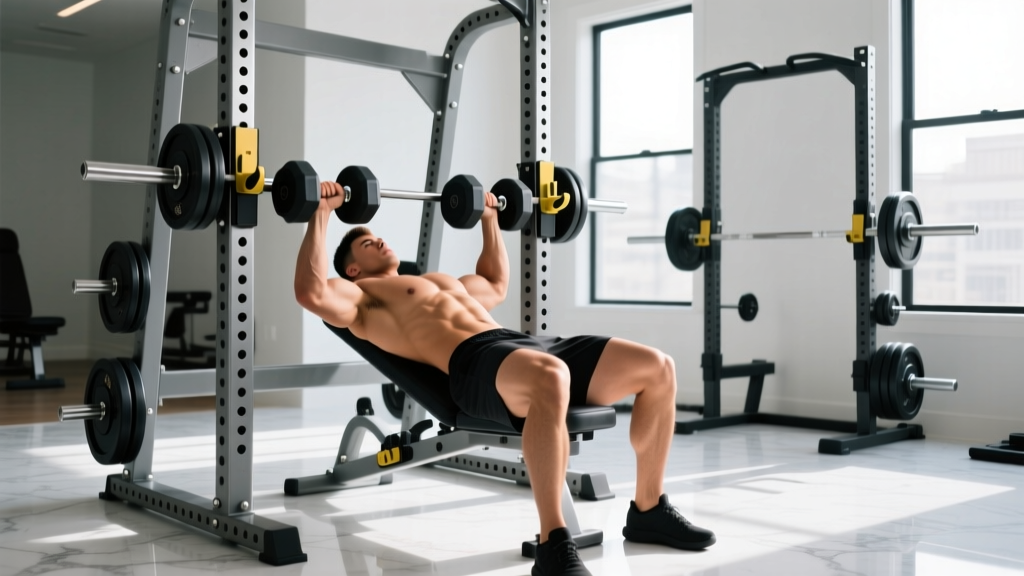
Decline Press With Dumbbells: Power Rack vs Squat Rack Guide
Master the decline press with dumbbells safely. Our beginner guide compares power racks, squat racks, and stands for optimal setup and injury prevention.

Why Rack Selection Dictates Your Decline Press Safety
When you execute a decline press with dumbbells, your center of gravity shifts dramatically toward your head and shoulders. According to ExRx.net's biomechanical directory, the sternocostal head of the pectoralis major is highly activated at a 15 to 30-degree decline. However, this angle introduces a severe mechanical vulnerability: if you fail a rep, the dumbbells do not just drop to your chest; they slide toward your neck and face due to gravity's downward slope.
This is where the debate of a power rack vs squat rack vs squat stand becomes a critical safety issue, not just a footprint concern. For beginners, understanding how your rack interacts with a decline bench is the difference between a productive hypertrophy session and a trip to the emergency room. In this 2026 guide, we will break down exactly how to evaluate your equipment and set up a safe, effective decline pressing station.
Beginner Insight: Many novices assume a squat stand is sufficient for all bench variations. While true for flat barbell benching with a spotter, the lateral instability of dumbbells on a downward slope makes squat stands inherently risky for heavy decline work without strict safety protocols.The 2026 Gear Matrix: Power Rack vs Squat Rack vs Squat Stand
Before we dive into the step-by-step setup, let us break down how the three main rack categories handle the unique demands of the decline press. The data below reflects average market pricing and structural capabilities for premium home gym gear in 2026.
| Feature | Power Rack (Full Cage) | Squat Rack (Half Rack) | Squat Stand |
|---|---|---|---|
| Avg Price Range | $600 - $3,500+ | $700 - $1,500 | $200 - $600 |
| Decline Safety Rating | Excellent (4-sided enclosure) | Good (if spotter arms are long) | Poor (high risk of lateral slip) |
| Bench Anchoring | High (can pin bench to uprights) | Moderate (relies on friction) | Low (freestanding only) |
| Spotter Arm Length | Short (catches inside cage) | Long (24+ inches extending forward) | Short (12 to 18 inches max) |
Step-by-Step: Setting Up the Ultimate Decline Station
Regardless of whether you are using a full cage or a half rack, the setup sequence remains vital. Follow these steps to ensure your bench does not slide and your spotter arms are positioned to catch a failed rep without damaging your rotator cuffs.
Step 1: Secure the Bench Angle and Base
Set your adjustable bench to a 15-degree or 30-degree decline. A 15-degree angle is optimal for isolating the lower pecs without causing excessive blood pressure spikes in the head. Slide the bench into the rack so that your eyes are directly under the barbell J-cups. Crucial Edge Case: If your bench has wheels, ensure they are lifted off the ground. Place rubber friction pads under the rear legs to prevent the bench from sliding backward during the dumbbell kick-up.
Step 2: Calibrate Spotter Arms for a Downward Slope
Because you are on a decline, the bottom of your range of motion is physically lower relative to the floor than on a flat bench. Set your safety spotter arms exactly 2 inches below your chest at the bottom of the movement. If you are using a half rack, ensure the 24-inch spotter arms extend past your head, as a failed dumbbell will naturally drift backward toward the uprights.
Step 3: The Pick-and-Kick Entry Technique
Getting heavy dumbbells into position on a decline is notoriously awkward. Do not try to curl them up from your lap while leaning back. Instead, use the knee-tuck method:
- Sit on the flat portion of the bench with the dumbbells resting on your thighs, just above the knees.
- Hook your thumbs under the dumbbell handles.
- Lean back into the decline while simultaneously driving your knees up to 'kick' the dumbbells into the starting position.
- Immediately plant your feet firmly into the decline bench's leg rollers.
Real-World Equipment Recommendations for 2026
To contextualize the power rack vs squat rack vs squat stand debate, here are three specific models that represent the best value and safety profiles for dumbbell decline pressing this year.
1. The Power Rack Choice: Titan T-3 Power Rack
Price: ~$649
Why it works: The T-3 features a 4-sided enclosure. If a dumbbell slips from your sweaty grip on a 30-degree decline, it will hit the safety pins or the floor inside the cage, rather than rolling across the gym. The 11-gauge steel uprights also allow you to use band pegs to physically anchor the decline bench frame, eliminating any backward sliding.
2. The Half Rack Choice: Rep Fitness SR-4000
Price: ~$899
Why it works: Half racks offer more open space, which is great for getting dumbbells in and out. The SR-4000 comes with 24-inch spotter arms that feature UHMW plastic liners. This is critical for dumbbells, as the plastic absorbs the shock of a dropped 80-pound dumbbell without denting the steel or damaging the knurling on your weights.
3. The Squat Stand Choice: Rogue S-2 Squat Stand 2.0
Price: ~$595
Why it works (with caveats): Squat stands are fantastic for small spaces, but they are the least safe for decline dumbbell work. If the Rogue S-2 is your only option, you must limit your working weight to dumbbells you can safely 'dump' forward onto the floor. Never use heavy loads that require spotter arms, as the 12-inch arms on most squat stands will not catch a dumbbell sliding backward toward your head.
Troubleshooting Common Beginner Mistakes
Even with the perfect rack, execution errors can compromise your safety. The ACE Fitness Exercise Library frequently highlights joint alignment as a primary factor in pressing injuries. Here is how to fix the most common decline press errors:
- The Slipping Bench: If your bench creeps backward during the set, your leg rollers are likely not secured tightly enough against your thighs. Adjust the roller pad height so it creates a firm, compressive lock against your quadriceps.
- Wrist Extension Overload: Holding heavy dumbbells on a decline forces the wrists into extreme extension. Use lifting straps or neutral-grip (hex) dumbbells to keep the wrist stacked directly over the elbow joint.
- Spotter Arm Interference: If you set the spotter arms too high, your elbows will strike the steel pins before your pectorals reach a full stretch. Always test your range of motion with an empty pair of 10-pound dumbbells before loading your working weight.
Frequently Asked Questions
Can I use a flat bench and elevate the foot end instead of a decline bench?
While physically possible, elevating the foot end of a flat bench on weight plates is highly discouraged. Standard flat benches are not engineered to handle the shear force of a loaded bench press at an angle, and the bench legs can easily buckle or slide off the plates. Always use a dedicated decline bench locked into a power rack or half rack.
Is the decline press with dumbbells better than the barbell version?
According to guidelines referenced by the National Strength and Conditioning Association (NSCA), dumbbells offer a greater range of motion and allow for natural shoulder rotation, which reduces impingement risks. However, barbells allow for heavier absolute loads. For beginners, dumbbells are generally safer because you can drop them to the sides if you fail, provided you are inside a power rack.
How do I safely exit the decline position after a heavy set?
Do not attempt to sit straight up while holding heavy dumbbells; this places immense strain on the lumbar spine. Instead, bring the dumbbells down to your chest, tuck your chin, and use your core to roll forward into a seated position, letting the momentum carry the weights down to your lap.
Final Verdict: Choosing Your Rack
Mastering the decline press with dumbbells requires respect for gravity and biomechanics. If your budget and space allow, a Power Rack is the undisputed champion for this movement, offering unparalleled peace of mind. A Squat Rack (Half Rack) is a highly capable runner-up, provided you utilize the extended spotter arms correctly. Reserve the Squat Stand for flat pressing and squats, and approach decline dumbbell work with extreme caution if it is your only available equipment. Train smart, anchor your bench, and let the lower pecs grow.
More gear to consider
All reviews
Space-Saving Dumbbell Racks for Russian Deadlifts with Dumbbells

Bumper vs Iron Plates: Rack Setup & Chest Rows Dumbbell Guide

Inner Pec Workout With Dumbbells: Neoprene Picks Compared
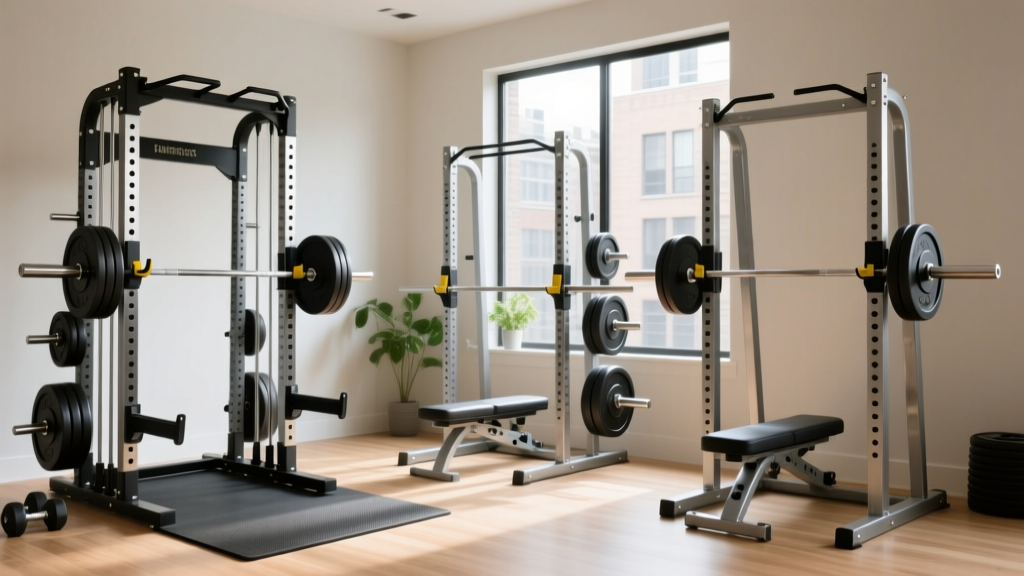
Power Rack vs Squat Rack vs Stand: Dumbbell Deadlift for Back
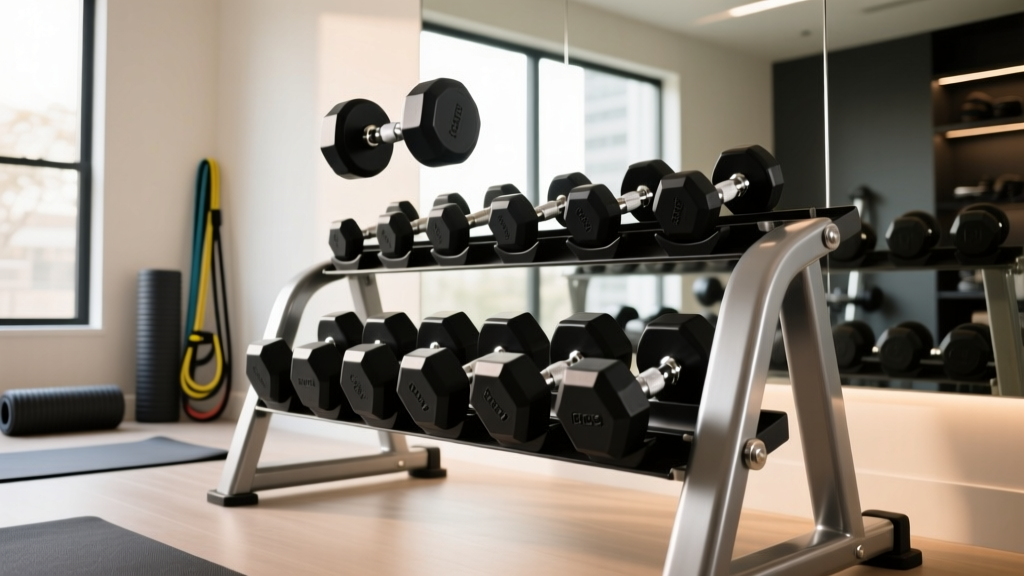
Top 2026 Dumbbell Racks to Support Dumbbell Row Muscles Workouts
