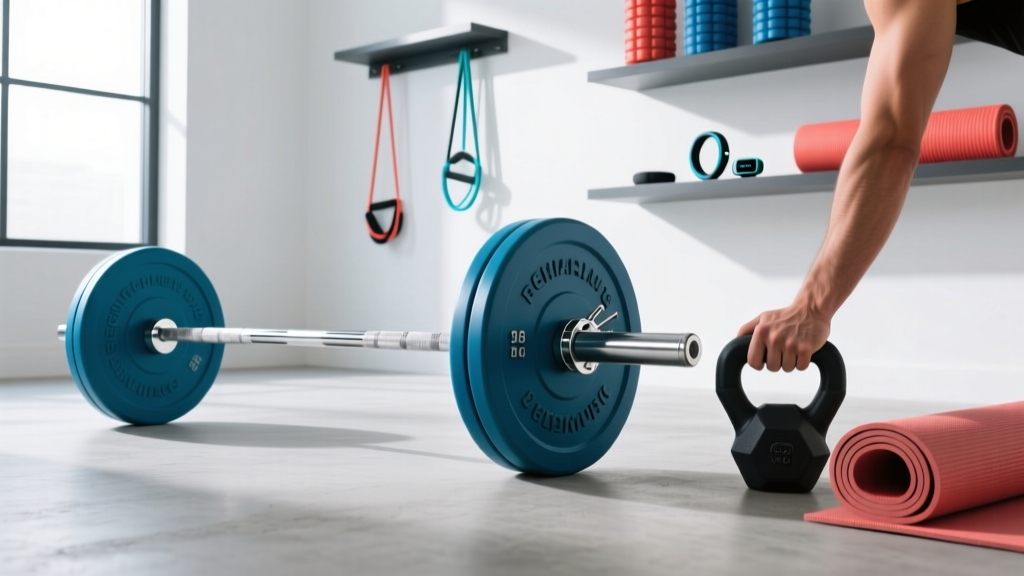
Perfecting the Dead Bug with Dumbbells: Top Neoprene Picks 2026
Master the dead bug with dumbbells using our 2026 guide to the best neoprene-coated weights for home core training, featuring grip tests and comparisons.

Why Neoprene is the Ultimate Choice for Core Stability Work
When building a home gym dedicated to functional fitness and core stability, the equipment you choose dictates the quality of your movement. For floor-based exercises, bare cast iron or knurled steel dumbbells are impractical and potentially damaging to both your flooring and your grip during high-repetition endurance sets. This is where the neoprene coated dumbbell for home use becomes an indispensable asset. Neoprene (polychloroprene) is a synthetic rubber that offers a slightly tacky, sweat-resistant surface, providing a secure grip without the abrasive texture of bare metal.
Core training requires intense focus on breathing and bracing. If you are constantly adjusting your grip on a slippery metal handle, you break the intra-abdominal pressure necessary for spinal stability. Neoprene's high-friction surface allows you to maintain a relaxed but secure hold, letting you channel your neurological drive entirely into the target musculature. Furthermore, the hexagonal shape commonly found on premium neoprene dumbbells prevents rolling, a critical safety feature when transitioning between sets on a hardwood or laminate floor.
Biomechanics of the Dead Bug with Dumbbells
The traditional dead bug is a foundational anti-extension exercise. However, when you progress to performing the dead bug with dumbbells, you fundamentally alter the biomechanical demands on the anterior core. By holding a 10 lb to 15 lb dumbbell in each hand, you increase the lever arm length and the rotational torque placed on the rectus abdominis and transversus abdominis.
According to the American Council on Exercise (ACE), maintaining a neutral spine while the extremities move is the primary goal of the dead bug. Adding external load via dumbbells forces the deep core stabilizers to work overtime to prevent the lumbar spine from arching off the mat. The weight does not need to be heavy; in fact, using excessively heavy dumbbells compromises form and shifts the load to the hip flexors. A 5 lb to 15 lb neoprene dumbbell provides the exact micro-loading increments required to safely progress this movement without overwhelming the central nervous system.
Expert Insight: The Torque Multiplier EffectHolding a 10 lb dumbbell with your arm fully extended overhead during a dead bug creates roughly 2.5 times more torque on the core than holding the same weight with a bent elbow. Always master the movement with straight arms using 5 lb neoprene weights before attempting heavier 15 lb pairs.
2026 Neoprene Dumbbell Comparison Matrix
To help you select the ideal weight for your home core training, we have tested the top neoprene options on the market. Below is our 2026 comparison matrix focusing on grip ergonomics, coating durability, and value for core-specific routines.
| Brand & Model | Coating Type | Handle Ergonomics | Price Range (Pair) | Best For |
|---|---|---|---|---|
| CAP Barbell SDNH Hex | Standard Neoprene | Straight, Medium Knurl | $24 - $32 | Budget / Entry Level |
| Yes4All Premium Ergonomic | High-Density Neoprene | Contoured, Wider Grip | $35 - $45 | Sweat Resistance / Grip |
| BalanceFrom GoFit Set | Soft-Touch Neoprene | Straight, Smooth | $50 - $65 (3 Pairs) | Progressive Overload |
Top 3 Neoprene Dumbbell Sets for Home Core Training
1. CAP Barbell Hex Neoprene (Model SDNH-10)
The CAP Barbell SDNH series remains a staple in home gyms for good reason. The 10 lb hex model (SDNH-10) features a solid cast iron core encased in a 3mm thick neoprene shell. For the dead bug with dumbbells, the hexagonal head is a massive advantage; when you finish your set and place the weights on the floor beside your mat, they will not roll into your furniture or across the room. The handle diameter is 35mm, which accommodates most hand sizes comfortably without requiring excessive grip strength, allowing you to focus entirely on core bracing. At roughly $28 per pair, it is an exceptional entry point for home core training.
2. Yes4All Premium Ergonomic Neoprene (15 lb Pair)
If you suffer from hand fatigue or hyperhidrosis (excessive sweating), the Yes4All Premium line is our top recommendation for 2026. Yes4All utilizes a slightly higher durometer (hardness) neoprene that resists the acidic breakdown caused by human sweat over time. The handle features a subtle hourglass contour that naturally locks into the palm, reducing the need to squeeze tightly during extended time-under-tension sets like the dead bug. Priced around $38 for the 15 lb pair, they offer a premium feel that outlasts cheaper alternatives by an estimated 2 to 3 years of regular use.
3. BalanceFrom GoFit All-Purpose (Progressive Set)
Core training requires progressive overload just like any other muscle group. The BalanceFrom GoFit set includes three pairs (5 lb, 10 lb, and 15 lb) for roughly $55. This is the most cost-effective way to build a complete core-training arsenal. You can use the 5 lb pair for learning the motor pattern, the 10 lb pair for standard working sets, and the 15 lb pair for advanced variations like the dead bug with a resistance band. The color-coded neoprene makes it easy to grab the right weight mid-workout without squinting at engraved numbers.
Edge Cases: When Neoprene Fails (and What to Do)
While neoprene is highly durable, it is not invincible. Understanding its failure modes will help you protect your investment:
- UV Degradation: Prolonged exposure to direct sunlight causes neoprene to 'chalk' and eventually peel. Never store your dumbbells on an outdoor patio or directly in front of a sun-drenched window.
- Sweat Hydrolysis: The salts and acids in human sweat can break down the chemical bonds of low-grade neoprene over time, leading to a sticky, degraded surface. Wipe your dumbbells down with a damp microfiber cloth and a mild, pH-neutral soap after heavy core circuits.
- Pet Damage: The slightly rubbery texture of neoprene is highly attractive to dogs and cats. Store your weights on a rack or in a closed bin to prevent claw punctures, which will expose the cast iron core to rust.
Step-by-Step: Executing the Movement Safely
The National Strength and Conditioning Association (NSCA) emphasizes that anti-extension exercises must prioritize spinal neutrality over limb range of motion. Follow this protocol to maximize the effectiveness of the dead bug with dumbbells:
- The Setup: Lie supine on a yoga mat. Hold a pair of 5 lb or 10 lb neoprene dumbbells and extend your arms directly toward the ceiling, perpendicular to your torso.
- Leg Position: Raise your legs so your hips and knees are bent at exactly 90 degrees. Your shins should be parallel to the ceiling.
- The Brace: Inhale deeply into your diaphragm, then exhale forcefully to pull your ribcage down and press your lower back firmly into the mat. There should be zero gap between your lumbar spine and the floor.
- The Descent: Slowly lower your right arm and left leg toward the floor. Stop exactly one inch before the floor or the moment your lower back begins to arch—whichever comes first.
- The Return: Exhale and pull the arm and leg back to the starting position, maintaining the intense abdominal brace throughout.
"The most common error in the weighted dead bug is treating it as a limb-moving exercise rather than a core-resisting exercise. If your back leaves the mat, the weight is too heavy, regardless of your overall strength level." - Mayo Clinic Fitness Guidelines
Frequently Asked Questions
Can I use adjustable dumbbells instead of neoprene for the dead bug?
While adjustable dumbbells (like the Bowflex 552 or PowerBlock) are excellent for heavy pressing and pulling, they are suboptimal for the dead bug. Their bulky physical dimensions can obstruct your range of motion when your arms are extended overhead, and their metal/plastic housings can be uncomfortable to grip for extended isometric holds. Neoprene hex dumbbells offer a compact, ergonomic profile specifically suited for floor-based core work.
How often should I perform the dead bug with dumbbells?
For optimal core development and spinal health, integrate this movement into your routine 2 to 3 times per week. Aim for 3 sets of 8 to 12 controlled repetitions per side. Because the transversus abdominis recovers relatively quickly, you can perform this exercise at the beginning of your workout as a core-activation primer, or at the end as a metabolic finisher.
What is the best flooring to use under my neoprene dumbbells?
Even though neoprene is floor-friendly, dropping any weight repeatedly can damage subfloors. We recommend performing your dead bugs on a high-density EVA foam mat or a thick yoga mat (6mm or thicker) to provide adequate cushioning for your spine and an extra layer of protection for your hardwood or laminate flooring.
More gear to consider
All reviews
Best Dumbbell Racks 2026 & Form: Dumbbell Lateral Raise GIF

Is Dumbbell Bench Press Harder? 2026 Adjustable Dumbbell Review

Beyond the Heaviest Dumbbell: Olympic vs Standard Plates

Gold Dumbbell Storage: 2026 Rack Budget & Value Analysis
Cast Iron vs Competition Kettlebells & Dumbbell Chest and Tricep Workout