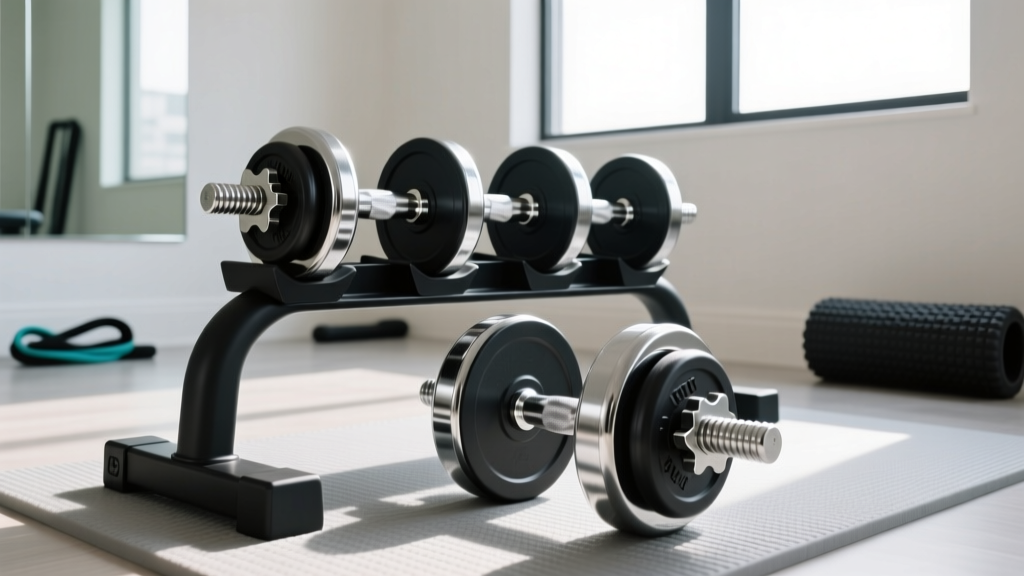
Maintaining Loadable Dumbbells for Rear Delt Dumbbell Exercises
Learn how to maintain loadable dumbbells with interchangeable plates to prevent wear and tear from rear delt dumbbell exercises. Expert care tips inside.

The Hidden Toll of Isolation Movements on Loadable Plates
Loadable dumbbells with interchangeable plates remain one of the most cost-effective and space-efficient investments for a home gym. Whether you are using standard 1-inch spinlock handles like the Yes4All sets ($40-$80) or premium 2-inch Olympic options like the Rogue Loadable Dumbbells ($195 per pair), the economic advantage over fixed-weight rubber dumbbells is undeniable. However, this modular design introduces mechanical vulnerabilities that fixed weights do not possess. Threads strip, collars loosen, and sleeves warp if not properly maintained.
While heavy compound lifts like dumbbell presses often get the blame for equipment degradation, it is actually high-rep, awkward-angle isolation work that accelerates wear and tear. Specifically, the rear delt dumbbell exercise—encompassing bent-over reverse flyes, chest-supported rear delt rows, and standing lateral raises—places unique biomechanical and environmental stress on interchangeable plate systems. Understanding these stressors is the first step in extending the lifespan of your gear.
Biomechanical Stress: Why Rear Delt Work Accelerates Wear
To understand why your equipment requires specialized maintenance, we must look at the physics and physiology of the movement. According to biomechanics data outlined by the ExRx database for the DB Rear Lateral Raise, the exercise requires a deep hip hinge or a prone bench position, fundamentally altering how the dumbbell interacts with your body and the environment.
⚠️ Equipment Warning: The Sweat Drip ZoneWhen performing a bent-over rear delt dumbbell exercise, your torso is nearly parallel to the floor. Your armpits and chest are positioned directly above the inner sleeves and collar threads of the dumbbells. High-rep sets (12-20 reps) induce heavy localized sweating, which drips directly onto the unprotected steel threads and zinc-plated collars. Sweat contains urea, salt, and lactic acid—a highly corrosive cocktail that will seize spinlock threads in a matter of weeks if left uncleaned.
The Micro-Vibration Loosening Effect
Many lifters perform a chest-supported rear delt dumbbell exercise to eliminate lower back strain. While excellent for muscle isolation, this variation causes the inner collars of the dumbbell to repeatedly tap against the vinyl or leather upholstery of the bench pad during the concentric and eccentric phases. These rapid micro-vibrations act like a pneumatic impact wrench in reverse, slowly backing off star-lock nuts and clamp collars. A loose collar on a 25lb plate not only ruins the mind-muscle connection by creating distracting rattling, but it also shifts the center of gravity, increasing the risk of a dropped plate on your foot.
Step-by-Step Maintenance Routine for Interchangeable Dumbbells
Proper maintenance of a loadable dumbbell with interchangeable plates requires a targeted approach, moving beyond a simple wipe-down. Follow this protocol to ensure your collars thread smoothly and your sleeves remain rust-free.
1. Thread and Collar Degreasing
Never use standard WD-40 on your dumbbell threads. WD-40 is primarily a solvent and water displacer, not a long-term lubricant. It will strip away existing factory grease and leave a sticky residue that attracts dead skin, chalk dust, and iron particles, eventually creating a cement-like sludge in the threads.
- The Fix: Use a dedicated degreaser like Simple Green or a 50/50 mix of white vinegar and water to break down sweat salts.
- Application: Spray the solution onto a stiff nylon brush (avoid stainless steel wire brushes on zinc-plated collars, as they will strip the protective coating).
- Drying: Wipe completely dry with a microfiber cloth immediately after scrubbing to prevent flash rusting.
2. Proper Lubrication for Spinlock and Clamp Collars
Once the threads are clean and dry, they must be lubricated to prevent metal-on-metal galling. Apply two to three drops of 3-IN-ONE Multi-Purpose Oil or a light synthetic gun oil (like Break-Free CLP) directly to the helical threads. Spin the collar back and forth to distribute the oil evenly. For Olympic-style dumbbells that use lever-action clamp collars, apply a drop of oil to the hinge pin to prevent squeaking and seizing.
Maintenance Schedule & Product Recommendations
Consistency is the key to longevity. Use the matrix below to establish a maintenance cadence based on your training frequency and environment (e.g., humid garage gyms require more frequent care than climate-controlled spare bedrooms).
| Maintenance Task | Frequency | Recommended Tools/Products | Estimated Cost |
|---|---|---|---|
| Sweat & Chalk Wipe Down | After every session | Damp microfiber cloth | $5 (pack of cloths) |
| Thread Degreasing & Oiling | Bi-weekly | Simple Green, Nylon Brush, 3-IN-ONE Oil | $12 total |
| Knurling Deep Clean | Monthly | Brass wire brush, mild dish soap | $8 |
| Sleeve & Plate Prong Inspection | Quarterly | Calipers, rubber mallet (for minor bends) | $15 |
Knurling Care: Preserving Grip for High-Rep Flyes
The rear delt dumbbell exercise requires a secure, hook-style or full grip to prevent the dumbbell from rolling forward in the hand during the lateral raise phase. If your knurling is packed with dead skin, magnesium carbonate (chalk), and sebum, your grip will fail before your posterior deltoids do.
"A loadable dumbbell's knurling is its most critical tactile interface. When chalk and sweat combine in the valleys of the knurl, they form a hardened paste that effectively turns an aggressive mountain-style knurl into a smooth, slippery cylinder." — Equipment Maintenance Guidelines, National Strength and Conditioning Association (NSCA)
The Brass Brush Technique
To restore the bite of your dumbbell handles without destroying the zinc or chrome plating, use a brass wire brush. Brass is softer than steel, meaning it will aggressively scrape out chalk and skin from the knurling valleys without shaving off the protective metallic coating of the handle. Scrub in a circular motion, followed by a wipe-down with a damp cloth. Never use a stainless steel brush on standard commercial or home-grade loadable handles; reserve stainless steel only for raw, uncoated Olympic bars.
Troubleshooting Common Loadable Dumbbell Failures
Even with meticulous care, interchangeable plate systems can develop mechanical quirks. Here is how to troubleshoot the most common issues encountered by lifters who frequently utilize modular dumbbells for isolation work.
Problem: The Collar Cross-Threads and Sticks
Cause: This usually happens when a lifter is fatigued after a heavy set of rear delt dumbbell exercises and attempts to spin the collar on at an angle, or when microscopic rust has formed on the helical ridges.
Solution: Do not force it with pliers, as this will permanently deform the threads. Apply a penetrating oil like PB Blaster, let it sit for 15 minutes, and gently rock the collar back and forth (counter-clockwise) until it breaks free. Once removed, clean both male and female threads with a thread-chasing file or a dedicated thread restorer tool.
Problem: Rattling Plates During the Eccentric Phase
Cause: Standard 1-inch cast iron plates often have center holes that are slightly oversized (e.g., 1.05 inches) to ensure they slide on easily. When performing a rear delt dumbbell exercise, the horizontal leverage causes the plates to shift and clang against each other, which can loosen the collar over time.
Solution: Upgrade to precision-machined Olympic loadable handles that utilize tight-tolerance sleeves and require friction clamp collars (like the Rogue HG 2.0 Collars). The clamping force of a lever-action collar compresses the inner plate against the sleeve shoulder, eliminating lateral play and the resulting micro-vibrations that back off threaded collars.
Final Thoughts on Gear Longevity
A loadable dumbbell with interchangeable plates is a lifelong investment if treated correctly. By recognizing the unique environmental and mechanical stressors introduced by isolation movements like the rear delt dumbbell exercise, you can shift from a reactive repair mindset to a proactive maintenance routine. Keep your threads clean, your knurling clear of chalk buildup, and your collars tightly secured, and your modular iron will serve your posterior chain development for decades to come.
More gear to consider
All reviews
Cast Iron vs Competition Kettlebells & Bowflex Dumbbell Bench Care
Olympic vs Standard Plates & Seated Dumbbell Shoulder Press Form

Racks Compared: Power, Squat, Stands & the Dumbbell Front Lunge

Standing Dumbbell Front Raise: Neoprene Dumbbell Mistakes & Fixes

Chest Press Machine or Free Weights? Loadable Dumbbell Space Guide
