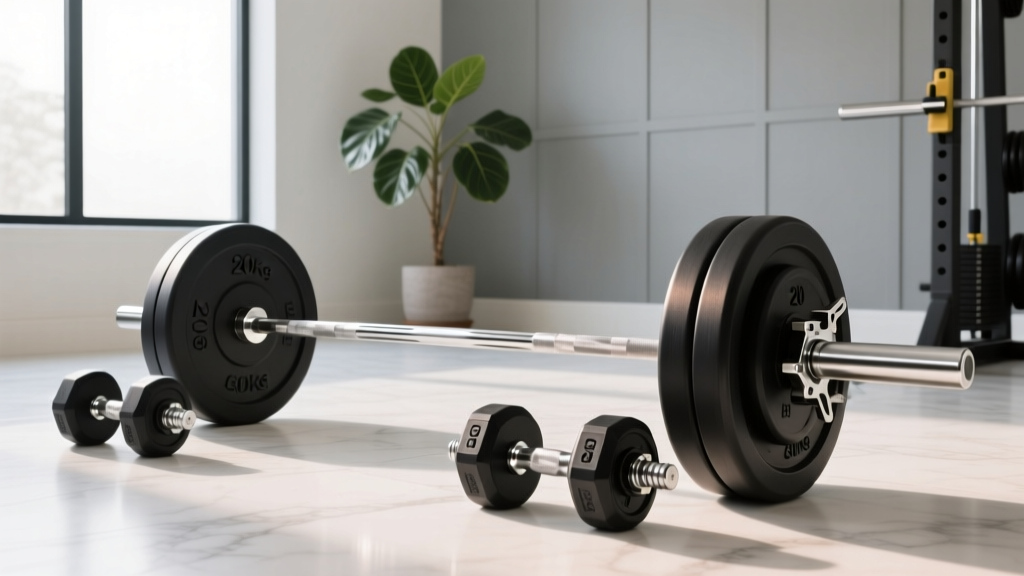
Curl Bar vs Dumbbells: Bicep Gains & Olympic Knurling Guide
Compare curl bar vs dumbbells for bicep growth. Includes a deep-dive Olympic barbell buying guide on weight specs, shaft diameter, and knurling patterns.

The Core Debate: Curl Bar vs Dumbbells for Arm Hypertrophy
When building a dedicated arm-day arsenal in 2026, lifters inevitably face a crossroads: should you prioritize the unilateral freedom of dumbbells or the heavy, stable overload of a curl bar? The curl bar vs dumbbells debate is a staple in bodybuilding and strength communities, but most comparisons skim the surface, focusing only on basic biomechanics. To make a truly informed purchasing decision, we must look deeper into the metallurgical and ergonomic engineering of the equipment.
The Quick Verdict: Dumbbells win for unilateral symmetry, deep stretch, and active supination. However, the Olympic curl bar dominates for heavy, stable overload, central nervous system (CNS) adaptation, and superior tactile feedback via advanced knurling patterns. Most elite lifters require both, but your primary investment should align with your specific joint health and loading needs.The Dumbbell Advantage: Unilateral Freedom and Micro-Loading
Dumbbells are the undisputed kings of unilateral training. When comparing a curl bar vs dumbbells, the dumbbell’s primary advantage lies in its ability to expose and correct muscular imbalances. Because each arm must move the load independently, your dominant bicep cannot compensate for a weaker counterpart.
Handle Ergonomics and Micro-Loading
Standard fixed hex dumbbells and high-end adjustable models (like the Nuobell or PowerBlock Pro) typically feature handle diameters between 32mm and 35mm. This thickness is excellent for grip strength development but can prematurely fatigue the forearm flexors before the biceps reach true mechanical failure. Furthermore, dumbbells allow for precise micro-loading. Jumping from a 45 lb to a 50 lb dumbbell is a 5 lb increase per arm; with a barbell setup, you can add fractional plates (e.g., 0.5 lb or 1 lb per side) to progress in much smaller, sustainable increments.
The Olympic Curl Bar: A Masterclass in Weight and Knurling
To truly evaluate the curl bar side of this matchup, we must apply a rigorous Olympic barbell buying guide lens. A curl bar is not just a bent piece of steel; the variations in weight, shaft diameter, and knurling engineering drastically alter the training stimulus.
Decoding Olympic Curl Bar Weights and Dimensions
Not all curl bars are created equal. When shopping for an Olympic curl bar, weight and sleeve length are your primary differentiators:
- Premium Olympic Curl Bars (e.g., Rogue Curl Bar, Eleiko Curl Bar): These typically weigh 35 lbs (15.8 kg). They feature a 28.5mm shaft diameter and extended 10.5-inch loadable sleeves. The longer sleeves allow you to load upwards of 200+ lbs using standard bumper or iron plates without the collars slipping off—a critical feature for heavy overload training.
- Standard/Budget EZ Bars (e.g., CAP Barbell OB-86PB): These usually weigh 25 lbs (11.3 kg) and feature shorter 7-inch sleeves. While adequate for beginners, the shorter sleeves limit your max load to about 90-100 lbs before you run out of sleeve space, creating a hard ceiling for advanced lifters.
The 28.5mm shaft found on premium curl bars is specifically chosen because it sits in the sweet spot for grip comfort and bar whip. It is slightly thicker than a 28mm Olympic weightlifting bar but thinner than a 29mm powerlifting bar, allowing for optimal finger wrapping during high-rep hypertrophy sets.
Knurling Patterns: Volcano, Mountain, and Hill
According to BarBend's comprehensive knurling guide, the knurl pattern dictates how the bar interfaces with your skin. This is where premium curl bars separate themselves from standard dumbbells.
- Volcano Knurling: Found on high-end bars like the Rogue Curl Bar, volcano knurling is created by machining a diamond pattern and then slightly flattening the top, leaving a sharp, jagged rim around a small crater. At a depth of roughly 1.2mm, it provides an aggressive "bite" that locks the bar into your palms during heavy, sweaty preacher curls without tearing your calluses.
- Mountain Knurling: Standard on most commercial gym dumbbells and mid-tier curl bars. The peaks are left sharp and pointed. It feels aggressive at first glance but can become painful during high-rep sets, often causing the lifter to loosen their grip to avoid skin tearing.
- Hill Knurling: The peaks are heavily flattened, resulting in a smooth, almost passive feel. Common on cheap, chrome-plated Amazon curl bars. We strongly advise against hill knurling for heavy arm work, as the lack of friction forces you to over-grip, leading to rapid forearm pump and elbow tendon strain.
Head-to-Head Spec Comparison: Premium Curl Bar vs. Urethane Dumbbells
Below is a direct data comparison between a top-tier Olympic curl bar and a set of commercial-grade urethane dumbbells to highlight the mechanical differences.
| Feature | Rogue Olympic Curl Bar (2026 Spec) | Rogue Urethane Dumbbells (Pair) |
|---|---|---|
| Base Weight | 35 lbs (Bar only) | 5 to 100+ lbs (Per dumbbell) |
| Shaft/Handle Diameter | 28.5mm | 34mm (Standard) |
| Knurling Type | Multi-pattern Volcano | Passive Mountain |
| Tensile Strength | 190,000 PSI | N/A (Solid Cast/Welded) |
| Wrist Biomechanics | Fixed 45-degree & 30-degree angles | Free rotation (Full Supination) |
| Approx. Cost (2026) | $295.00 | $3.50 - $4.50 per lb |
Biomechanics and Joint Health: Supination vs. Fixed Angles
The primary function of the biceps brachii is elbow flexion and forearm supination (rotating the palm upward). When using dumbbells, you can actively supinate the weight at the top of the movement, achieving a peak contraction that a curl bar simply cannot replicate. This makes dumbbells superior for targeting the short head of the bicep and maximizing the "peak."
However, the fixed, angled bends of an Olympic curl bar place the wrists in a semi-supinated, neutral position. For lifters suffering from medial epicondylitis (golfer's elbow) or wrist impingements, the straight-bar supination required by some dumbbell variations can cause severe pain. The curl bar’s fixed angles bypass this joint stress, allowing you to continue loading the biceps heavily without aggravating connective tissue.
Real-World Failure Modes and Maintenance
Equipment failure is rarely discussed in buying guides, but it dictates the long-term value of your purchase. Here are the edge cases and failure modes to watch for:
- Curl Bar Sleeve Seizure: Budget curl bars use cheap composite bushings that dry out and seize over time, causing the sleeves to stop spinning. When you rack a heavy curl bar, the kinetic energy transfers directly into your wrists instead of dissipating through the spinning sleeve. Always look for bronze or composite bushings with grease zerks or sealed needle bearings.
- Dumbbell Weld Snaps: Cheap, rubber-coated hex dumbbells with welded handles are notorious for snapping at the weld joint if dropped from shoulder height. If buying fixed dumbbells, prioritize solid cast urethane or solid steel models where the handle is forged as a single piece through the head.
- Knurl Rust and Degradation: Bare steel volcano knurling on premium curl bars will oxidize if exposed to humid garage environments. You must use a nylon brush and 3-in-One oil monthly to maintain the bite. Dumbbells with chrome or urethane handles require zero maintenance but sacrifice tactile grip.
Pro-Tip for Knurl Maintenance: Never use a steel wire brush on a premium volcano knurl. The stiff steel bristles will shear off the microscopic peaks that give the knurl its "bite." Stick to a stiff nylon brush and a light application of mineral oil to lift chalk and dead skin from the valleys.
The 2026 Buying Framework: Which Should You Invest In?
If your budget restricts you to only one option, use this decision matrix to guide your purchase:
Choose Dumbbells If:
- You are a beginner or intermediate lifter focusing on fixing left-to-right strength imbalances.
- You prioritize the bicep "peak" and want the ability to actively supinate during the concentric phase.
- You have limited space and need adjustable dumbbells (like the PowerBlock Elite) to replace an entire rack of fixed weights.
Choose the Olympic Curl Bar If:
- You are an advanced lifter who needs to overload the biceps and brachialis with weights exceeding 100 lbs safely.
- You suffer from wrist pain or elbow tendonitis that is aggravated by the fully supinated grip of dumbbells.
- You value the tactile feedback of a 190k PSI tensile strength shaft with precision-cut volcano knurling to prevent grip slip during high-sweat hypertrophy blocks.
Ultimately, the curl bar vs dumbbells debate isn't about finding a single winner; it's about understanding the mechanical nuances of your equipment. By paying close attention to Olympic barbell weight specs, sleeve lengths, and knurling depths, you can build an arm-training setup that maximizes hypertrophy while minimizing joint wear and tear.
More gear to consider
All reviews
Cast Iron vs Competition Kettlebells: 2026 Trends & Dumbbell Diagonal Raises
Troubleshooting Dumbbell Press Technique: Olympic vs Standard Plates

Water Dumbbell Exercises vs Loadable Dumbbells: 2026 Trends

Olympic vs Standard Plates for Your Full Body Dumbbell Routine
Dragon Ball Z Dumbbells vs Neoprene: Home Gym Mistakes & Fixes