
Loadable Plates vs Dial: Bowflex Dumbbell Exercises Cost Analysis
Are loadable plates better than dial weights for bowflex dumbbell exercises? We break down 2026 costs, failure modes, and long-term value per pound.

The Home Gym Dilemma: Dial Systems vs. Loadable Interchangeable Plates
When building a versatile home gym in 2026, lifters frequently search for routines centered around bowflex dumbbell exercises—a catch-all term for movements requiring rapid weight adjustments, such as Arnold presses, renegade rows, and drop-set lateral raises. While dial-adjustable dumbbells have dominated this space for years, a massive shift is occurring toward loadable dumbbells with interchangeable plates. For budget-conscious lifters and strength athletes who refuse to compromise on durability, the financial and mechanical breakdown between these two systems reveals a clear winner for long-term value.
This comprehensive budget breakdown analyzes the true cost of ownership, failure modes, and biomechanical clearance of loadable Olympic and standard dumbbell handles compared to premium dial-adjustable systems.
The True Cost Matrix: Upfront Investment vs. Cost Per Pound
To understand the value proposition, we must look beyond the initial price tag. Dial systems cap out at fixed weights, forcing you to buy entirely new, exponentially more expensive units when you outgrow them. Loadable systems scale linearly with the cost of iron.
| System Type | Upfront Cost (Pair) | Max Weight Capacity | Cost to Add 20 lbs |
|---|---|---|---|
| Dial-Adjustable (5-52.5 lbs) | $399 - $449 | 52.5 lbs per hand | N/A (Requires $699+ Upgrade) |
| Dial-Adjustable (10-90 lbs) | $699 - $799 | 90 lbs per hand | N/A (Fixed Cap) |
| Olympic Loadable System (14in Sleeves) | $260 - $320 (Handles + 100lbs Plates) | 100+ lbs per hand | $40 - $50 (Cast Iron) |
As demonstrated, if your strength progression demands weights beyond 52.5 lbs, the loadable plate system offers an insurmountable financial advantage. According to BarBend's extensive adjustable dumbbell testing, the cost-per-pound metric is the most critical factor for intermediate to advanced lifters who routinely press or row heavy loads.
Component Breakdown: Building a Loadable System in 2026
A loadable dumbbell system consists of three distinct purchases: the handles, the collars, and the plates. Here is where your budget actually goes.
1. The Handles: Standard vs. Olympic Sleeves
You have two primary paths when selecting loadable handles:
- Standard 1-Inch Sleeves (Spinlock): These are the traditional threaded handles. Budget-friendly ($30-$50 per pair), but the threaded collars are notoriously slow to adjust and prone to cross-threading if forced. Max capacity usually hovers around 40-50 lbs per hand before the sleeve runs out of space.
- Olympic 2-Inch Sleeves (Solid Steel): Handles from brands like Titan Fitness, Rogue, or Bells of Steel ($90-$160 per pair). These feature 50mm sleeves, aggressive knurling, and internal bronze bushings. They accept standard Olympic plates and can hold 100+ lbs per hand depending on sleeve length (typically 14 to 18 inches).
For a true adjustable dumbbell experience, opt for 14-inch total length handles with roughly 6 to 7 inches of loadable sleeve space. Longer 18-inch handles (often sold as 'dumbbell bars') become unwieldy during unilateral movements like Bulgarian split squats, causing the rear sleeve to clash with your torso.
2. The Plate Economics: Cast Iron vs. Urethane
To execute traditional bowflex dumbbell exercises effectively, you need a granular weight progression. Sourcing high-tolerance plates, such as Rogue Fitness machined steel plates or standard cast iron, ensures accurate loading.
- Cast Iron Olympic Plates: $1.50 to $2.50 per pound. Loud, prone to rust if stored in humid garages, but the most budget-friendly option.
- Urethane Coated Plates: $3.00 to $5.00 per pound. Odorless, rust-proof, and quieter. Essential if you are dropping the dumbbells on rubber mats during heavy fatigued sets.
- Fractional Plates (0.5lb - 2.5lb): Crucial for upper body isolation. The American Council on Exercise (ACE) emphasizes that progressive overload on small muscle groups (like lateral deltoids) requires micro-loading, which is easily achieved with $15 fractional change plates on a loadable system, but impossible on fixed-increment dial systems.
3. Collars and Locking Mechanisms
Do not use cheap spring clips on heavy loadable dumbbells. Invest in Lockjaw collars or heavy-duty Olympic clamp collars ($25-$40 per pair). These utilize a cam-lever system that exerts hundreds of pounds of clamping force, preventing plates from sliding outward during overhead tricep extensions or heavy floor presses.
Biomechanical Clearance: The Hidden Drawback of Loadable Plates
While loadable dumbbells win on budget and durability, they introduce a physical variable that dial systems avoid: radial clearance.
When performing close-grip movements or exercises where the dumbbells meet at the midline (e.g., Dumbbell Chest Flyes, Goblet Squats, or Hex Presses), the physical diameter of the plates matters.
⚠️ The Bumper Plate ProblemNever use standard 450mm (17.7-inch) Olympic bumper plates on dumbbell handles for upper body exercises. The massive diameter will cause the weights to collide before your chest muscles reach full contraction. Solution: Exclusively use machined steel plates or specialized 'dumbbell bumpers' (which have a smaller 190mm-220mm diameter) to maintain a full range of motion.
Failure Modes and Long-Term Durability Analysis
Understanding how equipment fails is the cornerstone of any true value analysis. Here is how the two systems compare when subjected to real-world home gym abuse.
Dial-Adjustable Failure Points
- Plastic Tab Shearing: The internal weight-selection mechanism relies on plastic tabs and gears. If the dumbbell is dropped from even a low height (e.g., slipping from sweaty hands during a heavy dumbbell press), these tabs snap, rendering the dial stuck.
- False-Seating: If the dial is not perfectly aligned when placed in the cradle, turning it can strip the internal selector rod, causing a 10lb plate to detach mid-rep—a severe safety hazard.
- Warranty Voids: Most dial manufacturers explicitly state that dropping the weights voids the warranty, yet dropping weights is a natural part of high-intensity interval training (HIIT) and heavy failure sets.
Loadable System Failure Points
- Sleeve End-Cap Blowouts: On ultra-cheap, hollow-core loadable handles, the welded end-cap can shear off if dropped repeatedly on concrete, allowing plates to slide completely off the sleeve.
- Collar Slippage: If using standard spring collars instead of cam-lock collars, the vibration from exercises like dumbbell snatches or walking lunges can cause the collar to inch outward, creating a dangerous imbalance.
- The Verdict on Durability: A solid steel Olympic loadable handle with a bolted or forged end-cap is virtually indestructible. It will outlive the lifter. The plates themselves are solid iron or steel. The failure rate of a properly assembled loadable system approaches zero.
Final Decision Framework: Which System Should You Buy?
To finalize this budget breakdown, use this decision matrix to determine which system aligns with your training style and financial parameters in 2026.
Buy Dial-Adjustable Dumbbells If:
- Your primary focus is circuit training, HIIT, or physical therapy where you need to change weights in under 3 seconds.
- You have severe space constraints and cannot store a rack of loose 2.5lb, 5lb, and 10lb plates.
- Your maximum strength ceiling for dumbbell movements will not exceed 50 lbs per hand in the foreseeable future.
Buy Loadable Interchangeable Plates If:
- You are a strength-focused lifter who routinely performs heavy goblet squats, deficit lunges, and chest presses requiring 60+ lbs per hand.
- You want a 'buy-it-for-life' system and refuse to baby your equipment by avoiding drops.
- You already own a barbell and Olympic plates, meaning your marginal cost to add dumbbell handles is under $150.
- You value micro-loading (fractional plates) for strict, progressive overload on isolation movements.
The Bottom Line
While the search volume for bowflex dumbbell exercises highlights a massive consumer desire for adjustable, space-saving home gym solutions, the financial and mechanical reality heavily favors the loadable dumbbell with interchangeable plates for serious lifters. By investing $150 in high-quality Olympic handles and strategically sourcing cast iron or machined steel plates over time, you build a scalable, indestructible arsenal that supports your strength journey from novice to advanced, without ever hitting an arbitrary weight ceiling.
More gear to consider
All reviews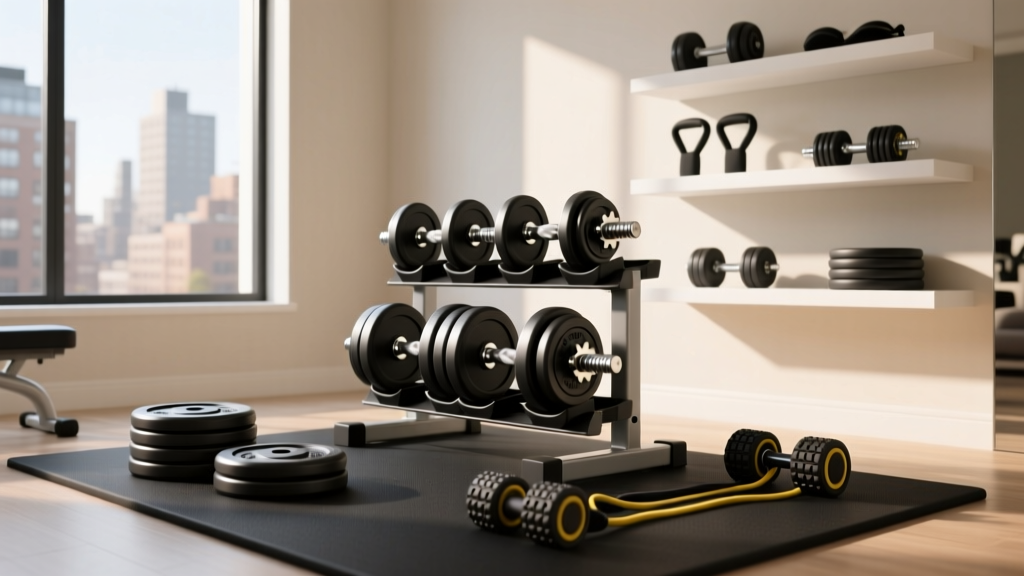
Space Optimization: Loadable Plates and Wrist Curls with Dumbbells
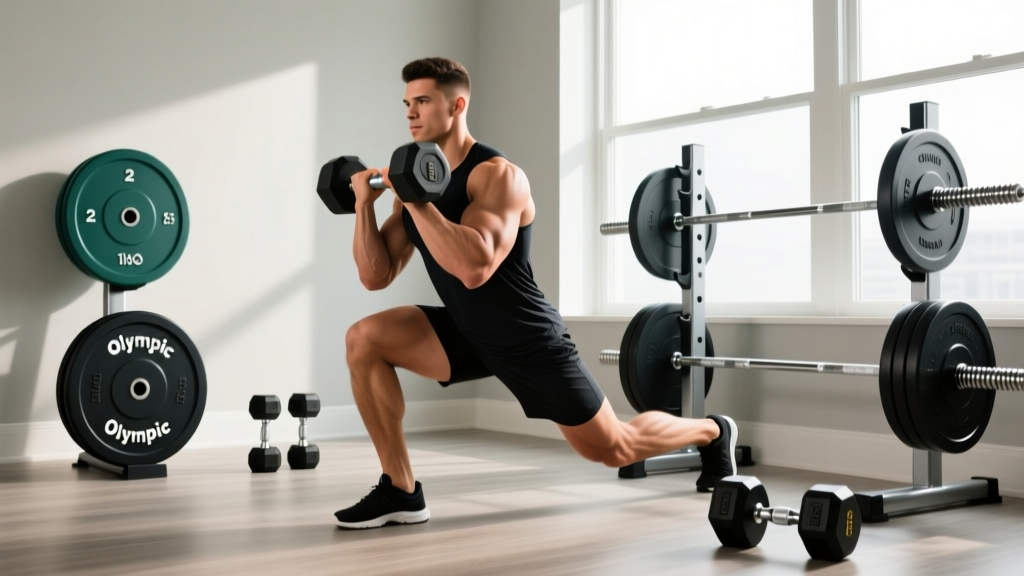
Olympic vs Standard Plates & Dumbbell Bulgarian Split Squat Muscles Worked

EZ Curl Bar vs Straight Bar: Which Builds Big Dumbbell Biceps?
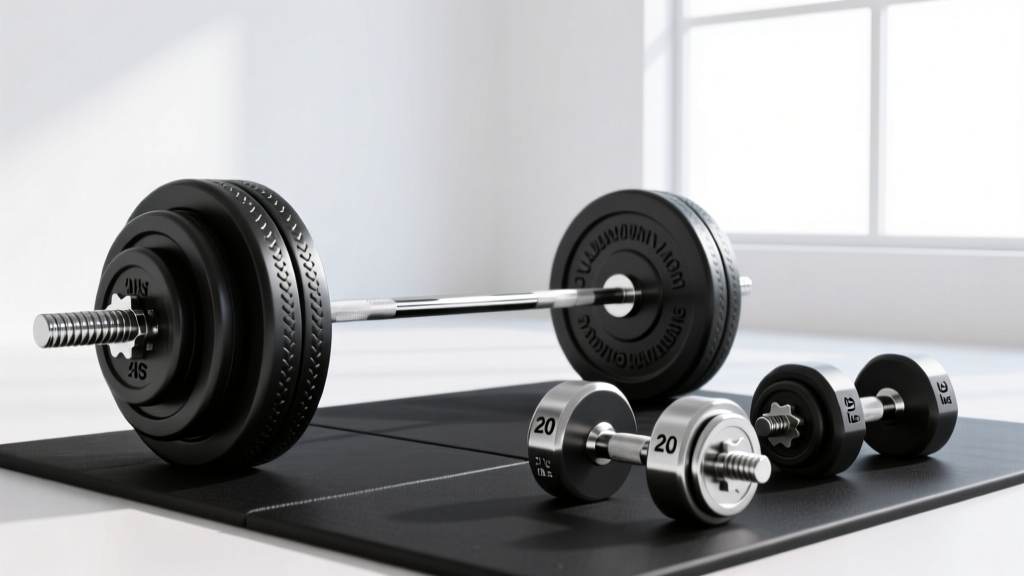
Olympic Barbell Guide: Knurling, Weight & Shoulder Rows Dumbbell

Space-Saving Gym Layouts for Heavy Dumbbell RDLs Using Loadable Sets
