
Convert Dumbbell to Barbell: Adjustable Set Reviews & Guide
Learn how to safely convert dumbbell to barbell setups. Our 2026 guide reviews the best adjustable dumbbells that actually work with connector bars.

Why Convert Dumbbells to a Barbell? The Beginner's Advantage
Building a home gym on a budget often means starting with a pair of adjustable dumbbells. They are space-efficient, versatile, and perfect for isolation movements. However, as your strength progresses, you will inevitably hit a ceiling with dumbbell-only training. Bilateral compound movements like heavy back squats, traditional deadlifts, and bench presses are significantly safer and more effective with a barbell. According to a biomechanical analysis published in the Journal of Sports Science & Medicine, barbell movements allow for greater absolute load and superior force production compared to dumbbells due to increased stability.
But buying a full Olympic barbell, bumper plates, and a power rack can cost upwards of $800 and dominate your garage. This is where the convert dumbbell to barbell strategy shines. By using a dumbbell connector bar (a simple steel tube that bridges two dumbbells together), you can create a makeshift barbell for a fraction of the cost. The catch? Not all adjustable dumbbells are physically designed to be connected. In this guide, we break down exactly how to execute this conversion safely and review the best adjustable dumbbell sets on the market that actually support this hybrid setup.
The Golden Rule: Not All Adjustable Dumbbells Convert
The most common mistake beginners make is buying a popular adjustable dumbbell set without checking its physical dimensions. To successfully connect two dumbbells, the combined width of the dumbbell heads and the connector bar must leave enough room for your hands to grip comfortably without scraping your knuckles.
⚠️ Critical Warning for Bowflex Users: The Bowflex SelectTech 552 is arguably the most popular adjustable dumbbell in the world, but it is terrible for barbell conversion. At 16.9 inches in length per dumbbell, placing two of them on a standard connector bar leaves zero clearance for your hands. You will end up with a 40-inch barbell where your grip is forced onto the bulky plastic weight casings, creating a severe safety hazard during pressing movements.To successfully convert dumbbell to barbell configurations, you need adjustable sets that are either compact in length or feature a traditional cylindrical shape that mimics standard barbell sleeves.
Step-by-Step: How to Convert Dumbbell to Barbell Safely
Follow this exact protocol to ensure your hybrid barbell is secure before loading it with heavy weight.
- Verify Sleeve Diameter Compatibility: Dumbbell connector bars come in two sizes: Standard (1-inch) and Olympic (2-inch). Ensure your adjustable dumbbells' handles match the connector bar's inner diameter. Forcing a 1-inch connector onto a 2-inch handle will result in catastrophic failure.
- Measure the Center Gap: Most high-quality connector bars (like the DB2 Barbell) feature a center knurled grip that is exactly 5.5 inches wide. Ensure your dumbbells' inner profiles are flat or tapered so they sit flush against the connector's collar.
- Load and Lock the Dumbbells: Set both adjustable dumbbells to the exact same weight. An asymmetrical load (e.g., 40 lbs on the left, 45 lbs on the right) will create an uneven moment arm, causing the bar to tilt dangerously during a bench press.
- Attach the Connector Bar: Slide the connector bar over the handles. If using a threaded connector, screw the dumbbell handles tightly into the bar. If using a sleeve-style connector, ensure the locking pins or star-locks are fully engaged.
- Perform the 'Hover Test': Before getting under the bar, lift the assembled unit to your waist and hold it for 10 seconds. Listen for clicking, shifting, or sliding. If the dumbbells rotate independently of the connector bar, do not use it for overhead or bench movements.
2026 Adjustable Dumbbell Review: Which Sets Actually Work?
Let's evaluate the top adjustable dumbbells specifically through the lens of barbell conversion compatibility, pricing, and structural integrity.
1. Nuobell 80lb Adjustable Dumbbells (Best Overall for Conversion)
Price: ~$429 per pair
Length: 15.3 inches (at max weight)
Verdict: The Nuobell 80s are the gold standard for hybrid home gyms. Unlike dial-based systems, Nuobell uses a twist-grip mechanism that keeps the handle completely stationary while the weight shells slide over it. The ends of the handles are relatively narrow and mimic a traditional dumbbell profile. When paired with a standard 2-inch Olympic connector bar, they leave roughly 6 inches of clearance for your hands—perfect for bench pressing and front squats.
2. PowerBlock Elite USA (Best for Heavy Lifters)
Price: ~$399 per pair (50lb base set)
Length: 12 inches
Verdict: PowerBlocks are incredibly compact and virtually indestructible. However, their blocky, rectangular shape means they do not fit into traditional cylindrical connector bars. To convert PowerBlock dumbbells to a barbell, you must purchase the proprietary PowerBlock Barbell Adapter or a specialized wide-grip flat connector. Once adapted, they are exceptionally stable and can handle heavy loads up to 90 lbs per side if you buy the expansion kits.
3. Yes4All Traditional Spin-Lock (Best Budget Option)
Price: ~$75 - $110 per pair
Length: Varies by plate loading (approx. 14.5 inches)
Verdict: If you are on a strict budget, traditional cast-iron spin-lock dumbbells are your best friend. Because they use standard 1-inch or 2-inch Olympic sleeves, they integrate flawlessly with almost any generic dumbbell connector bar on Amazon. The downside is that changing weights takes 45 seconds per dumbbell, but the structural compatibility for barbell conversion is 100% foolproof.
4. Bowflex SelectTech 552 (The 'Do Not Buy' for Connectors)
Price: ~$349 per pair
Length: 16.9 inches
Verdict: As mentioned earlier, the SelectTech 552 is a fantastic standalone dumbbell, but its excessive length and bulky plastic end-caps make it incompatible with 95% of connector bars on the market. If your primary goal is to eventually build a barbell setup, skip the Bowflex and invest in Nuobell or traditional plates.
Comparison Matrix: Dumbbell Compatibility & Specs
| Dumbbell Model | Max Length | Connector Compatibility | Best Use Case |
|---|---|---|---|
| Nuobell 80lb | 15.3 in | High (Standard 2" bars) | Bench Press, Squats |
| PowerBlock Elite | 12.0 in | Medium (Requires Adapter) | Heavy Deadlifts |
| Yes4All Spin-Lock | 14.5 in | High (1" or 2" bars) | Budget Hybrid Gyms |
| Bowflex 552 | 16.9 in | Very Low (Unsafe) | Isolation Only |
Common Beginner Mistakes and Safety Troubleshooting
Even with the right equipment, converting dumbbells to a barbell introduces unique mechanical stresses. Here is how to troubleshoot common failure modes:
- The 'Wobble' Effect: If your connector bar relies on set-screws (small grub screws that dig into the dumbbell handle), they will eventually strip the knurling on your dumbbells. Fix: Wrap a single layer of athletic tape around the dumbbell handle before inserting it into the connector to increase friction and protect the steel knurling.
- Center of Gravity Shifts: A standard 7-foot Olympic barbell weighs 45 lbs and distributes weight evenly across your back during a squat. A dumbbell connector bar weighs roughly 8 lbs and is only 20 inches long. Fix: Never use a dumbbell connector bar for heavy back squats. The short length will dig into your cervical spine. Limit hybrid barbell squats to front squats or goblet-style zercher squats.
- Collar Slippage: When performing movements like the Romanian Deadlift (RDL), the downward force can cause poorly secured dumbbell heads to slide off the connector. Always use secondary locking collars on the outside of the dumbbell handles if the design permits.
"The goal of a hybrid home gym is to maximize utility without compromising safety. A dumbbell-to-barbell converter is an excellent tool for pressing and hinging, but it should never replace a true Olympic barbell for heavy, spine-loaded axial movements."
Final Verdict: Building Your Hybrid Home Gym
Learning how to convert dumbbell to barbell setups is one of the smartest space-saving hacks for beginner and intermediate lifters. It bridges the gap between light isolation work and heavy compound lifting without requiring a $600 investment in a dedicated barbell and plate set.
For the best results in 2026, we highly recommend pairing the Nuobell 80lb adjustable dumbbells with a high-quality 2-inch Olympic connector bar. This combination offers the sleek profile needed for comfortable grip clearance, the micro-loading capabilities required for progressive overload, and the durability needed for intense bench press sessions. As always, prioritize proper form and equipment inspection over chasing personal records. For more foundational advice on structuring your home workouts safely, refer to the strength training guidelines provided by the American Council on Exercise (ACE).
By choosing the right adjustable dumbbells from the start, you future-proof your home gym, ensuring that your equipment grows right alongside your strength.
More gear to consider
All reviews
Compact Gym Design: Running With Dumbbells & Kettlebell Selection

Standard vs Olympic Plates: Alternate Dumbbell Front Raise Guide
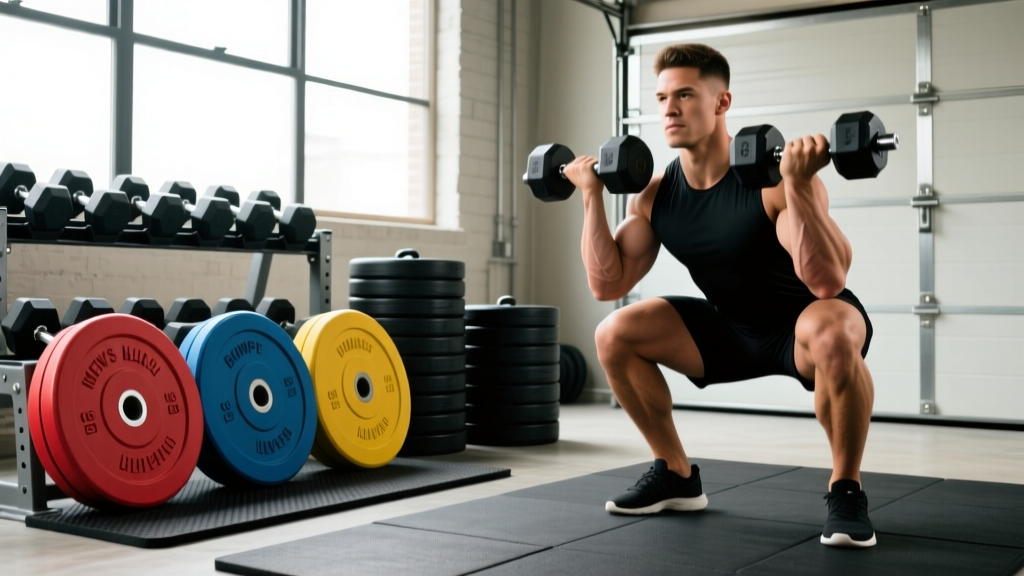
Bumper vs Iron Plates: Setup for Squats & Sitting Dumbbell Curls
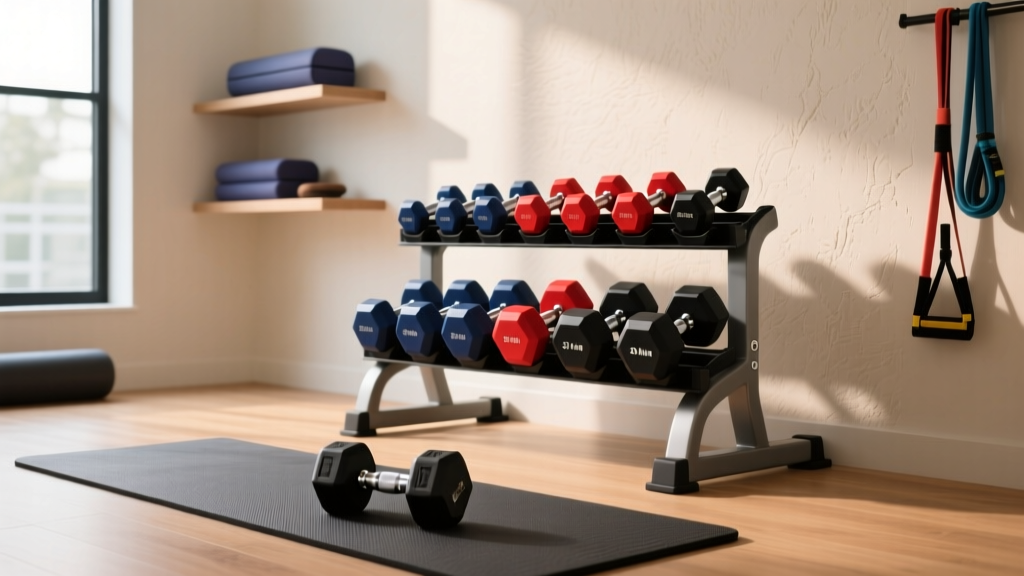
Best Racks for a 30 Minute Workout with Dumbbells: 2026 Budget Guide
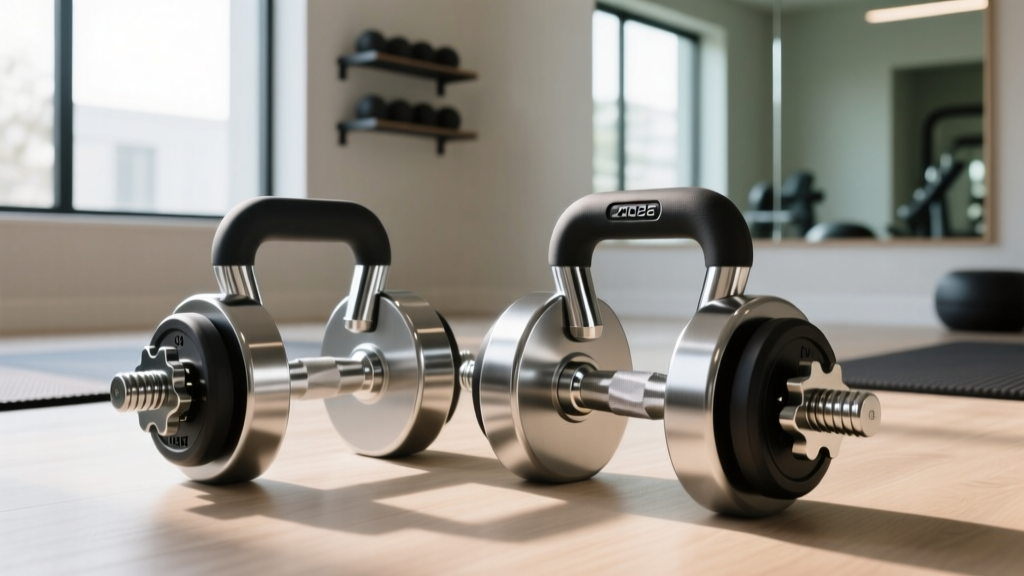
Best Loadable Dumbbells for Deltoids: 2026 Hands-On Review
