Collar Clamp Types: Safety for Lower Back Dumbbell Exercises
Compare barbell collar and clamp types to prevent weight shifts. Learn troubleshooting tips to stay safe during heavy lower back dumbbell exercises.

The Hidden Danger of Weight Shifts in Lumbar Training
When lifters think about barbell collar and clamp types, they usually picture heavy barbell squats or Olympic weightlifting drops. However, one of the most dangerous environments for collar failure is during lower back dumbbell exercises. Whether you are executing heavy dumbbell Romanian deadlifts (RDLs), dumbbell good mornings, or bent-over rows using plate-loaded Olympic dumbbell handles, the biomechanical margin for error is razor-thin.
According to kinesiology data from ExRx, exercises like the dumbbell stiff-leg deadlift place massive eccentric tension on the erector spinae and multifidus muscles to stabilize the lumbar spine. If a collar fails and a 10-pound plate slides just two inches outward on one side, it creates an immediate, violent asymmetric load. This rotational torque can instantly trigger an acute lumbar herniation or severe muscle tearing. In 2026, with the rise of heavy-duty plate-loaded dumbbell handles replacing adjustable selectorized models in commercial gyms, understanding collar mechanics is no longer optional—it is a critical safety protocol.
⚠️ WARNING: The Asymmetric Shift-and-SnapUnlike a barbell deadlift where both hands stabilize a single rigid axis, lower back dumbbell exercises require independent stabilization. A shifting plate alters the moment arm of the dumbbell mid-rep, forcing the lower back to compensate for lateral rotational forces it is not braced to handle.
Barbell and Dumbbell Collar Types Compared (2026 Market Breakdown)
Not all collars are created equal. The market is saturated with cheap imports that fail under the lateral vibration inherent to dumbbell hinges. Below is a comparison matrix of the primary collar types available today, evaluated specifically for their efficacy in securing plate-loaded dumbbells and barbells.
| Collar Type | Mechanism | Lateral Grip Force | Dumbbell Compatibility | Avg. Price (2026) |
|---|---|---|---|---|
| Spring Clips | Steel tension coils | < 20 lbs (Poor) | Terrible (Slips on vibration) | $5 - $12 / pair |
| Lever Clamps (e.g., Rogue AH-1) | Aluminum cam-lever | ~ 150 lbs (Excellent) | Fair (Bulky, scrapes legs) | $28 - $35 / pair |
| Lock-Jaw / Pro-Loc | ABS Plastic & TPU Latch | ~ 120 lbs (Great) | Excellent (Low profile) | $30 - $45 / pair |
| Spin-Lock Nuts | Threaded steel/iron | ~ 200 lbs (Superior) | Good (Requires threaded sleeve) | $15 - $25 / pair |
1. Spring Clips: The Outdated Hazard
Spring clips rely on the tension of bent steel wire. While they are fast to apply, they offer virtually no resistance to lateral vibration. When performing lower back dumbbell exercises, the plates rattle against each other, micro-millimeter by micro-millimeter, until the spring clip pops off the sleeve. Verdict: Never use spring clips for hinging movements or heavy rows.
2. Lever Clamps: The Barbell Gold Standard
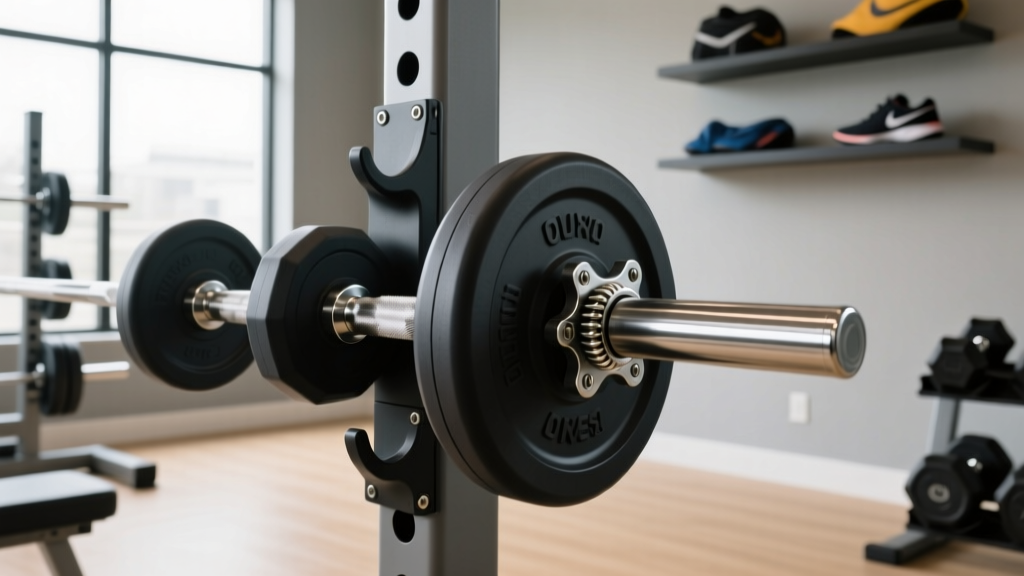
Lever clamps, such as the Rogue AH-1 Aluminum Clamp, use a cam-lever mechanism to bite into the steel sleeve. They provide immense clamping force and are the undisputed champions for barbell work. However, for plate-loaded dumbbells, the protruding lever handle can scrape against your thighs during RDLs or restrict wrist extension during heavy dumbbell rows. Furthermore, the rigid aluminum body can chip or scratch premium urethane dumbbell plates if forced on too tightly.
3. Lock-Jaw and Pro-Loc Style Collars
Brands like Lock-Jaw revolutionized the market with high-density ABS plastic bodies lined with thermoplastic polyurethane (TPU). The TPU creates massive friction against the steel sleeve without requiring a metal-on-metal bite. Their low-profile, rounded design makes them the absolute best choice for Olympic dumbbell handles, as they won't catch on your clothing or skin during tight-clearance lower back dumbbell exercises.
4. Spin-Lock Nuts (Threaded Sleeves)
If your dumbbell handles feature threaded sleeves (common in standard 1-inch and some Olympic setups), spin-lock nuts are mechanically the safest option. The physical threads prevent the collar from sliding off even if the nut loosens slightly. The drawback is speed; threading a nut on and off takes 10-15 seconds per side, which can ruin the pacing of a high-volume hypertrophy session.
Common Mistakes When Securing Weights for Lumbar Work
Even with the right equipment, user error leads to thousands of gym-related lower back injuries annually. Avoid these critical troubleshooting pitfalls:
- Mistake 1: Ignoring Sleeve Tolerances. Not all 50mm Olympic sleeves are exactly 50mm. Cheap import handles often measure 48.5mm to 49mm. A lever clamp calibrated for a true 50mm barbell will feel loose on an undersized dumbbell handle and slide off during a rep. Always test the clamp tension on your specific dumbbell brand before loading heavy plates.
- Mistake 2: The "Double Bump" Failure. When loading a dumbbell, lifters often bump the plates together, apply the collar, and then bump the dumbbell on the floor to "seat" the plates. This second impact can actually fracture the internal TPU lining of a Lock-Jaw collar or bend the pin of a lever clamp, destroying its clamping force over time.
- Mistake 3: Cross-Threading Spin-Locks. Chalk and iron dust build up in the threads of spin-lock dumbbell handles. If you force the nut past a chalk-clogged thread, you strip the metal. Once stripped, the collar will back off under the vibration of a dumbbell good morning.
Troubleshooting Guide: Mid-Set Collar Slippage
What happens if you are three reps into a heavy set of dumbbell RDLs and you hear the distinct clink of a plate sliding outward?
- Abort the Rep Immediately: Do not attempt to finish the set or "correct" your posture to account for the shifted weight. The asymmetric load is already compromising your lumbar discs.
- Controlled Descent: Lower the dumbbells straight down to the floor or platform. Do not drop them from the top of the movement, as the loose plate will act as a projectile.
- Inspect the Collar Lining: Check the TPU or rubber lining inside the collar. If you see deep grooves, tearing, or chalk packed into the grip surface, the collar is compromised and must be replaced.
- Re-Seat and Re-Tension: Wipe the dumbbell sleeve with a dry microfiber cloth to remove sweat and chalk. Push the plates flush against the dumbbell head, slide the collar completely flush against the outer plate, and engage the locking mechanism.
Lever clamps lose their bite when chalk dust acts as a dry lubricant on the steel sleeve. Keep a cheap rubber pencil eraser in your gym bag. Rubbing the eraser over the inside metal band of a lever clamp removes embedded chalk and restores the friction coefficient, extending the life of your collars for years.
Expert Verdict & Buying Framework
Securing your weights is not just about protecting your equipment; it is about protecting your spine. If your primary training involves heavy barbell squats and deadlifts, invest in a premium pair of aluminum lever clamps like the Rogue AH-1. However, if your programming heavily features lower back dumbbell exercises using plate-loaded Olympic handles, the low-profile, high-friction design of a Lock-Jaw or Pro-Loc style collar is non-negotiable. They provide the necessary lateral grip force without the bulky levers that interfere with your biomechanics during deep hinges and rows. Stop risking your lumbar health on $5 spring clips—upgrade your collars, secure your plates, and train with absolute confidence.
More gear to consider
All reviews
Seated Dumbbell Shrugs Muscles Worked: Neoprene Home Gym Setup

Rubber Hex vs Urethane Dumbbells: Best for Dumbbell Rows?
Bumper vs Iron Plates: Layouts & CrossFit Exercises with Dumbbells
Top Loadable Dumbbells: The Best One Arm Dumbbell Row Alternative

Best Dumbbell Racks 2026 & Form: Dumbbell Lateral Raise GIF