
Barbell Collars vs Clamps for the Single-Leg Dumbbell Deadlift
Compare barbell collar and clamp types to secure loadable dumbbells. Ensure maximum safety and balance for your single-leg dumbbell deadlift workouts.

The Hidden Danger in Your Home Gym: Unilateral Weight Shifting
As loadable Olympic dumbbell handles have surged in popularity for versatile home gyms in 2026, lifters are finally able to replicate heavy barbell movements with dumbbells. However, this setup introduces a critical, often overlooked safety variable: the collar. When performing a highly technical, balance-dependent movement like the single-leg dumbbell deadlift, the security of your weight plates is not just about preventing noise; it is about preserving your biomechanical alignment and protecting your spine.
According to the EXRX exercise directory, the single-leg dumbbell deadlift requires immense stabilization from the hamstrings, glutes, and erector spinae. If a 10-pound steel plate shifts just one inch outward on a loadable dumbbell sleeve during the eccentric (lowering) phase, the center of mass changes laterally. This creates an asymmetrical rotational torque on your lumbar spine and sacroiliac (SI) joint. To prevent injury, you must match the right collar or clamp to your specific equipment and environment.
Comparing the 4 Primary Collar and Clamp Types
Not all collars are created equal, and what works for a standard 7-foot Olympic barbell might be disastrous for a 6.5-inch loadable dumbbell sleeve. Here is a deep dive into the four main types of securing mechanisms available on the market.
1. Spring Clip Collars (The Budget Standard)
Spring clips are the ubiquitous, wire-loop collars found in almost every commercial gym. They rely on the tension of bent steel wire to grip the sleeve.
- Average Price: $8 - $15 per pair
- Sleeve Space Used: ~0.5 inches
- Pros: Extremely fast to apply; takes up minimal sleeve space, leaving more room for plates on short dumbbell handles.
- Cons: Prone to catastrophic failure during drops. The wire fatigues over time, losing tension.
- Verdict for Dumbbells: Acceptable for light, controlled single-leg dumbbell deadlifts, but highly dangerous if you drop the dumbbells to the floor at the end of a heavy set.
2. Lock-Jaw / Nylon Clamp Collars (The Gym Favorite)
Clamps like the Lock-Jaw Pro 2 use a rigid nylon body with internal teeth and a lever-locking mechanism to bite into the steel sleeve.
- Average Price: $25 - $35 per pair
- Sleeve Space Used: ~1.5 inches
- Pros: Excellent grip on standard 50mm sleeves; survives repeated drops from shoulder height.
- Cons: Bulky. On a short loadable dumbbell handle (like the Titan Fitness 6.5-inch sleeve), a 1.5-inch clamp on each side eats up 3 inches of total loading space, severely limiting your max weight capacity.
- Verdict for Dumbbells: Great for barbells, but too wide for most loadable dumbbell handles unless you are lifting relatively light loads.
3. Aluminum Lever Collars (The Heavy-Duty Precision Option)
Forged from aircraft-grade aluminum, collars like the Rogue Fitness AL-13 use a cam-lever system to apply immense, even pressure around the sleeve without relying on plastic teeth.
- Average Price: $45 - $60 per pair
- Sleeve Space Used: ~0.75 inches
- Pros: Low profile leaves maximum room for plates; indestructible under normal use; does not degrade in cold temperatures.
- Cons: Higher upfront cost; the lever can pinch fingers if applied carelessly.
- Verdict for Dumbbells: The absolute gold standard for heavy loadable dumbbell handles. The low profile allows you to load enough weight to make the single-leg dumbbell deadlift truly challenging for advanced lifters.
4. Spin-Lock Threaded Collars (The Legacy Choice)
These are the large, star-shaped nuts that thread onto standard 1-inch diameter dumbbell handles. They are entirely obsolete for Olympic (2-inch) setups but remain relevant for budget adjustable dumbbell sets.
- Average Price: $10 - $20 per pair (included with handles)
- Sleeve Space Used: ~1.0 inch
- Pros: Physically impossible for the collar to slide off unless the threads strip.
- Cons: Takes 15-20 seconds to thread on and off; threads can cross and jam if loaded at an angle.
- Verdict for Dumbbells: Secure, but the slow adjustment time ruins the flow of drop-sets and supersets.
Feature Comparison Matrix
| Collar Type | Material | Avg Price (Pair) | Sleeve Space | Drop Survival | Loadable Dumbbell Rating |
|---|---|---|---|---|---|
| Spring Clip | Steel Wire | $12 | 0.5" | Poor | 2/5 (Light loads only) |
| Nylon Clamp | Reinforced Nylon | $30 | 1.5" | Excellent | 3/5 (Eats sleeve space) |
| Aluminum Lever | Aluminum Alloy | $55 | 0.75" | Excellent | 5/5 (Ideal profile) |
| Spin-Lock | Cast Iron / Steel | $15 | 1.0" | Excellent | 4/5 (Slow to adjust) |
Step-by-Step: Securing Loadable Dumbbells for the Single-Leg Dumbbell Deadlift
To execute the single-leg dumbbell deadlift safely with loadable handles, follow this precise loading protocol recommended by strength and conditioning professionals affiliated with the National Strength and Conditioning Association (NSCA).
- Measure Your Sleeve Tolerance: Before buying collars, measure your dumbbell sleeve diameter with digital calipers. While Olympic standard is exactly 50mm, budget import handles often measure 48.5mm to 49mm. If your sleeve is under 49.5mm, rigid aluminum lever collars may not clamp tightly enough. In this case, use nylon clamps, as their internal teeth can bite into slightly undersized sleeves.
- Load Bumpers First, Steel Second: If you are mixing plate types, load the thicker rubber bumper plates against the inner flange of the dumbbell handle, and place thinner steel or urethane plates on the outside. This keeps the dense steel closer to the collar, reducing the lever arm and minimizing plate rattle.
- Apply and Tension the Collar: Slide the collar completely flush against the outermost plate. If using a lever collar, push it tight against the plates before flipping the cam lever. You should feel significant resistance in the final 45 degrees of the lever's arc.
- The 'Shake Test': Before stepping onto your lifting platform, hold the dumbbell by the handle and shake it vigorously side-to-side. If you hear the distinct 'clack' of plates shifting, the collar is not seated flush. Loosen, re-seat flush against the plate, and re-tighten.
Troubleshooting Common Collar Failures
⚠️ Expert Warning: The Cold Garage Gym Effect
If you train in an unheated garage gym during winter, avoid nylon clamp collars. Reinforced nylon becomes highly brittle at temperatures below 45°F (7°C). A heavy dumbbell drop on a cold concrete floor can shatter a nylon clamp, sending plates flying across your garage. Aluminum lever collars and steel spring clips are entirely immune to temperature-induced fatigue and are the only safe choices for cold-weather training environments.
Failure Mode: Nylon Teeth Stripping
Over time, the internal teeth of plastic clamp collars will wear down, especially if you frequently slide them on and off without fully releasing the tension lever. Once the teeth strip, the clamp will slide off during the hinge motion of a deadlift. Solution: Inspect the teeth every 6 months. If they look rounded rather than sharp, replace the clamps immediately.
Failure Mode: The 'Ghost' Shift
Sometimes plates shift even when the collar is tight. This happens when using machined steel plates with painted edges. The paint creates a slick surface that allows plates to slide against each other, compressing the space and leaving a gap between the plate and the collar. Solution: Use bare cast iron or rubber-coated plates for dumbbells, or insert a thin rubber friction pad between the plates before locking the collar.
Final Verdict for 2026
If your training heavily features unilateral hinge movements like the single-leg dumbbell deadlift, do not compromise on collar security. For standard 7-foot barbells, the Lock-Jaw Pro 2 nylon clamps remain a highly durable, cost-effective choice. However, for loadable Olympic dumbbell handles where sleeve real estate is at a premium, investing $55 in a pair of low-profile aluminum lever collars is non-negotiable. They preserve your loading capacity, survive thousands of drops, and ensure that the only thing failing during your workout is your muscle tissue—not your equipment.
More gear to consider
All reviews
Value Analysis: Loadable Dumbbells for Dumbbell Chest Press Exercises

Upgrading Chest Workouts With Dumbbells and Bench: Olympic Barbell Weight & Knurling Mistakes

Dumbbell Rack Maintenance After Standing Calf Raises with Dumbbells
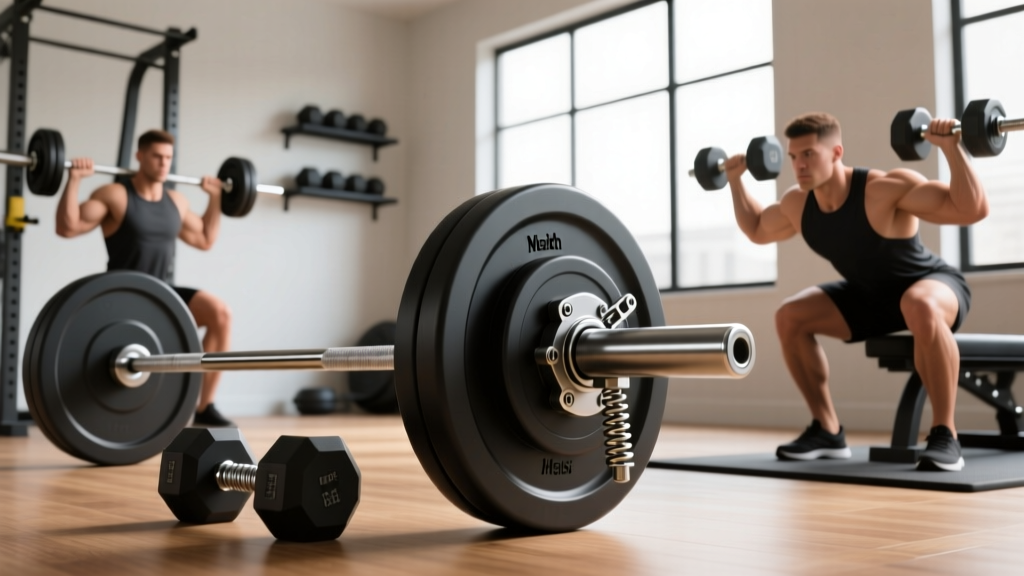
Barbell Collar vs Clamp Comparison & Dumbbell Exercises With Pictures
Troubleshooting Dumbbell RDL Form With Neoprene Weights
