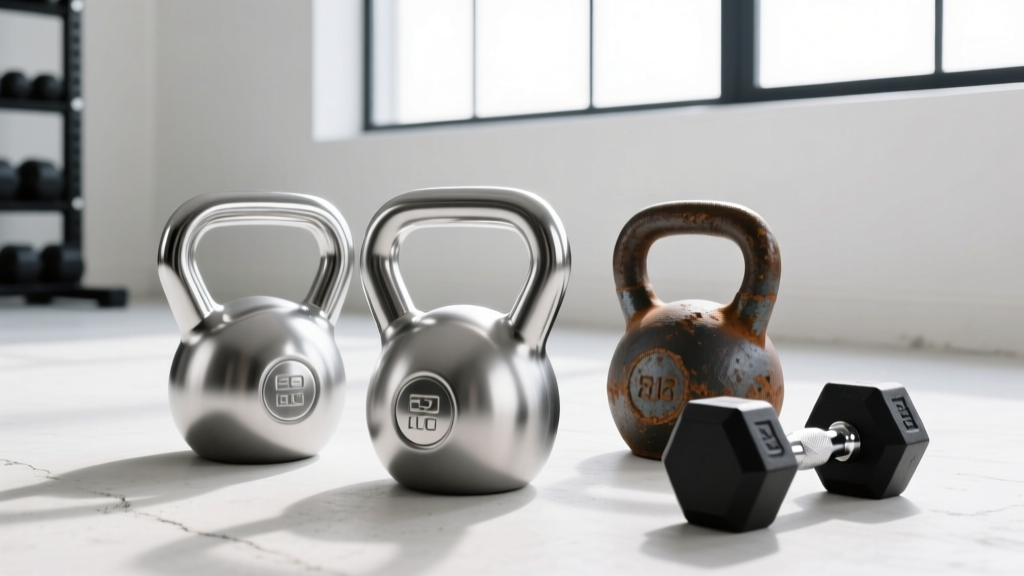
Beyond the Black and White Dumbbell Icon: Kettlebell Value Guide
Analyze the true cost and value of cast iron vs competition kettlebells. We break down pricing, handle geometry, and long-term durability for 2026.

The App Interface vs. Reality: Moving Past the Basics
If your digital workout log still relies on a generic black and white dumbbell icon to track your swings, snatches, and Turkish get-ups, you are missing the nuanced data that separates dedicated kettlebell training from standard resistance work. As we navigate the 2026 fitness equipment market, the price gap between traditional cast iron kettlebells and standardized competition kettlebells has widened, leaving many home gym owners and aspiring kettlebell sport athletes confused about where to allocate their budget.
At FitGearPulse, we don't just look at the sticker price. We analyze the Cost Per Kilogram (CPK), handle geometry, coating longevity, and resale value to determine the true lifetime value of your free weights. Whether you are grinding out heavy presses or performing high-rep ballistic snatches, understanding the metallurgical and financial differences between cast iron and competition steel is critical for your wallet and your hands.
Cast Iron Kettlebells: The Budget-Friendly Workhorse
Cast iron kettlebells are the undisputed champions of the budget-conscious garage gym. Poured into molds, these bells vary in physical size and handle diameter as the weight increases. A 12kg cast iron bell might feature a 32mm handle, while a 32kg beast from the same manufacturer could boast a 40mm+ handle.
Pricing Breakdown and Market Leaders
In 2026, the entry-level cast iron market remains highly competitive. Here is what you can expect to pay per pound:
- Budget Tier (CAP Barbell, Yes4All): $1.20 to $1.80 per pound. These are often coated in thick, glossy enamel or basic powder coat. The thick coating can fill in the handle texture, making them slick when you sweat.
- Premium Tier (Rogue Fitness, Kettlebell Kings Cast Iron): $3.00 to $4.50 per pound. These feature advanced finishes like E-Coat (electro-coating), which is significantly thinner than powder coat, preserving the aggressive knurl and handle texture required for heavy grinds.
Competition Kettlebells: The Premium Investment
Competition kettlebells are engineered for one specific purpose: absolute consistency. Whether you are holding an 8kg or a 32kg competition bell, the physical dimensions remain exactly the same. The global standard dictates a height of 280mm, a width of 210mm, and a handle diameter of exactly 35mm.
The Economics of Standardized Steel
Because they are made from hollow steel and filled with ball bearings or metallic filler to achieve exact weights, competition bells are substantially more expensive to manufacture.
- Standard Competition (Onnit, Rep Fitness): $4.50 to $6.00 per pound.
- Elite Single-Cast (Eleiko, Kettlebell Kings Single-Cast): $7.00 to $11.00+ per pound. These are milled from a single solid piece of steel, eliminating the 'window' (the hole used to add filler) and providing superior structural integrity and acoustic dampening.
'The 35mm handle on a competition bell is non-negotiable for kettlebell sport. It allows the bell to rest perfectly in the rack position without crushing the forearm, and the standardized width ensures your snatch trajectory never changes, regardless of the weight.' — StrongFirst Certified Instructors.
5-Year Cost of Ownership & Durability Matrix
To truly evaluate value, we must look beyond the initial purchase. How do these bells hold up in a humid garage gym over half a decade? Below is our proprietary durability and value matrix.
| Feature | Premium Cast Iron (E-Coat) | Standard Competition (Steel) | Elite Single-Cast Steel |
|---|---|---|---|
| Initial Cost (16kg) | ~$105 | ~$160 | ~$240 |
| Coating / Finish | E-Coat (Thin, rust-resistant) | Painted Steel (Prone to chipping) | Polished / Clear-Coated Steel |
| Humidity Resistance | High (Requires occasional oiling) | Medium (Paint chips expose steel) | Very High |
| Drop Tolerance | High (Will not shatter) | Low (Dents concrete, cracks paint) | Low (Dents concrete) |
| 5-Year Resale Value | 50% - 60% | 65% - 75% | 80% - 90% |
The Hidden Cost of Flooring
A critical, often overlooked expense in the competition kettlebell budget is flooring. Dropping a solid steel competition bell onto bare concrete will destroy the floor and crack the bell's paint job, leading to immediate rust. You must invest in 3/4-inch thick vulcanized rubber horse stall mats (typically $50-$70 per 4x6 mat from agricultural suppliers). Cast iron bells are slightly more forgiving on standard high-density EVA foam tiles, though rubber is always recommended for heavy ballistics.
Real-World Failure Modes and Edge Cases
When analyzing budget breakdowns, we must account for how equipment actually fails in the real world. ExRx.net and biomechanical standards highlight that grip fatigue is the primary limiting factor in kettlebell sport. Here is how different bells fail the user:
- The Powder-Coat Trap: Budget cast iron bells ($1.20/lb) use thick powder coating. After 50 high-rep swings, the friction wears the coating smooth. Chalk stops working, and the bell slips, forcing the athlete to grip tighter, which accelerates forearm pump and ruins the workout.
- The Horn Width Discrepancy: On cheaper cast iron bells, the 'horns' (the sides of the handle) are often too wide. During a clean or snatch, the bell flips over the wrist. If the horns are too wide, the bell slams into the radial bone, causing severe bruising. Competition bells have standardized, narrow horns specifically engineered to flip smoothly into the rack position.
- The Filler Rattle: Lower-tier competition bells use sand or cheap ball bearings to hit the target weight. Over 10,000 reps, the internal filler settles or shifts, slightly altering the center of mass and creating an annoying rattle. Single-cast steel bells eliminate this failure mode entirely.
The FitGearPulse Decision Framework
Do not waste money on gear that doesn't match your training stimulus. Use this step-by-step framework to finalize your 2026 purchasing strategy.
Path A: The Heavy Grind & General Fitness Athlete
Your Focus: Goblet squats, heavy double presses, slow Turkish get-ups, and general conditioning.
The Buy: Premium Cast Iron (E-Coat). The variable handle thickness actually benefits slow, heavy grinds by allowing you to match the handle diameter to your hand size. The lower price point allows you to buy a wider range of weights (e.g., 16kg, 24kg, 32kg) for the price of a single elite competition bell.
Path B: The Ballistic & Kettlebell Sport Athlete
Your Focus: High-rep snatches, long-cycle clean and jerks, and flow routines where the bell flips over the wrist constantly.
The Buy: Standard or Elite Competition Steel. The strict 35mm handle and standardized horn width are mandatory to prevent wrist bruising and grip tear-outs. Budget for 16kg and 20kg competition bells, and invest the remaining funds into proper 3/4-inch rubber flooring to protect your steel investment.
Frequently Asked Questions
Can I mix cast iron and competition kettlebells in the same workout?
Yes, but it requires mental adjustment. Because the handle diameters and the distance from the handle to the bell's center of mass differ, switching from a 16kg competition bell to a 16kg cast iron bell mid-workout will alter your swing timing and rack position. We recommend dedicating specific training blocks to one style or the other.
Are adjustable kettlebells a viable budget alternative?
Adjustable kettlebells (like the Bowflex SelectTech 840 or Kettlebell Kings Adjustable) offer incredible space and budget efficiency for grinds. However, they are generally not rated for high-impact ballistic drops and the mechanical locking pins can fail under the extreme G-force of heavy snatches. For pure ballistic value, traditional cast iron remains superior.
How do I maintain my competition kettlebells to preserve resale value?
Wipe down the handles with a dry brush after every use to remove chalk and sweat. If you notice a paint chip on the body, immediately apply a dab of rust-inhibiting enamel paint (like Rust-Oleum) to prevent oxidation. Store them off bare concrete to prevent moisture wicking.
More gear to consider
All reviews
Power Rack vs Squat Stand for a Dumbbell Only Glute Workout

Arm Exercises Using Dumbbells: Adjustable Gear Review & Fixes

Bumper vs Iron Plate Maintenance & The Kong Squeezz Dumbbell Test

How to Train Shoulders With Dumbbells: Hex vs Urethane for Small Gyms
EZ vs Straight Bar: Care & Shoulder Presses with Dumbbells
