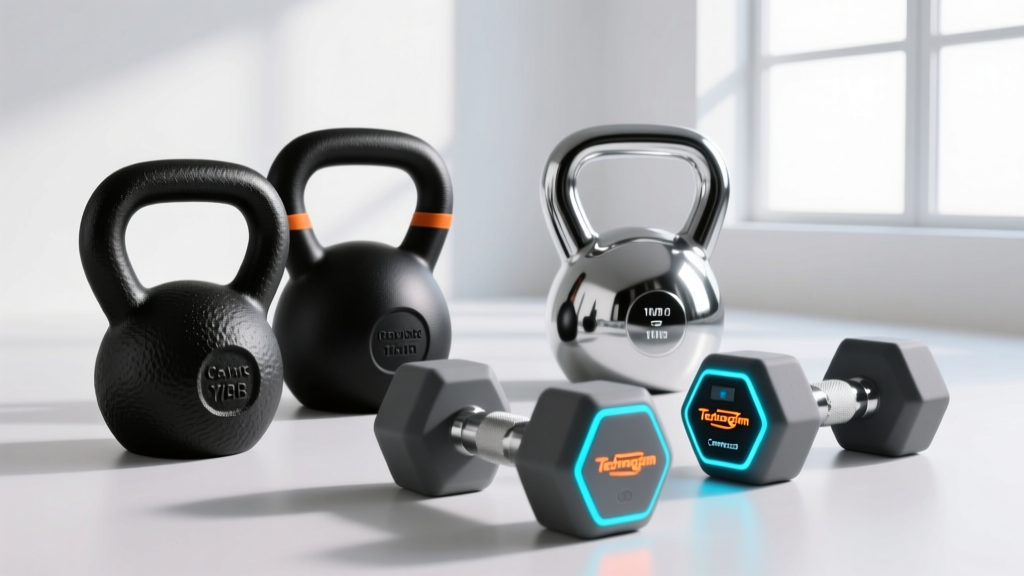
Cast Iron vs Competition Kettlebells & Technogym Connected Dumbbells
Analyze 2026 free weight trends: cast iron vs competition kettlebells and the rise of Technogym connected dumbbells for smart home gyms.

The 2026 Free Weight Market: Analog Iron Meets Digital Ecosystems
As we navigate the fitness equipment landscape in 2026, a fascinating dichotomy has emerged in the home and commercial gym sectors. On one side, we have the enduring, raw appeal of analog free weights—specifically the relentless demand for high-quality kettlebells for functional and ballistic training. On the other side, the premium smart-home gym sector has been completely disrupted by integrated digital ecosystems, most notably the Technogym connected dumbbells. For serious lifters and gym owners, understanding the ROI, biomechanical applications, and market pricing of these distinct equipment categories is no longer optional; it is essential for optimizing training outcomes and capital allocation.
This comprehensive market analysis and buying guide breaks down the metallurgical and practical differences between cast iron and competition kettlebells, while contrasting them against the high-tech hypertrophy solutions offered by smart dumbbell ecosystems. Whether you are outfitting a garage gym for kettlebell sport or building a data-driven smart gym, this report provides the exact specifications, pricing benchmarks, and failure modes you need to know.
Cast Iron Kettlebells: The Budget-Friendly Workhorse
Cast iron kettlebells remain the highest-volume seller in the free weight market. Manufactured by pouring molten grey iron into sand molds, these bells are characterized by their varied physical dimensions—meaning a 16kg bell is significantly smaller than a 32kg bell. This variability is a crucial factor for buyers to understand, as it directly impacts the biomechanics of advanced movements.
Metallurgy, Coatings, and Handle Geometry
In 2026, the baseline standard for premium cast iron kettlebells is a powder-coated finish over machined grey iron. Brands like Rogue Fitness have set the industry benchmark with handles that feature a 32mm to 35mm diameter, optimized for a secure grip during high-repetition swings and snatches without tearing the calluses. The powder coating provides excellent chalk retention and rust resistance, a significant upgrade from the cheap enamel paints found on budget e-commerce brands that chip and flake after months of floor contact.
Real-World Failure Modes and Edge Cases
Warning: The Porosity Problem in Budget IronWhen purchasing cast iron bells under $1.20 per pound, buyers frequently encounter casting porosity. This manifests as microscopic air bubbles trapped in the iron during the cooling process, leading to brittle handles that can snap under the extreme G-force of a heavy kettlebell snatch. Always inspect the handle arch for pitting or uneven grinding marks before committing to a bulk purchase.
Pricing for quality cast iron kettlebells in 2026 hovers between $1.60 and $2.40 per pound. They are the undisputed champions for general physical preparedness (GPP), heavy two-handed swings, and goblet squats where the exact dimensions of the bell's body are less critical.
Competition Kettlebells: Precision for the Serious Lifter
Unlike their cast iron counterparts, competition kettlebells are built to strict International Union of Kettlebell Lifting (IUKL) standards. Regardless of whether the bell weighs 8kg or 48kg, the physical dimensions remain identical: 280mm in height, 210mm in width, and a 33mm handle diameter. This uniformity is not a mere aesthetic choice; it is a biomechanical necessity for kettlebell sport.
The Biomechanics of the Rack Position
In movements like the clean and jerk or the long cycle, the kettlebell must rest securely in the 'rack position' against the lifter's forearm and torso. If a lifter trains with a small 12kg cast iron bell and then transitions to a massive 32kg cast iron bell, the shift in the bell's center of mass and physical bulk will alter their wrist alignment, elbow tuck, and breathing mechanics. Competition bells eliminate this variable. As detailed in the Kettlebell Kings buying guide, the uniform 33mm handle also allows for a consistent grip insertion, which is vital for preventing forearm pump-out during 10-minute sport sets.
Construction: Steel Shells and Internal Fill
Premium competition bells are machined from a single piece of high-grade steel. To achieve the exact IUKL weight requirements without altering the exterior volume, manufacturers use internal cavities filled with precision-measured steel shot or lead, sealed with a welded steel plug. High-end models from brands like Onnit or Kettlebell Kings feature a machined steel handle that requires minimal chalk and will never rust, chip, or degrade. Expect to pay a premium for this precision, with 2026 market rates ranging from $3.80 to $5.50 per pound.
The Smart Weight Disruption: Technogym Connected Dumbbells
While kettlebells dominate the ballistic and functional conditioning space, the hypertrophy, isolation, and physical therapy markets have been radically transformed by smart fitness gear. Leading this charge are the Technogym connected dumbbells, which represent the pinnacle of the digital-analog hybrid training trend.
How the Technogym Ecosystem Tracks Your Gains
Available through the Technogym Personal Line, these dumbbells are encased in high-density, shock-absorbing polyurethane and house proprietary internal sensors. They sync seamlessly via Bluetooth to the Technogym App, providing real-time data on rep count, range of motion, tempo (time under tension), and rest intervals. For lifters focused on strict hypertrophy—such as dumbbell chest presses, bicep curls, and lateral raises—this level of granular data tracking eliminates the guesswork from progressive overload.
However, it is vital to understand the use-case limitations. Smart dumbbells are engineered for controlled, linear movements. Dropping them, subjecting them to the extreme rotational torque of a kettlebell swing, or banging them together at the top of a fly movement will damage the internal accelerometers and void the warranty. They are a specialized tool for controlled muscle building, not a replacement for the rugged durability of analog iron.
Market Comparison Matrix: 2026 Pricing and Specs
| Equipment Type | Material & Build | 2026 Avg. Price/lb | Primary Use Case | Tech Integration |
|---|---|---|---|---|
| Cast Iron Kettlebell | Grey Iron, Powder Coat | $1.60 - $2.40 | GPP, Heavy Swings, Goblet Squats | None (Analog) |
| Competition Kettlebell | Solid Steel Shell, 33mm Handle | $3.80 - $5.50 | Kettlebell Sport, Snatches, Cleans | None (Analog) |
| Technogym Smart Dumbbells | Polyurethane, Internal Sensors | $12.00+ (Set based) | Hypertrophy, Isolation, Rehab | App Sync, Tempo & Rep Tracking |
ROI Analysis: Building Your 2026 Home Gym Arsenal
Allocating a $2,500 free weight budget requires a strategic approach based on your primary training modalities. Here is a practical decision framework for modern lifters:
- The Ballistic & Functional Athlete: If your programming relies heavily on kettlebell sport, Olympic lifting variations, or high-rep conditioning, allocate 80% of your budget to a full set of Competition Kettlebells (16kg, 20kg, 24kg, 32kg). The uniform dimensions will protect your wrists and ensure consistent technique progression.
- The Bodybuilder & Data Nerd: If your goal is pure muscle hypertrophy and you thrive on data analytics, invest heavily in the Technogym connected dumbbells. The ability to track time-under-tension and ensure symmetrical output between your left and right arms provides a coaching-level advantage that analog weights simply cannot offer.
- The Hybrid Generalist: The most common 2026 setup involves a hybrid approach. Purchase a pair of 24kg and 32kg cast iron kettlebells for heavy, messy, high-impact ballistic work, and supplement with a mid-range set of smart or adjustable dumbbells for controlled, tracked isolation work.
"The modern gym is no longer just a place to move weight; it is a data-gathering environment. However, data should never compromise the raw, indestructible nature of the tools required for explosive, high-velocity movements. Match the tool to the biomechanical demand."
Final Verdict: Where Should Your Capital Go?
The debate between analog and digital free weights is not a zero-sum game. Cast iron kettlebells remain the undisputed, cost-effective kings of general strength and rugged durability. Competition kettlebells are a non-negotiable investment for anyone serious about the technical nuances of kettlebell sport and joint longevity. Meanwhile, the Technogym connected dumbbells have successfully carved out a highly lucrative, premium niche for lifters who demand granular data tracking for hypertrophy and rehabilitation protocols.
By understanding the exact metallurgical differences, dimensional standards, and digital capabilities of each category, you can build a 2026 training arsenal that is both economically efficient and biomechanically optimized. Stop buying blind; invest in the specifications that match your training reality.
More gear to consider
All reviews
Dumbbell Side Bends for Love Handles & Barbell Collar Types Comparison

Collar Clamp Types Compared: Barbells vs. Dumbbell Power Cleans

Barbell Setup Guide: Weight, Knurling & Gym Ball Dumbbell Exercises

Upper Body Dumbbell Workout Routine: EZ Curl Bar vs Straight Bar

Neoprene Dumbbells for Rotator Cuff Exercises: 2026 Comparison
