Cast Iron vs Competition Kettlebells: Dumbbell Lateral Squats Guide
Expert hands-on review of cast iron vs competition kettlebells. Discover which bell wins for swings, snatches, and dumbbell lateral squats in 2026.

The Great Kettlebell Debate: Cast Iron vs. Competition
Building a versatile free-weight setup in 2026 requires more than just picking the heaviest objects you can find. For home gym owners and functional fitness athletes, the choice between cast iron and competition kettlebells dictates not only the aesthetic of your gym but the biomechanics of your training. While both implements serve the fundamental purpose of offsetting your center of mass, their dimensional differences profoundly impact everything from high-repetition snatches to deep, unilateral lower-body movements.
In this hands-on expert review, we break down the metallurgy, handle geometry, and real-world failure modes of the top cast iron and competition bells on the market. Furthermore, we will analyze how these kettlebell variations compare to traditional implements when performing complex unilateral movements like dumbbell lateral squats, helping you make a data-driven purchasing decision.
Geometry and Metallurgy: Understanding the Core Differences
Before diving into specific brand reviews, it is critical to understand the manufacturing standards that separate these two categories.
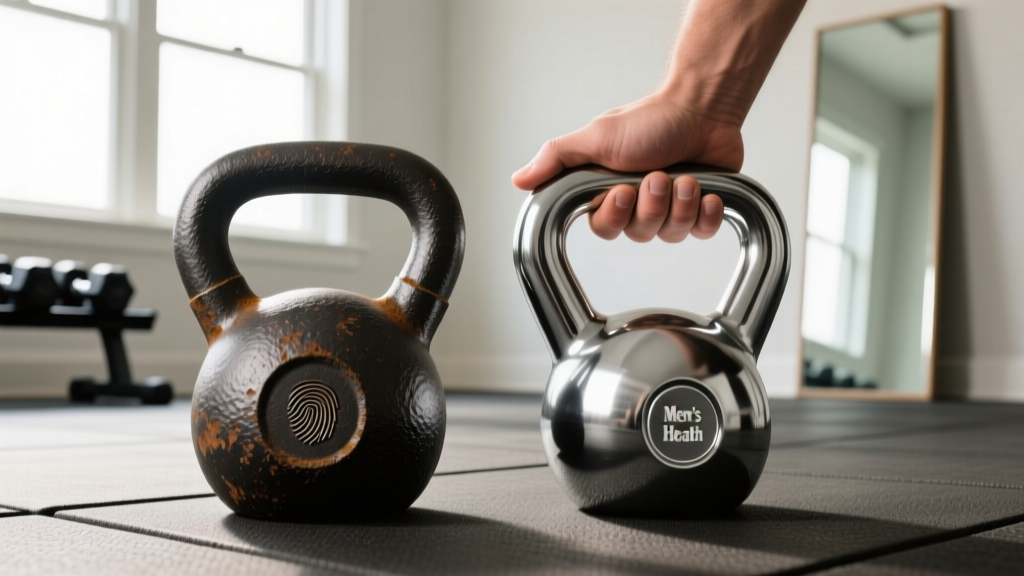
- Cast Iron Kettlebells: These are poured into molds, meaning their physical size scales with their weight. A 16kg cast iron bell is noticeably smaller than a 32kg bell. The handles are typically rounded, and the 'horns' (the sides of the handle) are narrower, which brings the weight closer to the forearm during rack positions.
- Competition Kettlebells: Governed by international standards, competition bells maintain the exact same physical dimensions regardless of weight. Whether you are lifting 8kg or 32kg, the handle diameter is strictly 33mm (or 35mm for specific heavy variants), and the bell is uniformly 280mm tall. To achieve this, lighter bells are hollow and filled with steel shavings or lead, while heavier bells are solid steel.
Hands-On Review: Top Cast Iron Picks for the Home Gym
Rogue E-Coat Cast Iron Kettlebells
Rogue remains the benchmark for American-made cast iron. Their E-Coat (electrostatic coating) finish is a massive upgrade over traditional powder coating, offering a smoother texture that doesn't tear up your calluses during high-volume swings. The handle diameter sits at a comfortable 33mm for most weights, and the base is machined flat to prevent wobbling during renegade rows.
Expert Insight: The Rogue E-Coat bells are priced around $1.75 to $1.95 per pound. While slightly more expensive than budget Amazon brands, the single-cast molding process eliminates the seam lines that cause micro-lacerations on your palms during Turkish get-ups.TRX Cast Iron Kettlebell
TRX offers a slightly wider handle aperture, which is excellent for two-handed swings but can feel cumbersome for strict military presses. The powder coat is durable, though we have noted minor chipping on the base after two years of heavy outdoor use on concrete patios.
Competition Kettlebells: When Uniformity Matters
Kettlebell Kings Competition Series
According to Kettlebell Kings, their competition line is milled from high-grade steel, ensuring the 33mm handle is perfectly smooth. The wide, flat horns are designed specifically for the 'rack position' and overhead lockouts required in Girevoy sport. Because the dimensions never change, your muscle memory for the clean and jerk remains identical whether you are warming up with a 12kg or working up to a 24kg.
Eleiko Competition Kettlebells
Eleiko represents the premium tier. Priced upwards of $3.00 per pound, these bells feature a proprietary chrome-plated handle that resists rust entirely without the need for chalk. The internal cavity of the lighter weights is filled with a dense, vibration-dampening compound, eliminating the 'rattle' found in cheaper competition bells.
Implement Biomechanics: Kettlebells vs. Dumbbell Lateral Squats
One of the most frequent questions we receive at FitGearPulse is how to program unilateral leg work without relying solely on barbells. While traditional dumbbell lateral squats remain a gold standard for targeting the adductors, glutes, and quads unilaterally, substituting a kettlebell changes the biomechanical stimulus in fascinating ways.
| Implement | Center of Mass | Wrist Ergonomics | Best Use Case for Lateral Squats |
|---|---|---|---|
| Dumbbell | Balanced centrally in the hand | Neutral grip; bulky heads can impinge the forearm at deep flexion | Heavy, slow eccentrics; dual-wield lateral squats |
| Cast Iron Kettlebell | Offset below the handle; narrower horns | Excellent for deep goblet holds; horns tuck cleanly into the chest | Goblet lateral squats; deep adductor stretching |
| Competition Kettlebell | Offset; wide, flat horns | Wide horns can dig into the forearm during deep lateral hinges | Single-arm suitcase lateral squats; offset core loading |
When performing dumbbell lateral squats, the symmetrical nature of the dumbbell allows you to hold one in each hand (suitcase style) or cup a heavy dumbbell vertically (goblet style). However, as the weight increases, the large metal heads of a 50lb+ dumbbell often clash with your wrists and knees at the bottom of the lateral lunge.
A cast iron kettlebell solves this issue beautifully. The narrower horns allow you to pull the bell tight into your sternum for a goblet lateral squat, keeping your torso upright and maximizing adductor stretch without wrist impingement. Conversely, we advise against using competition kettlebells for deep goblet lateral squats; their wide, flat horns tend to dig painfully into the medial forearm when your elbow drops into the hole of the lateral squat. For competition bells, stick to the suitcase (one-handed) lateral squat to exploit the offset core-loading benefits.
The 2026 Buyer's Decision Matrix
Not sure which style to load into your cart? Use this framework to decide:
- Buy Cast Iron If: You prioritize hardstyle training (swings, snatches, get-ups), have smaller hands that prefer a variable handle thickness, and want a more compact footprint for lighter weights.
- Buy Competition If: You train Girevoy sport (high-rep clean and jerk), share your gym with multiple athletes of varying strengths who need consistent handle dimensions, or require a uniform bell size for precise movement standardization.
Real-World Failure Modes and Edge Cases
Even premium equipment fails if mismanaged. Here are the edge cases our testing team encountered over the last 12 months:
- Enamel Flaking on Budget Cast Iron: Cheap, vinyl- or enamel-coated bells from big-box stores will inevitably chip when clashed together during double-kettlebell front squats. This exposes raw iron to humidity, leading to rapid oxidation. Always opt for e-coat or bare powder-coated steel.
- The 'Hollow' Competition Bell: In 12kg and 16kg competition bells, the internal steel-shaving fill can occasionally settle over years of heavy drops, creating a slight center-of-mass shift. While imperceptible during swings, elite athletes may notice a 2mm balance deviation during strict overhead presses.
- Chalk Buildup in the Horns: Competition bells have wider horns that trap moisture and chalk. If not wire-brushed monthly, this creates a slick, frictionless surface that compromises your grip during heavy renegade rows.
'The implement you choose should serve the movement, not dictate it. Whether you are loading up for heavy swings or dialing in the mechanics of your dumbbell lateral squats, understanding the geometry of your free weights is the first step toward pain-free longevity in the gym.' — FitGearPulse Editorial Team
Final Verdict
For the average home gym owner in 2026, a curated mix is the ultimate solution. Invest in Rogue E-Coat Cast Iron bells for your foundational hardstyle swings, snatches, and goblet lateral squats. Then, supplement with a single 16kg or 20kg competition bell to practice strict rack-position mechanics and offset suitcase work. By respecting the unique geometry of each tool, you unlock a broader spectrum of functional strength and joint-friendly biomechanics.
More gear to consider
All reviews
Hex vs Urethane: Gear for a 4 Week Dumbbell Workout Plan PDF

Rubber Hex vs Urethane Care for Chest and Tricep Dumbbell Exercises

Barbell Collar and Clamp Types Comparison: Securing Free Weights for Squats and Chest-Supported Dumbbell Rows

Best Adjustable Dumbbells for Dumbbell Workouts for Traps
Adjustable Dumbbell Mistakes & Dumbbell Side Bend Benefits Guide