
Cast Iron vs Competition: Value & the Kettlebell Swing with Dumbbell
Compare cast iron vs competition kettlebell costs for 2026. Plus, a biomechanical breakdown of performing a kettlebell swing with dumbbell alternatives.

The Core Dilemma: Cast Iron vs. Competition Steel
When outfitting a home gym or upgrading commercial equipment, the choice between cast iron and competition kettlebells is rarely just about aesthetics—it is a fundamental decision about biomechanics, longevity, and budget allocation. In 2026, the fitness equipment market has seen significant shifts in raw material costs, making a rigorous value analysis more critical than ever.
Cast iron kettlebells are the traditional choice. They are cast in molds, meaning their physical dimensions scale up as the weight increases. A 16kg cast iron bell will be noticeably smaller than a 32kg bell. Competition kettlebells, conversely, are constructed from hollow steel shells filled with steel shot or ball bearings. They maintain uniform dimensions (typically 330mm in height and 280mm in width) regardless of weight, with a standardized 35mm handle diameter. This uniformity is crucial for competitive lifters who rely on consistent muscle memory for complex movements like the snatch or clean and jerk.
Quick Budget Summary (2026 Market Averages):- Budget Cast Iron: $1.20 - $1.60 per lb
- Premium Ductile Iron: $2.50 - $3.50 per lb
- Standard Competition: $4.50 - $6.50 per lb
- Elite Competition: $7.00 - $9.00+ per lb
True Cost Breakdown: Price Per Pound & Lifespan
To understand the true value, we must look beyond the sticker price and evaluate the cost per pound alongside the expected lifespan and failure modes of the equipment. Cheap, gray cast iron bells (often found on massive e-commerce marketplaces) are brittle. Under the extreme G-forces generated during high-repetition ballistic movements, the handles of substandard gray iron bells can snap. Premium brands like Rogue Fitness utilize ductile iron, which incorporates magnesium to create nodular graphite structures, yielding a tensile strength exceeding 60,000 PSI compared to gray iron's 20,000 PSI.
| Feature | Budget Cast Iron | Premium Ductile Iron | Competition Steel |
|---|---|---|---|
| Avg. Cost per lb | $1.40 | $2.90 | $5.80 |
| Dimension Variance | High (scales with weight) | Moderate | None (Uniform 330mm) |
| Handle Diameter | Varies (30mm - 40mm) | ~33mm - 35mm | Exactly 35mm |
| Failure Mode | Handle snapping, rust | Coating degradation | Denting, paint chipping |
| Resale Value Retention | Low (~40%) | High (~75%) | Very High (~85%) |
The Biomechanical Budget Hack: Kettlebell Swing with Dumbbell
For lifters strictly constrained by budget, a common question arises: Can I effectively perform a kettlebell swing with dumbbell equipment instead of buying a dedicated bell? The short answer is yes, but only if you manipulate the center of mass (CoM) correctly. If you simply grip a dumbbell by its handle and swing it, the CoM rests directly inside your palm. This fundamentally alters the biomechanics, turning the movement into a front-raise variation that overloads the anterior deltoids and lower back while severely under-stimulating the posterior chain.
Why the Center of Mass Matters
According to foundational biomechanical research published in the Journal of Strength and Conditioning Research, the unique value of the kettlebell swing lies in the high horizontal shear forces generated by the offset center of mass. The bell's mass sits several inches below the grip, requiring explosive hip extension to decelerate and reverse the load.
To replicate this using a dumbbell, you must execute the kettlebell swing with dumbbell modification by holding the top head of a hex dumbbell vertically with both hands wrapped around the metal block (not the handle). This artificially extends the lever arm and pushes the CoM away from your grip, closely mimicking the shear force profile of a traditional cast iron kettlebell. While this is an excellent budget hack for the hip hinge, it remains a poor substitute for complex, multi-planar movements like the Turkish Get-Up or the Snatch, where the uniform handle window of a proper kettlebell is non-negotiable for safety.
"Attempting high-repetition snatches or cleans with a dumbbell is a fast track to wrist impingement and forearm bruising. The dumbbell swing hack is strictly for the posterior-chain hip hinge. For technical lifts, invest in the proper tool." — FitGearPulse Biomechanics Desk, 2026
Coating, Rust, and Hidden Depreciation Costs
When analyzing long-term value, the finish of the kettlebell dictates its lifespan and maintenance requirements. A $40 budget bell that rusts into a hazardous, flaking mess within 18 months is a worse investment than a $90 premium bell that lasts three decades.
E-Coat vs. Powder Coat vs. Bare Steel
- E-Coat (Electrophoretic Deposition): Common on mid-tier cast iron bells. It provides a thin, smooth finish that feels great on the hands but offers minimal protection against deep scratches. Once the seal is broken, oxidation spreads rapidly beneath the coating.
- Powder Coat: The gold standard for ductile iron bells (like those from Rep Fitness or Rogue). The textured surface holds chalk exceptionally well, which is vital for high-volume grip endurance. It is highly resistant to chipping and rust.
- Bare Steel / Urethane: Competition bells often feature bare steel handles for optimal grip friction, paired with a painted or urethane-coated spherical body. Urethane is virtually indestructible and odorless, justifying the premium price tag for commercial gym owners.
The FitGearPulse Decision Matrix
Use this framework to allocate your 2026 equipment budget efficiently based on your specific training methodology:
- The Hardstyle / Kettlebell Sport Athlete: Buy Competition Steel. The uniform 35mm handle and 330mm height are mandatory for consistent rack positions and safe overhead locking. The higher cost per pound is offset by the elimination of technique-breaking variables.
- The CrossFit / Functional Fitness Competitor: Buy Premium Powder-Coated Ductile Iron. You need the aggressive texture of powder coat for high-rep, sweaty metcons, and the slightly thicker handles build immense grip strength. Avoid competition bells here, as the smooth steel handles become slippery hazards during high-rep snatches.
- The Generalist / Home Gym on a Budget: Buy a single heavy Cast Iron Bell for swings and goblet squats, and utilize the kettlebell swing with dumbbell hack for accessory posterior-chain work to save money. Prioritize ductile iron over gray iron to ensure structural integrity.
Frequently Asked Questions
Do competition kettlebells feel lighter than cast iron?
Psychologically, yes. Because a 24kg competition bell is the exact same physical size as a 12kg competition bell, your brain anticipates the lighter weight based on visual cues. Furthermore, the dense steel shot inside a competition bell creates a slightly different acoustic and kinesthetic feedback loop compared to the solid mass of cast iron, making the load feel more 'manageable' during the float phase of a snatch.
Is the kettlebell swing with dumbbell modification safe for the lower back?
Yes, provided you maintain a strict hip hinge and neutral spine. However, because gripping the top head of a hex dumbbell requires immense isometric grip strength and wrist stabilization, your forearms will likely fail before your glutes and hamstrings do. It is best used as a finisher or a temporary substitute, not a permanent replacement for a properly balanced kettlebell.
Why do some premium cast iron bells have flat bottoms while others are rounded?
Flat bottoms are machined post-casting to allow for stable renegade rows and handstand push-up variations. However, this machining process removes the protective powder coat on the base, exposing raw iron. If you buy flat-bottomed bells, ensure you store them in a climate-controlled environment or apply a thin layer of mineral oil to the bare base monthly to prevent surface rust.
More gear to consider
All reviews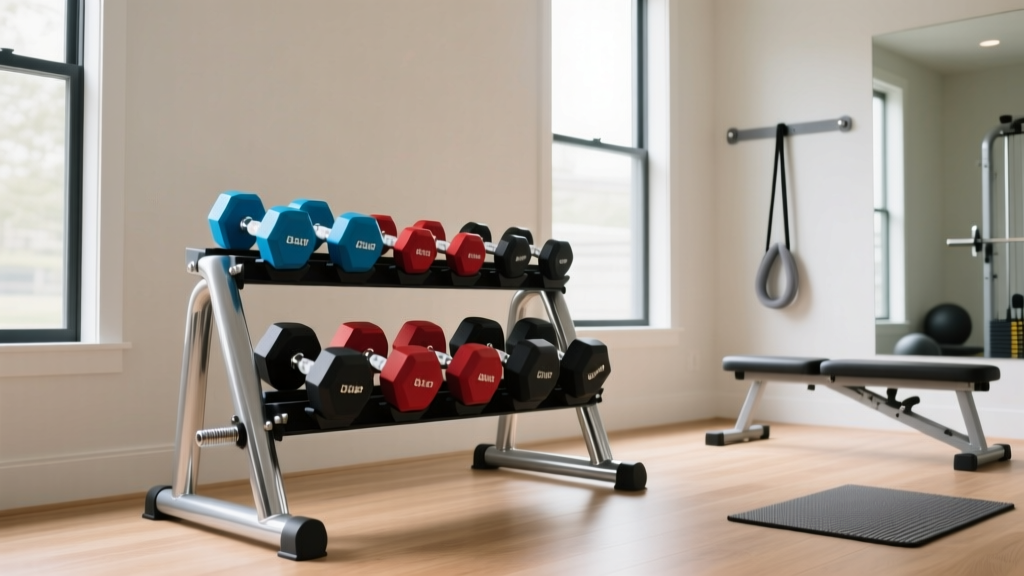
Smart Storage for Strength Training at Home With Dumbbells
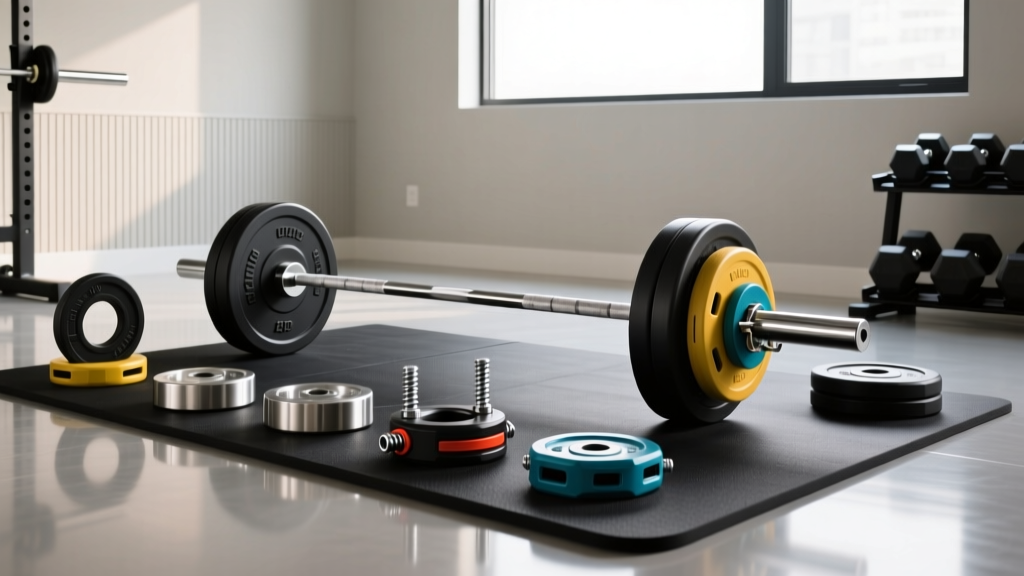
Barbell Collars Compared: Upgrading a 3 Day Split Dumbbell Workout

Loadable Dumbbells for Flies: 2026 Budget Breakdown
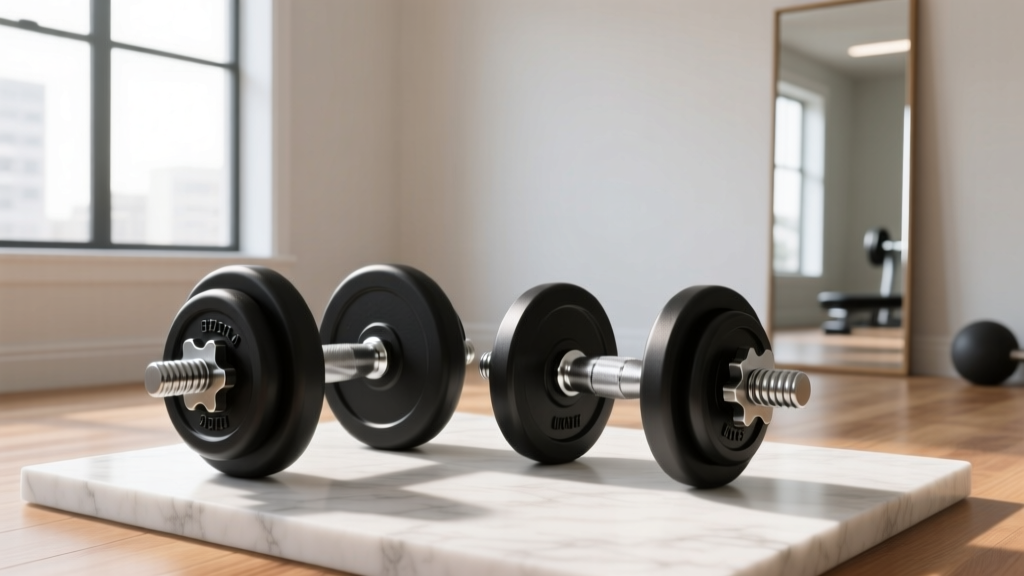
Bumper Plate vs Iron Plate for a Beginner Dumbbell Program

Bumper vs Iron Plates: A Dumbbell Plot of Cost & Durability
