
Cast Iron vs Competition Kettlebells: Maintenance & Dumbbell Floors
Compare cast iron and competition kettlebells for longevity. Learn essential maintenance routines, rust prevention, and how to protect your dumbbell floor.

The Material Divide: Cast Iron vs. Competition Steel
When outfitting a home or commercial gym in 2026, the debate between cast iron and competition kettlebells extends far beyond handle thickness or bell dimensions. As a buyer, you are not just investing in a piece of fitness equipment; you are adopting a specific maintenance routine and introducing a unique wear-and-tear profile to your training environment. The way a kettlebell ages, rusts, chips, and ultimately impacts your dumbbell floor depends entirely on its metallurgy and manufacturing process.
Cast iron bells, like the popular Rogue Powder Coat or Rep Fitness lines, are gravity-cast into sand molds. They are porous, brittle under sheer impact, and feature a variable footprint that grows as the weight increases. Competition bells, such as the Kettlebell Kings Competition Series or Eleiko models, are forged from solid steel, machined to a uniform 280mm x 200mm footprint regardless of weight, and feature bare steel handles for chalk grip.
Understanding these differences is critical for equipment longevity and for preserving the integrity of your gym's flooring infrastructure. Below, we break down the maintenance realities of both styles.
Specification & Maintenance Matrix
| Feature | Cast Iron (e.g., Rogue Powder Coat) | Competition Steel (e.g., Kettlebell Kings) |
|---|---|---|
| Material | Gray Cast Iron | Forged / Gravity-Cast Solid Steel |
| Base Geometry | Variable, often slightly rounded or uneven | Uniform, machined flat (200mm x 280mm) |
| Coating | Enamel, E-Coat, or Powder Coat | Painted Steel Body, Bare Steel Handle |
| Primary Failure Mode | Enamel chipping, handle horn snapping | Paint chipping, handle oxidation (rust) |
| Floor Impact Risk | High (Uneven base acts as a grinder) | Moderate (Concentrated point-loading) |
| Avg. Price (24kg) | $130 - $160 | $180 - $220 |
Cast Iron Longevity: Battling Enamel Chips and Oxidation
Cast iron kettlebells are the workhorses of the fitness industry, but their longevity is heavily dictated by their coating. In 2026, most premium cast iron bells utilize a textured powder coat or an e-coat finish. While powder coat provides excellent corrosion resistance, it is highly susceptible to cosmetic chipping when struck against other iron implements or dropped onto concrete.
The Danger of Chipped Enamel and Casting Seams
Lower-tier cast iron bells often use a glass-like enamel coating or suffer from aggressive casting seams (the raised lines where the mold halves met). When enamel chips, it leaves razor-sharp edges. If you drag or drop a chipped cast iron bell across a rubber dumbbell floor, those sharp edges will slice through the vulcanized rubber, causing irreversible tearing.
Expert Fix: Inspect the base and handle horns of your cast iron bells monthly. Use a flat metal file or 120-grit sandpaper to smooth out any chipped enamel, rust bubbles, or casting seams. A perfectly smooth base is non-negotiable for protecting high-density rubber flooring.Rust Remediation for Bare Iron
If the powder coat wears thin on the handle, the porous cast iron beneath will rapidly oxidize when exposed to the salts and moisture in human sweat. To rehabilitate a rusting cast iron handle, use a stainless steel wire brush attached to a cordless drill to strip the oxidation, followed by a wipe-down with mineral spirits. Finish by rubbing a light coat of 3-in-One oil or Camellia oil into the pores of the iron to displace moisture.
Competition Steel Care: Managing Chalk and Sweat
Competition kettlebells are engineered for high-repetition ballistic movements like snatches and jerks. The handles are left as bare, machined steel to absorb magnesium carbonate (chalk), which is essential for grip security. However, this bare steel requires a rigorous maintenance protocol.
Chalk is hygroscopic—it pulls moisture from the air. When mixed with the salts from your sweat, it forms a highly corrosive paste that will pit and rust a bare steel handle within days if left uncleaned. According to equipment maintenance guidelines highlighted by Garage Gym Reviews, neglecting chalk removal is the number one reason competition bells degrade prematurely in home gyms.
- Post-Workout: Wipe the handle down with a dry, stiff-bristled nylon brush to remove surface chalk.
- Weekly: Use a brass wire brush (brass is softer than steel and won't scratch the machined finish) to deep-clean the knurling or grip texture.
- Monthly: Apply a micro-thin layer of mineral oil to the handle, let it sit for 10 minutes, and buff it completely dry with a microfiber cloth. Never leave a competition bell handle 'wet' with oil, as it will ruin your grip during the next snatch session.
The Dumbbell Floor Dilemma: Base Geometry and Impact Forces
The interaction between your kettlebell and your dumbbell floor is a masterclass in physics and material science. The term 'dumbbell floor' generally refers to the dedicated drop-zone in a gym, typically outfitted with 3/4-inch vulcanized rubber horse stall mats or high-density crumb rubber tiles designed to absorb the kinetic energy of dropped weights.
Cast Iron: The Grinding Effect
Because cast iron bells are poured into sand molds, their bases are rarely perfectly flat. Many feature a slight convex curve or uneven casting nodules. When you set a 32kg cast iron bell down forcefully, the uneven base concentrates the weight onto a single high point. If you drag the bell even a fraction of an inch, it acts like a mortar and pestle, grinding the rubber aggregates of your dumbbell floor and accelerating the breakdown of the mat's structural integrity.
Competition Bells: Point-Loading and Shear Force
Competition bells feature a machined, perfectly flat steel base. While this eliminates the 'grinding' effect, it introduces severe point-loading. A 32kg competition bell has a relatively small footprint. When dropped from shoulder height during a missed snatch, the kinetic energy is transferred directly downward into a small surface area. The American Council on Exercise (ACE) notes that ballistic drops generate force multipliers far exceeding the static weight of the implement.
To protect your dumbbell floor from competition bell drops, standard EVA foam puzzle mats are entirely insufficient; they will bottom out and crack. You must invest in 3/4-inch vulcanized rubber mats with a Shore A hardness rating of 60 to 70. As noted by flooring experts at Rubber Flooring Inc, vulcanized rubber possesses the tensile strength required to absorb the sharp, localized impact of a flat steel base without permanently deforming.
Your 2026 Monthly Maintenance Protocol
To maximize the lifespan of your equipment and your flooring, implement this step-by-step monthly protocol:
- Base Inspection & Filing: Flip every kettlebell upside down. Run your thumb across the base. If you feel any burrs, chipped paint, or enamel shards, file them flush with a flat bastard file. This single step will add years to your dumbbell floor.
- Handle De-Oxidation: Scrub all bare steel handles with a brass brush and a 50/50 mix of white vinegar and water to neutralize sweat salts. Buff dry immediately.
- Coating Touch-Up: For painted competition bells or e-coated cast iron bells that have deep scratches down to the bare metal, apply a rust-inhibiting primer pen (like Rust-Oleum Stops Rust) to prevent subsurface oxidation from bubbling the surrounding finish.
- Floor Degreasing: Chalk dust, skin oils, and rubber off-gassing create a slick film on your dumbbell floor. Mop the drop zone with a pH-neutral cleaner (like Simple Green diluted 1:10). Avoid harsh degreasers or bleach, which will dry out the vulcanized rubber and cause it to become brittle and crumble under impact.
Final Verdict: Which Should You Buy?
If your priority is low-maintenance durability and you primarily perform slow, controlled lifts (presses, squats, Turkish get-ups) where the bell is gently placed on the floor, premium powder-coated cast iron is the most cost-effective choice. It requires minimal handle care and offers excellent longevity, provided you file down any casting seams to protect your flooring.
However, if you are training for kettlebell sport, focusing on high-rep ballistic snatches, or require a uniform footprint to stack and store weights efficiently, competition steel bells are mandatory. They will not crack under the stress of repetitive drops, and their machined flat bases are far gentler on a high-quality rubber dumbbell floor—provided you commit to the strict weekly chalk-removal and oiling protocol required to keep the bare steel handles pristine.
More gear to consider
All reviews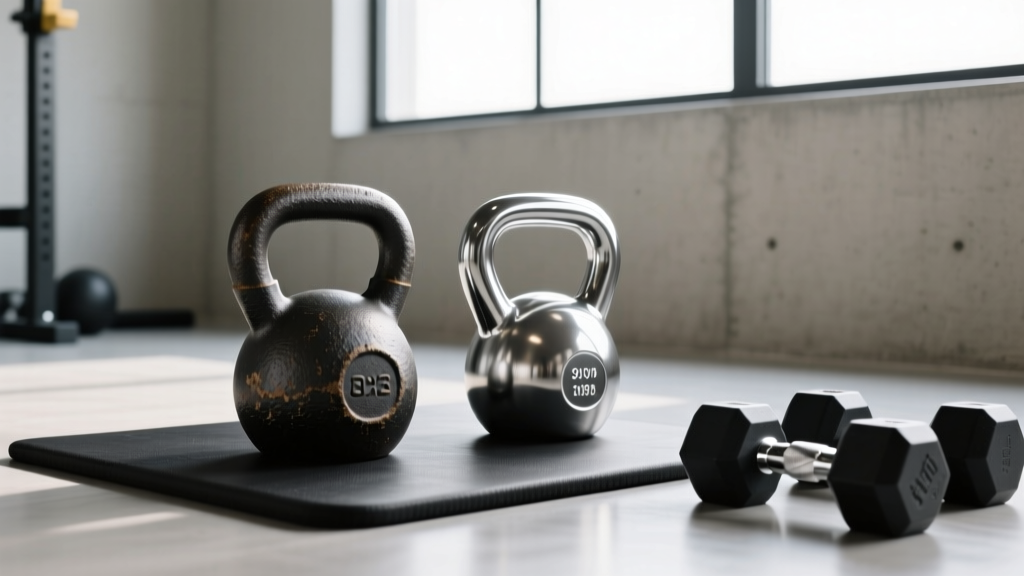
Cast Iron vs Competition Kettlebells: Deltoid Exercises with Dumbbells

Barbell Clamps for Squats & Any Leg Workout Routine With Dumbbells
Best Neoprene Dumbbells for Dumbbell Bench Pullovers 2026

Olympic vs Standard Plates & the Standing Dumbbell Fly Exercise

Rack Storage & Care for Lat Pulldowns and Dumbbells
