Cast Iron vs Competition Kettlebells & Chrome Dumbbell Maintenance
Compare cast iron vs competition kettlebells for longevity. Plus, essential maintenance tips to protect your gear and chrome dumbbell investments.

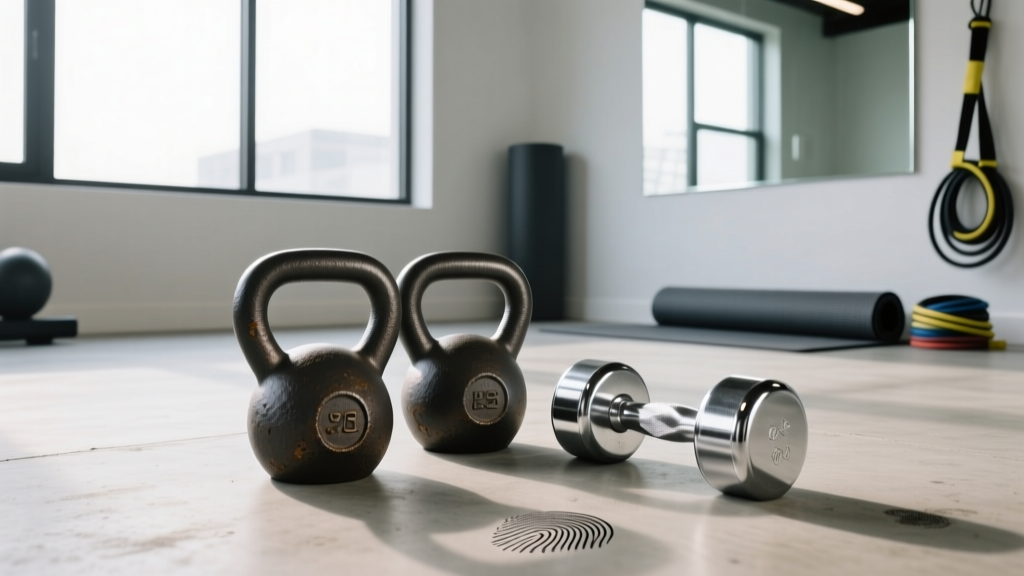
When outfitting a home or commercial gym in 2026, the debate between cast iron vs competition kettlebells usually centers on biomechanics, handle clearance, and standardized dimensions. However, as a long-term equipment investment, the true cost of ownership lies in maintenance, material degradation, and longevity. How do these specialized kettlebells hold up over a decade of heavy use, especially when compared to the traditional benchmark of free weight durability: the classic chrome dumbbell?
Understanding the metallurgical differences and coating technologies behind your free weights is the difference between gear that lasts a lifetime and equipment that ends up in a landfill. This guide breaks down the material science, failure modes, and exact maintenance protocols required to keep your cast iron, competition steel, and chrome-plated free weights in pristine condition.
The Core Dilemma: Cast Iron vs. Competition Kettlebells
The fundamental difference between a standard cast iron kettlebell and a competition kettlebell goes beyond the uniform size of the latter. It comes down to the base metal and the protective coating applied to prevent oxidation.
Cast Iron Kettlebells (Powder Coat & E-Coat)
Traditional cast iron bells, like those produced by CAP Barbell or the Rogue Fitness Powdercoat Kettlebells, are poured from gray cast iron. This material is inherently porous and highly susceptible to rust. To combat this, manufacturers apply protective layers:
- Powder Coat: A thick (2-3 mils) baked-on polymer. It provides excellent rust resistance but creates a textured surface that aggressively grips and retains gym chalk and dead skin cells.
- E-Coat (Electrocoating): A much thinner (0.5-1 mil) ceramic or polymer layer applied via an electrical current. It preserves the smooth feel of bare cast iron but wears away on the handle after 12 to 18 months of heavy friction, exposing the raw iron underneath.
Competition Kettlebells (Steel Core & Enamel Shell)
Competition bells, such as Eleiko Competition Kettlebells, feature a hollow steel or cast iron core calibrated to exact gram tolerances, encased in a thick polyurethane or enamel shell. While the shell is incredibly resilient to sweat and moisture, it is brittle. Dropping a competition bell onto a bare concrete garage floor can cause micro-fractures in the enamel, leading to a catastrophic failure mode known as spalling, where the coating flakes off in large sheets.
⚠️ The Sweat Chloride Threat
Human sweat contains high levels of sodium chloride and lactic acid (pH 4.5 to 7.0). When left to dry on the porous surface of a powder-coated cast iron kettlebell, it accelerates galvanic corrosion. A standard chrome dumbbell resists this better due to its non-porous finish, but once the chrome plating is breached by a scratch, the underlying copper and nickel layers degrade rapidly, causing the chrome to "pit" and flake.
The Longevity Matrix: Kettlebells vs. Chrome Dumbbells
To help you decide which modality and finish best suits your maintenance tolerance, we have mapped out the degradation profiles of the three most common free weight types found in modern gyms.
| Feature | Cast Iron (Powder/E-Coat) | Competition (Enamel/Steel) | Chrome Dumbbell |
|---|---|---|---|
| Core Material | Gray Cast Iron | Steel or Iron Core | Solid Steel / Cast Iron |
| Coating Thickness | 0.5 - 3.0 mils | 2.0 - 5.0 mils (Shell) | 0.05 - 0.1 mils (Plating) |
| Primary Failure Mode | Handle wear / Subsurface rust | Enamel chipping / Spalling | Pitting / Chrome Flaking |
| Chalk Retention | High (Powder) / Low (E-Coat) | Very Low | None |
| 2026 Avg. Cost/lb | $1.50 - $2.50 | $4.50 - $6.50 | $2.50 - $4.00 |
Step-by-Step Restoration and Preventative Care
Whether you are rescuing a neglected cast iron bell from a damp garage or maintaining the mirror finish on a premium chrome dumbbell, the chemical approach to maintenance must be precise. According to metallurgical guidelines outlined by restoration experts at Bob Vila, using the wrong abrasive can permanently ruin the protective layers of your free weights.
1. Deep Cleaning Chalk and Sebum Buildup
Gym chalk (magnesium carbonate) mixed with hand oils creates a cement-like paste that lodges in the knurling of a chrome dumbbell or the pores of a powder-coated kettlebell. This paste traps ambient moisture against the metal.
- The Dry Brush: Use a stiff nylon bristle brush (never wire) to dislodge dry chalk from the handle and horns.
- The Wash: Mix warm water with a few drops of Dawn dish soap (a powerful degreaser). Scrub the handle with a nylon brush.
- The Dry: Immediately towel dry, followed by 60 seconds with a hair dryer or heat gun on a low setting to evaporate moisture trapped in microscopic crevices.
2. Treating Subsurface Rust on Cast Iron
If your e-coat or powder-coat kettlebell develops orange freckling, the rust has penetrated the coating. Do not use a wire wheel, as it will strip the surrounding healthy coating.
- The Vinegar Soak: Submerge the rusted handle in a 50/50 solution of white vinegar and water for exactly 2 to 4 hours. The acetic acid dissolves the iron oxide without harming the surrounding polymer coating.
- Neutralize: Scrub with a baking soda and water paste to neutralize the acid, then rinse and dry thoroughly.
3. Polishing and Protecting Chrome Dumbbells
Chrome is highly resistant to rust, but it is vulnerable to pitting when exposed to acidic sweat over time. If you notice small brown dots on your chrome dumbbell, the rust is sitting on top of the chrome, not eating into the steel.
- The 0000 Steel Wool Method: Lubricate the handle with a light oil (like 3-IN-ONE) and gently buff the rust spots with #0000 (super fine) steel wool. This lifts the rust without scratching the mirror finish.
- The Protective Barrier: Apply a micro-thin layer of Boeshield T-9. Originally developed by Boeing for aviation, this leaves a dry, waxy film that repels sweat and humidity without leaving your hands greasy during lifts.
"The biggest mistake gym owners make is using standard WD-40 on their free weights. WD-40 is a solvent and water displacer, not a long-term lubricant or rust inhibitor. It evaporates quickly, leaving the metal bare, and its sticky residue attracts dust and chalk, accelerating wear on both competition enamel and chrome plating."
The 2026 Buying Framework: What to Look For
If you are currently deciding between buying a set of competition kettlebells, traditional cast iron bells, or a rack of chrome dumbbells, base your decision on your environment and maintenance willingness.
- Choose Cast Iron (E-Coat) If: You train in a climate-controlled indoor gym, prefer a smooth handle for high-rep snatches, and don't mind re-oiling the handle twice a year. Expect to pay around $1.80/lb.
- Choose Competition Kettlebells If: You require standardized dimensions for technical flow work or sport-specific training. You must commit to dropping them only on rubber matting to prevent enamel spalling. Expect to pay $5.00+/lb.
- Choose a Chrome Dumbbell Set If: You want the lowest maintenance free weight option available. Chrome requires nothing more than a weekly wipe-down with a microfiber cloth and occasional polishing. It is the most hygienic option for shared or commercial spaces, averaging $3.00/lb in 2026.
Expert FAQ on Free Weight Degradation
Can I use a wire brush on my competition kettlebell?
No. Competition kettlebells rely on a continuous enamel or polyurethane shell. A wire brush will score the shell, creating micro-fissures where moisture can infiltrate and cause the steel core to rust from the inside out, eventually pushing the coating off entirely.
Why is my chrome dumbbell flaking?
Decorative chrome plating is applied over layers of copper and nickel. If the dumbbell was dropped and the chrome chipped, moisture reached the copper layer. Copper oxidizes and expands, which pushes the top layer of chrome up, causing it to flake off in sharp shards. Once a chrome dumbbell begins to flake, it cannot be repaired; it must be retired or sent to a professional metal plating facility for stripping and re-dipping, which usually costs more than replacing the dumbbell.
How should I store my gear in a high-humidity garage?
If you live in a region with ambient humidity consistently above 60%, store your cast iron and chrome weights on a raised rack (never directly on a concrete floor, which wicks moisture). Place a commercial-grade desiccant bucket (like DampRid) near your weight storage area, and apply a quarterly coat of paste wax or Boeshield T-9 to all bare metal and knurled surfaces.
More gear to consider
All reviews
Bent-Over Dumbbell Row Muscles Worked: Troubleshooting Neoprene Mistakes
Rubber Hex vs Urethane: Best 110 lb Dumbbells for Home Gyms

Rubber Hex vs Urethane: Chest and Tricep Workout with Dumbbells

EZ Curl vs Straight Bar & Rubber vs Urethane Dumbbells: 2026 Trends

Cast Iron vs Competition Kettlebells & Dumbbell Safety Rack Guide
