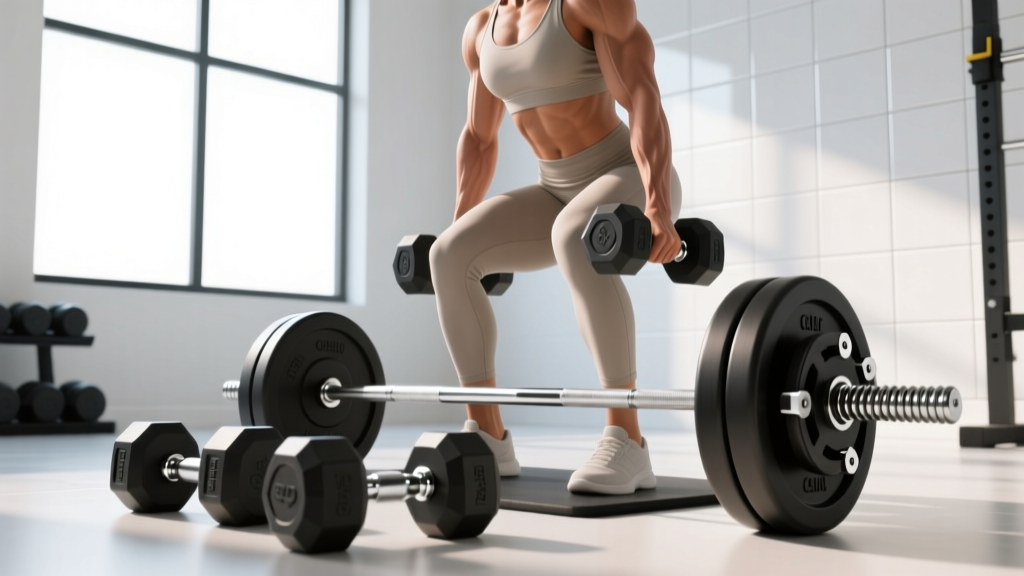
Calf Exercises with Dumbbells & Barbell Collar Clamp Types Compared
Troubleshoot leg day mistakes with our guide on calf exercises with dumbbells and a detailed barbell collar and clamp types comparison for safety.

Troubleshooting Leg Day: Isolation Execution vs. Compound Safety
Leg day is a complex interplay of biomechanical precision and heavy load management. Whether you are isolating the lower leg or loading up the barbell for heavy Romanian Deadlifts (RDLs), equipment mismanagement and poor technique are the primary culprits behind stalled progress and gym injuries. In this 2026 troubleshooting guide, we are tackling two highly specific, often overlooked aspects of lower-body training: the execution errors ruining your calf exercises with dumbbells, and the critical hardware failures associated with improper barbell collar selection.
Many lifters treat calf training as an afterthought, using improper dumbbell variations and bouncing through reps. Conversely, when transitioning to heavy compound lifts, the same lifters often rely on subpar spring clips, leading to dangerous plate shifts. Below, we break down the exact mistakes, failure modes, and hardware comparisons you need to optimize your lower-body sessions safely and effectively.
3 Common Mistakes in Calf Exercises with Dumbbells (And How to Fix Them)
The calves—comprising the gastrocnemius and the underlying soleus—are notoriously stubborn muscle groups. According to biomechanical data from ExRx Anatomy Directories, the gastrocnemius crosses both the knee and ankle joints, meaning knee position dictates which muscle is primarily targeted. When using free weights, dumbbells are the most accessible tool, but they introduce balance and loading challenges that lead to three major mistakes.
Mistake 1: Abusing the Stretch-Shortening Cycle (The "Bounce")
The most frequent error in standing or seated calf raises is utilizing the Achilles tendon's elastic energy. Lifters drop quickly into the bottom position and immediately reverse direction, bouncing out of the hole. This entirely bypasses the muscular tension required for hypertrophy.
- The Troubleshooting Fix: Implement a mandatory 1.5-second dead stop at the bottom of the eccentric phase. When holding a heavy dumbbell, lower your heel below the block, pause until the stretch reflex dissipates, and then press up. This eliminates momentum and forces the muscle fibers to initiate the concentric contraction.
Mistake 2: Inadequate Deficit and Dumbbell Slippage
Performing calf exercises with dumbbells on a flat floor restricts your range of motion (ROM) to roughly 40% of the muscle's capacity. Furthermore, attempting a single-leg calf raise while holding a 70lb round dumbbell often results in the weight slipping from a sweaty palm or pulling you off balance.
- The Troubleshooting Fix: Elevate your forefoot on a dedicated calf block or a thick bumper plate (aim for a 3.5 to 4-inch deficit). To solve the dumbbell slippage issue, switch to urethane hex dumbbells. The textured handle and flat edges provide a superior grip. If balance is the limiting factor, hold a single heavy dumbbell in the hand corresponding to the working leg (ipsilateral loading) while your free hand lightly touches a power rack for stabilization.
Mistake 3: Ignoring the Soleus (Seated Dumbbell Calf Raise Errors)
The soleus is best targeted with a bent knee (seated calf raises). However, balancing a heavy dumbbell vertically on top of the knee is not only painful but highly unstable, leading to premature set termination.
⚠️ Troubleshooting Warning: Never place a bare metal or hard urethane dumbbell directly on your patellar tendon or knee joint. The localized pressure can cause bruising and nerve compression.The Fix: Use a thick neoprene squat pad or a folded towel as a buffer. Alternatively, in 2026, many home gyms utilize specialized seated calf raise attachments that slide onto standard benches, allowing you to safely load dumbbells onto a padded lever arm rather than balancing them manually on your thighs.
The Barbell Collar and Clamp Types Comparison
Once you transition from dumbbell isolation to heavy barbell compounds like squats, lunges, and RDLs, securing your weight plates becomes a matter of severe safety. A shifting 45lb plate during an RDL creates an asymmetrical load that can instantly torque your lumbar spine. Based on extensive drop-testing and gym-floor data compiled by BarBend's Equipment Review Team, here is how the primary collar types compare in real-world scenarios.
| Collar Type | Popular 2026 Models | Avg. Price | Grip Force & Security | Primary Failure Mode |
|---|---|---|---|---|
| Spring Clip | Generic Chrome Clips | $10 - $15 | Low. Relies on metal tension. | Tension loss over time; slips on decline or dynamic lifts. |
| Clamp / Lock-Jaw | Lock-Jaw Pro 2, Bullz Lock | $25 - $35 | High. Polycarbonate latch with internal teeth. | Plastic housing can crack if dropped from overhead heights. |
| Lever / Competition | Rogue AB-1, Eleiko Olympic | $75 - $120 | Maximum. CNC aluminum with cam-action leverage. | Adds ~2.5kg to bar weight; slower to apply/remove. |
Failure Modes: When Collars Slip and Plates Shift
Understanding why collars fail is just as important as knowing which ones to buy. When executing lower-body hinges like RDLs or Good Mornings, the barbell undergoes significant horizontal acceleration and deceleration. Inertia pushes the plates outward against the collar. If you are using standard spring clips, the outward force easily overcomes the weak radial tension of the spring, resulting in "plate gap"—a dangerous phenomenon where plates rattle and shift away from the inner sleeve shoulder.
The Decline Bench and Incline Rack Problem
Gravity exacerbates collar failure on angled movements. If you are performing decline calf raises or decline bench presses, gravity is constantly pulling the plates down the sleeve toward the collar. According to equipment specifications from Rogue Fitness, competition-grade lever collars like the AB-1 utilize a cam-action lever that bites directly into the steel barbell sleeve, creating a physical wall that gravity and inertia cannot overcome. Spring clips, conversely, rely purely on friction, which is easily defeated by a 45-degree downward angle combined with heavy iron plates.
Step-by-Step Troubleshooting Matrix: Match the Collar to the Lift
To eliminate equipment-related failures from your training, use this quick-reference troubleshooting matrix to pair your lift with the correct hardware:
- For High-Rep, Light-Load Hypertrophy (e.g., Banded Work, Light Calf Raises):
Solution: Clamp-style collars (Lock-Jaw). They are fast to apply, secure enough for loads under 225 lbs, and won't damage the knurling or zinc coating of your barbell sleeves during rapid changes. - For Heavy Hinges and Squats (e.g., RDLs, Back Squats over 315 lbs):
Solution: Aluminum Lever Collars (Rogue AB-1 or Eleiko). The horizontal deceleration of heavy RDLs demands the absolute zero-slip guarantee of a cam-lock lever. The extra $80 investment prevents asymmetric loading and potential lumbar injury. - For Olympic Weightlifting (Cleans, Snatches):
Solution: IWF-Certified Competition Collars. These are calibrated to weigh exactly 2.5kg each and are designed to withstand the violent impact of dropping the bar from overhead without the latch mechanism shattering—a common failure mode for cheaper plastic clamp collars.
Final Takeaways for a Safer, More Effective Leg Day
Troubleshooting your leg day requires looking at both the micro (muscle execution) and the macro (equipment safety). When performing calf exercises with dumbbells, eliminate the bounce, secure a proper 3.5-inch deficit, and use urethane hex dumbbells to prevent grip failure. When loading the barbell for heavy compounds, retire the rusty spring clips and invest in lever or high-quality clamp collars to ensure the plates stay locked against the sleeve. By addressing these specific mechanical and hardware errors, you guarantee that the stimulus reaches the target muscle safely, maximizing hypertrophy while minimizing injury risk.
More gear to consider
All reviews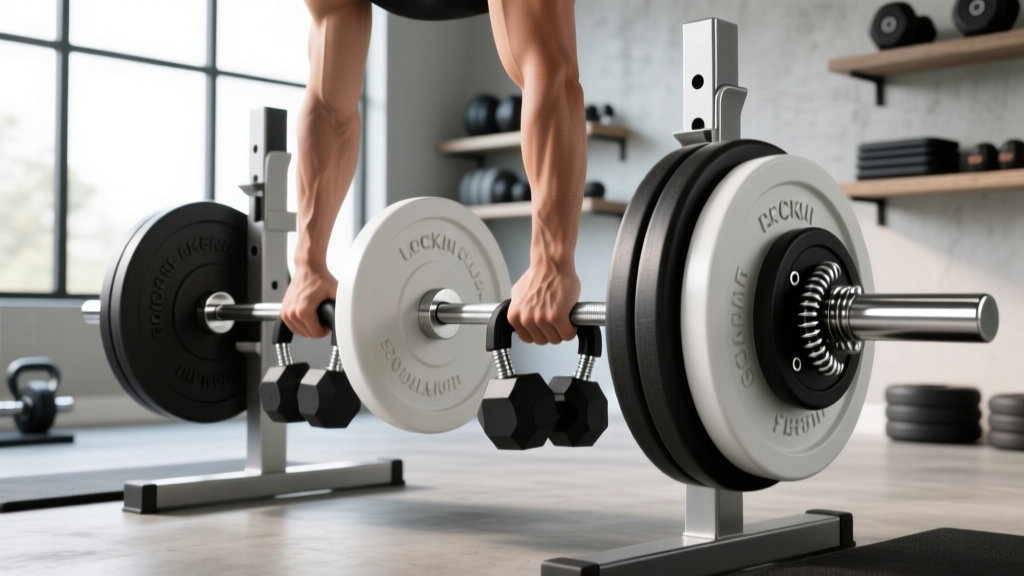
Collar Comparison: Fixing Dumbbell Farmers Carry & Squat Mistakes

Comparing Space-Saving Types of Dumbbells: Loadable Sets
Power Rack vs Squat Rack vs Stand: Cable Lateral Raise vs Dumbbell
Best Dumbbell Racks to Support Dumbbell Only Back Exercises
EZ Curl Bar vs Straight Bar + Incline Dumbbell Bench Form Layouts
