Gym Layouts: Bumper vs Iron Plates & Dumbbell Rows for Biceps
Optimize your home gym layout by comparing bumper vs iron plate storage footprints, ensuring perfect clearance for dumbbell rows for biceps.

The Spatial Reality of Home Gym Plate Storage
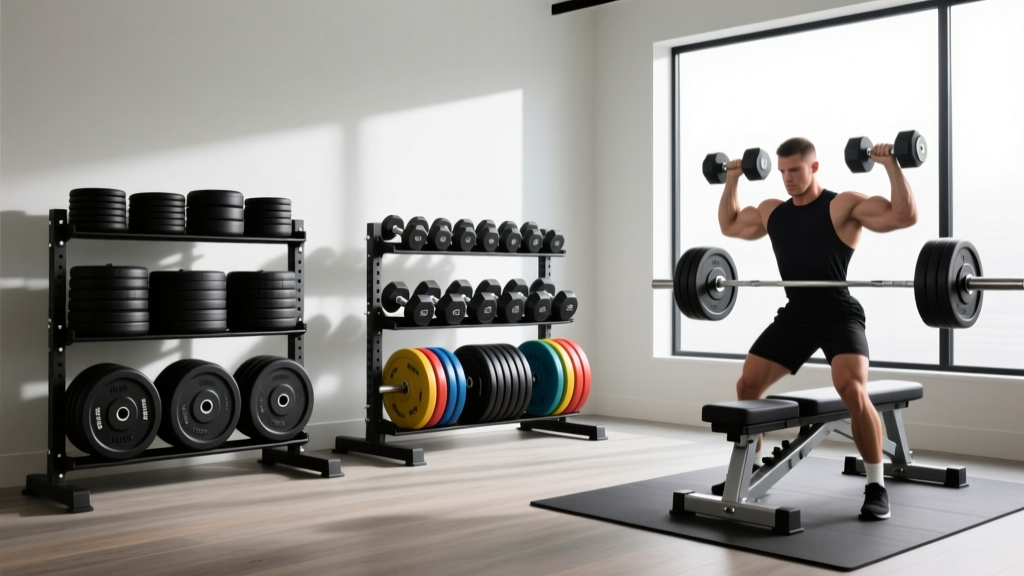
When designing a home gym in 2026, the debate between bumper plates and cast iron plates usually centers on noise reduction, drop tolerance, or Olympic lifting compatibility. However, from a strict space optimization and layout design perspective, the choice between the two dictates your storage footprint, drop zones, and the contiguous floor space available for bench and floor work. Every square foot in a garage or basement gym is premium real estate, and the physical geometry of your weight plates will determine how efficiently you can utilize it.
Choosing the right plate type isn't just about the barbell; it is about how the storage apparatus required for those plates interacts with your primary movement zones. In this guide, we break down the spatial mathematics of iron versus bumper plates and demonstrate how your storage choices directly impact your ability to safely execute wide-stance and lateral movements, such as dumbbell rows for biceps, without spatial obstruction.
Iron Plates: High-Density Storage for Maximum Floor Clearance
Cast iron plates are the undisputed champions of high-density storage. Because iron is significantly denser than vulcanized rubber, the physical profile of an iron plate is remarkably thin. A standard 45-pound Rogue Deep Dish cast iron plate measures approximately 1.3 inches in thickness.
The Vertical Tree Advantage
This slim profile allows you to store well over 500 pounds of iron on a standard vertical weight tree with 16-inch sleeves. A typical vertical tree occupies a floor footprint of just 24 inches by 24 inches (4 square feet). By consolidating your iron plates into a single, dense vertical column, you minimize the storage perimeter, pushing the bulk of your equipment into a tight corner and leaving the center of the room entirely open.
Layout Insight: Iron plates allow for 'micro-zoning.' Because a vertical tree takes up so little space, you can place it directly adjacent to a power rack without encroaching on the lateral walkways required for dumbbell work.Bumper Plates: Managing the Drop Zone and Vertical Storage Tax
Bumper plates introduce a spatial tax. Designed to be dropped from overhead, they are constructed from vulcanized rubber and feature a uniform 450mm diameter regardless of weight. While this uniformity is excellent for barbell mechanics, it is a nightmare for spatial efficiency. A 45-pound Rogue Echo Bumper Plate V2 measures roughly 3.25 inches thick—more than double the thickness of its iron counterpart.
The Horizontal and A-Frame Dilemma
Standard vertical weight trees often fail with full sets of bumper plates. The thick rubber sleeves bind against each other, and the sheer width of the plates causes them to scrape the floor when loaded on lower pegs. Consequently, bumper plates require specialized storage:
- Horizontal Wall Racks: A Rogue Horizontal Plate Rack requires up to 52 inches of contiguous wall space. While this keeps the floor clear, it monopolizes wall real estate that could otherwise be used for mirror placement, wall-ball targets, or resistance band anchor points.
- A-Frame Bumper Trees: These specialized trees feature longer, angled pegs to accommodate the thick rubber. However, their base footprint expands to roughly 36 inches by 36 inches (9 square feet), more than doubling the floor space required compared to a standard iron tree.
Footprint Comparison Matrix: Iron vs. Bumper Storage
Understanding the exact spatial requirements of your storage apparatus is critical before drawing up your gym floor plan. The table below outlines the typical footprint and spatial trade-offs for a standard 300-pound plate set (4x45s, 2x25s, 2x10s).
| Plate Type | Storage Apparatus | Floor Footprint | Wall Space Required | Layout Impact |
|---|---|---|---|---|
| Cast Iron (Machined) | Standard Vertical Tree | 4 sq. ft. (24' x 24') | 0 sq. ft. | High density; easily tucked into tight corners or rack corners. |
| Cast Iron (Deep Dish) | Standard Vertical Tree | 4 sq. ft. (24' x 24') | 0 sq. ft. | Slightly wider diameter may impede tight walkways. |
| Rubber Bumper | Horizontal Wall Rack | 0 sq. ft. (Wall-mounted) | ~12 sq. ft. (52' x 34') | Frees up floor space but limits wall utility and mirror placement. |
| Rubber Bumper | A-Frame Bumper Tree | 9 sq. ft. (36' x 36') | 0 sq. ft. | Massive floor footprint; creates a large 'dead zone' in the room. |
Designing the 'Clear Floor' Zone for Unilateral Movements
The ultimate goal of optimizing your plate storage is to create a centralized, unobstructed 'clear zone' for floor and bench work. When mapping out your layout, you must account for the lateral swing path and elbow flare of unilateral exercises.
For example, executing supinated dumbbell rows for biceps on a flat bench requires significant lateral clearance. Unlike a standard neutral-grip row where the elbow tracks tightly against the torso, a supinated (underhand) grip forces the elbow to flare outward to properly engage the biceps brachii and brachialis through a full range of motion. Furthermore, the dumbbells themselves will travel laterally at the bottom of the eccentric phase.
The 36-Inch Rule
If you utilize a bulky A-frame bumper tree and place it just 24 inches from your flat bench, you will inevitably strike the rubber plates with your elbows or dumbbells during heavy sets of dumbbell rows for biceps. This spatial collision not only interrupts your set but poses a serious injury risk to your elbow joints.
Pro Layout Tip: Always measure the wingspan of your largest user lying flat on a bench with arms fully extended laterally. Add 12 inches to each side. This is your mandatory 'Clear Zone' perimeter. If your iron weight tree or horizontal bumper rack infringes on this zone, you must relocate the storage to the opposite wall.
By utilizing wall-mounted horizontal storage for bumper plates, or tucking a slim vertical iron tree directly behind the uprights of your power rack, you preserve the 36-inch lateral perimeter on both sides of the bench. This guarantees that your dumbbell rows for biceps, heavy dumbbell floor presses, and wide-stance goblet squats remain completely unobstructed.
Cost vs. Spatial Efficiency in 2026
Budget constraints often intersect with spatial realities. As of 2026, high-quality cast iron plates generally cost between $2.00 and $2.80 per pound, while durable virgin rubber bumper plates range from $3.50 to $5.00 per pound.
However, you must factor in the storage cost. A basic vertical weight tree for iron plates costs around $60 to $90. A heavy-duty horizontal wall rack capable of holding 500+ pounds of bumpers safely can cost between $150 and $250, plus the cost of lag-bolting it into structural wall studs. If your gym is located in a finished basement with drywall over metal studs, horizontal wall racks may not be structurally viable, forcing you to buy an A-frame tree and sacrifice 9 square feet of floor space. In such scenarios, cast iron plates paired with a vertical tree offer vastly superior spatial and financial efficiency.
Actionable Layout Framework: Choosing Your Plates
Use this step-by-step framework to finalize your plate and storage decisions based on your room's geometry:
- Map the Drop Zone: If you plan to drop weights from overhead (e.g., Olympic lifts, CrossFit WODs), bumpers are mandatory. Allocate a 4x6 foot rubber-matted drop zone in the center of the room.
- Measure the Walls: If you choose bumpers, locate a wall with structural studs and at least 60 inches of clear horizontal space for a wall rack. If unavailable, default to iron plates.
- Define the Bench Perimeter: Place your flat bench in the intended clear zone. Measure 36 inches outward from both long edges. Ensure no vertical trees, A-frames, or fan/AC units sit inside this boundary to protect your form during dumbbell rows for biceps and chest presses.
- Calculate the Dead Space: Identify corners that cannot be used for movement due to low ceilings, doors, or HVAC ducts. These 'dead zones' are the perfect homes for vertical iron weight trees.
Frequently Asked Questions
Can I mix iron and bumper plates on the same barbell?
Yes, but with a spatial and mechanical caveat. If you are doing barbell work, you can load iron plates on the inside and bumpers on the outside. However, from a layout perspective, mixing means you must purchase and allocate floor space for both a vertical iron tree and a horizontal bumper rack, effectively doubling your storage footprint.
Do urethane plates offer a better spatial compromise?
Urethane plates are denser than rubber bumpers but quieter than cast iron. A 45-pound urethane plate is typically around 2.2 inches thick. They offer a middle-ground spatial footprint, allowing you to use specialized vertical trees with slightly longer sleeves, saving wall space while reducing noise in shared-wall home gyms.
More gear to consider
All reviews
Rubber Hex vs Urethane Dumbbells: Costs & Dumbbell Grip Pads

The Practical Fitness Checklist: What Actually Works Based on 12 Years of Equipment Testing
Power Rack vs Squat Stand: Lower Chest Dumbbell Exercise Mistakes

Beyond the Dumbbell Total Body Workout: Barbell Collar Comparison
Olympic vs Standard Plates: Neutral Grip Dumbbell Shoulder Press Guide
