
Bumper vs Iron Plates: Budgeting for Smith Machine Bicep Curls
Discover how to budget your 2026 home gym plates. We compare bumper vs iron plates, analyzing sleeve capacity for the smith machine bicep curl and more.

The 2026 Home Gym Economy: Rethinking Your Plate Budget
As we navigate the fitness equipment market in 2026, steel tariffs, shipping logistics, and raw material costs have fundamentally shifted how we should budget for home and commercial gyms. The default advice for the past decade has been simple: buy bumper plates for everything. But as gear enthusiasts demand higher ROI on their investments, the bumper-versus-iron debate requires a much more nuanced, math-driven approach. Outfitting your facility exclusively with premium urethane or virgin rubber bumpers is no longer just a luxury; in many specific training scenarios, it is a functional liability.
When building a comprehensive weight room, you must evaluate plates not just by their cost per pound, but by their dimensional footprint, drop rating, and application suitability. This is especially true when programming accessory isolation work like the smith machine bicep curl, plate-loaded leg presses, or iso-lateral chest presses. In this deep-dive value analysis, we break down the exact financial and biomechanical reasons why a hybrid plate strategy is the undisputed champion of modern gym budgeting.
The "Drop vs. Control" Budgeting Matrix
To maximize your equipment budget, you must categorize your training movements into two distinct buckets: Dynamic Drops and Controlled Eccentrics. Your plate purchasing should follow this matrix strictly.
- Dynamic Drops (Require Bumpers): Olympic weightlifting (cleans, snatches), CrossFit WODs, and heavy deadlifts where the barbell is returned to the floor from waist height or higher. The kinetic energy absorption of rubber is non-negotiable here to protect your flooring, barbell bearings, and the plates themselves.
- Controlled Eccentrics (Prefer Iron): Squats, bench presses, machine-based isolation movements, and controlled accessory work. In these scenarios, the weight is either caught by safety spotter arms or lowered to a physical stop under muscular control. The shock-absorbing properties of a bumper plate provide zero functional benefit, making the premium you pay for rubber entirely wasted.
Cost-Per-Pound Breakdown: 2026 Market Data
Let us look at the current market averages for 2026. According to extensive durability and pricing testing by Garage Gym Labs, the price gap between entry-level bumpers and premium cast iron remains substantial, especially when buying in bulk sets.
| Plate Category | Representative Model | Avg. Cost Per Pound | Thickness (45lb Plate) | Ideal Use Case |
|---|---|---|---|---|
| Recycled Rubber Bumper | REP Fitness Recycled | $1.80 - $2.10 | 3.50 inches | Garage CrossFit, Light Drops |
| Virgin Rubber Bumper | Rogue Echo Bumper | $2.75 - $3.25 | 3.25 inches | Olympic Lifting, Commercial Gyms |
| Urethane Bumper | Titan Elite Urethane | $4.50 - $6.00 | 3.10 inches | High-End Commercial, Low Odor |
| Cast Iron (Standard) | York Legacy / Used Market | $0.75 - $1.20 | 1.30 inches | Powerlifting, Machine Work |
| Calibrated Steel | Rogue Calibrated | $8.00 - $10.00 | 1.15 inches | Competition Powerlifting |
As the data from Rogue Fitness and other major manufacturers indicates, you are paying a 200% to 300% premium for the rubber encapsulation. If the movement does not require shock absorption, that capital is better allocated toward quality barbells, cable attachments, or specialized machines.
The Sleeve Capacity Crisis: Why the Smith Machine Bicep Curl Demands Iron
Here is where the bumper-versus-iron debate moves from pure economics into hard physical limitations. Many lifters overlook the loadable sleeve length of their equipment. A standard Olympic barbell offers about 16.3 inches of loadable sleeve space per side. However, specialized equipment—such as a Smith Machine, a plate-loaded T-bar row, or a leg press—often features drastically shorter sleeves due to the presence of carriage hooks, linear bearings, or pivot joints.
⚠️ The Dimensional BottleneckConsider the popular Titan Fitness Smith Machine. The loadable sleeve length on the carriage is approximately 10.5 inches per side. Let us do the math on maxing out a heavy smith machine bicep curl or a heavy shrug using different plates:
Scenario A: Loading 45lb Virgin Rubber Bumpers
A standard 45lb virgin rubber bumper is roughly 3.25 inches wide. If your sleeve is 10.5 inches long, you can fit exactly three plates per side (3 x 3.25 = 9.75 inches). This caps your loaded weight at 270 lbs of plates, plus the starting weight of the Smith bar. For advanced lifters performing heavy eccentric overloads or partial-rep bicep curls, this ceiling is reached far too quickly.
Scenario B: Loading 45lb Cast Iron Plates
A standard 45lb cast iron plate (like the classic deep dish or modern machined iron) is approximately 1.3 inches wide. On that same 10.5-inch sleeve, you can comfortably slide on eight plates per side (8 x 1.3 = 10.4 inches). This allows you to load 720 lbs of plates onto the machine.
"When programming heavy isolation movements on fixed-path machines, the limiting factor is rarely human strength; it is the physical geometry of the plate sleeve. Iron plates provide a density-to-width ratio that rubber simply cannot match."
Therefore, if your training regimen heavily features machine-based hypertrophy work, investing in a set of iron 45s and 25s is not just a budget saver—it is a functional necessity to ensure progressive overload is not artificially capped by rubber thickness.
Real-World Failure Modes and Edge Cases
Beyond dimensions and dollars, understanding how plates fail in specific environments is crucial for long-term value retention.
Bumper Plate Edge Cases: "Tacoing" and Carriage Friction
When using thick bumper plates on plate-loaded machines where the plate rests against a metal carriage or pivot arm at an angle, the rubber can deform over time. Furthermore, if rubber bumpers are stored vertically on a tree for months, the heavier 45lb and 55lb plates can develop a permanent warp (colloquially known as "tacoing"). When warped bumpers are loaded onto a Smith machine, the uneven weight distribution can cause the linear bearings to bind, resulting in a sticky, jerky bar path during your smith machine bicep curl or squat.
Iron Plate Edge Cases: Oxidation and Acoustic Shock
The primary failure mode of iron is environmental. In humid climates or unclimate-controlled garages, cast iron will oxidize rapidly if not maintained with a light coat of 3-in-One oil or mineral spirits. Additionally, the acoustic shock of iron-on-iron clanking can exceed 100 decibels, which is a significant nuisance in residential zones. To mitigate this, budget for a set of rubber matting or use magnetic plate silencers, which still keeps your overall setup cheaper than buying full urethane bumpers.
The Optimal 2026 Hybrid Gym Budget Strategy
To achieve maximum versatility without overspending, we recommend the "70/30 Hybrid Allocation" for a standard $1,200 plate budget.
- Step 1: Secure the Drop-Ready Core (40% of Budget / ~$480)
Purchase 200 lbs of high-quality virgin rubber or recycled bumpers (two 45s, two 25s, two 15s, two 10s). This covers your deadlifts, cleans, and any WODs where the bar hits the floor. - Step 2: Maximize Sleeve Density with Iron (40% of Budget / ~$480)
Source 400 lbs of used or new cast iron plates (specifically 45lb and 25lb pairs). Use these exclusively for squat racks, bench presses, and short-sleeve machines like the Smith Machine, leg press, and chest press. The used market in 2026 remains robust, often yielding iron for under $1.00/lb on local marketplaces. - Step 3: Precision Fractionals (20% of Budget / ~$240)
Invest in a set of Urethane or Steel fractional plates (0.25, 0.5, 0.75, 1 lb). Urethane is preferred here because small iron plates are easily lost, and urethane offers a premium, quiet feel for micro-loading on isolation exercises.
Final Verdict: Stop Overpaying for Rubber
The fitness industry has successfully marketed bumper plates as a universal necessity, but a smart 2026 budget requires looking past the hype. By analyzing the biomechanical demands of your programming and the physical dimensions of your equipment, you can make highly strategic purchasing decisions. The next time you load up the bar for a heavy set of smith machine bicep curls, take a look at the sleeve space. Ditch the thick, expensive rubber, slide on the dense, cost-effective iron, and enjoy the true value of intelligent gym engineering.
More gear to consider
All reviews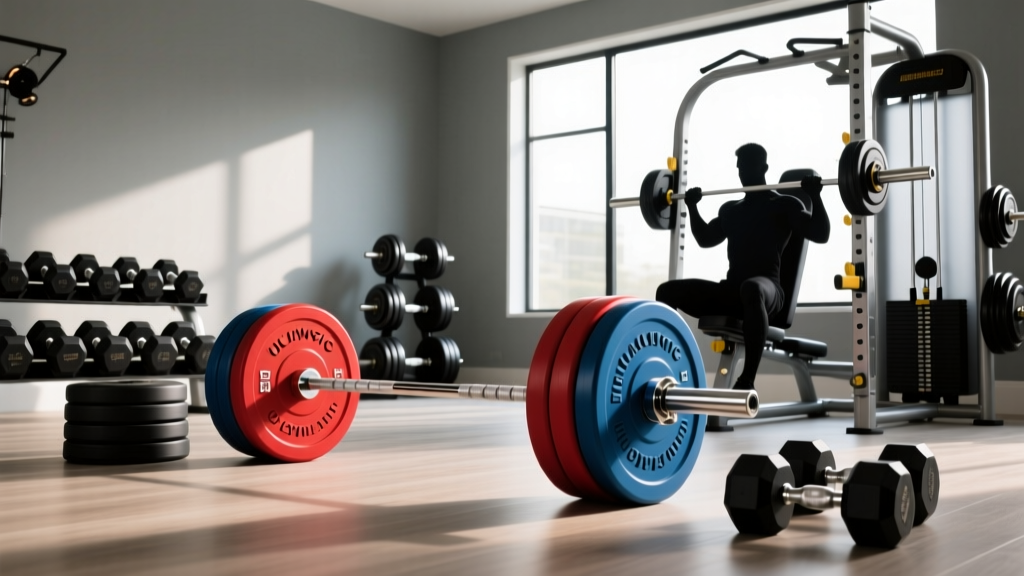
Barbell Buying Guide: Weight, Knurling & Pec Deck with Dumbbells
Master Dumbbell Wood Chops at Home with Neoprene Weights

EZ Curl Bar vs Straight Bar: Beyond Dumbbell Lower Back Workouts

HIIT With Dumbbells: Adjustable Dumbbell Head-to-Head Review

Neoprene Dumbbells for Rotator Cuff Exercises: 2026 Comparison
