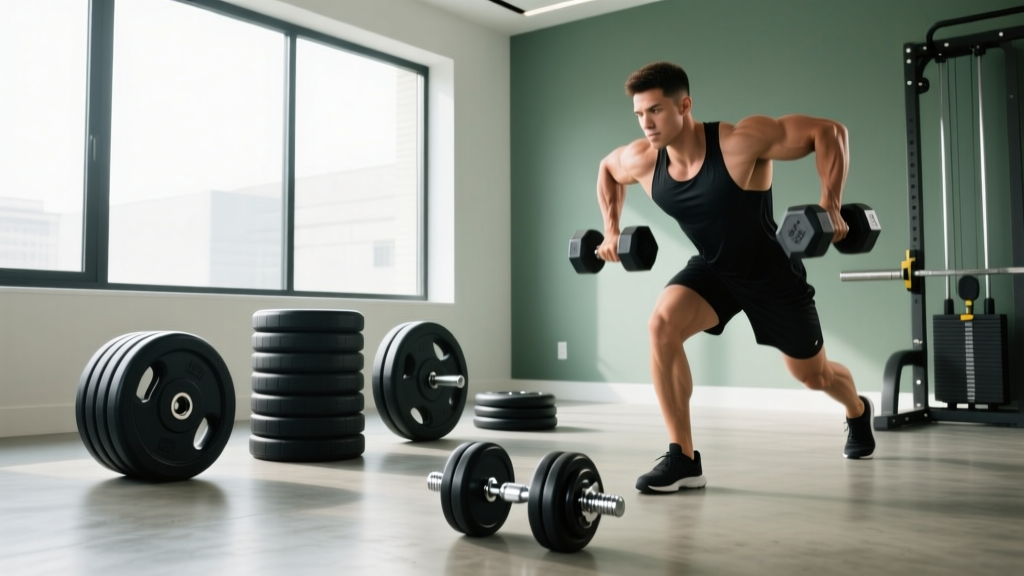
Bumper vs Iron Plates & Dumbbell Shoulder Flies Cost
Compare bumper vs iron plates and dumbbell shoulder flies costs. Discover the ultimate budget breakdown and value analysis for your home gym setup.

The Home Gym Free Weight Budget Dilemma
Building a comprehensive home gym in 2026 requires a strategic approach to capital allocation. The free weights market has seen significant price fluctuations over the last few years, driven by raw material costs and global shipping rates. When outfitting your rack, the two most critical decisions you will face are choosing between bumper plates and cast iron plates for your barbell work, and determining the most cost-effective way to program isolation movements like dumbbell shoulder flies. This guide provides a rigorous budget breakdown and value analysis to help you maximize your return on investment (ROI) without sacrificing training quality.
Bumper Plates vs. Cast Iron: A Deep Value Analysis
The debate between rubber bumper plates and traditional cast iron plates is not just about aesthetics or noise reduction; it is fundamentally about cost-per-pound, durability, and training modality. To make an informed financial decision, we must look at the exact specifications and market pricing for both options.
| Feature | Virgin Rubber Bumpers | Crumb Rubber Bumpers | Standard Cast Iron | Machined Steel / Urethane |
|---|---|---|---|---|
| Average Cost per Pound | $3.50 - $5.50 | $2.00 - $3.00 | $1.50 - $2.50 | $4.50 - $7.00+ |
| Durometer (Shore A) | 70A - 85A | 60A - 70A | N/A (Solid Metal) | 85A - 90A+ (Coating) |
| Drop Rating (Dead Bounce) | High (Minimal Bounce) | Low (High Bounce) | Zero (Do Not Drop) | Moderate to High |
| Thickness (45lb Plate) | 2.1 - 2.5 inches | 3.0 - 3.5 inches | 1.2 - 1.5 inches | 1.0 - 1.3 inches |
| Primary Use Case | Olympic Lifting, CrossFit | General Fitness, Garage Gyms | Powerlifting, Bodybuilding | Commercial, Heavy Powerlifting |
The Bumper Plate Breakdown: Virgin vs. Crumb Rubber
Bumper plates are essential if your programming includes Olympic weightlifting (snatches, cleans) or high-repetition barbell drops from overhead. However, not all bumpers are created equal. Virgin rubber bumpers are manufactured from pure, unrecycled rubber, yielding a higher Shore A durometer rating. This means they are denser, have a 'dead bounce' (preventing the bar from rebounding dangerously), and last significantly longer. According to equipment standards outlined by USA Weightlifting, consistent plate dimensions and bounce characteristics are critical for safety during competitive lifts.
Crumb rubber bumpers, made from recycled tires, are cheaper but suffer from high bounce and faster degradation. Furthermore, crumb rubber plates are notoriously thick. Loading 300+ lbs on a barbell with crumb bumpers can cause severe barbell whip and sleeve overcrowding.
⚠️ The 10lb Bumper Plate Warning: Never buy 10lb bumper plates for heavy loading. Because they must maintain the standard 17.7-inch diameter, 10lb bumpers are incredibly thin and prone to warping or tearing at the steel insert. If you need 10lb increments, buy cast iron fractional plates or technique plates made of solid urethane.The Cast Iron Advantage
If your training revolves around powerlifting (squats, bench presses, deadlifts) or traditional bodybuilding, cast iron plates offer the highest ROI. At roughly $1.50 to $2.50 per pound, iron allows you to load a barbell heavily without taking up excessive sleeve space. The primary drawback is noise and floor damage; dropping cast iron requires specialized shock-absorption flooring, which adds to your overall budget.
Accessory Budgeting: Dumbbell Shoulder Flies & Isolation
Once your barbell plates are secured, you must allocate funds for accessory work. Isolation movements, particularly dumbbell shoulder flies (encompassing both lateral raises and rear deltoid flies), present a unique budgeting challenge. The deltoid is a relatively small muscle group that requires strict form and lighter loads to achieve maximum hypertrophy without relying on momentum.
According to kinesiology data from ExRx.net, the lateral deltoid functions primarily to abduct the humerus, a movement where mechanical disadvantage increases as the arm raises. Consequently, intermediate lifters typically perform dumbbell shoulder flies with weights ranging from just 10 lbs to 25 lbs per hand. Rear deltoid flies often require even lighter loads, typically between 5 lbs and 15 lbs.
The Fixed Dumbbell Trap
Many home gym owners make a catastrophic financial error by purchasing a full rack of fixed hex dumbbells to accommodate every possible exercise. To properly progress on dumbbell shoulder flies, you might need pairs at 5, 10, 15, 20, and 25 lbs. At an average commercial rate of $2.50 per pound, purchasing these five pairs alone will cost upwards of $375, while taking up massive amounts of floor space on a rack.
The Value Solution: Adjustable Dumbbells
For isolation movements like shoulder flies, adjustable dumbbells are the undisputed kings of budget efficiency. High-quality adjustable sets (such as Nuobell or PowerBlock Elite) allow you to scale weights in 2.5 lb or 5 lb increments from 5 lbs up to 50+ lbs. A premium adjustable set costs between $300 and $450 in 2026. While the upfront cost seems high, it replaces up to 15 pairs of fixed dumbbells, yielding an immediate positive ROI and freeing up vital square footage in your gym.
'True budget efficiency in a home gym isn't about buying the cheapest individual item; it's about minimizing the cost-per-utility across your entire training spectrum.' — Home Gym Equipment Analyst
Real-World 2026 Budget Scenarios
How should you split a $1,200 free weight budget? Here are two optimized frameworks based on training style, validated by resistance training guidelines from the American College of Sports Medicine (ACSM) regarding progressive overload and equipment versatility.
Scenario A: The Olympic Weightlifter / CrossFit Athlete
- Barbell Plates ($750): 260 lbs of Virgin Rubber Bumpers (essential for dropping from overhead).
- Accessory Dumbbells ($350): One pair of adjustable dumbbells (5-50 lbs) for dumbbell shoulder flies, lunges, and pressing accessories.
- Collars & Clips ($50): Heavy-duty locking collars.
- Remaining Budget ($50): Chalk and barbell brush.
Scenario B: The Powerbuilder (Strength + Hypertrophy)
- Barbell Plates ($450): 300 lbs of Standard Cast Iron (maximizes heavy loading capacity and minimizes sleeve space).
- Accessory Dumbbells ($400): Premium adjustable dumbbells with a micro-load feature (crucial for progressing on rear deltoid and lateral shoulder flies).
- Flooring ($250): 3/4-inch thick horse stall mats to protect the floor from the cast iron drops.
- Remaining Budget ($100): Fat grips and lifting straps.
Hidden Costs: Shipping, Flooring, and Maintenance
When calculating the value of iron vs. rubber, you must factor in the 'hidden' costs of ownership:
- Shipping and Freight: Cast iron is incredibly dense. Bumper plates, particularly crumb rubber, are voluminous. Shipping companies often charge by dimensional weight for bulky bumper sets, which can add $100-$200 to your final checkout price compared to compact iron sets.
- Off-Gassing and Climate Control: Cheap crumb rubber bumpers emit volatile organic compounds (VOCs) that smell strongly of tires and chemicals. If your gym is in an attached garage or basement, you may need to invest in an air purifier or leave the plates outside to off-gas for weeks. Virgin rubber and cast iron do not share this severe issue.
- Maintenance: Cast iron requires occasional wire-brushing and a light coat of 3-in-One oil or WD-40 to prevent surface rust, especially in humid environments. Bumper plates require zero rust maintenance but can tear at the steel hub insert if repeatedly dropped with a light load (e.g., dropping a barbell loaded only with two 15lb bumpers).
Final Verdict: Maximizing ROI on Your Iron and Rubber
Allocating your home gym budget requires matching your equipment to your biomechanical needs. If you are dropping weights from the shoulder or overhead, virgin rubber bumper plates are a non-negotiable safety investment, despite the higher cost per pound. If your focus is purely on moving maximum weight from point A to point B without dropping, cast iron plates offer unmatched financial efficiency.
Furthermore, never drain your budget on fixed dumbbell racks just to perform isolation work. By investing in a high-quality adjustable dumbbell set, you secure the exact micro-increments needed to safely and effectively progress on dumbbell shoulder flies and other accessory movements, ensuring your 2026 home gym is both financially sound and structurally complete.
More gear to consider
All reviews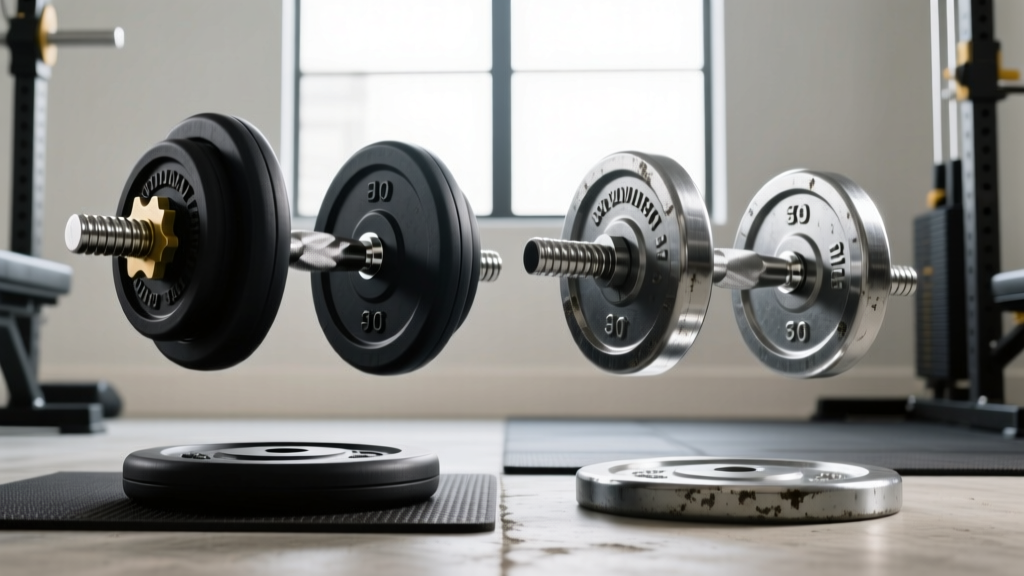
Bumper Plate vs Iron Plate: Best for the Double Dumbbell Swing?

Bumper vs Iron Plates: Budgeting for Smith Machine Bicep Curls

EZ Curl vs Straight Bar: Rogue Bar & Dumbbell Care

Space-Optimized Free Weight Zones: Cast Iron vs Competition Kettlebells & PowerBlock Dumbbells 90

Rubber Hex vs Urethane: Gear for Leg Workouts at Home with Dumbbells
