
Bumper vs Iron Plates: Beyond Dumbbell Leg Exercises for Women
Explore the 2026 shift from dumbbell leg exercises for women to barbell training. Compare bumper vs iron plates for RDLs, hip thrusts, and home gym setups.

The 2026 Shift: Moving Past Dumbbell Leg Exercises for Women
The fitness landscape in 2026 has fundamentally shifted. For years, gym floors and home setups were dominated by dumbbell leg exercises for women—movements like goblet squats, walking lunges, and step-ups. While these exercises remain foundational for hypertrophy and unilateral stability, a massive cohort of female lifters is currently hitting the 'dumbbell ceiling.' When your Bulgarian split squat or heavy goblet squat requires 70-pound dumbbells, grip fatigue and awkward handling often fail before your glutes and quads do. The natural, biomechanically superior progression is the barbell.
This migration toward heavy barbell compound movements has sparked a surge in home gym investments, specifically forcing a critical purchasing decision for new barbell owners: bumper plates vs. cast iron plates. Choosing the right weight plates is no longer just about aesthetics or dropping weights from overhead; it is about floor clearance, sleeve real estate, and optimizing lower-body biomechanics for exercises like Romanian Deadlifts (RDLs) and hip thrusts.
Market Analysis: Bumper vs. Iron Plate Sales Trends
According to the American College of Sports Medicine (ACSM), strength training among women has seen double-digit growth year-over-year, with a distinct pivot toward heavy, barbell-based posterior chain work. Consequently, the free weight equipment market has adapted to meet the demands of the modern home gym.
In 2026, cast iron plates remain the budget-friendly staple, averaging $1.50 to $2.50 per pound. However, bumper plates—once strictly reserved for Olympic weightlifters and CrossFit affiliates—now account for over 45% of direct-to-consumer home gym plate sales. Brands like Rep Fitness and Rogue have introduced specialized 'technique' and 'echo' bumpers to bridge the gap between commercial durability and residential noise constraints. As BarBend's comprehensive equipment analysis notes, the choice between iron and rubber is ultimately dictated by your specific training environment and the exact movements you program.
2026 Market Insight: The Urethane Middle-Ground
Urethane-coated iron plates are currently the fastest-growing segment in the premium home gym market. They offer the slim profile of raw iron with the noise-dampening and rust-proof qualities of rubber. However, they command a steep premium, often costing $3.50 to $5.00+ per pound, making them a luxury investment for dedicated lifters.
Technical Breakdown: Cast Iron vs. Bumper Plates
To make an informed purchasing decision, you must look beyond the price tag and examine the physical dimensions and material properties of the plates. Below is a 2026 comparison matrix of standard market offerings.
| Feature | Cast Iron (e.g., Rogue Machined) | Standard Bumper (e.g., Rep CR-15) | Premium Bumper (e.g., Rogue HG 2.0) |
|---|---|---|---|
| Cost Per Pound | $1.75 - $2.50 | $2.50 - $3.20 | $4.00 - $5.00 |
| 45lb Plate Thickness | ~1.2 inches | ~3.1 inches | ~3.3 inches |
| 10lb Plate Diameter | ~9.0 inches | 17.7 inches (450mm) | 17.7 inches (450mm) |
| Drop Tolerance | Low (Chips floors/bars) | Medium-High | Very High (IWF Spec) |
| Best Use Case | Squats, Bench, Heavy Loading | General Home Gym, RDLs | Olympic Lifts, Drops |
Real-World Edge Cases: Biomechanics and Floor Clearance
The most common mistake buyers make is assuming all 45-pound plates interact with the floor and the barbell sleeve in the same way. When transitioning from dumbbell leg exercises for women to barbell hinges, two major edge cases dictate which plate type you should buy.
The RDL and Deadlift Diameter Problem
Consider the Romanian Deadlift (RDL) or a standard deadlift. A standard 45lb cast iron plate is roughly 17 inches in diameter, but a 10lb cast iron plate is only about 9 inches in diameter. If you are a lighter lifter starting your RDL progression with 95 lbs (a 45lb bar + two 10lb plates + two 15lb plates), the barbell sits dangerously low to the ground. This alters your hip hinge biomechanics, forcing you to round your lower back to reach the bar, which is a primary mechanism for lumbar injury.
Bumper plates solve this entirely. As detailed in the Rogue Fitness HG 2.0 specifications, all bumper plates from 10lbs to 45lbs maintain a uniform 450mm (17.7-inch) diameter. This ensures the bar always starts at the correct mid-shin height, regardless of whether you are lifting 65 lbs or 225 lbs, preserving proper spinal alignment during the hinge.
Hip Thrust Setup and Sleeve Real Estate
The barbell hip thrust is a cornerstone of glute-focused training. However, loading heavy with bumper plates eats up barbell sleeve space. A standard Olympic barbell sleeve is 16.3 inches long. Because a 45lb iron plate is only ~1.2 inches thick, you can easily load over 400lbs per side. Conversely, a 45lb bumper plate is over 3 inches thick. If you use bumpers, you can only fit about four 45s per side (approx. 180-200lbs total per side) before running out of sleeve space and failing to secure the barbell collar safely. If your goal is to eventually hip thrust 300+ lbs, thick bumper plates will physically prevent you from loading the bar.
The Noise and Vibration Factor (Garage Gym Realities)
Beyond biomechanics, the 2026 home gym reality involves shared walls, HOA regulations, and garage floors. Cast iron plates generate high-frequency acoustic spikes and structural vibration when set down heavily after a set of squats or deadlifts. Bumper plates, specifically those made from virgin rubber rather than recycled 'crumb' rubber, absorb kinetic energy and drastically reduce decibel output. If your home gym is on a second floor or shares a wall with living spaces, bumper plates (paired with horse-stall mats) are virtually mandatory to prevent structural damage and noise complaints.
2026 Buyer's Framework: Which Should You Invest In?
Use this decision matrix to finalize your equipment order:
- Invest in Cast Iron If: You are on a strict budget (under $2.00/lb), you have a dedicated ground-level garage gym, your programming heavily features squats and bench presses where dropping the bar is rare, and you plan to lift heavy (300+ lbs) requiring maximum sleeve space.
- Invest in Bumper Plates If: You frequently perform RDLs, deadlifts, or Olympic variations with sub-135lb loads, you train on hardwood or residential flooring, you share your space and need noise reduction, and you value the uniform starting height for hinge movements.
- The Hybrid Approach: Many advanced lifters buy a pair of 45lb and 35lb bumpers for their RDLs and deadlifts to guarantee proper floor clearance, while filling the rest of their plate tree with cheaper 25lb, 10lb, and 5lb cast iron plates to save money and preserve sleeve space for heavy squat days.
Pro Tip: Never drop bare iron plates on a concrete garage floor without thick rubber matting. The micro-fractures caused by repeated impacts will eventually cause the cast iron to crack or shatter, creating a severe safety hazard.
Frequently Asked Questions
Can I mix bumper and iron plates on the same barbell?
Yes, but you must load them correctly. Always place the cast iron plates on the barbell sleeve first (closest to the barbell collar), and load the bumper plates on the outside. The bumper plate's wider rubber surface area will absorb the impact of drops and protect the iron plates from chipping, while also protecting the barbell's internal bearings from shock damage.
Do cheap bumper plates smell?
Yes. Budget bumper plates made from recycled 'crumb' rubber use chemical binders that off-gas heavily, often making a small, unventilated garage gym smell like burning tires for months. In 2026, it is highly recommended to spend the extra $0.50 per pound on 'virgin rubber' bumpers, which are cured differently and emit almost zero odor after a brief initial airing-out period.
Why not just stick to heavy dumbbells?
While dumbbell leg exercises for women are excellent for addressing muscle imbalances, sourcing matching pairs of 80lb or 100lb rubber hex dumbbells is incredibly expensive (often exceeding $3.00/lb) and requires massive rack footprint. A barbell and plate setup is vastly more space-efficient and cost-effective for progressive overload in the 200lb+ range.
More gear to consider
All reviews
Dumbbell Around the World: Adjustable Dumbbell Review & Fixes
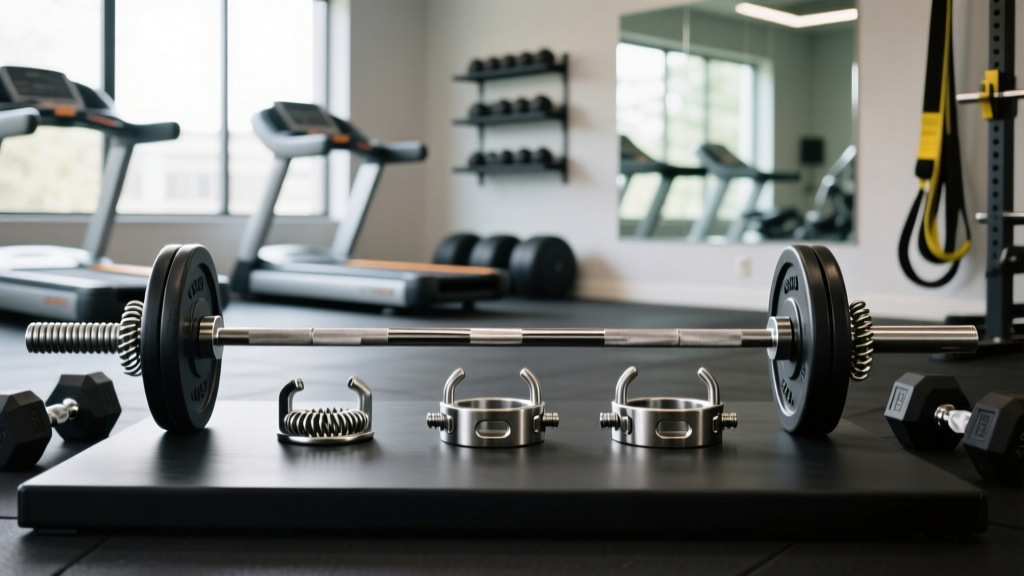
Barbell Clamps for Squats & Any Leg Workout Routine With Dumbbells

Bumper vs Iron Plate Care & Incline Dumbbell Skull Crusher Longevity

Setup: Skull Crusher Exercise with Dumbbells & Barbell Collars
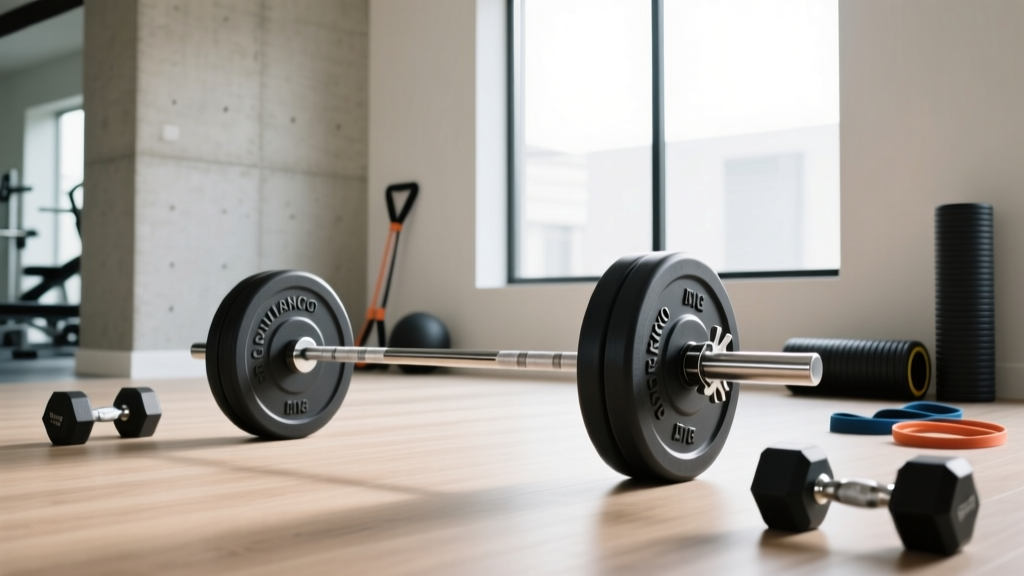
Beyond Leg Lifts Over Dumbbell: Beginner Olympic Barbell Guide
