
Bumper vs Iron Plates: After Dumbbell Exercises for Arms Beginners
Transitioning from dumbbell exercises for arms beginners? We compare bumper vs iron plates with hands-on reviews, pricing, and expert buying advice.

The Transition: Beyond Dumbbell Exercises for Arms Beginners
Most lifters begin their strength journey focusing on isolation movements. If you have spent the last few months mastering dumbbell exercises for arms beginners—think bicep curls, tricep extensions, and hammer curls using 10lb to 30lb neoprene or hex dumbbells—you have built a crucial foundation of connective tissue strength and mind-muscle connection. However, as your central nervous system adapts and you crave the systemic progressive overload that only heavy compound barbell lifts can provide, you inevitably graduate to the barbell.
That transition brings you to the first major equipment crossroads of your lifting career: bumper plate vs iron plate. As of 2026, the home gym market is saturated with options, and choosing the wrong plates can lead to damaged flooring, stalled progress, or wasted budget. In this hands-on review, we break down the material science, pricing, and real-world application of both plate types to help you make the right investment for your garage gym.
Material Science: Vulcanized Rubber vs. Cast Iron
Before diving into specific brand reviews, it is vital to understand the engineering differences between these two staples. According to the International Weightlifting Federation (IWF) technical rulebook, competition plates must adhere to strict dimensional tolerances, but the commercial and home gym markets offer vast variations.
Bumper Plates: The Physics of Absorption
Bumper plates are constructed from solid rubber (either virgin or recycled) with a steel or brass inner hub. Their primary design purpose is to be dropped from overhead or shoulder height without shattering or destroying the platform beneath them. The density of the rubber is measured on the Shore A durometer scale. High-quality training bumpers typically rate between 85 and 90 Shore A, providing a 'dead bounce' that prevents the barbell from rebounding dangerously into your shins during a missed clean or snatch.
Iron Plates: Density and Tradition
Cast iron plates are the traditional standard for powerlifting and bodybuilding. They are significantly denser than rubber, meaning a 45lb iron plate is roughly 1.5 inches thick, whereas a 45lb bumper plate is a uniform 2.15 inches thick. This density allows you to load significantly more weight onto a standard barbell sleeve before running out of space—a critical factor if you are chasing a 500lb+ deadlift.
Expert Insight: The Hub Tolerance Trap
When buying used or budget plates, always check the inner hub diameter. Standard Olympic barbells feature a 50mm sleeve. Premium plates use a 50.4mm to 50.6mm hub tolerance. Cheaper, off-brand plates often have hubs that warp or are cast at 51mm+, causing a dangerous 'clanking' and lateral shift on the bar during heavy squats.
Hands-On Review: Top Iron Plates for Home Gyms
If your training consists strictly of powerlifting (squat, bench, deadlift) or traditional bodybuilding, and you have a dedicated rubber-matted platform, iron is the superior choice. Here are our top picks for 2026.
1. REP Fitness Cast Iron Plates
REP Fitness has dominated the budget-to-mid-tier iron market for years. Their standard cast iron plates feature a machined face, ensuring the plates sit flush against one another, eliminating the annoying rattling common with cheaper hardware store plates.
- Pricing: Approximately $2.10 to $2.40 per pound (sold in pairs or full sets).
- Pros: Excellent finish, accurate weight calibration (within 2% tolerance), easy-to-read raised lettering.
- Cons: Prone to surface rust if kept in an unclimate-controlled garage in humid environments; requires occasional wire-brushing and mineral oil coating.
2. Rogue Machined Iron Plates
For the lifter who demands perfection, Rogue’s machined iron plates are the gold standard. The edges are smooth, and the weight calibration is incredibly tight (within 10 grams of stated weight).
- Pricing: Premium tier, hovering around $3.00+ per pound.
- Pros: Unmatched aesthetic, incredibly thin profile for maximum bar loading, rust-resistant e-coat finish.
- Cons: High price point; frequent stock shortages due to intense demand.
Hands-On Review: Top Bumper Plates for Olympic Lifting
If your routine includes Olympic weightlifting, CrossFit, or high-rep barbell complexes where the bar frequently returns to the floor from a height, bumpers are non-negotiable. As noted in BarBend's comprehensive guide on plate materials, the right bumper will save your barbell's internal bearings and your concrete floor.
1. Rogue Echo Bumper Plates
The Rogue Echo line remains the undisputed workhorse of the home and affiliate gym community. Made from virgin rubber, they feature a low-bounce compound and a stainless steel insert that grips the barbell sleeve securely.
- Pricing: Roughly $389 for a 260lb set (approx. $1.50/lb when bought as a full set, making them highly economical for bumpers).
- Pros: High durometer rating (dead bounce), IWF standard diameter (450mm), durable stainless steel hub.
- Cons: The 10lb and 15lb 'fractional' bumpers are notoriously fragile and prone to bending if dropped alone on the bar.
2. Fringe Sport Black Bumper Plates
Fringe Sport offers a slightly softer rubber compound that excels in noise reduction. According to Garage Gym Reviews' hands-on drop tests, Fringe Sport bumpers consistently rank highest for shock absorption in residential settings where noise transfer to neighbors is a concern.
- Pricing: Mid-tier, averaging $2.80 per pound.
- Pros: Exceptional warranty (1 to 3 years depending on weight), very low noise profile, vibrant color options available in their competition line.
- Cons: Slightly thicker profile than Rogue Echo, meaning you can fit fewer plates on the sleeve.
Head-to-Head Comparison Matrix
| Feature | Cast Iron Plates | Rubber Bumper Plates |
|---|---|---|
| Primary Use | Powerlifting, Bodybuilding | Olympic Lifting, CrossFit |
| Drop Tolerance | Low (Will crack/damage floors) | High (Designed for dropping) |
| Thickness (45lb) | ~1.5 inches | ~2.15 inches |
| Cost Per Pound | $1.80 - $3.00 | $2.50 - $5.00+ |
| Barbell Capacity | High (Fits more weight) | Moderate (Fills sleeve faster) |
The Space, Noise, and Flooring Factor
One of the most overlooked aspects of the bumper vs iron debate is the physical footprint in your gym. Iron plates require significantly less storage space on a weight tree. If you own a compact power rack setup in a spare bedroom or small garage, a pair of iron 45s, 25s, 10s, and 5s will take up half the peg space of the equivalent rubber bumpers.
Warning: Never drop cast iron plates on bare concrete or standard interlocking foam mats. The kinetic energy transfer will shatter the concrete slab beneath the foam and permanently dent the iron plates. If you buy iron, you must invest in a dedicated 3/4-inch thick horse-stall mat platform.
Expert Decision Framework: Which Should You Buy?
Choosing between the two ultimately comes down to your training modalities and your environment. Use this framework to finalize your cart:
Buy Cast Iron If:
- Your programming is strictly powerlifting (Squat, Bench, Deadlift) or traditional hypertrophy work.
- You are nearing advanced strength levels and need to load 400+ lbs on a standard barbell without running out of sleeve space.
- You have a dedicated, heavy-duty rubber lifting platform and strict control over your barbell descents.
- You are on a strict budget and need to maximize total weight purchased per dollar.
Buy Bumper Plates If:
- You practice Olympic weightlifting (Snatch, Clean and Jerk) where missing reps and dropping the bar is part of the learning process.
- You do CrossFit-style metcons involving high-rep deadlifts, power cleans, or thrusters where lowering the bar under control would tax your grip and central nervous system unnecessarily.
- Your home gym is located on a floor with questionable structural integrity or shared walls where noise dampening is a priority.
Final Thoughts on Your Progression
Moving from dumbbell exercises for arms beginners to heavy, systemic barbell training is a massive milestone in your fitness journey. Whether you choose the dense, old-school reliability of machined iron or the shock-absorbing safety of vulcanized rubber bumpers, ensure you are buying from reputable manufacturers with verified hub tolerances. Your barbell sleeves—and your garage floor—will thank you for the investment.
More gear to consider
All reviews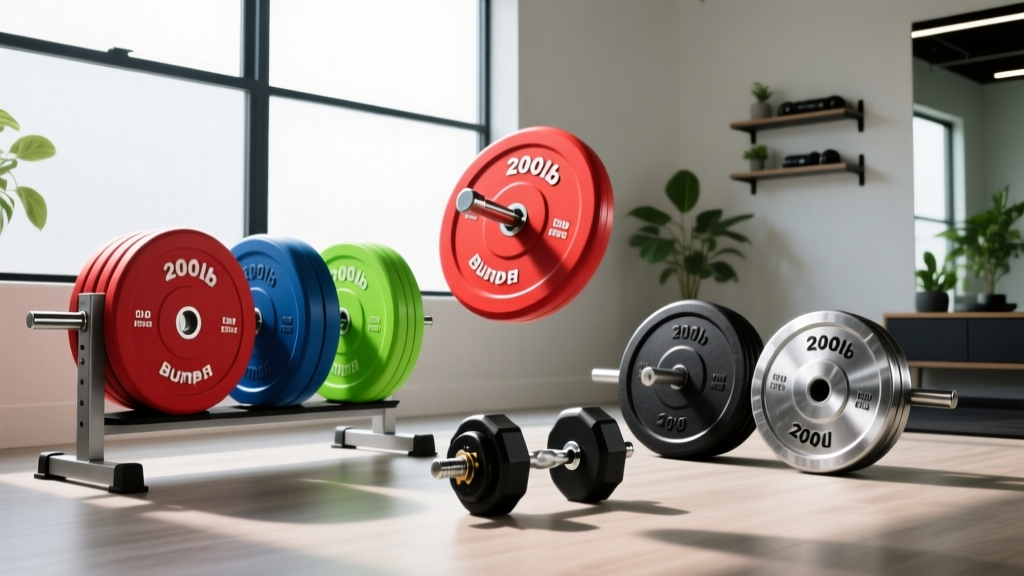
Bumper Plate vs Iron Plate Trends: The 200lb Dumbbell Effect
Best Adjustable Dumbbells for Boxing Exercises (2026)

Bumper vs Iron Plate Storage: Space For One Arm Dumbbell Roll

Olympic Barbell Weight & Knurling vs Dumbbells for Hip Thrust
Power Rack vs Squat Stand: Best Rig for Your Dumbbell Back Workout
