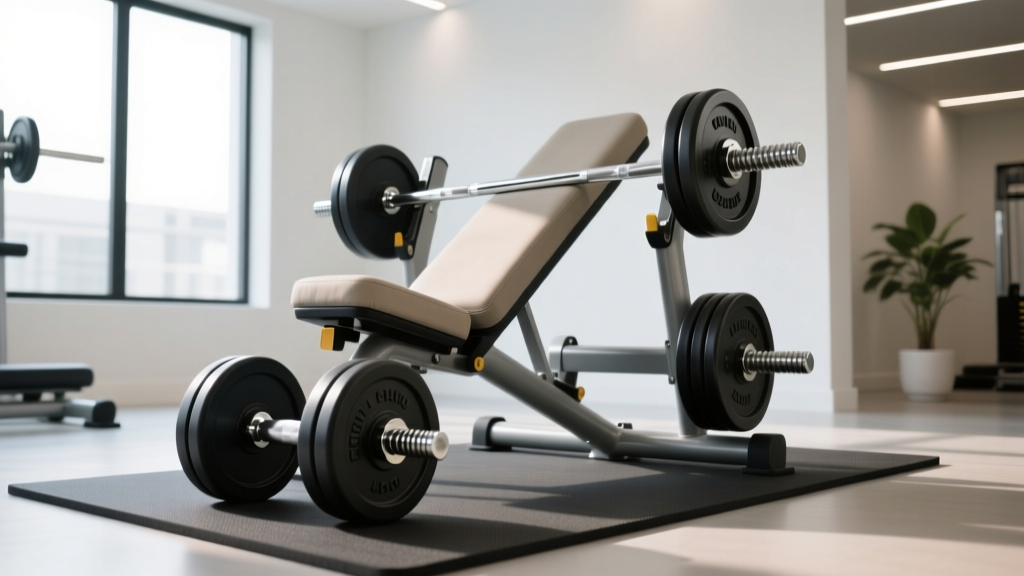
Bumper vs Iron Plates: Gym Layouts and Dumbbell Chest Presses
Optimize your home gym layout. Compare bumper vs iron plates for space, storage, and flooring to maximize room for dumbbell chest presses and racks.

The Spatial Dilemma: Bumper vs. Iron Plates in Modern Home Gyms
As dedicated home gym real estate becomes increasingly premium in 2026, every square foot of your layout must be meticulously planned. The debate between bumper plates and cast iron plates is no longer just about noise reduction or Olympic lifting compatibility; it is fundamentally a space optimization challenge. Your choice of weight plates dictates your flooring requirements, storage footprint, and the clearance needed for multi-use zones. Whether you are outfitting a tight 10x10 spare room or a two-car garage, understanding the spatial geometry of your plates is the first step toward a highly functional layout.
The Dimensional Reality: Thickness, Sleeves, and Trees
The most immediate spatial impact of your plate choice is physical volume. Cast iron is incredibly dense, while bumper plates rely on virgin rubber or urethane, requiring significantly more thickness to achieve the same weight. This discrepancy drastically alters how you load barbells and store your gear.
Barbell Sleeve Capacity
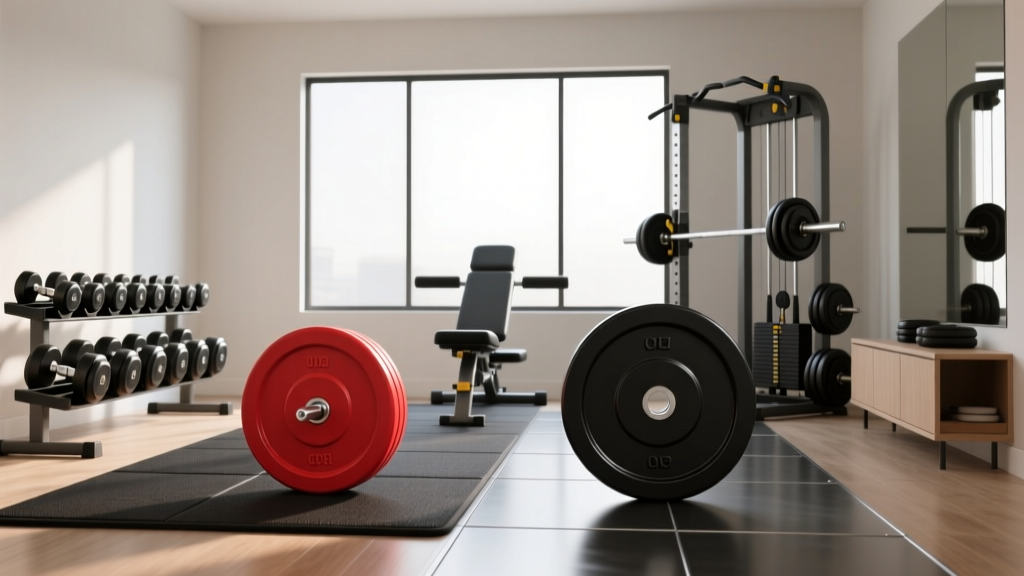
A standard Olympic barbell sleeve is 16.4 inches long. Consider the Rogue Echo Bumper Plates, where a 45-pound plate measures approximately 3.25 inches thick. Loading four 45-pound bumpers per side consumes 13 inches of sleeve space, leaving just enough room for a collar. Conversely, a 45-pound Rogue Deep Dish Iron Plate is only about 1.5 inches thick. You can easily load five or six iron plates per side, allowing for heavier maximal lifts without requiring specialized extended-sleeve deadlift bars.
Weight Tree and Rack Footprints
Storage density is where iron plates truly shine. A standard A-frame weight tree (like the Titan Fitness A-Frame) can hold over 800 pounds of cast iron in a compact 30x30 inch base. The same tree loaded with bumper plates will max out spatially around 500 pounds before the thick rubber edges begin to overlap and bind, forcing you to purchase secondary storage racks or wall-mounted cradles, which eat into your valuable wall clearance.
Flooring Footprints and Drop Zone Boundaries
Your plate selection directly mandates your flooring layout, which in turn defines the usable boundaries of your gym space.
- Bumper Plate Drop Zones: Bumpers are designed to be dropped, but they still transfer kinetic energy. According to Garage Gym Reviews, dropping heavy bumpers requires at least 3/4-inch thick vulcanized rubber mats or specialized lifting platforms. Furthermore, you must designate a 6-foot by 8-foot "drop zone" around your power rack where no fragile equipment or walls are within striking distance of a bouncing barbell.
- Iron Plate Strict Zones: Cast iron will shatter if dropped from shoulder height and will crack standard concrete subfloors. However, because iron plates mandate strict, controlled lowering (or the use of spotter arms), you do not need to account for lateral bounce. This allows you to push your power rack much closer to walls or adjacent equipment, maximizing the remaining floor space for other modalities.
Designing the Multi-Use Bench Zone
In a space-optimized gym, your power rack rarely serves just one purpose. It is a squat stand, a pull-up rig, and a bench press station. The spatial requirements shift dramatically depending on the implement you are using.
When executing heavy barbell bench presses, the lifter's wingspan is constrained by the barbell's fixed grip, and the movement fits neatly within the 48x48 inch interior footprint of a standard power rack. However, when programming your weekly split, transitioning from heavy barbell benching to dumbbell chest presses requires a distinct spatial shift. Dumbbell chest presses demand a significantly wider lateral clearance to accommodate the deep stretch at the bottom of the movement and the wider arc of the dumbbells.
Clearance Calculations for Dumbbell Work
According to spatial guidelines outlined by BarBend, a dedicated dumbbell pressing zone requires a minimum of 8 feet of lateral width to ensure the lifter's elbows and the dumbbells do not strike the uprights of the power rack or adjacent weight trees. If your rack is pushed into a corner to save space, you must angle your adjustable bench at a 45-degree offset from the rack's crossmembers to execute dumbbell chest presses safely. Failing to map out this lateral clearance leads to cramped form, restricted range of motion, and a high risk of knuckle abrasions against steel uprights.
Comparison Matrix: Spatial and Functional Impact
| Feature | Bumper Plates (Standard Rubber) | Cast Iron Plates (Machined/Deep Dish) |
|---|---|---|
| Average 45lb Thickness | 3.25 inches | 1.5 inches |
| Storage Density | Low (Requires more horizontal/vertical rack space) | High (Compact stacking on trees and pegs) |
| Flooring Requirement | Heavy-duty 3/4" rubber or lifting platform | Standard mats acceptable if lifts are controlled |
| Drop Zone Clearance | Requires 6'x8' bounce buffer zone | Minimal buffer; can be placed near walls |
| Average Cost (2026) | $2.20 - $3.50 per pound | $1.80 - $2.80 per pound |
| Best Layout Application | Garage gyms with dedicated Olympic lifting platforms | Tight spare rooms, multi-use zones, and basement gyms |
2026 Home Gym Layout Blueprints
To put this data into practice, here are two space-optimized blueprints based on your plate selection.
Blueprint A: The 10x10 Spare Room (Iron Plate Optimized)
The Constraint: 100 square feet, low ceilings, shared walls.
The Strategy: Use machined cast iron plates. Place a folding wall-mounted squat rack (like the PRx Performance Profile) against the primary load-bearing wall. Store iron plates on a compact, wall-mounted plate peg system directly adjacent to the rack. Because iron plates do not bounce, the rack can sit just 12 inches off the wall. The center of the room remains completely open, providing the necessary 8-foot lateral wingspan required for unrestricted dumbbell chest presses and floor work when the rack is folded away.
Blueprint B: The 2-Car Garage Corner (Bumper Plate Optimized)
The Constraint: 20x20 foot shared space, concrete subfloor, high noise tolerance.
The Strategy: Utilize a 4x8 foot raised plywood and rubber lifting platform positioned in the corner. Outfit the platform with a full power rack and load it with urethane bumper plates (which offer a tighter dimensional profile than standard rubber bumpers, saving sleeve space). Because the bumpers require a drop zone, the platform acts as the strict boundary. Outside the platform, lay down interlocking EVA foam tiles to create a soft, spacious zone for accessories, kettlebell swings, and dumbbell movements, ensuring a clear physical and visual separation between heavy barbell drops and controlled accessory work.
Final Verdict on Space Optimization
Choosing between bumper and iron plates is an exercise in spatial geometry. If your primary goal is to maximize a small footprint, minimize storage sprawl, and maintain wide-open transition zones for dumbbell chest presses and floor work, cast iron plates are the undisputed champions of spatial efficiency. However, if your training heavily features Olympic lifts, high-rep barbell drops, and you have the square footage to dedicate to a specialized drop zone and heavy-duty platform, bumper plates remain an essential investment. Map your clearance, measure your sleeves, and build your layout around the physical reality of your iron and rubber.
More gear to consider
All reviews
Rubber Hex vs Urethane vs the Bowflex Dumbbell: Expert Review
Power vs Squat Rack vs Stand: Good Exercises for Arms with Dumbbells
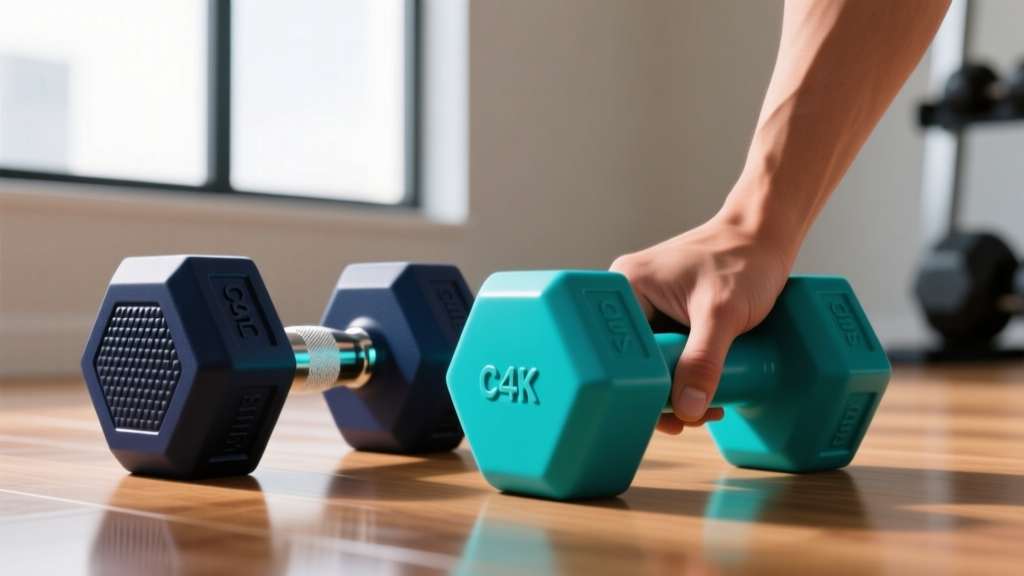
Best Forearm Twists Dumbbell: Rubber Hex vs Urethane 2026
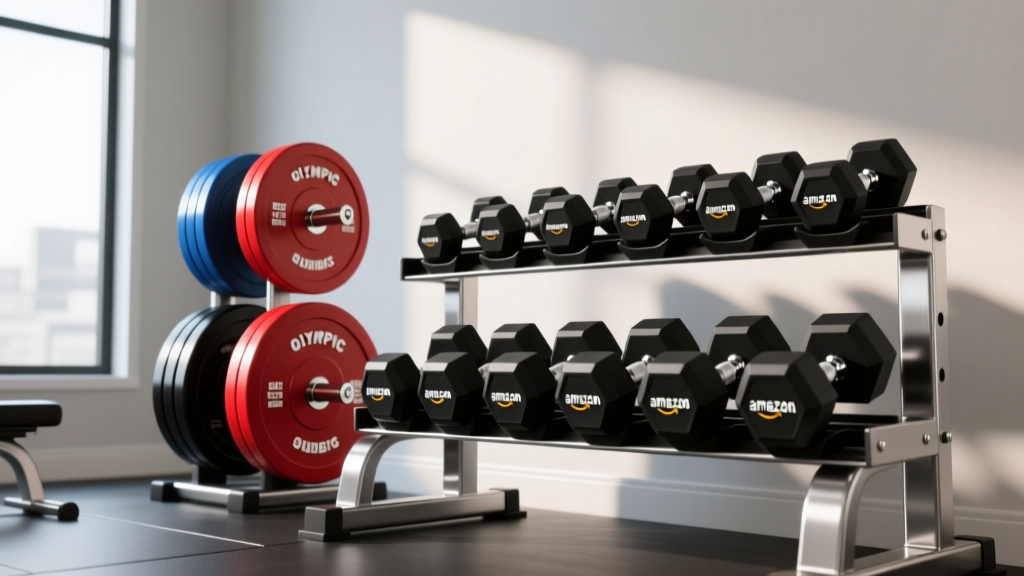
Olympic vs Standard Plates & Amazon Basics Rubber Hex Dumbbell Hand Weight

Rubber Hex vs Urethane: Dumbbell Exercises for Rear Deltoids