
2026 Trends: Bumper vs Iron Plates & Bench Press Workout With Dumbbells
Analyze 2026 free weight market trends comparing bumper vs iron plates, and discover why the bench press workout with dumbbells is dominating home gyms.

The 2026 Free Weight Market Landscape
The global fitness equipment market has undergone a radical transformation over the last three years, and as we navigate 2026, the free weights sector is experiencing a fascinating bifurcation. According to industry data from Grand View Research, the demand for specialized, high-durability home gym equipment has stabilized into a premium tier, while commercial facilities are aggressively optimizing their floor plans. This macroeconomic shift has directly impacted how consumers and gym owners choose between traditional cast iron plates and specialized bumper plates.
Furthermore, we are witnessing a massive biomechanical and purchasing shift in upper-body training. The traditional barbell bench press, while still a staple, is increasingly being supplemented or entirely replaced by heavy dumbbell variations. This trend report dives deep into the material economics of weight plates and explores the surging market dominance of the bench press workout with dumbbells, providing you with a data-driven framework for your next equipment investment.
Bumper vs. Iron Plates: Material & Market Comparison
To understand where the market is heading, we must first analyze the fundamental differences in manufacturing, cost-per-pound, and use-case viability between modern bumper and iron plates. The 2026 supply chain has stabilized, but raw material costs for steel and vulcanized rubber continue to dictate retail pricing.
| Plate Type | Material Composition | Avg 2026 Cost (per lb) | Drop Rating / Durability | Primary Market Segment |
|---|---|---|---|---|
| Hi-Temp Bumper | Crumb Rubber (Recycled) | $1.40 - $1.75 | High (Bounce-prone) | Garage Gyms, CrossFit |
| Competition Bumper | Virgin Rubber + Steel Hub | $3.50 - $5.00+ | Very High (Dead bounce) | Olympic Weightlifting |
| Standard Cast Iron | Grey Cast Iron | $1.10 - $1.50 | Low (Cracks if dropped) | Bodybuilding, Powerlifting |
| Machined Steel | Calibrated Steel Alloy | $4.00 - $6.50 | Medium (Requires platforms) | Competitive Powerlifting |
The Economics of Virgin Rubber vs. Crumb Bumpers
The bumper plate market is currently dominated by two distinct tiers. The entry-level tier consists of crumb rubber bumpers (often referred to as Hi-Temp plates). These are manufactured by compressing recycled rubber scraps into molds. While they are incredibly durable and can withstand thousands of drops from overhead, their primary drawback is a high durometer bounce, which can be hazardous in tight home gym spaces. In 2026, these remain the most cost-effective option for functional fitness athletes, averaging around $1.60 per pound.
Conversely, the premium tier is defined by virgin rubber bumpers. The Rogue Echo V2 Bumper Plates remain the gold standard in this category, featuring a steel insert hub and a matte finish that resists dust accumulation. Virgin rubber offers a 'dead bounce' and a thinner profile, allowing lifters to load more weight onto the barbell sleeve. However, the manufacturing cost of virgin rubber keeps the retail price hovering between $3.25 and $4.00 per pound, making it a significant capital expenditure for commercial gym owners outfitting multiple platforms.
Cast Iron's Enduring Niche Resurgence
Despite the flashiness of urethane and rubber-coated plates, raw cast iron is experiencing a niche resurgence among powerlifters and traditional bodybuilders. Why? Because iron plates offer the thinnest possible profile on the barbell sleeve and are completely immune to the degradation that rubber experiences when exposed to UV light or extreme temperature fluctuations in unclimate-controlled garages. Furthermore, machined steel plates provide exact weight tolerances (often within 10 grams), which is critical for competitive powerlifters attempting precise world records.
The Biomechanical Shift: The Bench Press Workout With Dumbbells
While the debate between bumper and iron plates largely centers on lower-body Olympic lifts and deadlifts, the upper-body equipment market tells a completely different story. In 2026, there is a documented, massive surge in the sales of heavy adjustable dumbbells and fixed-weight hex dumbbells, directly correlated to a shift away from exclusive barbell benching.
Market Trend Alert: The Dumbbell Takeover
Recent retail analytics indicate that sales of adjustable dumbbell systems (such as the Nuobell 80lb and PowerBlock Pro series) have outpaced traditional flat bench and barbell bundle sales by 22% in the home-gym sector over the last 18 months. Consumers are prioritizing joint longevity and unilateral hypertrophy over raw 1-rep max barbell strength.
When designing a bench press workout with dumbbells, lifters and personal trainers are prioritizing three distinct biomechanical advantages that barbells simply cannot replicate:
- Increased Range of Motion (ROM): As noted by the kinesiology databases at ExRx, dumbbells allow the lifter to lower the weight past the plane of the chest, stretching the pectoralis major fibers more deeply than a barbell, which is stopped by the sternum. This deep stretch under load is a primary driver of mechanical tension and muscle hypertrophy.
- Unilateral Stabilization and Symmetry: A barbell allows a dominant side to compensate for a weaker side. Dumbbells force each side of the central nervous system to stabilize the load independently, correcting muscular imbalances that often lead to shoulder impingements over a 10-year lifting career.
- Joint Angle Customization: Dumbbells allow the lifter to rotate the wrists into a neutral or semi-neutral grip, drastically reducing torque on the acromioclavicular (AC) joint and the rotator cuff, a critical factor for aging lifters in the 35-55 demographic.
This biomechanical reality has forced equipment manufacturers to innovate. We are now seeing 'convertible' benches that integrate directly with adjustable dumbbell racks, and a decline in the purchase of specialized 45lb iron plates for home upper-body days, as a $500 pair of 5-80lb adjustable dumbbells offers a more versatile stimulus for chest hypertrophy than a static barbell setup.
Strategic Purchasing Framework for 2026
Given these intersecting trends, how should you allocate your equipment budget this year? Here is a practical decision framework based on your primary training modality.
Tier 1: The Hybrid Functional Athlete
- The Strategy: You perform Olympic lifts, CrossFit WODs, and traditional strength work.
- Plate Investment: Purchase a full set of Virgin Rubber Bumpers (10s, 25s, 45s). The dead bounce is non-negotiable for safety during high-rep cleans and snatches.
- Dumbbell Integration: Invest in a pair of loadable dumbbell handles (e.g., Rogue Loadable Dumbbell Handles) so you can utilize your existing bumper plates for heavy unilateral presses and lunges without buying a separate set of fixed dumbbells.
Tier 2: The Hypertrophy & Bodybuilding Specialist
- The Strategy: Your primary goal is muscle growth, aesthetics, and joint preservation. You rarely drop weights from overhead.
- Plate Investment: Skip the expensive bumpers. Invest in high-quality, machined cast iron plates or urethane-coated grip plates. Urethane offers the thin profile of iron with a protective coating that prevents rust and floor damage, usually costing around $2.50 per pound.
- Dumbbell Integration: Allocate the money saved from not buying bumpers toward a premium adjustable dumbbell set (5-90 lbs) and a highly adjustable FID (Flat/Incline/Decline) bench. This combination is the ultimate engine for a high-volume bench press workout with dumbbells.
Tier 3: The Competitive Powerlifter
- The Strategy: You need exact weight tolerances and specialized barbell mechanics.
- Plate Investment: Calibrated steel plates are mandatory. While they cost upwards of $5.00 per pound, their ultra-thin profile allows you to load 800+ lbs on a barbell sleeve, and their exact weight guarantees competition compliance.
- Dumbbell Integration: Keep dumbbell work strictly accessory-based. A set of fixed hex rubber dumbbells ranging from 15 to 50 lbs is sufficient for tricep extensions and light incline presses to support your main barbell lifts.
Expert FAQ on Weight Plate Investments
Do I need bumper plates for a home gym in 2026?
Only if you are performing Olympic weightlifting movements (snatches, cleans) or high-rep functional fitness workouts where the barbell is frequently dropped from the hip or overhead. If your training consists strictly of powerlifting (squats, bench, deadlifts) or bodybuilding, cast iron or urethane plates are significantly more cost-effective, offer a thinner profile, and will not degrade from UV exposure in a garage setting.
Can I mix iron plates and bumper plates on the same barbell?
Yes, but with strict caveats. If you are dropping the bar, the bumper plates must have a larger diameter (standard 450mm) than the iron plates, and the bumpers must be placed on the sleeve first (closest to the collar) to absorb the impact. Never drop a barbell where an iron plate makes contact with the floor before the rubber bumper, as this will instantly shatter the iron plate and potentially bend your barbell sleeve.
Are adjustable dumbbells durable enough for heavy bench pressing?
The 2026 generation of adjustable dumbbells, particularly those utilizing steel dial mechanisms or magnetic locking pins (like the Nuobell or PowerBlock Elite), are rated for loads up to 90-120 lbs per hand. However, they are not designed to be dropped. When performing a heavy bench press workout with dumbbells, you must have the spotter arms set on your bench or use a controlled descent, as dropping an adjustable dumbbell will destroy the internal shifting mechanism and void the warranty.
More gear to consider
All reviews
Dumbbell Rack Guide: Storage & The Dumbbell Floor Press Muscles Worked

Power Rack vs Squat Rack vs Squat Stand: Best Setup for Back Exercises with One Dumbbell

Best Loadable Dumbbells 2026: Reviews & Dumbbell Exercises PDF
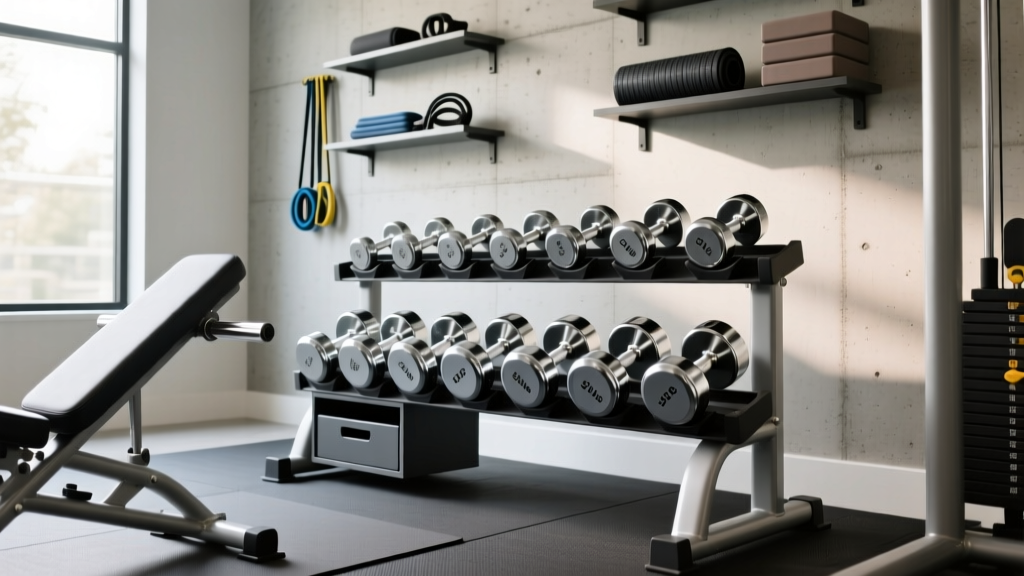
Decline Dumbbell Curl Setups: 2026 Rack & Storage Trends
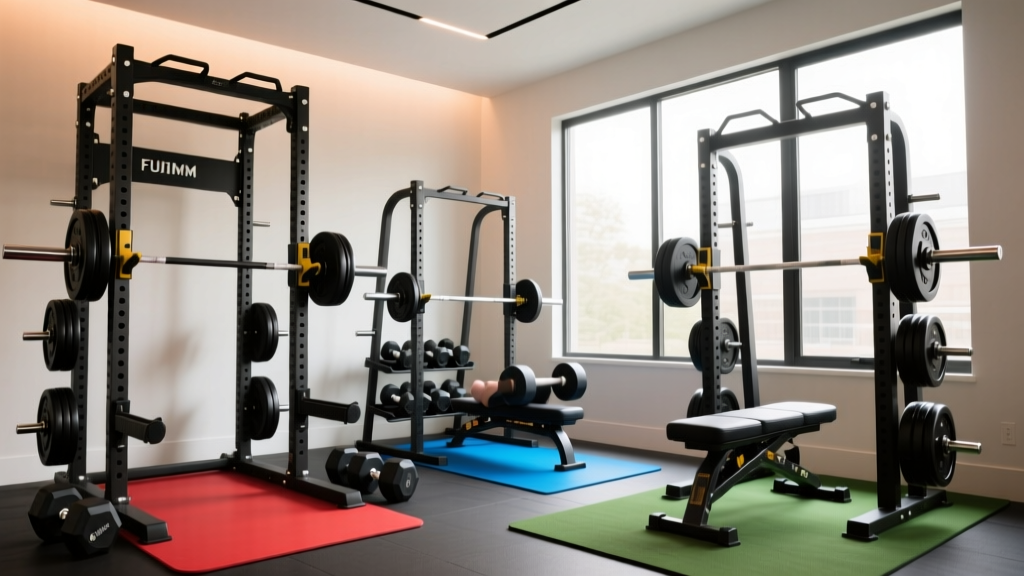
Power Rack vs Squat Rack vs Stand: Dumbbell Exercises for Breast Lift
