Bumper vs Iron Plates: Layouts for Good Back Exercises With Dumbbells
Compare bumper vs iron plates for home gym space optimization. Discover layout strategies for barbell zones and good back exercises with dumbbells.

The Spatial Footprint: Bumper vs. Cast Iron Dimensions
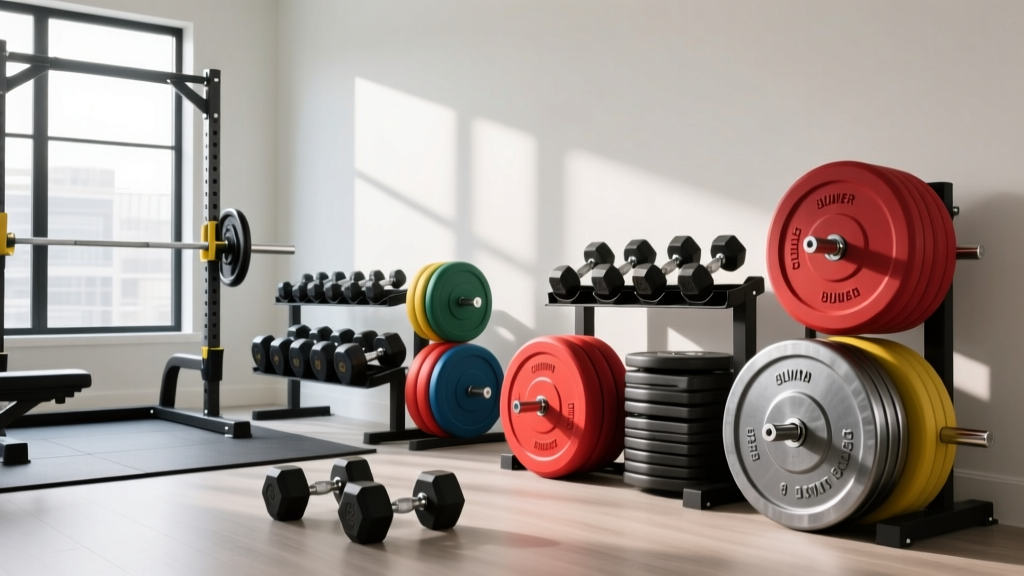
Designing a high-performance home gym in 2026 requires balancing heavy barbell capabilities with versatile accessory zones. The foundational decision—choosing between bumper plates and cast iron plates—dictates your entire floor plan, storage footprint, and acoustic treatment. This spatial ripple effect directly impacts how you arrange secondary training areas, particularly when setting up clearance for good back exercises with dumbbells.
To optimize a limited layout (such as a standard 20x20 foot garage or a 12x15 foot spare room), you must first understand the physical geometry of your weight plates. Bumper plates, like the industry-standard Rogue HG 2.0 Bumpers, are universally 450mm (17.72 inches) in diameter, regardless of whether they are 10-pound technique plates or 55-pound competition plates. Conversely, cast iron plates scale in diameter; a 45-pound deep-dish iron plate measures roughly 14.5 inches across, while a 10-pound plate is barely 9 inches.
Layout Impact: The Deadlift Deficit
Because iron plates under 25 pounds sit significantly lower to the ground, performing barbell deadlifts with lighter iron loads requires you to integrate block pulls or deficit platforms into your floor plan to maintain proper biomechanical starting positions. Bumper plates eliminate this need, allowing for a more streamlined, single-surface platform layout.
Storage Configurations and Wall Clearance
When mapping out the perimeter of your gym, plate storage is often the biggest spatial bottleneck. The thickness and material of your plates will determine whether you can utilize space-saving wall mounts or if you must dedicate valuable floor square footage to weight trees.
- Cast Iron & Wall Cradles: Iron plates are exceptionally dense. A 45-pound iron plate is roughly 1.35 inches thick. This density allows you to use wall-mounted plate storage brackets (such as the Rogue Wall Mount Plate Storage), which project only about 10 inches from the wall. This frees up critical floor space for movement corridors.
- Bumper Plates & Weight Trees: A 45-pound bumper plate is typically 3.25 inches thick and highly susceptible to edge tearing if repeatedly dragged across wall-mounted metal pegs. Bumpers require freestanding A-frame weight trees or horizontal plate cradles. A standard 3-peg weight tree demands a 4-foot operational radius around it to safely load and unload plates without striking adjacent equipment.
By choosing iron plates and wall storage, you can reclaim up to 16 square feet of floor space compared to a bumper-and-tree setup. This reclaimed space is vital for expanding your accessory training zones.
Acoustic Zoning and Drop Zones
Space optimization is not just about physical dimensions; it is also about acoustic zoning. If your gym shares a wall with living spaces or neighbors, the choice of plates dictates your flooring layout and equipment placement.
Bumper plates allow for controlled drops from overhead or the top of a deadlift. You can place your barbell zone directly over standard 3/4-inch vulcanized rubber horse stall mats. Iron plates, however, demand a strict 'no-drop' policy unless you invest in specialized crash pads or a heavily dampened multi-layer platform. If you are forced to use iron plates in a noise-sensitive environment, you must position the barbell zone in the structural center of the room, away from shared drywall, which inherently fragments your gym layout and limits where you can place your benching and dumbbell stations.
Designing the Accessory Zone: Good Back Exercises With Dumbbells
Once the primary barbell and storage zones are established, the remaining square footage must be intelligently allocated for hypertrophy and isolation work. When mapping out the secondary training zone for good back exercises with dumbbells, spatial clearance becomes just as critical as the barbell zone. According to biomechanical guidelines outlined by the American Council on Exercise (ACE), improper spatial constraints can severely limit the range of motion (ROM) required for optimal latissimus dorsi and rhomboid activation.
1. The Single-Arm Dumbbell Row Envelope
The single-arm dumbbell row is a staple for unilateral back development. To perform this correctly, you need a flat bench and a 4x6 foot clearance envelope. This space allows for a full stretch at the bottom of the movement and a slight torso rotation at the top without your elbow striking a wall or your dumbbell clipping a nearby weight rack. If your bumper plate storage tree is placed too close to the bench zone, you will be forced to truncate your pulling path, reducing mechanical tension on the lats.
2. Chest-Supported Dumbbell Rows
For chest-supported rows, you will typically use an adjustable FID (Flat/Incline/Decline) bench, such as the Rep Fitness AB-3100 2.0, set to a 30-degree or 45-degree incline. While the bench footprint is roughly 4.5 feet long, you must account for a 2-foot clearance zone at the head of the bench for dumbbell retrieval and a 3-foot clearance on either side to allow the dumbbells to hang freely at the bottom of the eccentric phase without grazing the floor or nearby equipment.
3. Dumbbell Pullovers
The dumbbell pullover is excellent for targeting the lats and serratus anterior, but it is notoriously space-hostile. Performing this exercise requires a bench placed perpendicular to a wall or rack. You need at least 36 inches of rear and overhead clearance to prevent the dumbbell from striking the drywall at the bottom of the stretch. If your gym layout is cramped due to bulky bumper plate trees, pullovers become a safety hazard.
Space-to-Cost ROI Matrix (2026 Market Data)
When deciding how to allocate your budget and floor plan, consider the following matrix comparing the spatial and financial ROI of both plate types:
| Feature | Virgin Rubber Bumper Plates | Precision Cast Iron Plates |
|---|---|---|
| Average Cost (per lb) | $3.50 - $4.50 | $1.80 - $2.20 |
| Storage Footprint | High (Requires floor trees, ~16 sq ft) | Low (Wall-mountable, ~4 sq ft) |
| Acoustic Profile | Low impact, safe for drops | High impact, requires crash pads |
| Accessory Zone Impact | Limits space for dumbbell back rows | Maximizes floor space for FID benches |
The 200-Square-Foot Gym Blueprint
If you are working with a standard 10x20 foot garage bay (200 square feet), here is how the National Strength and Conditioning Association (NSCA) principles of facility flow apply to your plate and dumbbell layout:
- Zone 1: The Hinge & Pull Platform (8x8 feet)
Place an 8x8 foot rubber mat platform at the far end of the garage. If using iron plates, mount wall cradles directly on the adjacent side wall. If using bumpers, place a weight tree 3 feet behind the platform to allow for safe plate loading without blocking the garage door track. - Zone 2: The Dumbbell Back & Accessory Corridor (6x8 feet)
Position a commercial-grade adjustable bench in the center of the remaining space. This 6x8 foot corridor provides the exact 4x6 foot envelope needed for single-arm dumbbell rows and the 36-inch rear clearance required for dumbbell pullovers. Keep this zone entirely free of floor-standing racks. - Zone 3: The Perimeter Storage (2x20 feet)
Utilize the opposite long wall for a wall-mounted dumbbell rack (holding 5lb to 50lb pairs) and a vertical kettlebell rack. By keeping the floor clear of weight trees and utilizing vertical wall space, you ensure unimpeded movement between the heavy barbell zone and the dumbbell hypertrophy zone.
Final Thoughts on Spatial Harmony
Ultimately, the choice between bumper and iron plates is not just about the barbell; it is about the negative space they create. If your primary goal is Olympic lifting or heavy, high-volume deadlifts where dropping the bar is mandatory, bumpers are non-negotiable, and you must accept the larger storage footprint. However, if your programming heavily emphasizes hypertrophy, bodybuilding, and good back exercises with dumbbells, cast iron plates paired with wall-mounted storage will reclaim the vital square footage needed to maneuver freely, adjust benches, and train with a full, uncompromised range of motion.
More gear to consider
All reviews
Beyond a Beginner Workout with Dumbbells: Olympic Barbell Guide

Dumbbell Tenement Definition & Gym Setup: Olympic vs Standard Plates
EZ Curl Bar vs Straight Bar: Beyond Types of Dumbbell Exercises

2026 Market Trends: Loadable Dumbbells for Progressive Lunges with Dumbbells

Olympic vs Standard Plates: Pairing With Different Types of Dumbbells
