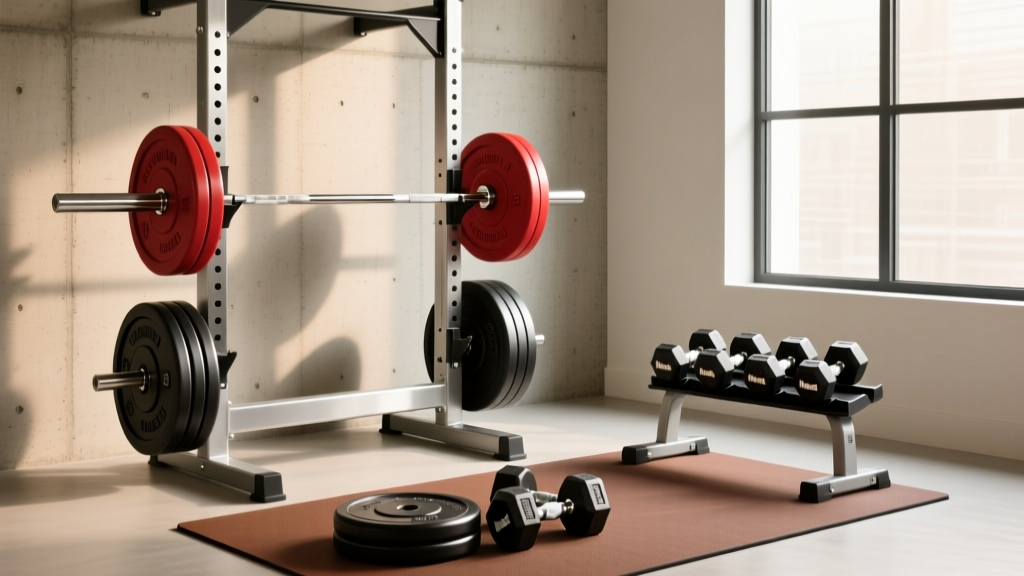
Bumper vs Iron Plates & 60 Dumbbell Budget Breakdown
Compare 2026 costs of bumper vs iron plates and a 60 dumbbell set. Expert budget breakdown, cost-per-pound data, and home gym value analysis.

The 2026 Home Gym Dilemma: Where Does Your Budget Go?
Building a home gym in 2026 requires ruthless financial prioritization. When outfitting your rack, the debate between bumper plates and cast iron plates is no longer just about aesthetics or noise reduction—it is a strict mathematical exercise in cost-per-pound, longevity, and versatility. Furthermore, many lifters overlook the immense value of integrating a dedicated 60 dumbbell setup into their purchasing strategy, often overspending on barbell plates while neglecting the unilateral hypertrophy work that dumbbells provide.
As a senior equipment analyst for FitGearPulse, I have tracked the fluctuating steel and rubber markets over the last five years. Today, we are breaking down the exact financial and practical realities of stocking your gym. We will compare the budget footprint of cast iron, crumb rubber bumpers, and virgin rubber bumpers, while analyzing where a 60 dumbbell set fits into a sub-$1,000 equipment budget.
Cost-Per-Pound Matrix: Iron vs. Bumper vs. 60 Dumbbell
Before diving into the nuances of durometer ratings and grip fatigue, we must look at the raw data. The following table reflects average 2026 market pricing for a standard 260-pound plate set (four 45s, two 25s, two 10s, four 5s, two 2.5s) and a pair of 60-pound dumbbells.
| Equipment Type | Avg. Cost Per Pound | 260lb Set / Pair Cost | Primary Use Case |
|---|---|---|---|
| Cast Iron Plates (Economy) | $1.60 - $1.90 | $416 - $494 | Powerlifting, Budget Gyms |
| Cast Iron Plates (Machined) | $2.20 - $2.80 | $572 - $728 | Olympic Lifting, Precision |
| Crumb Rubber Bumpers | $2.50 - $3.10 | $650 - $806 | CrossFit, Garage Gyms |
| Virgin Rubber Bumpers | $4.80 - $5.50 | $1,248 - $1,430 | Commercial, Heavy Drops |
| Fixed 60 Dumbbell Pair | $1.10 - $1.30 | $132 - $156 (120lbs) | Hypertrophy, Isolation |
| Adjustable 60 Dumbbell Set | $2.90 - $3.50 | $350 - $420 (120lbs) | Space-Saving, Circuit Work |
Cast Iron Plates: The Unapologetic Budget King
If your primary goal is moving maximum weight from point A to point B without dropping the barbell from overhead, cast iron remains the undisputed champion of value. In 2026, economy iron plates from brands like Titan Fitness or CAP Barbell hover around the $1.70 per pound mark. This allows you to build a massive 400-pound plate arsenal for the price of a modest bumper plate set.
The Hidden Costs of Iron
However, the sticker price of iron plates is deceptive. According to facility guidelines highlighted by the National Strength and Conditioning Association (NSCA), dropping cast iron plates, even on thick rubber matting, transfers immense kinetic shock into the subfloor. Over time, this causes concrete spalling—where the top layer of your garage concrete cracks and flakes away. To mitigate this, you must invest in 3/4-inch vulcanized rubber horse stall mats (roughly $50-$70 each), adding $150+ to your hidden startup costs.
Additionally, raw or painted iron plates are highly susceptible to oxidation. If your gym is in an unclimate-controlled garage, you will need to perform maintenance every six months using a wire brush and 3-in-One oil to prevent rust degradation.
⚠️ Expert Warning: The Barbell Whip EffectNever mix light bumper plates (10lb or 15lb) on the outside of heavy iron plates when dropping a barbell. The iron acts as a fulcrum, and the thin rubber bumper absorbs the impact unevenly. This creates a severe whip effect that can permanently bend your barbell sleeves or cause the thin bumper to 'taco' and split down the steel insert.
Bumper Plates: Paying for Acoustics and Drop-Safety
Bumper plates are engineered for one specific purpose: to be dropped from a height without destroying your barbell, your floor, or your eardrums. But not all bumpers are created equal, and the budget breakdown varies wildly based on the rubber compound.
Crumb Rubber vs. Virgin Rubber
Crumb rubber bumpers (like the REP Fitness Equalizer series) are made from recycled, compressed rubber flecks. They are the budget-friendly bumper option, usually pricing out around $2.80 per pound. They offer a 'dead bounce,' meaning they hit the floor and stay put, which is excellent for safety. However, they are thicker than virgin rubber, meaning you can fit fewer plates on the barbell sleeve—a critical edge case if you are deadlifting over 500 pounds.
Virgin rubber bumpers, such as the legendary Rogue Echo Bumper Plates, are manufactured from pure, unrecycled rubber. They boast an 88 Shore A durometer rating, making them incredibly hard and durable. While they command a premium of over $5.00 per pound, their lifespan is easily double that of crumb rubber, and they emit virtually no odor—a massive factor if your home gym is attached to your living space.
The 60 Dumbbell Variable: Isolation on a Budget
Here is where most home gym owners miscalculate their budget. They spend $1,200 on virgin rubber bumper plates for barbell work, only to realize they have no budget left for accessory movements. Enter the 60 dumbbell setup.
Barbell pressing and squatting build raw strength, but unilateral dumbbell work is mandatory for correcting muscular imbalances and driving hypertrophy. Purchasing a pair of fixed 60 lb hex dumbbells (often available from CAP Barbell or Amazon Basics for around $140 total) yields a staggering cost-per-pound of just $1.16. This is significantly cheaper than even the most economy-friendly iron plates.
Fixed Hex vs. Adjustable 60 Dumbbell Sets
If space is at a premium, an adjustable 60 dumbbell set (such as the Flybird 60lb adjustable pair or the Nuobell system) costs between $350 and $450. While the upfront cost is higher, an adjustable set replaces 15 pairs of fixed dumbbells (from 5 lbs to 60 lbs), effectively saving you over $1,200 and 40 square feet of floor space. As noted in BarBend's comprehensive plate and free weight comparisons, balancing your barbell and dumbbell investments is the key to a well-rounded, cost-effective training environment.
Decision Framework: How to Allocate Your $800 Budget
If you have exactly $800 to spend on free weights in 2026, how should you deploy it? Use this decision matrix based on your primary training style:
Scenario A: The Powerlifter / Strongman
- Allocation: $450 on a 260lb Cast Iron Plate set + $140 on a pair of fixed 60 lb hex dumbbells + $60 on a high-quality lifting belt.
- Why: You need maximum weight on the bar. Bumper plates are a waste of your budget. The 60 dumbbell pair allows for heavy rows and unilateral presses without the mechanical wobble of adjustable dials.
Scenario B: The CrossFit / Olympic Weightlifter
- Allocation: $650 on a 230lb Crumb Rubber Bumper set + $150 on an adjustable 60 dumbbell set.
- Why: You will be dropping the bar from overhead. Iron plates will destroy your floor and your barbell bearings. The adjustable 60 dumbbell set allows you to quickly transition from heavy barbell snatches to high-rep dumbbell thrusters without cluttering your garage with a massive dumbbell rack.
Scenario C: The Bodybuilder / Hypertrophy Focus
- Allocation: $350 on a 160lb Cast Iron Plate set + $450 on a premium adjustable 60 dumbbell set (upgradable to 80lbs).
- Why: Bodybuilders rarely drop barbells from overhead. You only need enough iron plates to load your squats and bench presses. The bulk of your budget should go toward the adjustable 60 dumbbell set, as 70% of your accessory and isolation work will be performed with dumbbells.
Final Verdict on Value and ROI
The bumper vs. iron plate debate ultimately comes down to your relationship with gravity and your subfloor. If you drop weights, bumpers are a non-negotiable insurance policy for your equipment. If you control the eccentric and rack the weight safely, cast iron offers unmatched financial efficiency. However, ignoring the 60 dumbbell variable is a critical error. By strategically mixing economy iron or crumb bumpers with a dedicated 60 lb dumbbell setup, you can build a commercial-grade, fully versatile home gym in 2026 without breaking the $1,000 barrier.
More gear to consider
All reviews
Troubleshooting the Incline Dumbbell Press with Neoprene Weights

Bumper vs Iron Plates: Care for Your Dumbbell Weight Lifting Routine
Bumper Plate vs Iron Plate: Specs, Costs & Dumbbell Push Ups

Iron vs Bumper Plates: Budget Guide & Dumbbell Renegade Row GIF Tips

Power Rack vs Squat Rack vs Stand: Arnold Dumbbell Press Setup
