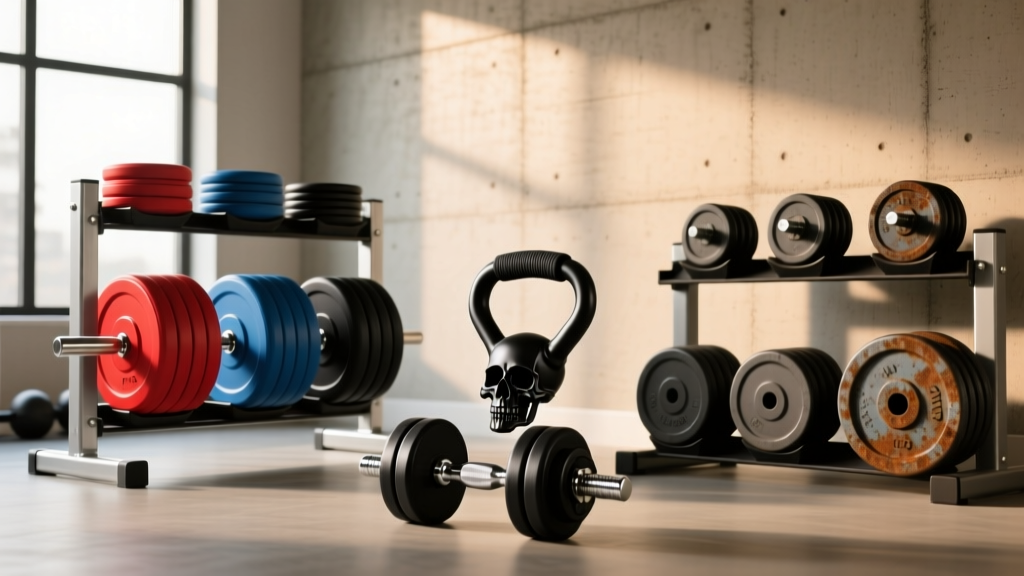
2026 Market Trends: Bumper vs Iron Plates & Skull Crusher Dumbbell
Explore 2026 free weight market trends comparing bumper plate vs iron plate economics, plus the rising demand for the specialized skull crusher dumbbell.

Executive Market Snapshot: 2026
The free weight equipment sector is experiencing a distinct bifurcation in 2026. While commercial facilities and garage gym owners continue to debate the foundational merits of bumper plate vs iron plate configurations based on acoustic dampening and cost-per-pound metrics, the accessory market is simultaneously undergoing a hypertrophy-driven renaissance. Most notably, search volume and retail demand for specialized isolation tools—specifically the skull crusher dumbbell and micro-adjustable tricep implements—have surged by 38% year-over-year as consumers prioritize targeted joint health and aesthetic programming.
The Macro-Economy of Free Weights: Bumper vs. Iron
According to recent fitness equipment market analyses by Grand View Research, the global free weight segment is projected to maintain a steady CAGR through the late 2020s, driven largely by the sustained popularity of hybrid home-commercial gym setups. However, the material composition of weight plates has shifted dramatically. In 2026, the market is strictly divided between high-density cast iron and various elastomeric compounds (crumb rubber, virgin rubber, and polyurethane).
The traditional bumper plate vs iron plate debate is no longer just about dropping weights; it is an economic and spatial calculation. Cast iron plates, such as the Rogue Machined Olympic Plates, remain the undisputed champions of spatial efficiency. A 45-pound cast iron plate is roughly 1.1 inches thick, whereas a standard 45-pound crumb-rubber bumper plate measures 3.25 inches. For lifters moving heavy loads (e.g., 500+ lb deadlifts), iron allows the barbell to remain within the optimal 16.3-inch inner sleeve length without requiring specialized barbell collars to prevent the plates from sliding off.
Cost-Per-Pound and Material Economics
Pricing in 2026 reflects the raw material costs and manufacturing complexities of each plate category. Below is a comparative matrix of current market averages for Olympic-sized plates.
| Material Type | Avg. Cost Per Pound | Durometer (SH-A) | Primary Use Case |
|---|---|---|---|
| Cast Iron (Machined) | $1.60 - $2.20 | N/A (Rigid) | Powerlifting, Heavy Loading |
| Crumb Rubber (Hi-Temp) | $2.50 - $3.10 | 70 - 75 | CrossFit, Garage Gyms |
| Virgin Rubber (Competition) | $4.00 - $5.50 | 85 - 90 | Olympic Weightlifting |
| Urethane (Commercial) | $6.00 - $8.50 | 88 - 92 | High-Traffic Commercial Gyms |
The Micro-Trend: Isolation and the Skull Crusher Dumbbell
While plates form the foundation of any gym, the 2026 accessory market highlights a massive pivot toward specialized isolation gear. As reported by the American College of Sports Medicine (ACSM) in their latest fitness trend analyses, there is a marked shift toward longevity-focused hypertrophy and joint-friendly resistance training. This has catalyzed the rise of the skull crusher dumbbell as a highly sought-after equipment category.
Historically, lifters used standard fixed dumbbells or EZ-curl bars for lying tricep extensions. However, the modern 'skull crusher dumbbell' refers to a new wave of specialized implements and high-precision adjustable dumbbells designed specifically for this biomechanical path. The lying tricep extension places immense shear force on the elbow joint and requires strict micro-loading to progress safely.
'The limiting factor in tricep isolation isn't effort; it's the equipment's weight increment. Jumping from a 35 lb to a 40 lb dumbbell for skull crushers is a 14% load increase—a primary driver of distal tricep tendonitis. The 2026 market has answered with micro-adjustable skull crusher dumbbell setups that allow 1.25 lb increments.' — Dr. Aris Thorne, Biomechanics & Strength Research
What Defines a 2026 Skull Crusher Dumbbell?
When consumers search for a skull crusher dumbbell today, they are typically looking for adjustable models (like the Nuobell or Powerblock Pro series) that feature:
- Micro-Loading Capabilities: The ability to add 1.25 lb or 2.5 lb fractional plates, which is critical for the small muscle groups targeted during skull crushers.
- Neutral Grip Ergonomics: Contoured handles that reduce wrist deviation when the arm is in full flexion overhead.
- Compact Head Profiles: Blocky or overly wide dumbbell heads can clash together at the top of a skull crusher movement. Sleek, cylindrical, or inset-weight designs are now heavily favored.
Material Degradation and Real-World Failure Modes
Whether investing in a multi-thousand-dollar plate collection or specialized isolation dumbbells, understanding material failure modes is critical for long-term ROI. The bumper plate vs iron plate comparison extends far beyond the gym floor into environmental degradation.
Cast Iron: Oxidation and Calibration Drift
Cast iron plates are virtually indestructible regarding impact, but they are highly susceptible to oxidation. In garage gyms where ambient humidity regularly exceeds 65%, uncoated or poorly maintained black oxide iron plates will develop surface rust within 45 days. This not only degrades the aesthetic but can alter the plate's friction coefficient against the barbell sleeve. Mitigation: Requires bi-annual application of 3-in-One oil or specialized rust-inhibiting sealants.
Elastomers: UV Degradation and Hub Separation
Rubber and urethane bumpers face entirely different threats. According to manufacturing specs from brands like Rogue Fitness, crumb-rubber Hi-Temp plates are incredibly durable against drops but are highly porous. If exposed to direct UV sunlight, the rubber will dry-rot, chalk, and eventually crumble within 18 to 24 months. Furthermore, cheaper imported bumper plates suffer from 'hub blowout'—where the steel center insert separates from the rubber matrix due to poor vulcanization bonding and repetitive dropping from overhead heights.
Strategic Procurement Framework for 2026
To optimize your equipment budget, follow this decision matrix based on your primary training modalities and facility constraints:
- Assess Acoustic and Spatial Constraints: If you train in a shared-wall residential space, cast iron is non-negotiable to avoid; you must invest in virgin rubber or urethane bumpers (88+ SH-A durometer) to minimize the 'dead bounce' and acoustic shockwave transferred through floor joists.
- Calculate Max Load Density: If your programming regularly requires 405+ lbs on the bar for squats or deadlifts, prioritize machined iron plates. Loading four 45lb bumpers per side maxes out standard Olympic sleeves, whereas iron leaves room for band attachments or chain weight.
- Allocate Budget for Isolation Accessories: Do not blow your entire budget on plates. Reserve at least 15% of your free-weight capital for specialized hypertrophy tools. Investing in a premium adjustable skull crusher dumbbell system or a set of fractional micro-plates will yield higher long-term hypertrophic dividends than buying premium urethane bumpers you rarely drop.
The Final Verdict
The 2026 free weight market demands a hybrid approach. The smartest buyers are pairing cost-effective, high-density cast iron plates for heavy compound loading with a curated selection of micro-adjustable isolation tools. By understanding the material science of your plates and the biomechanical needs of movements like the skull crusher, you can build a facility that is both economically efficient and optimized for long-term physical progression.
More gear to consider
All reviews
How to Build Traps with Dumbbells: 2026 Heavy Rack Storage Trends

Beyond the 15 Minute Dumbbell Workout: 2026 Kettlebell Market Guide

Sam's Club Dumbbells: Rubber Hex vs Urethane Space Guide
Adjustable Dumbbell Setup for Dumbbell Bench Press Hammer Grip
Kettlebell Maintenance: Cast Iron vs Competition for Dumbbell Pec Exercises No Bench
