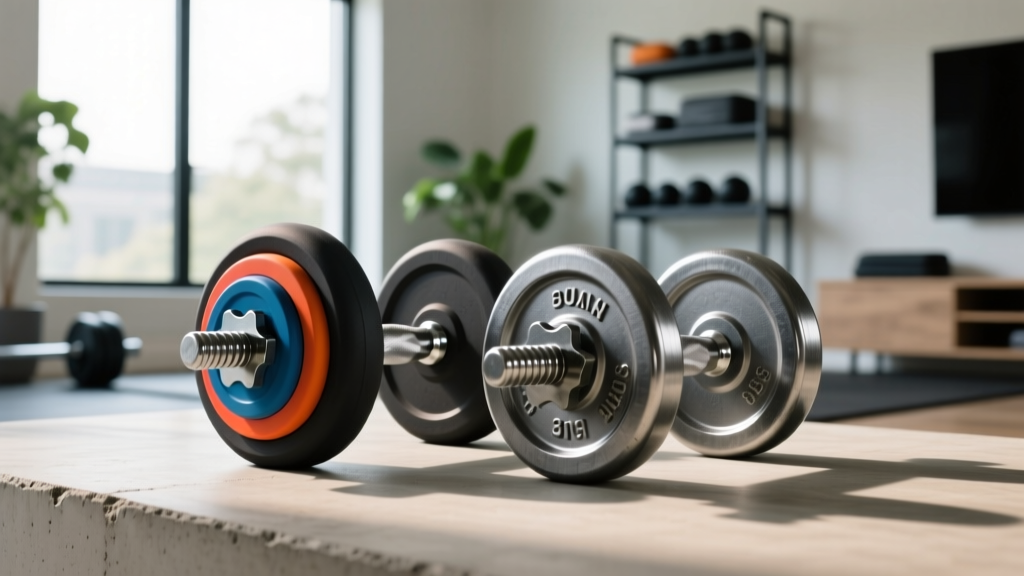
Bumper Plate vs Iron Plate: Specs, Costs & Dumbbell Push Ups
Explore our expert bumper plate vs iron plate comparison. Learn about durometer ratings, pricing, and how to elevate your dumbbell push ups with plates.

The Core Debate: Bumper vs. Cast Iron for the Modern Home Gym
Building a resilient free-weight setup requires more than just buying the cheapest iron you can find on clearance. As we navigate the fitness equipment market in 2026, the choice between bumper plates and traditional cast iron plates remains one of the most critical decisions for home gym owners. Your choice dictates not only your barbell dynamics but also your flooring longevity, acoustic footprint, and even how you execute floor-based movements like dumbbell push ups.
Quick Verdict: Buy Bumper Plates if you perform Olympic lifts, drop weights from overhead, or train in a garage with a standard concrete slab. Buy Machined Iron Plates if you are strictly powerlifting, need to maximize sleeve capacity for heavy deadlifts, and already have a dedicated, shock-absorbing deadlift platform.Material Science: Durometer, Bounce, and Flooring Impact
To truly understand the difference, we have to look at the material engineering. Bumper plates are manufactured from virgin rubber or urethane blends, measured on the Shore A Durometer scale. This scale measures the hardness and rebound characteristics of the elastomer.
- Training Bumpers (85-90 Shore A): Plates like the Rogue Echo Bumpers sit around 90 Shore A. They are hard enough to prevent excessive 'dead bounce' but soft enough to absorb the kinetic energy of a 300lb clean-and-jerk drop.
- Competition Urethane (92+ Shore A): Premium Eleiko competition plates use specialized urethane blends that offer near-zero bounce and extreme durability, though at a massive premium.
- Cast Iron: Traditional iron plates offer zero shock absorption. When dropped, 100% of the kinetic energy transfers through the barbell sleeve, into the collar, and directly into your subfloor.
Head-to-Head Specifications Matrix
| Feature | Rogue Echo Bumper (45lb) | CAP Barbell Cast Iron (45lb) | Eleiko Competition (20kg) |
|---|---|---|---|
| Material | Virgin Rubber | Cast Iron (Enamel Coated) | Urethane/Rubber Blend |
| Durometer | 90 Shore A | N/A | 92+ Shore A |
| Thickness | 3.25 inches | 1.35 inches | 2.15 inches |
| Avg Price/lb | $2.80 - $3.20 | $1.40 - $1.80 | $18.00+ |
| Floor Impact | Low (High absorption) | Severe (Requires platform) | Minimal (Dead bounce) |
Beyond the Barbell: Dumbbell Push Ups and Floor Work
While the barbell is the primary driver for buying plates, a complete home gym ecosystem supports diverse movements, including floor-based calisthenics. The type of plate you own directly influences how you can modify bodyweight exercises, particularly dumbbell push ups and their variations.
The Deficit Push-Up Protocol Using Bumper Plates
According to biomechanical analyses outlined by ExRx.net regarding push-up mechanics, increasing the range of motion (ROM) past the neutral floor plane significantly increases pectoral stretch and muscle fiber recruitment. While many athletes use hex dumbbells as parallettes for this, 10lb bumper plates offer a superior alternative for deficit work.
- Setup: Place two 10lb bumper plates flat on the floor, shoulder-width apart.
- Grip: Grip the outer edges of the bumper plates. The rubberized edge provides a tactile, non-slip grip that bare iron plates cannot match, especially when hands get sweaty.
- Execution: Lower your chest past the plane of the plates for a deep stretch. The 1.75-inch thickness of a 10lb bumper plate provides the exact optimal deficit depth without over-stretching the anterior deltoid capsule.
Expert Warning: Never use 10lb cast iron plates for grip-based floor exercises or as stabilizing bases for renegade rows. The thin, machined edges of iron plates can easily slice into the calluses of your palms under dynamic bodyweight loads. Bumper plates provide a safe, wide surface area.
Transitioning from Heavy Drops to Floor Work
If your workout programming involves supersetting heavy barbell deadlifts with floor-based dumbbell push ups, bumper plates are virtually mandatory. Dropping iron plates creates micro-fractures in standard garage concrete. Over time, this degraded concrete creates dust and uneven surfaces, making floor work uncomfortable and hazardous. Bumpers preserve the structural integrity of your training space, ensuring a clean, flat surface for your dumbbell and bodyweight routines.
Cost Analysis and Sleeve Capacity Limitations
The most common argument against bumper plates is the cost and the physical space they consume on the barbell sleeve. Let us break down the mathematics of loading a standard Olympic barbell (which typically features 16.3-inch loadable sleeves).
- Iron Plate Capacity: Because a 45lb cast iron plate is only 1.35 inches thick, you can easily fit six 45lb plates per side (270lbs per side, 585lbs total with the bar). This is essential for elite powerlifters.
- Bumper Plate Capacity: A 45lb bumper plate is 3.25 inches thick. You can only fit four 45lb bumpers per side before running out of sleeve space (180lbs per side, 405lbs total).
For 95% of home gym owners in 2026, maxing out at 405lbs on a barbell is a multi-year goal. Therefore, the sleeve limitation of bumpers is largely a non-issue unless you are specifically training for equipped powerlifting meets.
Maintenance, Failure Modes, and Edge Cases
Every piece of fitness equipment has a failure point. Understanding these will save you hundreds of dollars in replacement costs.
Cast Iron: Oxidation and Calibration Drift
Cheaper, unmachined cast iron plates are notorious for poor weight calibration. It is common for budget 45lb iron plates to actually weigh anywhere from 42lbs to 48lbs. Furthermore, if your garage gym experiences humidity levels above 60%, uncoated or poorly enameled iron will develop surface rust within months. This rust transfers to your barbell sleeves, accelerating wear on your bar's bushings or bearings.
Bumper Plates: Insert Blowout and Warping
The Achilles heel of bumper plates is the steel or brass center insert. Edge Case Failure: If you load only a single 10lb or 15lb bumper plate on each side of the barbell and drop it from overhead, the entire kinetic force is concentrated on that single thin insert. This causes 'insert blowout,' where the steel ring tears through the rubber, rendering the plate useless. Always pair lighter bumper plates with a heavier 45lb plate behind them to distribute the impact force across a wider surface area.
Final Verdict: What Should You Buy?
If your training involves Olympic weightlifting, CrossFit-style metabolic conditioning, or you simply want to protect your home's foundation while maintaining the versatility to perform deficit dumbbell push ups safely, invest in a set of high-durometer rubber bumper plates. The premium of roughly $1.50 extra per pound over cast iron is entirely justified by the acoustic dampening, flooring protection, and ergonomic benefits for floor-based accessory work.
Conversely, if you are building a dedicated powerlifting sanctuary with a specialized deadlift platform, and your primary goal is moving maximal loads with precise, calibrated weight, machined cast iron or calibrated steel plates remain the undisputed kings of the iron game.
More gear to consider
All reviews
Space-Saving Deltoid Dumbbell Setups: Rubber Hex vs Urethane
Beyond the Biggest Dumbbell Curl: Barbell Knurling Guide

Power Rack vs Squat Rack: Setup for a Push Pull Dumbbell Workout

Power Rack vs Squat Rack vs Stand: Squats & Dumbbell Backward Lunges
Space-Saving Loadable Dumbbells: Dumbbell Workout Routine for Women
