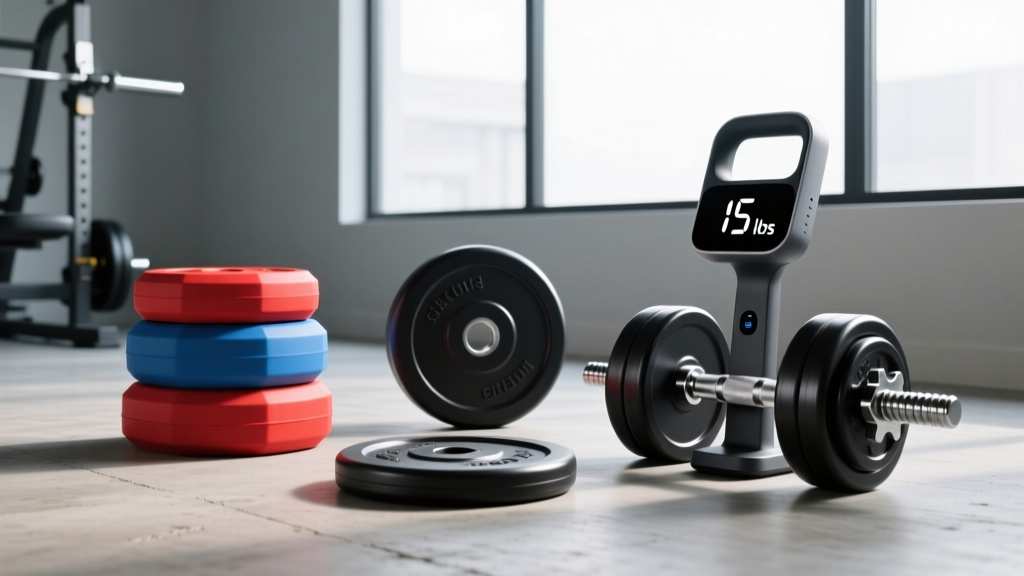
Bumper Plate vs Iron Plate vs a Dumbbell That Changes Weight
Compare bumper plates, cast iron plates, and a dumbbell that changes weight. Our 2026 hands-on review reveals the best free weight investments for your gym.

Building a comprehensive home gym is a journey of progressive overload—both in your training and in your equipment investments. For most lifters, the cornerstone of a space-efficient setup is a high-quality dumbbell that changes weight. However, as your strength outpaces the 80-to-90-pound ceiling of most adjustable dumbbells, transitioning to a barbell becomes mandatory. This brings us to the ultimate 2026 free-weight debate: bumper plate vs iron plate. Which should you load onto your Olympic barbell, and how do they complement the adjustable gear you already own?
The Progression Dilemma: Outgrowing Adjustable Gear
Adjustable dumbbells like the Nuobell 80lb Gen 2 (retailing around $449) or the PowerBlock Elite EXP are marvels of modern engineering. They replace entire racks of fixed-weight dumbbells, condensing hundreds of pounds of iron into a compact footprint. But they have hard limits. According to extensive durability testing by Garage Gym Reviews, the internal dial and magnetic pin mechanisms of a dumbbell that changes weight are highly susceptible to catastrophic failure if dropped from a height greater than 12 inches.
Once your unilateral movements (like heavy Bulgarian split squats or Romanian deadlifts) demand more than 90 pounds per hand, or you want to perform dynamic Olympic lifts, you must graduate to a standard 7-foot Olympic barbell and plate system. This is where the choice between rubber bumpers and traditional cast iron dictates the safety, noise level, and longevity of your garage gym.
Bumper Plates: The Drop-Tested Workhorses
Bumper plates are constructed from dense rubber with a steel or brass inner hub, designed specifically to be dropped from overhead without destroying your floor or the barbell. In 2026, the market is strictly divided into two camps: virgin rubber and crumb rubber.
Virgin Rubber vs. Crumb Rubber
Virgin rubber bumpers, like the Rogue Echo Bumpers, offer a smooth finish, minimal odor, and a higher durometer (hardness) rating, typically around 90 Shore A. They are thinner, allowing you to load more weight on the bar, but they possess a 'lively' bounce that can be dangerous if dropped on uneven flooring. Conversely, crumb rubber plates, such as the REP Fitness CR-15 ($329 for a 230lb set), are made from recycled, compressed rubber flecks. They have a lower durometer (around 80 Shore A), resulting in a 'dead bounce' that absorbs kinetic energy brilliantly, making them vastly superior for garage gyms with standard 3/4-inch horse stall mats.
According to BarBend's comprehensive equipment analysis, bumper plates are an absolute necessity if your programming includes high-rep Olympic weightlifting, CrossFit-style workouts, or any movement where the barbell ends up overhead.
Cast Iron Plates: The Calibrated Traditionalist
If your training revolves around powerlifting, strict bodybuilding, or controlled strength work where the barbell is never dropped, machined cast iron plates remain the gold standard. Iron plates are significantly denser than rubber, meaning a 45-pound iron plate takes up roughly an inch of sleeve space, whereas a 45-pound bumper plate is a uniform 17.7 inches in diameter and roughly 3.5 inches thick.
Accuracy and Maintenance
Premium iron plates, like the Rogue Machined Olympic Plates, are milled to a strict +/- 1% weight tolerance. In 2026, these retail for approximately $2.15 per pound. The primary drawback of iron is environmental degradation. Uncoated or poorly painted iron plates will flash-rust if your garage humidity regularly exceeds 60%. To maintain them, you must periodically wipe them down with 3-in-1 machine oil and a wire brush. Cheaper, off-brand cast iron plates (often found on resale markets for $1.00/lb) suffer from 'calibration drift,' where a 45lb plate might actually weigh 42lbs, severely impacting progressive overload tracking.
Head-to-Head Matrix: Bumpers, Iron, and Adjustables
To visualize how these three equipment categories interact in a modern home gym, review the comparison matrix below:
| Feature | Bumper Plates | Cast Iron Plates | Dumbbell That Changes Weight |
|---|---|---|---|
| Primary Use | Olympic lifting, drops, WODs | Powerlifting, controlled presses | Unilateral work, isolation, space-saving |
| Drop Safety | High (designed for drops) | Low (will crack flooring/bars) | None (internal mechanisms will shatter) |
| Noise Level | Moderate (thud) | High (loud metallic clang) | Low (clinking plastic/metal) |
| 2026 Avg Cost | $2.50 - $4.00 / lb | $1.50 - $2.50 / lb | $4.00 - $6.00 / lb (system cost) |
| Sleeve Space | High (thick profile) | Low (thin profile) | N/A (Fixed handle length) |
Real-World Failure Modes & Edge Cases
As equipment reviewers, we look past the marketing copy to identify how gear actually fails in the wild. Here are the most common edge cases we see in home gyms:
- Bumper Insert Blowouts: The most common failure point on budget bumper plates is the steel hub tearing through the rubber center. This happens when lifters repeatedly drop the bar from overhead onto hard concrete without adequate flooring. The sheer force shears the rubber away from the metal insert.
- Iron Plate Chipping: Enamel-coated iron plates look pristine on day one, but the paint chips rapidly when plates are slammed together during loading. This exposes raw iron to oxygen and moisture, initiating rust spots within 48 hours in humid climates.
- Adjustable Dumbbell Dial Jams: If you chalk your hands heavily and then grip a dumbbell that changes weight, fine magnesium carbonate dust inevitably works its way into the selector dial or magnetic pin housing, causing the weight plates to lock up or fail to engage.
The 2026 Buying Framework: What Should You Choose?
Your purchasing decision should be dictated entirely by your training modality and your relationship with your neighbors.
Scenario A: The Olympic & Functional Fitness Athlete
If you are snatching, cleaning, or doing high-rep deadlifts where fatigue dictates dropping the bar, buy crumb rubber bumper plates. Pair them with a high-quality dumbbell that changes weight for your accessory work (like lunges and lateral raises), and you will have a complete, drop-safe gym that won't crack your foundation.
Scenario B: The Powerlifter & Bodybuilder
If your training consists of controlled squats, bench presses, and rack pulls, buy machined cast iron plates. The thinner profile allows you to load upwards of 500 pounds on a standard barbell sleeve—something physically impossible with thick bumper plates. Invest in a heavy-duty power rack with safety straps to catch missed reps, eliminating the need to drop the bar entirely.
Scenario C: The Space-Constrained Minimalist
If you live in an apartment or a small spare bedroom, stick strictly to a premium dumbbell that changes weight (like the Nuobell or PowerBlock) and a set of lightweight competition iron plates (10lbs and 25lbs) for micro-loading. Avoid full-sized bumpers entirely, as their 17.7-inch diameter makes them incredibly cumbersome to store in tight closets or under beds.
Ultimately, a dumbbell that changes weight is the perfect starting point, but understanding the distinct mechanical advantages of bumpers versus iron plates is what transforms a makeshift home workout space into a elite, 2026-ready training facility.
More gear to consider
All reviews
EZ vs Straight Bar Space Layouts & Dumbbell Equivalent to 225 Bench
Dumbbell Set Stand Setup & Olympic Barbell Knurling Guide
From Neoprene to 44 kg Dumbbells: A Beginner Home Guide

Beyond the EZ Bar Dumbbell Curl: 2026 Kettlebell Trends

Beyond a 20 lb Dumbbell Workout Routine: Barbell Knurl Guide
