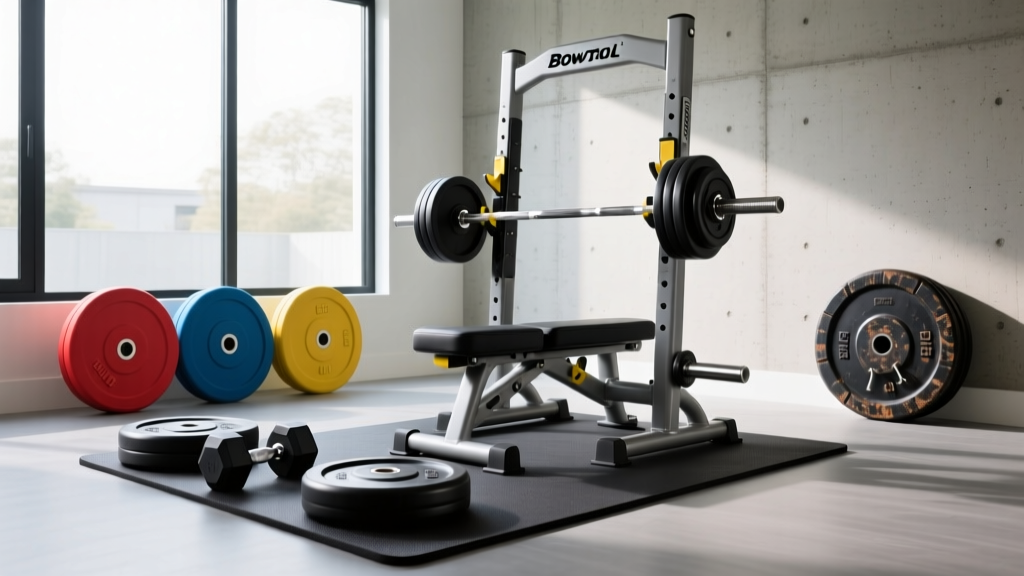
Bowflex Dumbbell or Plates? Bumper vs Iron Value Breakdown
Compare bumper vs iron plates for your home gym. We break down cost-per-pound, durability, and value against adjustable options like the Bowflex dumbbell.

The Home Gym Budget Crossroads: Adjustables vs. Plate Progression
Building a home gym in 2026 requires navigating a complex landscape of equipment costs, space constraints, and long-term durability. Many lifters begin their journey by investing in space-saving adjustable equipment, such as a bow flex dumbbell system (like the popular SelectTech 552, which typically retails around $399-$449). While adjustable dumbbells offer incredible value for isolation movements and light-to-moderate hypertrophy work, they eventually hit a ceiling for heavy compound barbell lifts. When you are ready to progress to barbell squats, deadlifts, and Olympic lifts, you must transition to buying weight plates.
This brings us to the most debated budget breakdown in the home gym community: bumper plates vs. iron plates. Which option delivers the best return on investment? Below, we conduct a comprehensive value analysis, breaking down cost-per-pound, material degradation, failure modes, and hidden spatial costs to help you allocate your fitness budget wisely.
Bumper vs. Iron: The Core Comparison Matrix
Before diving into the nuanced material science and long-term wear patterns, let us look at the raw data. The following matrix compares standard cast iron plates against the two primary bumper plate categories (recycled crumb rubber and virgin rubber).
| Feature | Cast Iron Plates | Recycled Crumb Bumpers | Virgin Rubber Bumpers |
|---|---|---|---|
| Avg. Cost per Pound | $1.50 - $2.25 | $2.00 - $3.00 | $3.50 - $5.50 |
| 45lb Plate Thickness | ~1.5 inches | ~3.5 inches | ~3.2 inches |
| Drop Rating | Low (Floor/Plate Damage) | High (Dead Bounce) | Very High (Controlled Bounce) |
| IWF Tolerance Compliance | No | Rarely | Yes (Competition Grade) |
| Noise Level on Impact | Extremely Loud | Moderate | Quiet |
Iron Plates: The Budget-Friendly Workhorse
If your primary metric for value is strictly cost per pound, cast iron is the undisputed champion. In the current market, you can reliably source high-quality cast iron plates from brands like Titan Fitness or Rogue Fitness for between $1.50 and $2.25 per pound. For a standard 250lb plate set, you are looking at an investment of roughly $375 to $560.
Material and Coating Breakdown
Not all iron is created equal. Cheaper, imported cast iron plates are prone to 'spider-cracking'—a structural failure where microscopic fissures in the cast metal propagate and eventually cause the plate to shatter if dropped from shoulder height. To mitigate this, invest in machined steel or high-grade cast iron with a durable finish.
- Enamel Paint: The cheapest option. Prone to chipping and requires occasional touch-ups to prevent surface rust.
- Powder Coat: A superior, baked-on finish that resists chipping and moisture. Highly recommended for garage gyms with fluctuating humidity.
- Machined Steel: Found in premium models like the Rogue Deep Dish plates. These offer exact weight tolerances (within 1% of stated weight) and a sleek, dense profile.
Bumper Plates: Paying for Protection and Performance
Bumper plates are engineered with a uniform diameter (standardized at 450mm by the International Weightlifting Federation) so that all plates, regardless of weight, hit the floor simultaneously during overhead drops. This protects both the barbell sleeves and your gym floor. However, this engineering comes at a premium, often costing 2 to 3 times more per pound than iron.
Virgin Rubber vs. Recycled Crumb
When shopping for bumpers, you will encounter two distinct manufacturing processes. According to comprehensive equipment analyses by BarBend, understanding the difference is critical for long-term value.
- Recycled Crumb Rubber: Made from compressed, ground-up tires. These are cheaper ($2.00/lb) and have a 'dead bounce,' making them safe for garage gyms. However, they are highly porous, trap odors, and shed black dust over time.
- Virgin Rubber: Made from new, unmixed rubber compounds. Models like the Rogue Echo Bumper Plates offer a denser matrix, a controlled 'live bounce,' and zero off-gassing odors. They cost upwards of $3.50/lb but last decades under heavy use.
Expert Insight on Failure Modes: The most common point of failure in budget bumper plates is 'hub pull-out.' This occurs when the steel center insert separates from the rubber matrix due to repetitive impact. Always look for bumpers that feature a hooked or flanged steel hub design, which mechanically locks the insert into the rubber, preventing it from sliding out over time.
Space Constraints: Sleeves, Storage, and Spatial Value
Value is not just about the purchase price; it is about how the equipment integrates into your physical space. Bumper plates introduce two major spatial constraints that iron plates do not.
1. Barbell Sleeve Capacity
A standard Olympic barbell features 16.3 inches of loadable sleeve space. Because a 45lb cast iron plate is only ~1.5 inches thick, you can load ten plates per side (450lbs), yielding a total lifting capacity of 945lbs. Conversely, a 45lb bumper plate is roughly 3.2 inches thick. You can only fit five plates per side (225lbs), capping your total barbell weight at 495lbs. While 495lbs is sufficient for 95% of home gym owners, elite powerlifters and strongman competitors will find bumper plates severely limiting for heavy rack pulls or squats.
2. The Vertical Storage Trap
Cast iron plates can be stored vertically on 'tree' style rack horns without issue. Bumper plates cannot. If you hang bumper plates vertically on a storage tree for extended periods, gravity will pull the heavy rubber matrix downward. Over 6 to 12 months, this causes permanent warping, resulting in plates that no longer sit flush against one another and wobble dangerously during lifts. Bumper plates require horizontal storage racks, which consume significantly more floor space and cost an additional $100-$150 to purchase.
Final Verdict: Allocating Your 2026 Gym Budget
So, how should you allocate your hard-earned capital? The decision hinges entirely on your training modality and spatial environment.
Choose Cast Iron If:
- You are on a strict budget and need to maximize your cost-per-pound.
- Your training focuses on powerlifting, heavy partials, or slow-tempo strength work where dropping the barbell is not required.
- You have limited floor space and need to utilize vertical storage racks.
- You already have a dedicated, reinforced lifting platform installed.
Choose Bumper Plates If:
- You practice Olympic weightlifting (cleans, snatches) or CrossFit-style high-rep deadlifts where dropping the bar is mandatory.
- Your gym is located in a shared space, garage, or upper floor where noise dampening and floor protection are non-negotiable.
- You value the aesthetic and uniform barbell setup that 450mm diameter plates provide.
The Hybrid Approach: For the ultimate budget optimization, consider a mixed fleet. Purchase a set of 45lb and 25lb virgin rubber bumpers for your dynamic, high-impact Olympic lifts, and supplement them with cheap cast iron 10lb and 5lb fractional plates for micro-loading your heavy squats and bench presses. This hybrid strategy gives you the protective benefits of rubber where it matters most, while leveraging the dense, low-cost profile of iron to push your absolute strength ceilings without breaking the bank.
More gear to consider
All reviews
Power Rack vs Squat Rack vs Stand: Plus Easy Dumbbell Arm Workout

EZ Curl vs Straight Bar: Space Layouts & Dumbbell Pullovers for Chest
2026 Trends: Back Exercises With Dumbbells and Bench vs Kettlebells

Dumbbell RDL Tutorial: Form Guide & Adjustable Weight Review

EZ Curl Bar vs Straight Bar & Over the Head Dumbbell 2026 Trends
