
Single Arm Dumbbell Row Muscles Worked: Rack Maintenance Guide
Discover how proper dumbbell rack maintenance and storage protect your gear and optimize the single arm dumbbell row muscles worked for heavy pulling.

The Biomechanical Toll: Why Heavy Rows Stress Equipment
When mapping the single arm dumbbell row muscles worked, exercise scientists highlight the latissimus dorsi, rhomboids, middle trapezius, and posterior deltoids as the primary movers, with significant isometric demand on the brachioradialis, biceps brachii, and the anti-rotation core stabilizers. According to kinesiology databases like ExRx, this unilateral pulling motion allows lifters to move immense loads—often exceeding 100 lbs per hand in advanced athletes.
However, this massive force output creates a hidden casualty in the home and commercial gym: the dumbbell rack and the dumbbells themselves. The aggressive pick-up, the asymmetrical loading of rack tiers, and the inevitable 'drop' when grip failure occurs during a heavy set of rows accelerate equipment degradation. In 2026, with premium urethane dumbbells costing upwards of $3.50 per pound and heavy-duty racks ranging from $450 to $800, proactive maintenance is no longer optional. Understanding how your storage solutions interact with your heaviest compound pulls is the key to maximizing equipment longevity.
Rack Structural Integrity: Welds, Trays, and Asymmetry
The single arm dumbbell row is unique because it encourages lifters to grab a single, ultra-heavy dumbbell, perform the set to failure, and drop it directly to the floor rather than carefully returning it to the rack. Over time, this behavior leads to two major rack maintenance issues: tier asymmetry and tray degradation.
Weld Fatigue and Steel Gauge
Premium racks, like the Rogue 3-Tier Dumbbell Rack (built from 11-gauge steel, retailing around $595), can withstand the shock of heavy iron. However, budget-friendly options utilizing 14-gauge steel (such as certain imported models in the $250–$350 range) are susceptible to micro-fractures at the weld joints. When a 120 lb dumbbell is repeatedly slammed onto a middle tier instead of the reinforced bottom tray, the kinetic energy transfers directly into the TIG or MIG welds connecting the tier brackets to the uprights.
⚠️ Warning: The 'Missing Rack' HazardAthletes performing heavy single arm rows often use the rack itself for balance, leaning their non-working hand on the top tier or upright. If the rack is not bolted to the floor or heavily weighted at the base, the lateral force of a 100+ lb row can tip a freestanding A-frame rack, causing catastrophic injury and equipment destruction.
UHMW Plastic Tray Liners
To protect both the rack and the dumbbell heads, modern storage solutions use Ultra-High Molecular Weight (UHMW) polyethylene liners on the trays. Hex dumbbells, when dropped from waist height after a grueling row set, can gouge standard rubber trays. UHMW liners absorb this shock. Inspect these liners every six months; if gouges exceed 2mm in depth, replace the sheets to prevent the steel edges of the dumbbells from grinding against the steel rack frame.
Knurling Preservation: The Grip Factor in Unilateral Pulls
Grip strength is universally the limiting factor in the single arm dumbbell row muscles worked. If your grip fails, your lats and rhomboids never reach true muscular failure. Therefore, maintaining the knurling on your dumbbells is just as critical as maintaining the rack that stores them.
Human sweat contains urea, lactic acid, and sodium chloride. When a heavy row set finishes and the dumbbell is placed back on the rack, residual sweat sits in the knurling valleys. Within 48 hours, the chloride ions begin to strip the protective zinc or black oxide coating, leading to oxidation (rust). Rust flattens the 'volcano' peaks of the knurl, turning an aggressive grip into a smooth, slippery hazard.
The 3-Step Knurling Restoration Protocol
- Brushing: Use a stiff nylon bristle brush (never a wire brush, which will strip the zinc coating) to scrub the knurling immediately after heavy rowing sessions. Brush in a circular motion to lift chalk and dead skin from the valleys.
- Neutralizing: Once a month, wipe the handles with a microfiber cloth lightly dampened with a pH-neutral cleaner or simple mineral spirits to break down acidic sweat buildup.
- Oiling: Apply 3 to 4 drops of mineral oil or specialized knurling oil (like Rogue's Knurl Oil) to the handle. Work it in with a nylon brush, then wipe away the excess. This displaces moisture and prevents oxidation without leaving a slippery residue that would ruin your next rowing session.
Environmental Storage: Urethane vs. Rubber Degradation
Where you place your dumbbell rack in your gym or garage drastically affects the lifespan of the dumbbells stored upon it. According to equipment maintenance guides from Garage Gym Reviews, environmental factors are the primary killer of dumbbell heads.
| Material Type | Primary Environmental Threat | Storage & Maintenance Rule |
|---|---|---|
| Virgin Urethane | UV Light & Ozone Exposure | Keep racks away from direct sunlight and garage doors. UV breaks down polymer chains, causing chalking and cracking. |
| Recycled Rubber | Temperature Fluctuations & Oils | Avoid freezing garages. Never clean with bleach or harsh degreasers, which dry out the rubber and cause it to flake. |
| Neoprene / Vinyl | Moisture Trapping & Mold | Ensure good airflow around the rack. Wipe down with a mild soap solution; do not stack wet dumbbells tightly together. |
Optimizing Rack Layout for Heavy Pullers
If your programming heavily features unilateral rows, your rack layout should reflect your biomechanics. Storing your heaviest dumbbells (80–120 lbs) on the bottom tier is standard practice for safety and center-of-gravity management. However, the middle tier is where the most 'pick-up' wear occurs, as lifters often grab mid-weight dumbbells (40–60 lbs) for high-volume hypertrophy row sets.
Rotate the dumbbells on your middle tier every three months. The repeated friction of picking up and placing down the exact same pair of 50 lb dumbbells will wear down the UHMW tray liner and the specific dumbbell heads faster than the rest of your set. By rotating the pairs from left to right, you distribute the physical wear evenly across the rack's footprint.
Frequently Asked Questions
Can I use WD-40 to clean my dumbbell knurling after rows?
No. WD-40 is a solvent and water displacer, not a long-term lubricant or protectant. It will strip away existing protective oils and leave a residue that attracts dust and chalk, ultimately creating a slippery surface that will compromise your grip during heavy single arm dumbbell rows. Stick to 3-in-One oil or pure mineral oil.
How do I fix a wobbly dumbbell rack tier?
If a tier becomes wobbly, the carriage bolts connecting the tier brackets to the uprights have likely stretched or loosened due to vibration from dropped weights. Use a torque wrench to tighten all hardware to the manufacturer's specifications (usually between 60–80 ft-lbs for heavy-duty 11-gauge racks). Apply a medium-strength threadlocker (like Loctite Blue 242) to the threads to prevent future vibration loosening.
Does the single arm dumbbell row require a specific rack height?
While the exercise targets the back muscles regardless of rack height, storing heavy dumbbells on a tier that is roughly at knee-to-mid-thigh height (typically the second tier of a 3-tier rack) is optimal. This allows you to hinge at the hips and grip the dumbbell with a neutral spine, reducing lower back shear forces during the initial pick-up before you move to your rowing stance.
More gear to consider
All reviews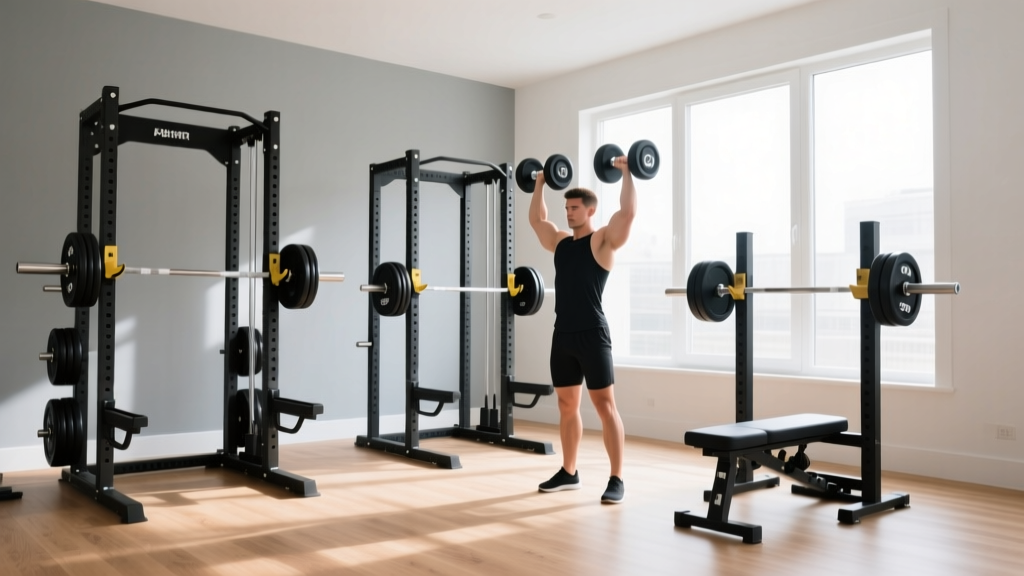
Power Rack vs Squat Rack vs Stand: Standing Dumbbell Chest Workout Setup

All in Motion Dumbbells: Neoprene Coating Mistakes and Fixes

Dumbbell Exercises for Rear Delts: Neoprene Mistakes & Fixes
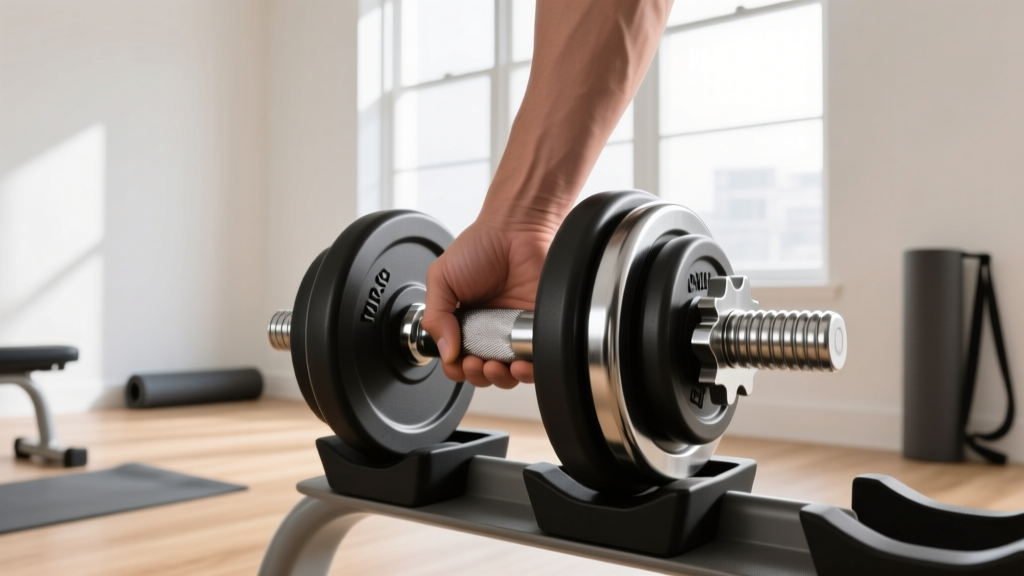
Maintaining Loadable Home Workout Dumbbells (No Bench Setup)

Barbell Clamps: Setup for Squats & Legs Exercises with Dumbbells
