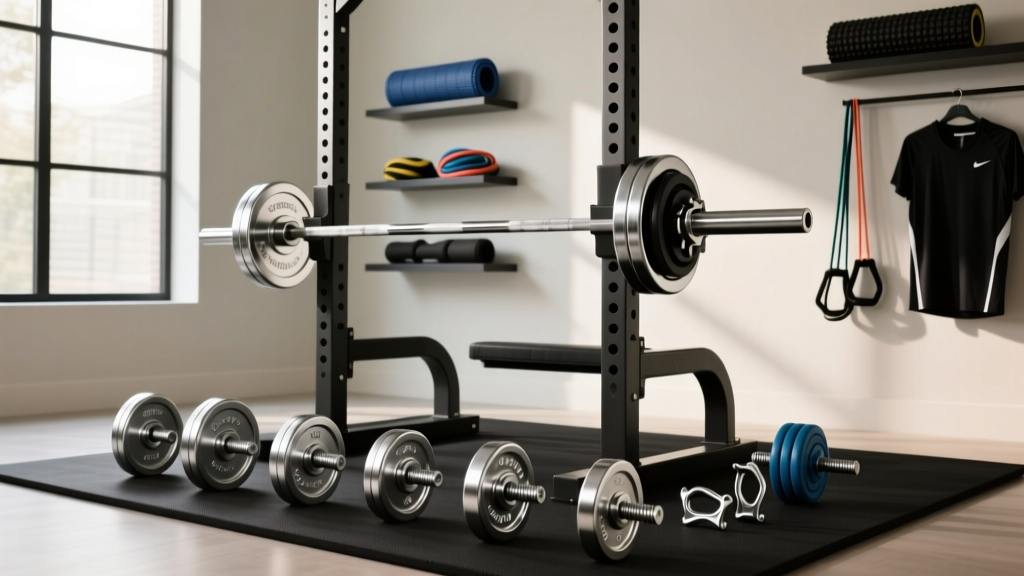
Beyond Dumbbell Shoulder Side Raises: Barbell Collar Types Compared
Transitioning from dumbbell shoulder side raises to heavy barbell lifts? Compare barbell collar and clamp types to ensure safety and find the best gear.

The Free Weight Progression: From Isolation to Compound
When you first step into the free weight section of the gym or build your initial home garage gym, your routine likely revolves around isolation movements and lighter implements. You might spend weeks mastering the strict form required for dumbbell shoulder side raises to build your medial deltoids, or practicing goblet squats with a single kettlebell. According to ExRx.net's exercise directory, mastering these foundational dumbbell movements is critical for developing joint stability and mind-muscle connection before moving to heavier loads.
However, as you progress to heavy compound barbell lifts—like the back squat, deadlift, or overhead press—the equipment requirements change drastically. A 45-pound Olympic barbell loaded with multiple plates introduces severe kinetic risks if not properly secured. This is where understanding barbell collar and clamp types transitions from a minor accessory detail to a critical safety necessity.
Why Barbell Collars Are Non-Negotiable for Beginners
Beginners often assume that the sheer weight of the plates will keep them flush against the barbell sleeve. In reality, the physics of asymmetric loading tells a different story. If you are performing a dynamic movement like a barbell hip thrust or a push press, the deceleration and acceleration phases create lateral force. Without a secure clamp, plates can slide outward. Even a half-inch shift in plate distribution on a 45-pound barbell can create a dangerous seesaw effect, leading to missed lifts, wrist injuries, or catastrophic bar dumps.
Safety Warning: Never perform unilateral barbell movements (like landmine presses or single-arm rows) without heavy-duty locking collars. The rotational torque will instantly spin the sleeve and slide the plates off if unsecured.
Step-by-Step: How to Properly Load and Secure a Barbell
Before diving into the hardware, you must master the physical process of securing the bar. Follow this step-by-step protocol every time you load the bar:
- Balance the Load: Always load plates symmetrically. If you add a 45-pound plate to the left sleeve, immediately add one to the right before proceeding.
- Seat the Plates Flush: Push the plates tightly against the inner shoulder of the barbell sleeve. Ensure no rubber dust or chalk buildup is preventing a flush seat.
- Apply the Collar: Slide the collar onto the sleeve until it makes firm contact with the outermost plate.
- Engage the Locking Mechanism: Depending on your clamp type (detailed below), squeeze the lever, tighten the set screw, or snap the locking jaw into place.
- The Tilt Test: Before lifting, tilt the barbell slightly to one side. If the collar and plates slide even a millimeter, remove the collar and reseat it.
Barbell Collar and Clamp Types Comparison
The fitness equipment market in 2026 offers several distinct clamping mechanisms. Below is a comparison matrix of the four primary types you will encounter in commercial and home gyms.
| Collar Type | Clamping Mechanism | Average Price (Pair) | Security Rating | Best Use Case |
|---|---|---|---|---|
| Spring Clips | Tensioned Steel Coils | $10 - $18 | Low | Light accessories, quick changes |
| Lever Clamps | Plastic/Nylon Cam Lever | $20 - $35 | Medium-High | General home gym use, hypertrophy |
| Aluminum Locking | Threaded Set Screw / Hex Key | $40 - $65 | Very High | Heavy powerlifting, dropping bars |
| Competition Collars | Weighted Locking Lever (2.5kg) | $85 - $130 | Maximum | Olympic weightlifting, IWF meets |
1. Spring Clips (The Budget Option)
Spring clips are the most common and least expensive collars. They rely on the tension of heavy-gauge steel wire to grip the sleeve. While they are incredibly fast to apply and remove, they suffer from metal fatigue over time. Furthermore, they offer very little lateral clamping force, meaning they will not prevent plates from sliding during high-impact drops or dynamic Olympic lifts.
2. Lever Clamps (The Home Gym Standard)
Lever clamps, such as the popular Harbinger Pro Clamps or generic Lock-Jawz, utilize a reinforced nylon body with a rubberized inner gasket and a cam-action lever. When you snap the lever shut, it pulls the inner housing tight against the sleeve. These are excellent for beginners transitioning from dumbbells to barbells because they require zero hand strength to secure and provide a highly reliable grip for standard squats, bench presses, and deadlifts.
3. Aluminum Locking Collars (The Heavy Duty Choice)
For lifters moving heavy iron or performing CrossFit-style workouts where the barbell is frequently dropped from overhead, aluminum locking collars are the gold standard. Models like the Rogue ALR-3.0 Aluminum Locking Collars use a threaded set screw driven by a hex key or integrated T-handle to bite directly into the steel sleeve. This creates a mechanical lock that is virtually immune to slipping, even under extreme impact.
4. Competition Collars (The Olympic Standard)
Governed by the International Weightlifting Federation (IWF) technical rules, competition collars must weigh exactly 2.5 kilograms each. They feature massive locking levers designed to secure the bumper plates used in the snatch and clean & jerk. Unless you are an aspiring Olympic weightlifter training on calibrated competition plates, these are generally overkill and too heavy for standard home gym use.
Technical Edge Cases: Sleeve Tolerances and Slippage
One of the most frustrating failure modes beginners encounter is a collar that simply will not grip the barbell. This is rarely a defect in the collar itself, but rather a mismatch in sleeve tolerances.
A standard Olympic barbell sleeve is nominally 50mm (1.97 inches) in diameter. However, manufacturing variances mean that budget barbells might have sleeves measuring 49.5mm, while premium calibrated bars might measure exactly 50.2mm. If you buy a cheap lever clamp designed with a tight 50mm tolerance, it will slide right off a 49.5mm budget barbell, creating a massive safety hazard. Conversely, if your barbell has aggressive end-cap knurling or a protruding snap ring, certain wide-body clamps will not seat flush against the plates, leaving a dangerous gap.
Expert Tip: Always measure your barbell sleeve with a digital caliper before purchasing high-end locking collars, and check the manufacturer's stated sleeve diameter compatibility.
2026 Purchasing Framework: Which Clamp Should You Buy?
Use this decision framework to select the right collar based on your current training phase:
- The Isolation Phase (Beginner): If you are still primarily doing dumbbell shoulder side raises, lateral raises, and light barbell pressing, a $25 pair of nylon lever clamps is all you need. They are safe, fast, and forgiving on slightly mismatched barbell sleeves.
- The Strength Phase (Intermediate): Once your squat and deadlift surpass 225 pounds, upgrade to a $45 pair of aluminum locking collars. The mechanical set-screw grip ensures your expensive bumper plates stay seated during heavy eccentrics.
- The Dynamic Phase (Advanced): If you are incorporating power cleans, snatches, or high-repetition drop sets, invest in heavy-duty competition-style clamps or specialized magnetic quick-release collars that can withstand repeated high-G impacts without loosening.
Frequently Asked Questions
Can I use dumbbell collars on a barbell?
No. Dumbbell handles typically measure between 28mm and 35mm in diameter, while Olympic barbell sleeves are 50mm. Dumbbell spring clips will not stretch to fit a barbell, and attempting to force them can damage the spring tension or cause them to snap off dangerously.
Do barbell collars add to the total weight lifted?
Yes, though the amount varies. Standard plastic lever clamps weigh about 0.2 lbs each, which is negligible for most lifters. However, aluminum locking collars can weigh up to 0.5 lbs each, and official IWF competition collars weigh 2.5 kg (5.5 lbs) each. In competitive powerlifting and weightlifting, the collar weight is always factored into the total bar weight.
Why do my lever clamps leave black marks on the barbell?
This is caused by the rubberized inner gasket of the clamp reacting with the zinc or chrome oxidation on the barbell sleeve, combined with friction. To prevent this, wipe down your barbell sleeves with a light coat of 3-in-One oil or mineral oil after your workout, and clean the inner rubber gaskets of your clamps with a damp microfiber cloth monthly.
More gear to consider
All reviews
Bumper vs Iron Plates: Optimizing the Dumbbell RFE Split Squat
Barbell Knurling & Weight Guide: Beyond Dumbbell Workout Exercises

Maintaining Loadable Dumbbells for Bent Over Reverse Dumbbell Flys
Skull Dumbbell Trends 2026: The Shift to Loadable Plate Systems

Bumper vs Iron Plate Care: Dumbbell Deadlift vs Barbell
