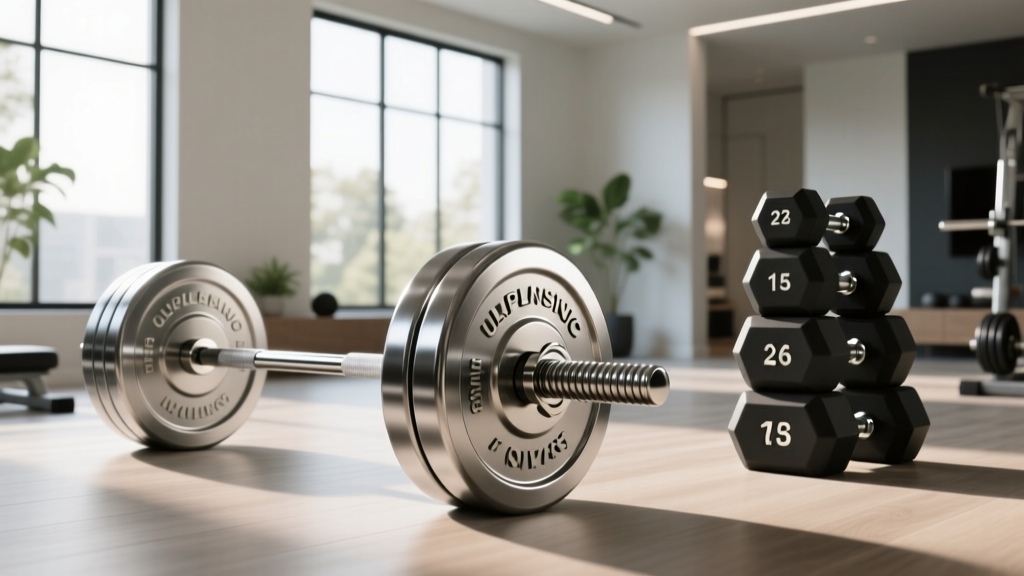
Beyond Dumbbell Only Workouts: Olympic Barbell Guide
Transitioning from dumbbell only workouts? This beginner guide breaks down Olympic barbell weight, knurling, and top 2026 picks for progressive overload.

Step 1: Recognizing the Limits of Dumbbell Only Workouts
While dumbbell only workouts are fantastic for building unilateral stability, correcting muscle imbalances, and establishing initial hypertrophy, they eventually hit a hard ceiling. Most commercial gyms cap their dumbbell racks at 100 to 120 pounds. Once your goblet squats, Romanian deadlifts, or floor presses require more than 50 pounds per hand, grip fatigue, physical space, and the sheer awkwardness of hoisting heavy dumbbells into position become limiting factors.
This is the exact threshold where upgrading to an Olympic barbell becomes non-negotiable for progressive overload. A standard 45-pound Olympic barbell allows you to load weight incrementally, stabilize heavy loads across your entire posterior chain, and safely bail out of failed repetitions. But buying your first barbell can be overwhelming. This step-by-step guide will decode Olympic barbell weight standards, knurling patterns, and material science to ensure you make the right investment in 2026.
Beginner Insight: The Grip Fatigue Factor
When transitioning from dumbbell only workouts to barbell training, you will immediately notice a shift in grip demand. Holding two 70-pound dumbbells requires intense isolated grip strength. A 140-pound barbell deadlift distributes that load across a single, knurled steel shaft, allowing your central nervous system to focus on moving the weight rather than just holding it.
Step 2: Understanding Olympic Barbell Weight and Dimensions
Not all barbells weigh the same, and choosing the right shaft diameter is critical for your hand size and training style. According to the Garage Gym Labs comprehensive testing standards, barbells generally fall into three distinct weight and dimension categories:
- Men's Olympic Bar (20kg / 44 lbs): Features a 28mm to 29mm shaft diameter and a 51.5-inch loadable sleeve length. This is the gold standard for powerlifting, general strength training, and CrossFit.
- Women's Olympic Bar (15kg / 33 lbs): Features a narrower 25mm shaft diameter and a slightly shorter overall length (79 inches). The thinner shaft is ideal for lifters with smaller hands, improving grip security during heavy pulls.
- Multi-Purpose / Technique Bar (15kg to 35 lbs): Often features a 28mm shaft but shorter loadable sleeves. Great for beginners practicing form before adding standard plates.
Why Shaft Diameter Matters
If you are moving from dumbbell only workouts where handles are typically 30mm to 35mm thick, a 28mm barbell shaft will feel remarkably thin and aggressive. A 29mm shaft (common in power bars) provides a slightly fuller grip, which is preferable for heavy bench presses and squats, while a 28mm shaft (common in weightlifting bars) offers more 'whip' and flexibility for dynamic movements like the clean and jerk.
Step 3: Decoding Knurling Patterns for Your Grip
Knurling is the cross-hatched pattern machined into the steel shaft that creates friction against your skin. For beginners leaving dumbbell only workouts behind, understanding knurling is the difference between a secure lift and a torn callus. As detailed by the experts at BarBend, knurling generally falls into three geometric profiles:
| Knurl Type | Description & Feel | Best For |
|---|---|---|
| Mountain | Sharp, pointed peaks. Feels like a cheese grater. Common on cheap, entry-level Amazon bars. | Avoid. Causes severe callus tearing. |
| Hill | Rounded, smooth peaks. Often the result of a 'volcano' knurl wearing down over years of use. | High-rep conditioning, but lacks grip for 1RM deadlifts. |
| Volcano | Machined with a pointed tool, then the very tip is blunted. Leaves a sharp outer rim with a dipped center. | The premium standard. Bites into the skin without tearing. |
The Center Knurl Debate
Powerlifting bars feature a 'center knurl'—a strip of knurling in the exact middle of the bar. This is designed to grip the back of your t-shirt or skin during heavy back squats, preventing the bar from sliding down your spine. Weightlifting bars omit the center knurl to prevent tearing up the chest and collarbones during the 'clean' phase of a clean and jerk. For a beginner building a home gym in 2026, a mild center knurl is the most versatile choice.
Step 4: Bushings vs. Bearings (The Spin Factor)
When you load up a barbell for a deadlift, the sleeves (the ends where the plates go) need to spin independently of the shaft. If they don't, the rotational force of the plates will twist the bar out of your hands. Manufacturers use two types of internal mechanisms to facilitate this spin:
Bronze Bushings
Solid metal rings that provide a slow, controlled spin. They are incredibly durable, require zero maintenance, and are perfect for powerlifting (squats, bench, deadlifts) where you want the bar to feel stable and rigid in your hands.
Needle Bearings
Small cylindrical rollers that allow for a lightning-fast, frictionless spin. Essential for Olympic weightlifting (snatches, cleans) where the bar must rotate rapidly as you flip your wrists under the weight. Overkill and sometimes too 'whippy' for strict powerlifting.
Step 5: 2026 Top Barbell Recommendations for Beginners
Based on current 2026 pricing, tensile strength testing, and knurling quality, here are the top three barbells for athletes graduating from dumbbell only workouts:
1. The Best Overall Value: Rep Fitness AB-4100
- Price: $249.00
- Tensile Strength: 190,000 PSI
- Knurl: Deep Volcano (No center knurl)
- Why it wins: Rep Fitness has dominated the mid-tier market. The AB-4100 offers a 28.5mm shaft with a gorgeous hard chrome finish that resists rust without filling in the knurling. It uses high-quality bushings, making it a hybrid bar that handles both slow deadlifts and moderate cleans flawlessly.
2. The Premium Standard: Rogue Ohio Bar
- Price: $295.00 (Cerakote sleeve/shaft options vary up to $345)
- Tensile Strength: 190,000 PSI
- Knurl: Moderate Volcano
- Why it wins: The Ohio Bar is the benchmark against which all other multi-purpose bars are measured. The knurl is slightly less aggressive than the Rep AB-4100, making it ideal for high-volume CrossFit workouts where your hands will take a beating. The Cerakote options offer military-grade corrosion resistance.
3. The Budget Powerlifter: Bells of Steel Residential Bar
- Price: $189.99
- Tensile Strength: 190,000 PSI
- Knurl: Moderate with Center Knurl
- Why it wins: If your primary goal is to squat, bench, and deadlift heavy, this bar includes the center knurl you need for squat stability at a price point that leaves room in your budget for weight plates.
A Note on Tensile Strength: Never buy a barbell with a tensile strength below 165,000 PSI. Bars in the 110,000 to 150,000 PSI range (often sold in big-box sporting goods stores for $99) will permanently bend if you drop them from shoulder height or load them past 300 pounds. Always look for a minimum of 190,000 PSI for a lifetime warranty guarantee.
Step 6: Maintenance and Care
Leaving the controlled environment of dumbbell only workouts means you are now responsible for maintaining a 7-foot steel implement. Even high-end stainless steel or Cerakote bars require basic upkeep.
- Brush the Knurl: Once a month, use a stiff nylon brush (never brass or steel, which can damage the finish) to scrub out dead skin, chalk, and dust from the knurling valleys.
- Oil the Sleeves: Apply 2-3 drops of 3-in-One oil or synthetic barbell oil to the inside of the sleeve bushings every 6 months to maintain a smooth spin.
- Wipe Down: If you train in a humid garage gym, wipe the shaft with a microfiber cloth and a light coat of mineral oil after heavy sweat sessions to prevent surface oxidation.
Frequently Asked Questions
Can I use my existing dumbbell plates on an Olympic barbell?
No. Standard dumbbells and cheap home-gym kits use 1-inch diameter holes. Olympic barbells require plates with 2-inch (50mm) diameter holes. You will need to invest in a set of Olympic bumper plates or cast-iron plates when you buy your bar.
Will a barbell take up too much space compared to dumbbells?
An Olympic barbell is 7 feet long and requires a 4-foot clearance on either side for loading plates. However, a single barbell and a set of plates take up significantly less floor space than a full 100-pound dumbbell rack, making it the superior space-saving choice for serious home gyms.
How much weight should I buy to start?
For a beginner transitioning from dumbbell only workouts, a 'Starter Set' consisting of the barbell (45 lbs), two 45lb plates, two 25lb plates, two 10lb plates, and four 5lb plates (Total: 255 lbs) is the perfect starting configuration. This allows for micro-loading and will sustain your progression for the first 12 to 18 months of linear periodization.
More gear to consider
All reviews
Optimizing Rows with Dumbbells: Rubber Hex vs Urethane Value

Installing a Power Rack vs Squat Stand for Dumbbell Arm Exercises

Power Rack vs Squat Rack vs Stand for the Seated Dumbbell Biceps Curl

EZ Curl Bar vs Straight Bar: Market Data & Front Delt Dumbbell Raise
2026 Trends: EZ Curl Bar vs Straight Bar & Dumbbell Fly Exercise