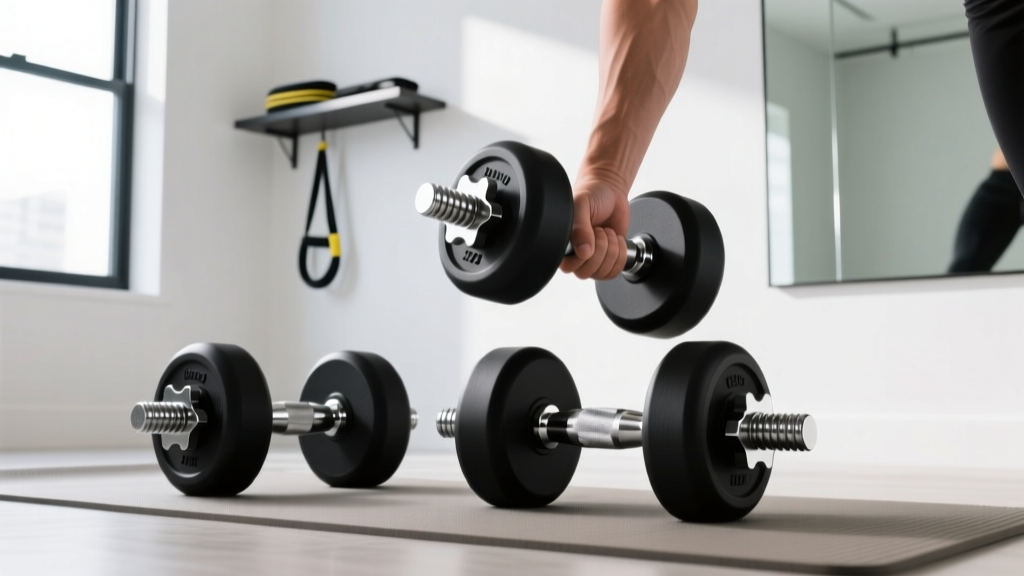
Top Dumbbell Racks to Optimize Dumbbell Movements (2026)
Discover the best dumbbell racks for 2026. Our hands-on reviews show how proper storage optimizes safety and flow during heavy dumbbell movements.

The Hidden Biomechanics of Dumbbell Storage
Most home gym owners treat dumbbell storage as a mere aesthetic afterthought, tossing their hex or urethane weights onto any flat surface that can bear the load. However, as training intensity scales, the way you store and retrieve your equipment directly impacts your performance and injury risk. When transitioning between complex, high-fatigue dumbbell movements—such as supersetting heavy goblet squats with renegade rows—fumbling with a poorly designed, flat-shelved rack ruins your heart rate zone and compromises your grip strength before the set even begins.
Furthermore, the ergonomics of the pickup matter immensely. According to facility design and safety guidelines emphasized by the National Strength and Conditioning Association (NSCA), improper lifting mechanics from floor level or poorly angled shelves can introduce dangerous shear forces to the lumbar spine. A properly engineered dumbbell rack features an inclined shelf (typically between 10 to 15 degrees), allowing you to maintain a neutral wrist and execute a safe hip-hinge pickup. This micro-adjustment is critical when prepping for heavy dumbbell movements where every ounce of grip and core stability must be preserved for the working set.
In this 2026 hands-on review, we evaluate the top-tier dumbbell racks on the market, analyzing their steel gauge, shelf geometry, footprint, and real-world durability to help you optimize your training space.
Expert Hands-On Reviews: Top 3 Dumbbell Racks
1. Rogue Fitness 3-Tier Dumbbell Rack (The Commercial Gold Standard)
If you are building a no-compromise garage gym or commercial facility, the Rogue 3-Tier remains the undisputed heavyweight champion. Constructed from 11-gauge 3x3-inch steel, this rack is virtually indestructible. The standout feature for athletes focused on heavy dumbbell movements is the precise 15-degree incline of the shelves, which perfectly aligns the wrist and forearm during the pickup phase.
- Pros: UHMW plastic liners protect expensive urethane dumbbells from scuffing; 15-degree ergonomic shelf angle; holds up to 150 lbs per pair without sagging.
- Cons: Premium price point; heavy footprint requires dedicated floor space.
- Specs & Pricing: 11-gauge steel, 48-inch width, ~$425.00 (2026 pricing).
Expert Insight: The UHMW (Ultra-High Molecular Weight) polyethylene liners on the Rogue rack are a game-changer. Unlike cheap rubber mats that degrade and stick to urethane coatings over time, UHMW offers a frictionless glide that preserves the knurling and branding on premium dumbbells.
2. Rep Fitness 3-Tier Dumbbell Rack (Best Value for Hex Sets)
For the majority of home gym owners running rubber or cast-iron hex dumbbells, the Rep Fitness 3-Tier offers the best balance of cost and engineering. While it uses slightly thinner 14-gauge steel compared to Rogue, the cross-bracing ensures zero lateral wobble, even when you aggressively rack a pair of 80-pounders mid-set. The shelves feature a subtle 10-degree tilt, which is sufficient to facilitate safe retrieval for most dumbbell movements without causing round dumbbells to roll forward.
- Pros: Excellent price-to-durability ratio; rubber-lined shelves dampen sound and protect iron; compact 36-inch width option available.
- Cons: Rubber shelf liners can trap dust and require occasional wiping; 14-gauge steel is slightly more prone to cosmetic scratching.
- Specs & Pricing: 14-gauge steel, 36-inch or 48-inch widths, ~$229.99.
3. Bells of Steel 3-Tier Dumbbell Rack (The Space-Saver)
Not everyone has a 100-square-foot dedicated weight room. The Bells of Steel 3-Tier is engineered for tight spaces, featuring a narrower 24-inch footprint that perfectly accommodates a standard set of adjustable dumbbells or a compact 5-to-50 lb hex set. Despite its smaller size, the 12-gauge steel frame handles dynamic loading exceptionally well, ensuring the rack doesn't tip when you are rushing through high-tempo dumbbell movements like thrusters or devil presses.
- Pros: Extremely compact footprint; integrated handle for mobility; highly affordable.
- Cons: Limited capacity for massive 100+ lb dumbbell pairs; shelf angle is closer to 8 degrees, which is less optimal for heavy pickups.
- Specs & Pricing: 12-gauge steel, 24-inch width, ~$189.99.
2026 Comparison Matrix: Specs and Performance
Use the table below to cross-reference the technical specifications of our top picks against your specific training needs and space constraints.
| Brand / Model | Steel Gauge | Shelf Angle | Max Capacity (Per Tier) | Footprint (Width) | 2026 Price |
|---|---|---|---|---|---|
| Rogue 3-Tier | 11-Gauge (3x3) | 15 Degrees | 450 lbs | 48 inches | $425.00 |
| Rep Fitness 3-Tier | 14-Gauge (2x2) | 10 Degrees | 300 lbs | 36 or 48 inches | $229.99 |
| Bells of Steel 3-Tier | 12-Gauge (2x2) | 8 Degrees | 250 lbs | 24 inches | $189.99 |
Space Planning and Facility Clearance
Buying the rack is only half the battle; placing it correctly is where many home gym owners fail. According to the American College of Sports Medicine (ACSM) health and fitness facility guidelines, adequate clearance around free weight stations is paramount for safety.
When mapping out your gym floor, you must leave a minimum of 36 inches of clear floor space directly in front of the dumbbell rack. This allows you to step back, hinge at the hips, and safely lift the weights without your heels clipping the base of the rack. If you frequently perform walking lunges or farmer's carries as part of your dumbbell movements repertoire, increase that clearance to 48 inches to allow for a safe, unobstructed walking path away from the storage zone.
Edge Cases, Failure Modes, and Maintenance
Even the best equipment degrades if ignored. Based on our long-term testing, here are the most common failure modes associated with dumbbell racks and how to prevent them:
Warning: The Vibration Loosening Effect
If your dumbbell rack is situated less than three feet from a power rack or deadlift platform, the repetitive ground vibration from dropped barbells will gradually back out the nuts and bolts on your dumbbell rack. Over 6 to 12 months, this can lead to severe lateral instability. The Fix: Apply a medium-strength blue threadlocker (like Loctite 242) to all threaded hardware during initial assembly, and schedule a torque-check with a socket wrench every six months.
Another common issue is the degradation of rubber shelf liners. In garages exposed to high UV light and extreme temperature fluctuations, cheap rubber liners will dry rot, crack, and eventually stick to the coating of your dumbbells. If you live in a climate with harsh summers, opt for racks with UHMW plastic liners (like Rogue) or apply a UV-protectant silicone spray to rubber liners twice a year.
Frequently Asked Questions
Can I store round adjustable dumbbells on a tiered rack?
Yes, but with a caveat. Adjustable dumbbells (like PowerBlocks or Bowflex) often have blocky or spherical profiles that don't sit flush on angled tiered shelves. If you use adjustable dumbbells, look for a rack with a flat top tier or a dedicated adjustable dumbbell cradle to prevent them from rolling or tumbling off the incline.
Does the rack angle really matter for lighter dumbbell movements?
For lighter isolation dumbbell movements like lateral raises or tricep kickbacks (using 15-25 lb weights), a flat shelf is perfectly fine. However, the angled shelf becomes a critical safety and ergonomic feature the moment you start pressing or rowing with dumbbells exceeding 40 lbs, as it drastically reduces the moment arm on your lower back during the pickup.
How do I protect my floor from the rack's steel feet?
Most premium racks come with basic rubber end-caps, but these often compress and tear under heavy loads. We recommend purchasing separate 3x3-inch UHMW or heavy-duty horse-stall mat squares to place under each foot. This not only protects your epoxy or rubber flooring from deep gouges but also increases the friction coefficient, preventing the rack from 'walking' across the floor when you aggressively re-rack heavy weights.
For more in-depth analysis on setting up your weight room, check out the comprehensive equipment testing and layout guides available at Garage Gym Reviews. Optimizing your storage isn't just about keeping things tidy; it's about engineering a seamless, safe environment that elevates every single rep of your workout.
More gear to consider
All reviews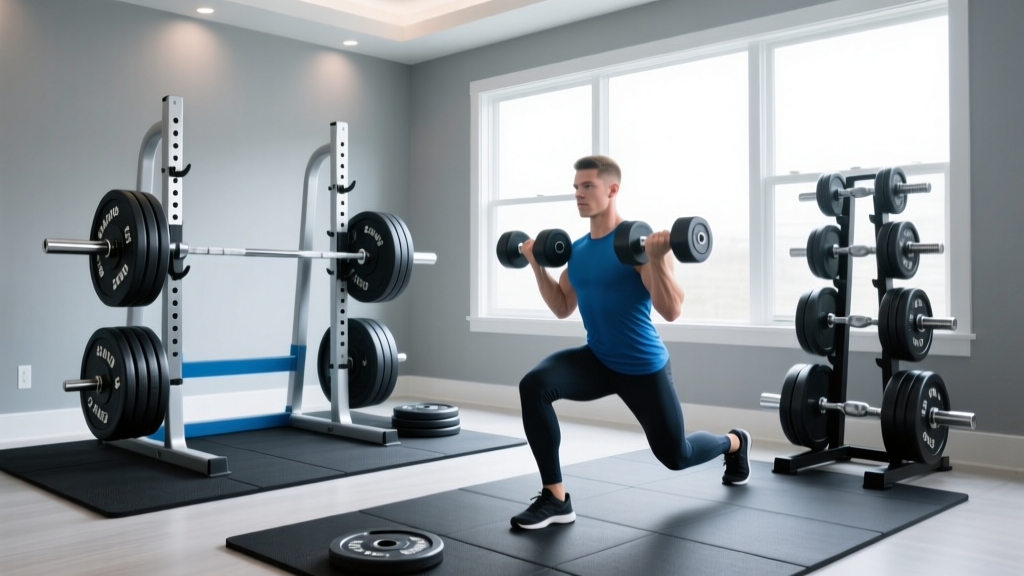
Olympic vs Standard Plates: Setup for Forward Lunges with Dumbbells

EZ Bar vs Straight Bar: Space Layouts & Frontal Raises Dumbbell Guide

Dumbbell Dead Bug Press Errors & Olympic Barbell Knurl Guide
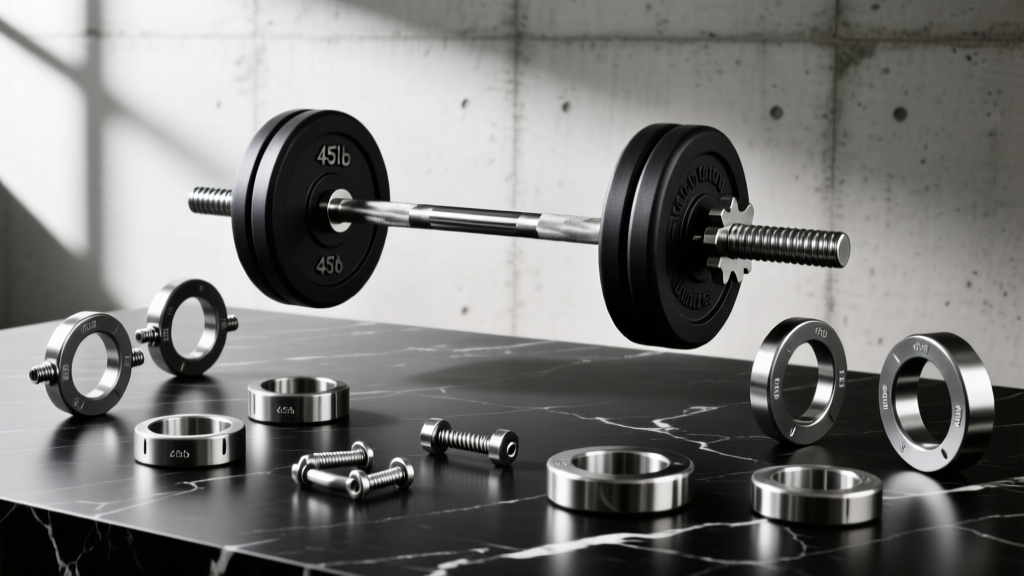
Barbell Collar & Clamp Types Comparison: Mid Back Dumbbell Exercises
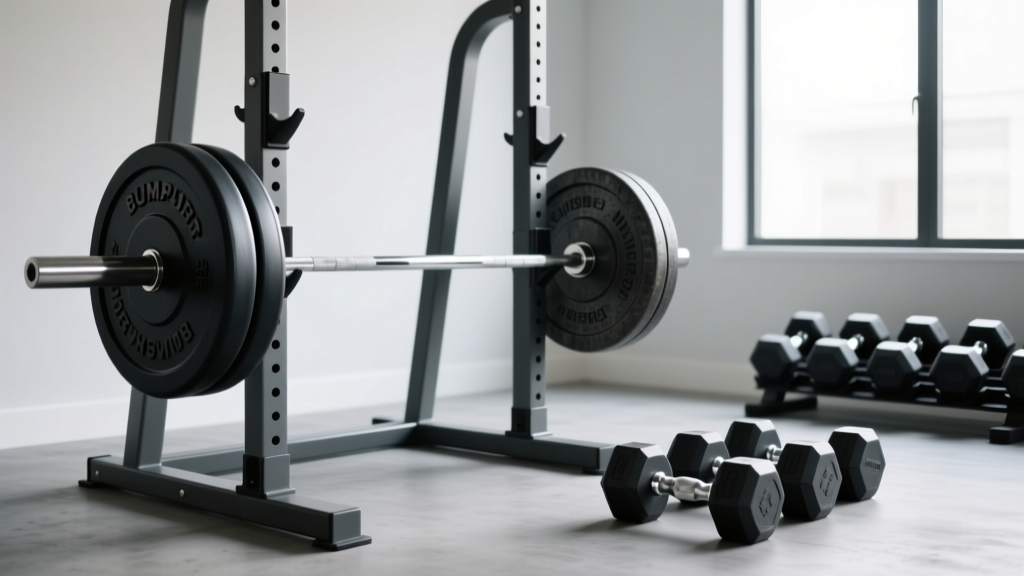
Beyond Exercises with Dumbbells: Bumper vs Iron Plate Maintenance