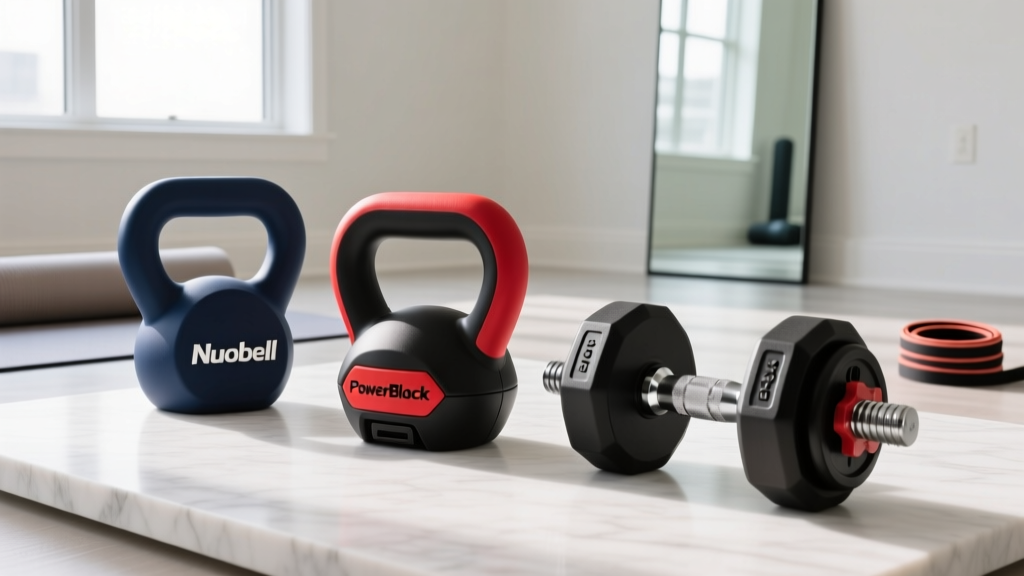
Best Adjustable Dumbbells for the 3 Best Dumbbell Shoulder Exercises
Compare top adjustable dumbbells for the 3 best dumbbell shoulder exercises. In-depth review of Nuobell, PowerBlock, and Bowflex for overhead mechanics.

The Intersection of Deltoid Mechanics and Adjustable Dumbbell Design
Shoulder training demands a unique combination of heavy loading for the anterior deltoids and precise micro-loading for the medial and posterior heads. When executing the 3 best dumbbell shoulder exercises—the Seated Overhead Press, Strict Lateral Raises, and the Arnold Press—the physical geometry of your equipment dictates your biomechanical efficiency. Unlike standard hex dumbbells, adjustable models introduce variables like handle length, weight distribution, and cage clearance that can either optimize your range of motion or cause joint impingement.
As of 2026, the adjustable dumbbell market has matured significantly. Manufacturers have addressed historical failure modes, but distinct design philosophies remain. This in-depth buying guide evaluates the top adjustable dumbbells specifically through the lens of shoulder biomechanics, helping you match the right gear to your specific deltoid training needs.
Overhead Safety Protocol: Dropping adjustable dumbbells from the top of an overhead press is the leading cause of mechanism failure. Unlike solid cast-iron dumbbells, internal gears and plastic dials cannot withstand high-impact drops. Always lower the weights under control to the rack or your thighs.Comparison Matrix: Top Adjustable Dumbbells for Shoulder Work
Before breaking down the specific exercises, let us examine the raw specifications that impact shoulder mechanics. The table below compares the three market leaders based on dimensions, increment options, and overhead suitability.
| Model | Max Weight | Handle Length | Weight Increments | 2026 Street Price | Shoulder Ergonomics |
|---|---|---|---|---|---|
| Nuobell 552 | 50 lbs (Expandable to 80) | 14.5 inches | 2.5 to 5 lbs | $329 | Excellent (Traditional feel) |
| PowerBlock Elite EXP | 50 lbs (Expandable to 90) | 12.0 inches | 2.5 to 5 lbs | $249 (Base) | Good (Compact, cage restricts rotation) |
| Bowflex SelectTech 552 | 52.5 lbs | 15.75 inches | 2.5 to 5 lbs | $299 | Poor (Excessive length, bulky ends) |
Exercise 1: Seated Dumbbell Overhead Press (The Heavy Load Test)
Biomechanics & Gear Requirements
The Seated Overhead Press is the premier mass-builder for the anterior deltoid. According to exercise biomechanics data cataloged by ExRx.net, this movement requires maximum stability at the top of the pressing arc. The primary gear requirement here is compactness and structural rigidity. When pressing 50+ pound dumbbells overhead, a bulky dumbbell shifts the center of mass away from your wrist joint, creating unnecessary shear force on the radiocarpal joint.
The Winner: PowerBlock Elite EXP
For heavy overhead pressing, the PowerBlock Elite EXP is unmatched. Its unique rectangular cage design keeps the weight stacked directly over the handle, resulting in a highly centralized center of mass. Furthermore, the EXP line's modular expansion kits (allowing upgrades to 70 lbs and 90 lbs) make it the only adjustable set that can keep pace with your overhead press strength gains over a multi-year training cycle.
Real-World Failure Mode to Avoid: Users attempting heavy overhead presses with dial-based dumbbells (like older Bowflex models) often experience dial slippage if the dumbbell is not placed perfectly flat on the rack before adjustment. PowerBlock's pin-selector mechanism completely eliminates this overhead safety hazard.
Exercise 2: Strict Lateral Raises (The Ergonomic & Micro-Load Test)
Biomechanics & Gear Requirements
Targeting the medial deltoid requires strict lateral raises. This is an isolation movement where the moment arm is exceptionally long, meaning you will be using significantly lighter weights (typically 10 to 25 lbs per hand). The critical requirement for lateral raises is micro-loading capability and handle ergonomics. Jumping from 15 lbs to 20 lbs is a massive 33% load increase for the medial deltoid; therefore, 2.5 lb increments are mandatory for progressive overload without compromising form.
'The length of the dumbbell handle and the width of the weight plates dictate your grip width. A grip that is too wide during lateral raises forces internal rotation of the humerus, increasing the risk of subacromial impingement.' — Principles of Joint Biomechanics
The Winner: Nuobell 552
The Nuobell 552 dominates the lateral raise. Why? Because it perfectly mimics the dimensions and knurled feel of a traditional commercial-grade dumbbell. The weight plates are beveled and compact, allowing you to grip the handle naturally without your hands being pushed into an artificially wide stance.
Crucially, the Nuobell offers true 2.5 lb increments up to 25 lbs, which is exactly the weight range where lateral raises occur.
Why the Bowflex Fails Here: The Bowflex SelectTech 552 measures 15.75 inches in length. During a lateral raise, the bulky plastic ends of the Bowflex will physically collide with your torso or thighs at the bottom of the movement, artificially shortening your range of motion and ruining the stretch-mediated hypertrophy stimulus.
Exercise 3: The Arnold Press (The Rotational Clearance Test)
Biomechanics & Gear Requirements
Popularized by Arnold Schwarzenegger, this variation starts with a supinated grip (palms facing you) at the bottom and rotates to a pronated grip (palms facing forward) at the top. This movement recruits all three heads of the deltoid and requires deep wrist mobility. The absolute requirement for the Arnold Press is rotational clearance. Your wrists must be able to rotate freely without scraping against the dumbbell's housing.
The Winner: Ironmaster Quick-Lock V2
While not a dial or pin-selector, the Ironmaster Quick-Lock V2 is the ultimate tool for the Arnold Press. The PowerBlock's enclosed cage physically blocks the wrist from fully supinating at the bottom of the movement, scraping the forearm and limiting the stretch. The Nuobell and Bowflex perform adequately, but their internal shifting weights can feel unbalanced during the rotational phase.
The Ironmaster is a solid block of steel with a screw-in locking pin. It takes roughly 15 seconds to change weights, but it offers 100% zero-rattle stability and a completely open handle that allows for unrestricted wrist rotation. For the 2026 lifter prioritizing joint health and full range of motion, the Ironmaster's square, compact block design is the gold standard for rotational shoulder work.
Final Buying Decision Framework
Choosing the right adjustable dumbbell for shoulder training ultimately depends on your primary training focus and budget. Use this framework to make your final decision:
- Choose PowerBlock Elite EXP if: Your primary goal is heavy overhead pressing and raw strength. You value structural durability over traditional aesthetics and plan to expand past 50 lbs in the future.
- Choose Nuobell 552 if: Your training is heavily focused on hypertrophy, strict isolation (lateral raises), and you require the ergonomic feel of a traditional knurled dumbbell handle with rapid 2.5 lb micro-loading.
- Choose Ironmaster Quick-Lock V2 if: You prioritize complex rotational movements like the Arnold Press, require commercial-grade drop safety, and do not mind spending 15 seconds per side to change weights.
For comprehensive exercise form guides and joint safety standards regarding shoulder mechanics, always refer to the ACE Fitness Exercise Library and the educational resources provided by the National Strength and Conditioning Association (NSCA). Proper equipment paired with impeccable biomechanics is the only way to build bulletproof, boulder shoulders in 2026 and beyond.
More gear to consider
All reviews
Seated Dumbbell Shrugs Muscles Worked: Neoprene Home Gym Setup

EZ vs Straight Bar Value: Arm Exercises With Dumbbells for Ladies
Are Dumbbells HSA Eligible? Budget Rack & Storage Value Guide

Rubber Hex vs Urethane: Which Makes the Best Arnold Presses Dumbbell?

Loadable Dumbbells: Space-Saving Setups for Incline Dumbbell Rows
