
Space-Saving Loadable Dumbbells: Easy Dumbbell Workout for Women
Discover how loadable dumbbells with interchangeable plates optimize small home gyms, creating the perfect layout for an easy dumbbell workout for women.

The Spatial Math: Fixed Dumbbells vs. Loadable Systems
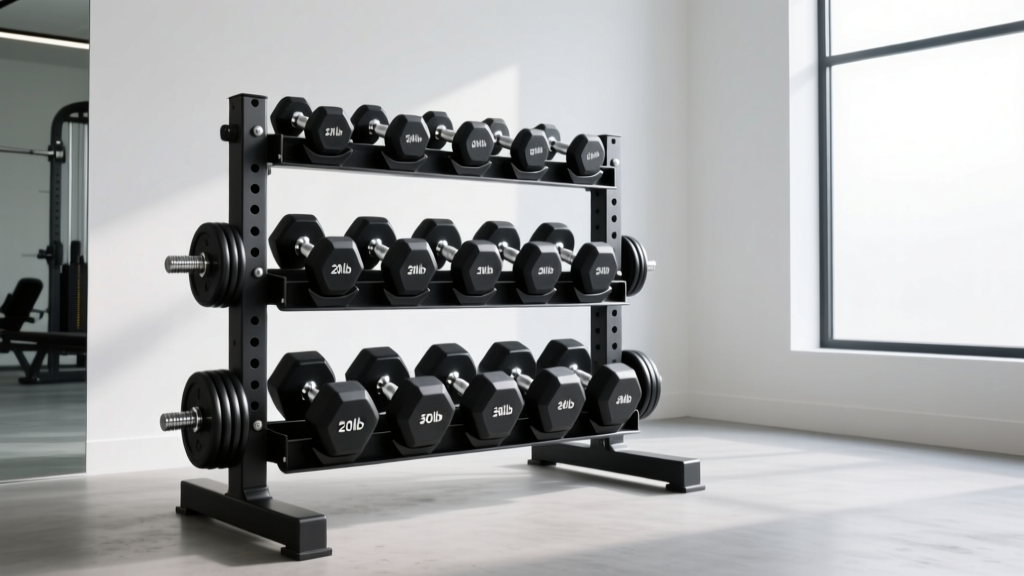
Designing a functional home gym in a compact apartment or spare bedroom requires ruthless spatial efficiency. For years, the standard approach to free weight training involved purchasing a full set of fixed rubber hex dumbbells. However, a standard 5-to-50-pound set (in 5-pound increments) requires a 3-tier dumbbell rack that measures roughly 48 inches wide, 24 inches deep, and 30 inches high. This consumes nearly 8 square feet of floor space, not including the mandatory 36-inch walkway clearance required for safe access.
Enter the loadable dumbbell with interchangeable plates. By utilizing a pair of 14-inch or 15-inch threaded or friction-lock handles alongside a compact vertical plate tree, you can reduce your weight storage footprint by up to 75%. A vertical plate tree holding 160 pounds of 1-inch standard plates occupies a mere 18-inch by 18-inch footprint (2.25 square feet). This dramatic reduction in gear footprint is the foundational step in space optimization, allowing you to reclaim valuable floor area for yoga mats, stretching zones, or simply keeping the room feeling open and breathable.
Space Optimization Highlight
Fixed Set Footprint: ~8 sq. ft. (plus 6 sq. ft. clearance)
Loadable System Footprint: ~2.25 sq. ft. (plus 3 sq. ft. clearance)
Space Saved: Up to 80% of your dedicated equipment zone.
Choosing the Right Loadable Handle for Small Spaces
Not all loadable dumbbell handles are created equal, especially when space is at a premium. The length of the handle sleeve directly dictates how many plates you can load, which in turn determines your maximum weight capacity. In 2026, the market has refined these handles to offer better knurling and more secure collar mechanisms, but the physical dimensions remain the primary constraint for spatial planning.
| Model | Handle Length | Sleeve Length | Max Capacity | Est. Price (Pair) |
|---|---|---|---|---|
| CAP Barbell SDH-14 Solid Steel | 14 inches | 5.5 inches | ~45 lbs per hand | $35 - $45 |
| Yes4All 15' Threaded Handle | 15 inches | 6.5 inches | ~60 lbs per hand | $45 - $55 |
| Rogue Loadable Dumbbell Handle | 17.5 inches | 8.5 inches | 100+ lbs per hand | $185 - $200 |
For most home gym layouts focused on general fitness and toning, the CAP Barbell SDH-14 or the Yes4All 15-inch models are ideal. The 14-inch handles are particularly advantageous for narrow storage shelves or compact vertical racks, as they minimize horizontal protrusion. However, if your programming requires heavier goblet squats or Romanian deadlifts, the longer sleeves of the Rogue handles accommodate larger bumper plates, though they require a wider storage footprint.
Designing the Layout: The Triangle Workflow
Space optimization is not just about storing equipment; it is about designing a layout that facilitates movement. According to American Council on Exercise (ACE), environmental friction is one of the leading causes of workout abandonment in home settings. To combat this, implement the 'Triangle Workflow' in your room design.
1. The Storage Node
Place your vertical plate tree and dumbbell handles in the corner of the room, ideally on a high-density EVA foam mat (at least 3/8-inch thick) to protect hardwood floors from cast iron impacts. This node should be within arm's reach of your primary workout zone but out of the direct path of movement.
2. The Active Zone
Reserve a minimum 6-foot by 6-foot clear space in the center or against the longest unbroken wall. This is where the actual training occurs. By using loadable dumbbells, you keep this zone entirely free of tripping hazards like unused 25-pound plates or bulky 3-tier racks.
3. The Staging and Rest Node
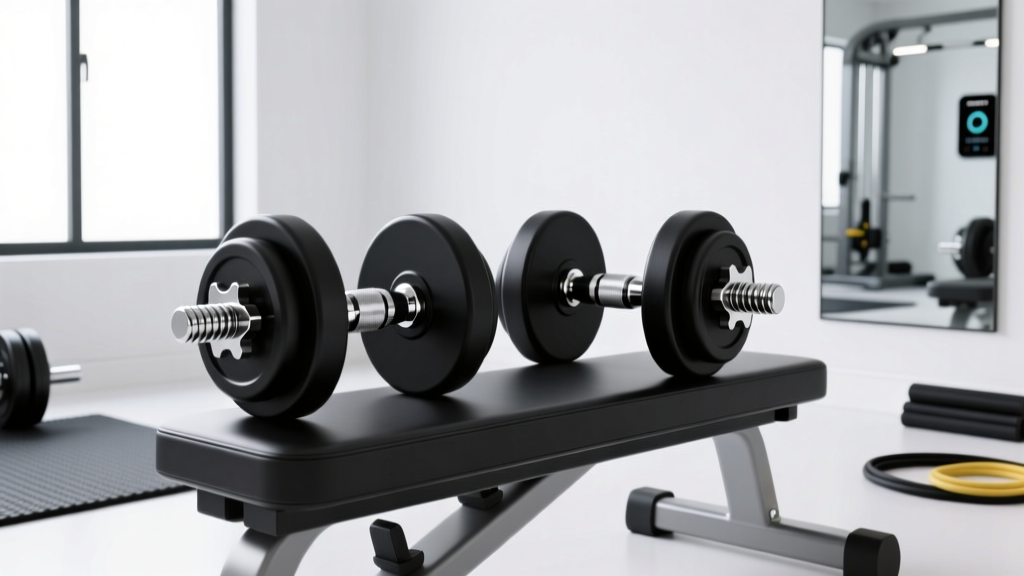
Position a small bench or a sturdy stool between the Storage Node and the Active Zone. This is where you stage your pre-loaded dumbbells before a set begins. When you eliminate the need to walk across the room to fetch heavier weights mid-circuit, you maintain your heart rate and focus.
Curating the Plates: Urethane vs. Cast Iron in Compact Rooms
The type of interchangeable plates you buy heavily influences both the spatial layout and the sensory environment of your home gym. In 2026, standard 1-inch cast iron plates remain the most cost-effective option, averaging $1.20 to $1.50 per pound. However, cast iron is thick. A standard 10-pound cast iron plate measures roughly 9 inches in diameter and 1.2 inches thick. Loading three of these on a 5.5-inch sleeve is physically impossible.
The Urethane Advantage: Urethane-coated plates are denser and thinner. A 10-pound urethane plate might only be 0.8 inches thick, allowing you to fit significantly more weight onto a compact 14-inch handle. Furthermore, urethane eliminates the metallic 'clank' and the distinct iron odor that can permeate small, poorly ventilated apartment bedrooms. While urethane commands a premium (typically $2.50 to $3.50 per pound), the spatial and acoustic benefits make it the superior choice for multi-use living spaces.
Programming: Setting Up for an Easy Dumbbell Workout for Women
The ultimate goal of optimizing your home gym layout is to remove barriers to entry. When you design a space that is clean, organized, and highly functional, you naturally set the stage for an easy dumbbell workout for women that prioritizes fluid movement, consistency, and functional strength over logistical headaches.
The 'Pre-Load' Strategy for Seamless Circuits
Because loadable dumbbells require manual weight changes, the spinlock collar process can interrupt the flow of a fast-paced circuit. To ensure your session remains an easy dumbbell workout for women focused on results rather than gear management, use the Pre-Load Strategy:
- Identify your weight tiers: Most full-body routines require a 'Heavy' tier (e.g., goblet squats, RDLs), a 'Medium' tier (e.g., chest presses, rows), and a 'Light' tier (e.g., lateral raises, tricep extensions).
- Stage the plates: Before hitting start on your workout timer, stack your Medium and Light plates in neat, separate piles on your Staging Node.
- Use spring collars: Upgrade from traditional threaded spinlock nuts to 1-inch spring collars. They cost about $15 a pair and reduce weight-change time from 45 seconds down to 3 seconds, keeping your rest periods strictly timed.
The Centers for Disease Control and Prevention (CDC) recommends that adults engage in muscle-strengthening activities of moderate or greater intensity that involve all major muscle groups on 2 or more days a week. By streamlining your equipment layout, you ensure that meeting these guidelines feels like an inviting daily habit rather than a cumbersome chore.
Expert Troubleshooting: Common Space & Gear Friction Points
Even the most meticulously planned compact home gyms encounter operational friction. Based on BarBend's adjustable dumbbell testing data and extensive home-gym layout consultations, here are the most common failure modes with loadable systems and how to solve them:
- The 'Clanking' Sleeve Gap: If your plates rattle excessively during movements like dumbbell lunges, it is because the sleeve is not fully packed. Solution: Buy a set of 1-inch fractional micro-plates (0.5 lb or 1 lb) to act as 'spacers' that tighten the load against the collar, ensuring a solid, unified feel.
- Plate Tree Tipping: Vertical plate trees are top-heavy. If you load all your 25-pound plates on the top pegs, the center of gravity shifts, creating a severe tipping hazard in a small room where it might fall onto furniture. Solution: Always adopt a 'bottom-heavy' loading protocol. Store 25s and 10s on the lowest pegs, and 5s and 2.5s on the top pegs. Alternatively, bolt the base of the tree to the wall using a simple $5 L-bracket.
- Knurling Wear on Storage: Storing bare steel handles directly on metal rack hooks destroys the knurling over time. Solution: Line your storage hooks with adhesive felt strips or high-density rubber tubing to preserve the grip texture of your handles.
"In spatial design for fitness, the equipment you choose should serve the architecture of the room, not dominate it. Loadable dumbbells represent the perfect intersection of modular scalability and spatial respect, allowing the athlete to adapt the gear to the space, rather than sacrificing the space for the gear."
Final Thoughts on Compact Gym Architecture
Transitioning to a loadable dumbbell system with interchangeable plates is one of the highest-ROI decisions you can make for a compact home gym. By accurately calculating your spatial math, selecting the correct handle sleeve length, and implementing a deliberate Triangle Workflow, you transform a cluttered spare room into a high-performance training sanctuary. This meticulous approach to layout design ensures that every time you step onto the mat, you are greeted by an organized, frictionless environment perfectly primed for an effective, accessible, and empowering training session.
More gear to consider
All reviews
Olympic vs Standard Plates and Exercises with 10lb Dumbbells
Best Dumbbell Racks for Heavy Lifts & Punches with Dumbbells

McGregor Dumbbell Setup Guide: Space Optimization for Home Gyms

Storing Scheels Dumbbells: 2026 Rack Trends & Market Analysis
Best Adjustable Dumbbells for Flat Bench Dumbbell Curls (2026)
