Beyond the Dumbbell Chest Press Exercise Image: Barbell Guide
Transitioning from dumbbells? Discover common Olympic barbell buying mistakes, knurling troubleshooting, and weight tolerances to optimize your bench press.

The Form Disconnect: Why Your Dumbbell Chest Press Exercise Image Doesn't Translate to Barbells
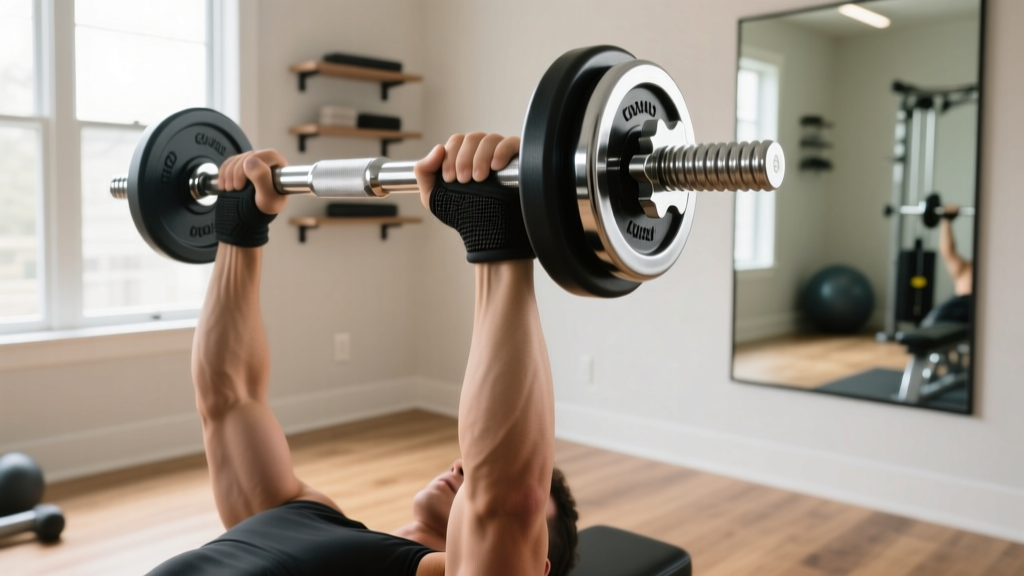
Many lifters begin their pressing journey with dumbbells. It is incredibly common to search for a dumbbell chest press exercise image to analyze wrist alignment, unilateral pathing, and shoulder retraction. However, when these same lifters transition to the Olympic barbell bench press, they frequently make critical equipment mistakes. They assume the pressing mechanics and equipment requirements are identical, failing to account for barbell whip, shaft diameter, and knurling aggressiveness.
A dumbbell allows your hands to move independently, naturally accommodating your unique biomechanics. A barbell locks your hands into a fixed plane. If you attempt to replicate the exact grip width and wrist angle from a dumbbell press on a barbell without considering the bar's physical properties, you risk wrist impingement, grip failure, and stalled progress. This troubleshooting guide addresses the most common Olympic barbell buying mistakes regarding weight tolerances and knurl patterns, ensuring your equipment supports your strength goals in 2026.
Mistake #1: Ignoring Barbell Weight Tolerance and Shaft 'Whip'
The most common mistake lifters make when buying their first Olympic barbell for benching is prioritizing price over shaft diameter and weight tolerance. Standard Olympic weightlifting bars feature a 28mm shaft diameter designed to bend (or 'whip') during explosive cleans and snatches. When you bench press 225 lbs or more with a 28mm bar, that same whip causes severe bar oscillation, destabilizing your wrists and making lockout incredibly difficult.
⚠️ Troubleshooting Warning: If your barbell wobbles violently at the bottom of your bench press or during lockout, your shaft diameter is likely too thin (28mm). You need a powerlifting-specific bar with a 29mm shaft to eliminate flex and provide a rigid pressing surface.Furthermore, cheap barbells often have loose weight tolerances. A bar labeled as 20kg (44 lbs) might actually weigh 18.5kg or 21.5kg. In competitive powerlifting or serious tracking, this discrepancy ruins your progressive overload data. According to the USAPL Technical Rules, elite competition bars must adhere to extremely strict weight tolerances, a standard you should look for when investing in a home gym barbell.
2026 Barbell Weight Tolerances & Pricing Matrix
| Barbell Type | Shaft Diameter | Weight Tolerance | Whip (Flex) | 2026 Avg Price |
|---|---|---|---|---|
| Olympic Weightlifting | 28mm | +/- 1% (Elite) | High | $300 - $650 |
| Multi-Purpose | 28.5mm | +/- 2% (Standard) | Moderate | $200 - $350 |
| Powerlifting (Bench) | 29mm | +/- 0.5% (Strict) | Stiff / None | $350 - $950 |
Mistake #2: Choosing the Wrong Knurling for the Bench Press
Knurling is the cross-hatched pattern machined into the steel shaft of the barbell. It is the only point of contact between you and the weight. Selecting the wrong knurl type is a massive troubleshooting headache, leading either to shredded calluses or dangerous mid-rep grip slips. The Rogue Fitness Barbell Guide categorizes knurling into three primary geometric profiles, each with distinct use cases.
Hill vs. Mountain vs. Volcano Knurling
- Hill Knurling: The tops of the knurl diamonds are flattened off. This feels smooth and comfortable, making it ideal for high-rep bicep curls or casual lifting. Troubleshooting note: If you use a hill-knurled bar for heavy benching, your grip will inevitably slip when sweat accumulates, forcing you to squeeze the bar excessively and wasting central nervous system (CNS) energy.
- Mountain Knurling: Sharp, aggressive, and pointy. Common on cheap import bars and some dedicated deadlift bars. It bites into the skin immediately. While great for pulling heavy deadlifts, it will tear your palms during the setup and unracking phase of a bench press.
- Volcano Knurling: The gold standard for powerlifting and bench pressing. The center of the diamond is flat (like a volcano crater), but the outer edges remain sharp. This provides immense grip security without tearing the skin, allowing you to focus entirely on driving the bar through your chest.
Mistake #3: Overlooking Center Knurling and Shaft Diameter
Many multi-purpose barbells omit the center knurl to make front squats more comfortable on the collarbone. However, for the bench press, a center knurl is a vital troubleshooting tool. When you arch your back and retract your scapulae, the center knurl bites into your shirt and skin, preventing the bar from sliding horizontally across your chest during the descent.
"A slipping barbell during the eccentric phase of the bench press alters the lever arm on the shoulder joint, increasing the risk of pec tears and rotator cuff impingement. Equipment stability is just as critical as biomechanical positioning." — Biomechanics analysis from Stronger By Science.
Combine a missing center knurl with a 28.5mm shaft, and you have a recipe for a bar that shifts unpredictably in your hands. Always verify that your chosen barbell features a passive or mild center knurl if bench pressing is a priority.
Troubleshooting Your Current Barbell Setup
Use this step-by-step diagnostic flow to identify why your barbell bench press feels unstable or uncomfortable compared to your dumbbell pressing.
- Symptom: Bar slides down my chest during the descent.
Cause: Lack of center knurl or wearing a slick synthetic shirt.
Fix: Switch to a cotton t-shirt and upgrade to a power bar with a passive center knurl. - Symptom: Hands tear or bleed after 3-4 sets.
Cause: Mountain knurling or poor grip torque (squeezing too hard without engaging the lats).
Fix: Switch to a volcano knurl bar (e.g., Rogue Ohio Power Bar) and focus on 'bending the bar' to engage the lats rather than just crushing the steel. - Symptom: Wrist pain at the bottom of the press.
Cause: Using a 28mm Olympic weightlifting bar; the whip causes the bar to oscillate, forcing the wrists to stabilize micro-movements.
Fix: Purchase a 29mm stiff powerlifting bar to eliminate flex and stack the joints vertically.
2026 Olympic Barbell Recommendations by Knurl Type
If you are ready to fix your equipment bottlenecks, here are the top-performing barbells on the market in 2026, categorized by their knurl profile and bench press suitability.
1. Rogue Ohio Power Bar (Stainless Steel)
- Knurl: Aggressive Volcano
- Shaft: 29mm
- Price: ~$475
- Verdict: The undisputed king of the home gym bench press. The stainless steel shaft requires zero maintenance, and the volcano knurl locks into your palms like velcro without shredding your calluses.
2. Rep Fitness Deep Dish Power Bar
- Knurl: Moderate Volcano
- Shaft: 29mm
- Price: ~$329
- Verdict: An incredible budget-friendly alternative. The knurl is slightly less aggressive than the Rogue, making it perfect for lifters who mix high-rep dumbbell work with heavy barbell benching and want to preserve their hand skin.
3. Eleiko Performance Powerlifting Bar
- Knurl: Sharp Mountain / Deep Volcano Hybrid
- Shaft: 29mm
- Price: ~$1,100+
- Verdict: Elite-tier equipment. The knurl is incredibly aggressive. Only recommended for competitive powerlifters who chalk up heavily and need absolute zero slip during maximal singles.
Stop relying on a generic dumbbell chest press exercise image to dictate your barbell mechanics. Dumbbells and barbells are entirely different tools that require specific equipment tolerances. By understanding shaft diameter, weight calibration, and knurl geometry, you can troubleshoot your grip issues, eliminate bar whip, and build a significantly stronger, safer bench press.
More gear to consider
All reviews
Rubber vs Urethane: Care for the Rolling Dumbbell Triceps Extension
Essential Gym Dumbbells Accessories: Rack Maintenance & Storage Care
Space-Saving Dumbbells for Biceps and Triceps: Hex vs Urethane
Bumper vs Iron Plates 2026: Trends & Tricep Kickback with Dumbbells

EZ Curl vs Straight Bar Care & Dumbbell Squats vs Goblet Squats