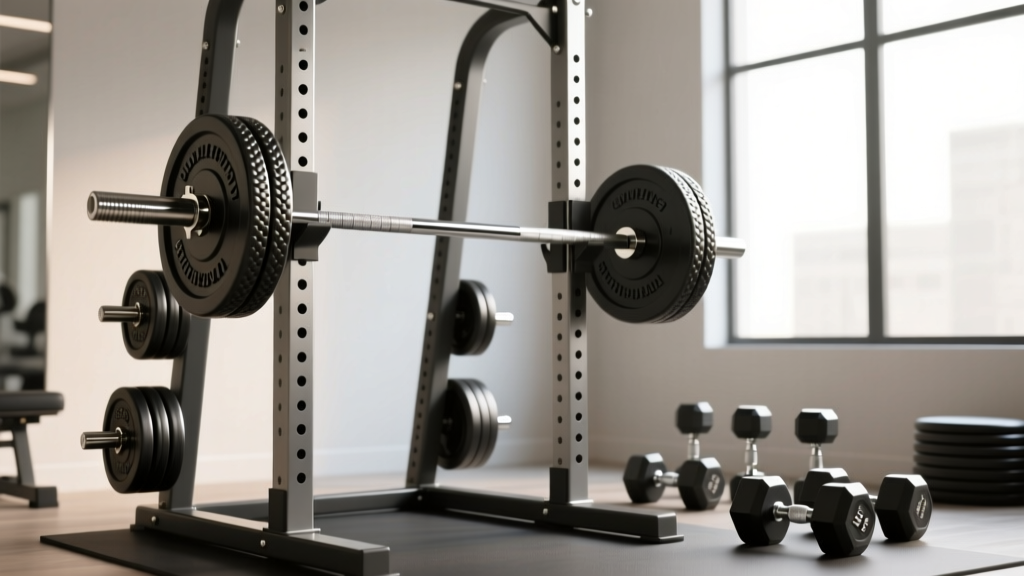
Barbell Knurling Setup & Space for a Belly Workout With Dumbbells
Master Olympic barbell installation with our knurling guide, plus learn to configure your rack footprint for a core and belly workout with dumbbells.

The Foundation: Selecting Your Olympic Barbell by Knurling and Weight
Building a high-performance home gym in 2026 requires more than just buying the first barbell you see online. The interface between your hands and the steel—the knurling—dictates your grip security, comfort, and overall training longevity. Whether you are preparing for heavy powerlifting singles or setting up a versatile space that transitions into accessory work, understanding barbell weight tolerances and knurl patterns is non-negotiable. According to the International Weightlifting Federation (IWF), certified Olympic bars must adhere to strict dimensional and weight tolerances, but the commercial and prosumer markets offer a wider variety of specialized shafts.
Expert Callout: IWF vs. IPF MarksBefore purchasing, check the knurl rings. IWF marks are spaced 910mm apart for Olympic weightlifting (snatch and clean & jerk). IPF marks are 810mm apart for powerlifting (bench press and squat). Many modern hybrid bars feature dual knurl rings, but purists should select a bar specific to their primary discipline to avoid aggressive knurl tearing up the hands during high-rep cleans.
Decoding Knurling Patterns: Volcano, Mountain, and Hill
Knurling is not just about roughness; it is about geometry. The shape of the machined diamonds determines how the bar feels under load.
- Volcano Knurling: The gold standard for most lifters. The peaks of the diamonds are shaved off, creating a crater-like rim that grips the skin without tearing it. The Rogue Ohio Bar (approx. $225-$295) features a highly refined volcano knurl on a 28.5mm shaft, offering an optimal balance for both pulling and pressing.
- Mountain Knurling: Aggressive and sharp. The peaks are left intact, creating a jagged surface that bites into calluses. Found on dedicated power bars like the Texas Power Bar ($325+), this is ideal for heavy, low-rep deadlifts but will shred your hands during high-volume Olympic lifts.
- Hill Knurling: The peaks are rounded off completely. This is common on budget Amazon bars or specialized multi-grip bars. It is comfortable but lacks the bite required for heavy 1RM attempts in a humid garage gym.
| Barbell Model (2026 Specs) | Shaft Diameter | Knurl Type | Tensile Strength | Price Range |
|---|---|---|---|---|
| Rogue Ohio Bar (Zinc) | 28.5mm | Volcano | 190,000 PSI | $225 - $295 |
| Eleiko Olympic Sport Bar | 28.0mm | Mild Volcano | 215,000 PSI | $850 - $920 |
| Texas Power Bar (Classic) | 29.0mm | Mountain | 200,000 PSI | $325 - $375 |
For a comprehensive breakdown of barbell metallurgy and sleeve rotation mechanics, refer to the Rogue Fitness Barbell Specifications Guide, which remains an industry benchmark for tensile strength and yield ratings.
Step-by-Step Barbell Rack Installation & Safety Walkthrough
Your barbell is only as safe as the rack supporting it. Modern 3x3-inch steel uprights with 5/8-inch hardware are the 2026 standard for home gyms, but improper torque and accessory selection can ruin your barbell's knurling and compromise safety.
- Upright Spacing & Hardware Torque: Set your uprights to the standard 49-inch inside width. When tightening the 5/8-inch Grade 8 bolts, use a calibrated torque wrench set to 80 ft-lbs. Overtightening can warp the upright tubing; undertightening leads to rack sway during heavy re-racking.
- J-Cup Selection (Protecting the Knurl): Never use bare steel J-cups. Always install sandwich-style J-cups with UHMW (Ultra-High Molecular Weight) plastic liners. The plastic conforms slightly to the barbell shaft, protecting the precise volcano knurling from being sheared off during heavy squats.
- Safety Strap Calibration: Ditch traditional steel pin-and-pipe safeties if you train alone. Steel pins will grind against the barbell shaft and destroy the knurling if you fail a rep. Instead, install Dyneema or UHMW safety straps. Set the straps exactly 2 inches below your lowest squat depth. This allows the barbell to bounce slightly on the straps without the knurling taking abrasive damage.
Optimizing the Drop Zone: Transitioning to a Belly Workout With Dumbbells
Modern home gym design prioritizes multi-functional footprints. You aren't just building a powerlifting station; you are creating a comprehensive fitness hub. Once your heavy squats, presses, and deadlifts are racked, the immediate floor space around the platform becomes the dedicated zone for accessory movements. This is where intelligent floor planning allows you to seamlessly transition into a targeted belly workout with dumbbells without leaving your primary training area.
Flooring and Spatial Requirements
To protect both your equipment and your spine during floor-based core routines, extend 3/4-inch vulcanized rubber horse stall mats at least four feet beyond the front and sides of your power rack. This creates an impact-absorbing drop zone. When performing a belly workout with dumbbells, the thick rubber provides necessary cushioning for the thoracic spine during weighted V-ups and Russian twists, while remaining dense enough to prevent the dumbbells from sinking or rolling unpredictably.
Pro-Tip: Dumbbell Selection for Core WorkFor floor-based core routines, avoid adjustable dumbbells with fragile plastic dials (like early-generation dial models) as they can crack when set down aggressively on rubber mats during high-intensity intervals. Opt for solid rubber hex dumbbells in the 15 lb to 35 lb range, or heavy-duty adjustable models like the Nuobell 552 or PowerBlock Pro series, which feature welded steel cores and durable urethane coatings that withstand floor contact during dynamic movements like dumbbell pull-throughs and weighted sit-ups.
By integrating this accessory zone directly adjacent to your barbell station, you maintain training density. You can execute a heavy 5x5 barbell front squat session, strip the bar, and immediately drop to the mat for a high-rep belly workout with dumbbells, maximizing your time efficiency and keeping your heart rate elevated in the hypertrophy and endurance zones.
Barbell Maintenance: Preserving the Knurl and Shaft
A $300+ Olympic barbell is a precision instrument. Neglecting maintenance leads to oxidized shafts, degraded knurling, and seized sleeve bushings. Follow this strict 2026 maintenance protocol to ensure your barbell outlasts your lifting career.
"The most common mistake lifters make is using a stainless steel wire brush on a zinc or black oxide barbell. This strips the protective coating and guarantees surface rust within 48 hours in a humid environment." — FitGearPulse Equipment Lab
- Weekly Cleaning: Use a stiff brass or nylon brush to scrub chalk and dead skin out of the knurl valleys. Brush diagonally across the shaft, not parallel to the knurl lines, to avoid bending the machined peaks.
- Monthly Lubrication: Apply a light coat of 3-in-One oil or a specialized barbell oil to the shaft. Wipe it down with a microfiber cloth until it is dry to the touch. This displaces moisture and prevents oxidation without leaving the bar slippery for your next session.
- Sleeve Maintenance: Once every six months, remove the end caps (if your bar features snap-ring or bolt-on sleeves) and apply a thin layer of white lithium grease to the bronze bushings or needle bearings. This ensures the sleeves spin freely during Olympic cleans, reducing rotational torque on your wrists.
For further reading on biomechanics and safe equipment setup for core and compound movements, consult the educational resources provided by the National Strength and Conditioning Association (NSCA). Proper equipment selection and spatial awareness are the bedrock of a sustainable, injury-free training environment.
More gear to consider
All reviews
Loadable Dumbbells for Plank with Dumbbell Row: 2026 Value Guide
2026 Dumbbell Racks for the Best Hamstring Exercise with Dumbbells

Standard vs Olympic Plates for Your Sitting Dumbbell Workout Setup

Space Layouts: Loadable Dumbbells & The Atlantis Dumbbell Bench

Seated Dumbbell Shrugs Muscles Worked: Neoprene Home Gym Setup
