
Barbell Buying Guide: Knurling & Seated Dumbbell Press Muscles Worked
Master your home gym setup with our step-by-step Olympic barbell buying guide. Explore weight, knurling types, and complementary dumbbell pressing mechanics.

Building Your Free Weight Foundation: A Step-by-Step Approach
Stepping into the world of free weights can feel overwhelming, especially when confronted with the sheer variety of Olympic barbells on the market. As a beginner, your first major equipment investment should be a high-quality, multi-purpose Olympic barbell. However, a truly balanced upper-body pushing routine requires more than just a barbell; it demands an understanding of how unilateral dumbbell movements complement your heavy barbell work. In this comprehensive 2026 buying guide, we will walk you through the exact specifications of Olympic barbell weight and knurling, while exploring how to pair your new bar with targeted dumbbell exercises for complete muscular development.
Beginner's Golden Rule: Never compromise on the barbell shaft. The bar is the only piece of equipment you physically grip during every single lift. A poorly manufactured shaft will ruin your form, tear your calluses, and limit your progressive overload.Step 1: Decoding Olympic Barbell Weight and Dimensions
Before you look at flashy coatings or brand names, you must understand the foundational geometry of an Olympic barbell. Standardization is key to ensuring your weight plates fit correctly and your biomechanics remain consistent.
The Weight and Length Standards
- Men's Olympic Bar: Weighs exactly 20kg (44 lbs) and measures 2200mm (7.2 feet) in total length. The loadable sleeve length is typically 16.3 inches, accommodating multiple bumper plates.
- Women's Olympic Bar: Weighs 15kg (33 lbs) and measures 2010mm (6.6 feet). The primary difference, beyond weight, is the shaft diameter, which is narrower to accommodate smaller hand sizes.
Shaft Diameter and Tensile Strength
The shaft diameter dictates how the bar feels in your hands and how much it flexes (whips) during dynamic movements. For a beginner looking for a multi-purpose bar, a 28.5mm shaft is the gold standard. It provides enough rigidity for heavy bench presses while retaining the slight whip needed for Olympic cleans. Avoid cheap 30mm+ shafts found in big-box stores; they are incredibly difficult to grip securely.
Furthermore, you must check the tensile strength, measured in PSI (pounds per square inch). As of 2026, any reputable manufacturer will offer a minimum of 190,000 PSI. Anything below 165,000 PSI risks permanent bending if you drop a heavy deadlift. According to Rogue Fitness official barbell specifications, their benchmark multi-purpose bars utilize 190,000 PSI steel to guarantee a lifetime warranty against bending.
Step 2: Navigating Barbell Knurling Types
Knurling is the cross-hatched pattern machined into the steel shaft to provide grip. The geometry of this pattern drastically alters your lifting experience. Choosing the wrong knurl can make heavy pulls feel like holding a bar of soap, or worse, shred the skin off your palms during high-repetition sets.
| Knurl Profile | Shape Geometry | Aggressiveness | Best Application |
|---|---|---|---|
| Hill | Rounded, shallow peaks | Low / Passive | High-rep conditioning, beginners |
| Volcano | Deep valleys with a rimmed edge | Medium / Grippy | Multi-purpose, powerbuilding |
| Mountain | Sharp, pronounced peaks | High / Aggressive | Heavy powerlifting singles |
For 90% of beginners and intermediate lifters, the Volcano knurl is the optimal choice. It bites into the skin just enough to secure a heavy deadlift, but the flattened peaks prevent the micro-tearing associated with aggressive mountain knurls during high-volume bench pressing.
Step 3: Pairing Your Barbell with Dumbbell Mechanics
Buying a premium barbell is only half the battle for upper-body development. While the barbell bench press and overhead press are unparalleled for building absolute, raw strength, they lock your scapulae into a fixed, bilateral path. This can mask left-to-right strength imbalances and underdevelop crucial stabilizer muscles.
This is where integrating unilateral dumbbell work becomes non-negotiable. If you have ever researched the exact seated dumbbell press muscles worked, you already know that this movement recruits far more than just the prime movers. According to the ExRx.net biomechanical database, the seated dumbbell shoulder press heavily targets the anterior and medial deltoids, the clavicular head of the pectoralis major, and the triceps brachii. However, the true magic lies in the synergistic stabilizers: the rotator cuff complex, the serratus anterior, and the upper trapezius must work overtime to prevent the dumbbells from drifting backward or inward.
"The barbell builds the engine; the dumbbell builds the steering wheel. You cannot safely transfer the raw force generated by a heavy barbell overhead press without the deep scapular stabilizers forged by the seated dumbbell press."
How to Structure Your Pushing Routine
- Primary Heavy Compound (Barbell): Start your workout with the barbell overhead press or bench press. Work in the 4-6 rep range to maximize central nervous system adaptation and raw force production.
- Secondary Hypertrophy & Stabilization (Dumbbell): Follow up with the seated dumbbell shoulder press. Aim for 3 sets of 8-12 reps. Focus on a deep stretch at the bottom and a controlled tempo to maximize the time under tension for the medial deltoids.
- Accessory Isolation: Finish with lateral raises and tricep extensions to fully fatigue the peripheral muscles.
Step 4: Real-World 2026 Barbell Recommendations
As of early 2026, supply chain stabilization and advancements in metallurgy mean that premium stainless steel and hard chrome bars are more accessible than ever. Here are three specific models that fit the beginner-to-intermediate profile perfectly:
1. The Budget-Conscious Workhorse: Rep Fitness Colorado Bar
- Price: ~$329
- Specs: 28.5mm shaft, 190k PSI, Stainless Steel
- Knurl: Dual volcano knurl (slightly more aggressive for deadlifts, smoother for pressing)
- Verdict: The stainless steel shaft requires zero maintenance and will not rust in a humid garage gym. It is the best value-for-money bar on the market.
2. The Industry Standard: Rogue Ohio Bar (Stainless)
- Price: ~$295 - $345 (depending on coating)
- Specs: 28.5mm shaft, 190k PSI
- Knurl: Classic Rogue volcano knurl
- Verdict: The benchmark against which all other multi-purpose bars are measured. The knurl is perfectly balanced, and the bronze bushings provide a smooth, reliable spin for Olympic lifts.
3. The Premium Investment: Eleiko Sport Training Bar
- Price: ~$950+
- Specs: 28mm shaft, proprietary Swedish steel
- Knurl: Refined mountain knurl (unique to Eleiko)
- Verdict: According to Eleiko's Olympic barbell engineering guidelines, their proprietary steel hardening process creates a bar that is incredibly whippy yet virtually indestructible. It is an heirloom piece of equipment, though likely overkill for a strict beginner.
Frequently Asked Questions
Do I need a center knurl on my barbell?
For a beginner, a center knurl is optional. Powerlifters prefer a sharp center knurl to grip the upper back during low-bar squats. However, if you plan to do front squats or Olympic cleans, a smooth or lightly knurled center is much more comfortable against your collarbone.
How often should I clean my barbell knurling?
You should brush your barbell knurling with a stiff nylon brush once a week to remove dead skin, chalk, and dirt. If you live in a humid environment and own a non-stainless steel bar, apply a very light coat of 3-in-One oil or mineral oil to the shaft once a month to prevent oxidation.
Can I use the same barbell for benching and deadlifting?
Yes, provided you buy a multi-purpose bar with a 28.5mm shaft and a volcano knurl. Specialized deadlift bars (which are 27mm and highly whippy) or specialized powerlifting bench bars (which are 29mm+ and extremely stiff) are only necessary for advanced competitors lifting well over 400 lbs.
More gear to consider
All reviews
Barbell Guide: Weight, Knurling & Seated Dumbbell Overhead Extension

Barbell Collar Types Compared: Beyond the 5 Day Dumbbell Workout
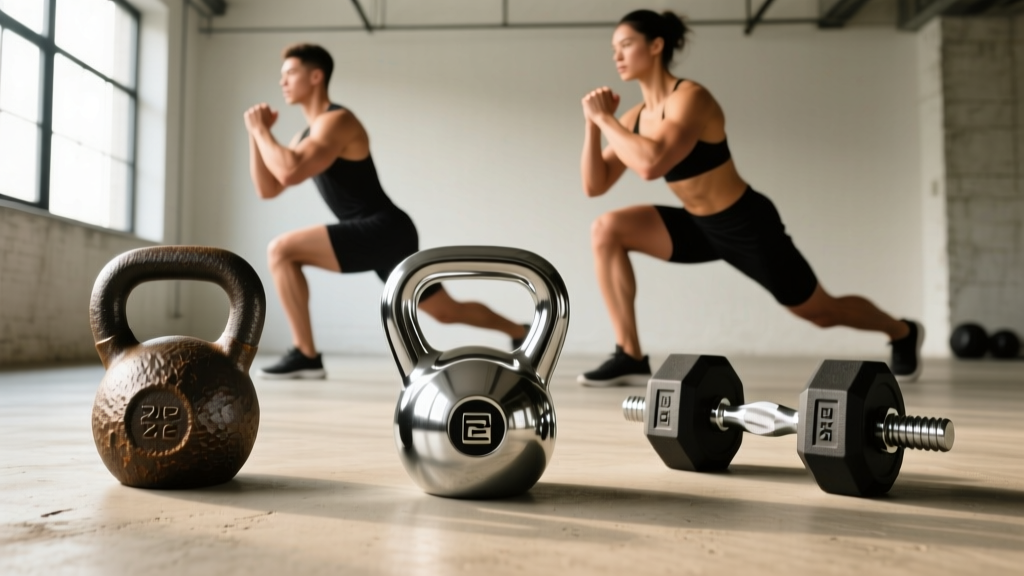
Cast Iron vs Competition Kettlebells & Dumbbell Overhead Lunge

Rubber Hex vs Urethane: Back and Shoulder Dumbbell Workout Guide

Beyond the 1000 Pound Dumbbell Myth: Bumper vs Iron Plate Trends 2026
